25 Farmhouse Kitchen Flooring Ideas That Feel Authentic (Not Cheap)
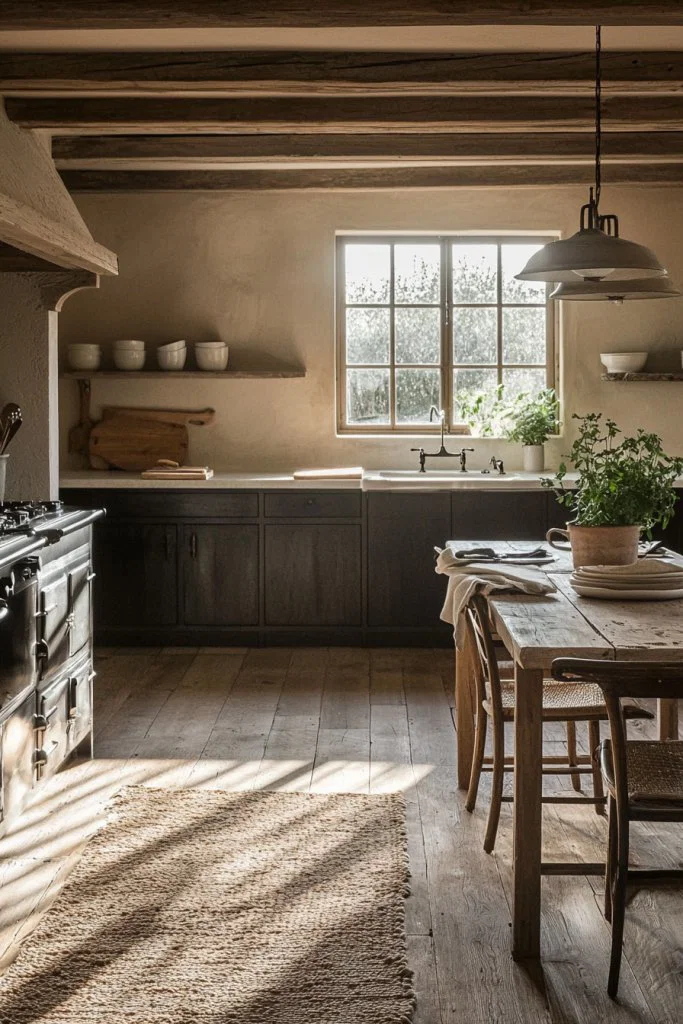
Farmhouse kitchen flooring sets the entire tone of your space, grounding every cabinet, counter, and wall in warmth and character. These 25 rustic flooring ideas give you beautiful, practical options for every budget and style.
The farmhouse kitchen thrives on honest materials, lived-in textures, and colours that feel rooted in nature. Every flooring choice you make either strengthens or weakens that cosy, welcoming atmosphere you want guests to feel the moment they walk in.
Whether you prefer the authenticity of reclaimed wood or the practicality of vinyl plank, the right floor ties your entire kitchen design together. Understanding what each material looks like and how it performs helps you choose confidently and style your space beautifully.
1. Warm Hardwood Flooring
Classic hardwood fills a farmhouse kitchen with rich, natural grain patterns that immediately communicate warmth and tradition. Oak, maple, and hickory each offer distinct tones, from honey gold to deep amber, that anchor the entire room beautifully.
Choose a matte or satin stain finish to enhance the wood’s natural character while protecting it from everyday kitchen spills. Pair your hardwood floor with shaker cabinets and vintage-style hardware to strengthen the overall farmhouse aesthetic.
2. Distressed Laminate Floors
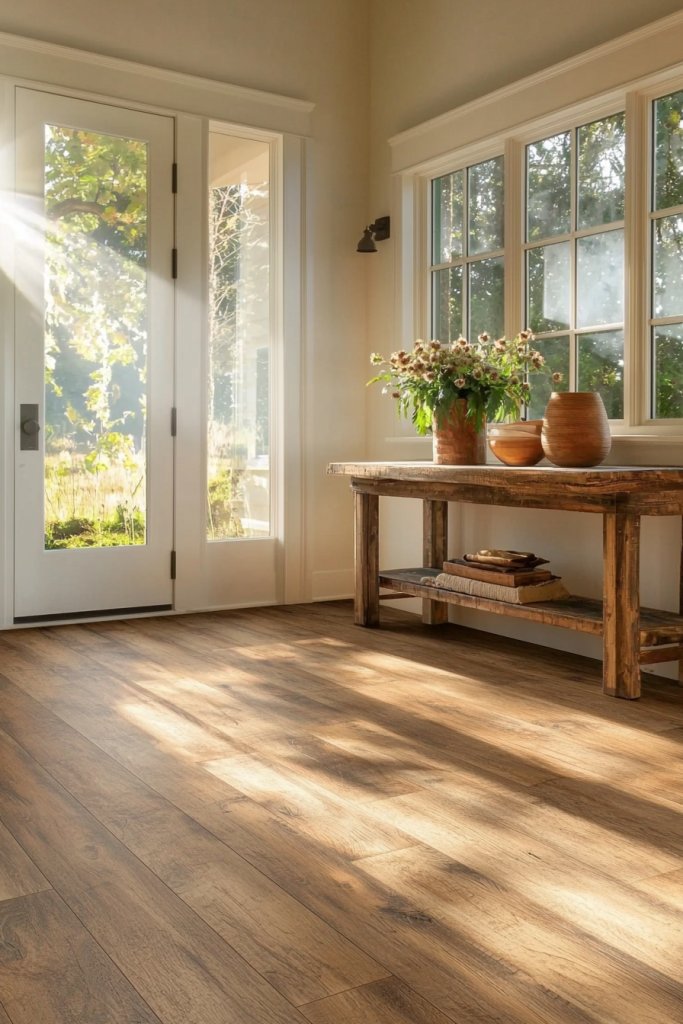
Distressed laminate captures the worn, aged look of old farmhouse wood at a fraction of the material cost. Its textured surface adds authentic visual depth, with colour variations that mimic decades of natural weathering across each plank.
Select a weathered oak or barn-inspired pine finish to keep the palette warm and grounded in rustic style. Laminate’s click-lock installation makes it a genuinely manageable weekend project for homeowners who want a fast, budget-friendly refresh.
3. Reclaimed Barn Wood
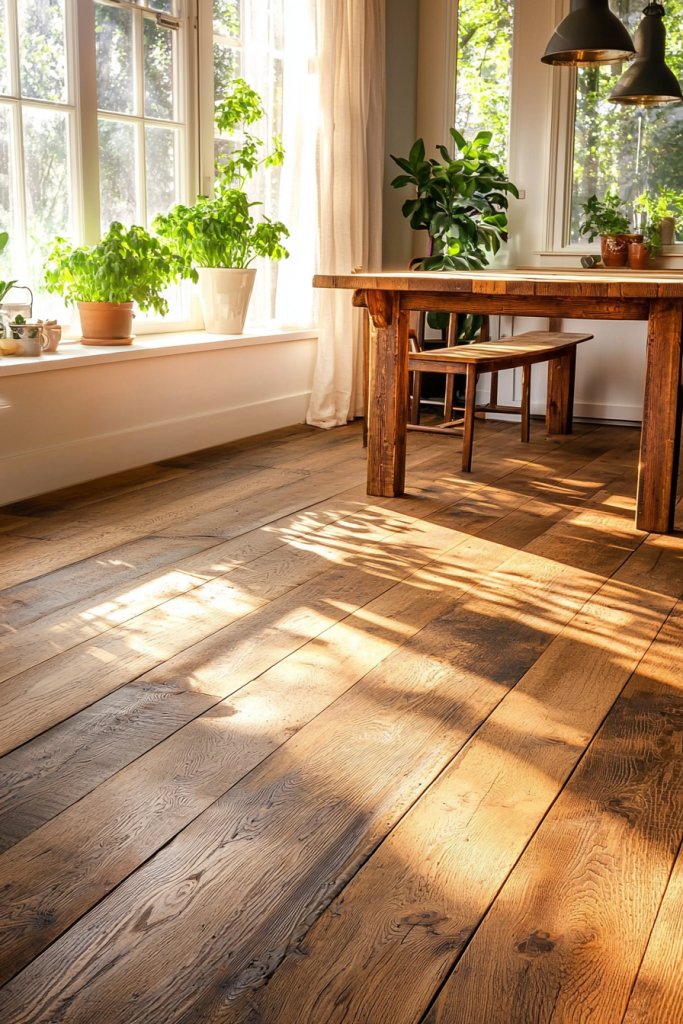
Reclaimed barn wood brings unmatched character to a farmhouse kitchen, with every plank carrying its own knots, saw marks, and weathered grain. The colour range spans deep espresso browns to silvery greys, creating a floor that looks genuinely storied and one-of-a-kind.
Source your planks from a reputable reclaimed timber supplier to ensure the wood receives proper treatment before installation. Seal the floor with a hardwax oil finish to protect the surface while preserving the raw, honest texture that makes reclaimed wood so special.
4. Wide Plank Pine
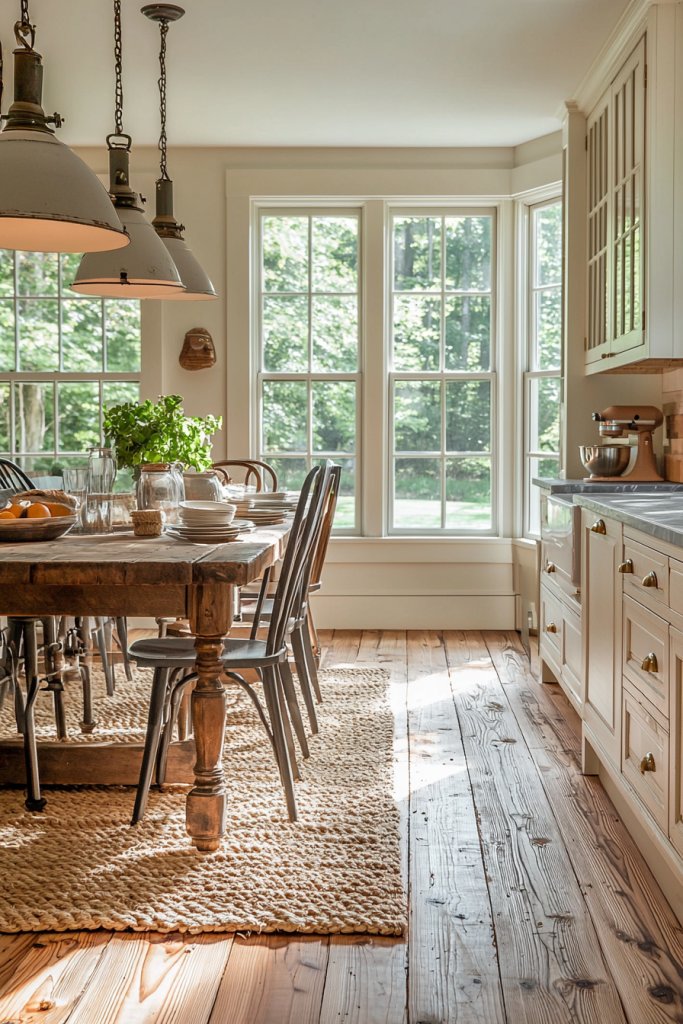
Wide plank pine flooring gives a farmhouse kitchen an open, airy feel, with broad boards that draw the eye across the room. The soft, knotty surface of pine develops a beautiful patina over time, growing richer and more characterful with every passing year.
Opt for planks at least five inches wide to maximise the spacious, traditional farmhouse effect underfoot. Finish pine floors with a durable oil-based sealer to protect the softer wood from the heavy foot traffic a busy kitchen always generates.
5. Bamboo Kitchen Flooring
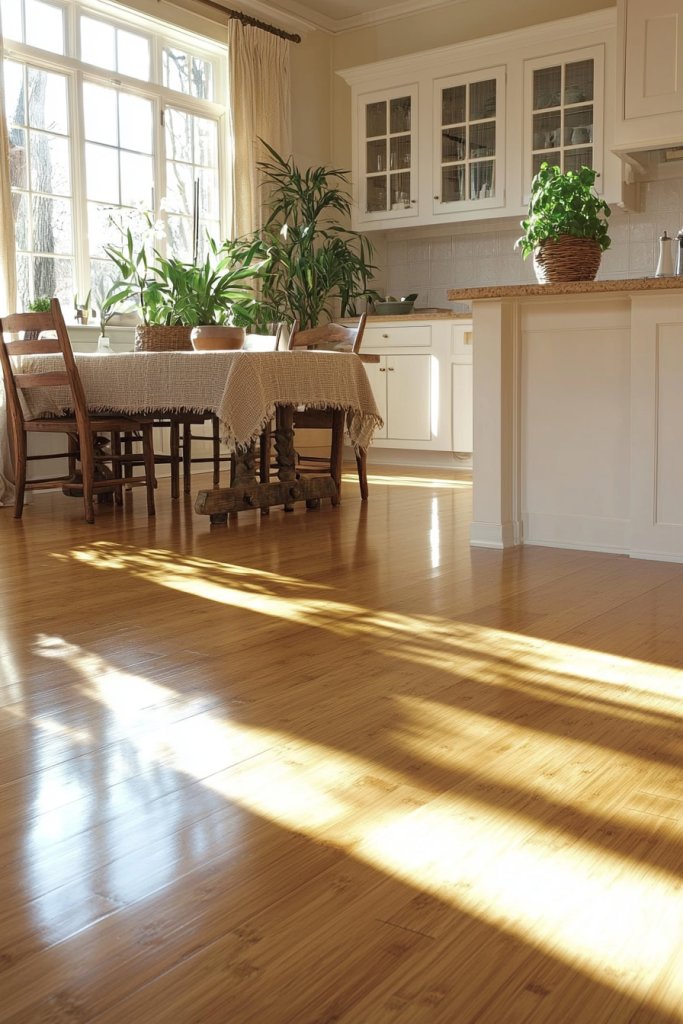
Bamboo flooring delivers a clean, natural aesthetic that works surprisingly well in a relaxed farmhouse kitchen setting. Its fine linear grain reads as warm and organic, complementing cream cabinetry and open shelving with an effortless, understated style.
Choose strand-woven bamboo for superior hardness, since it outperforms many traditional hardwoods in resisting dents and scratches. Pair a warm honey-toned bamboo floor with earthy linen textiles and wooden furniture to keep the overall palette cohesive and grounded.
6. Rustic Tile Floors
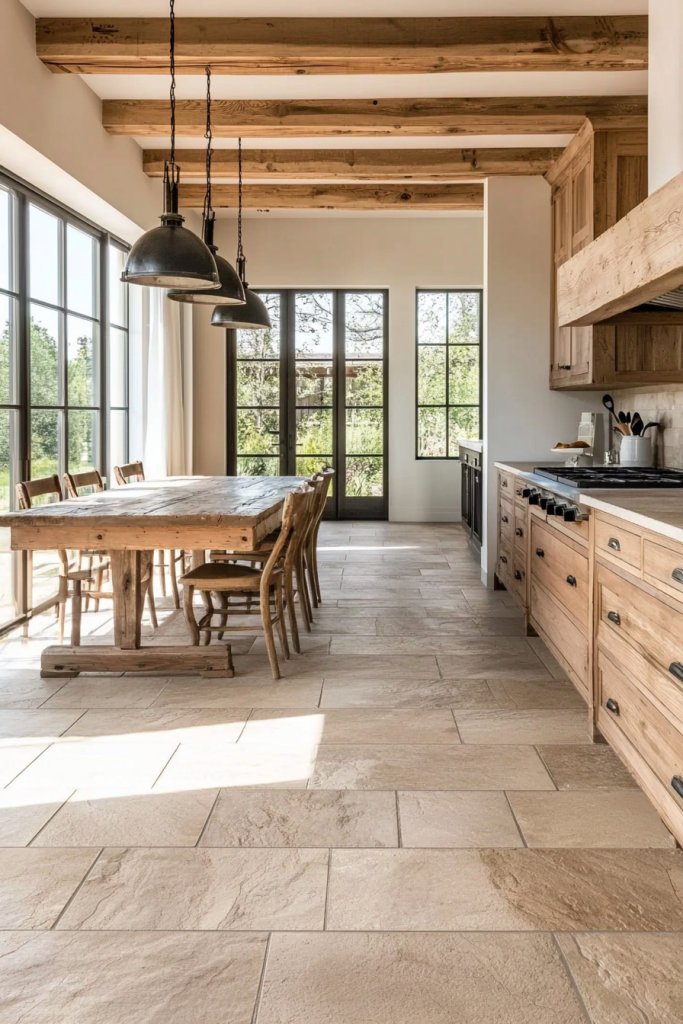
Rustic tile brings a rugged, handcrafted quality to a farmhouse kitchen, with imperfect edges and varied surface textures that feel genuinely artisanal. Warm terracotta, stone-look, and matte ceramic tiles all contribute to a floor that looks like it belongs in an old country home.
Use wide grout lines in a natural or slightly contrasting tone to emphasise the tile’s handmade character and add visual interest. Combine rustic tile with exposed wooden beams and open shelving to complete a coherent farmhouse interior from floor to ceiling.
7. Vinyl Plank Flooring
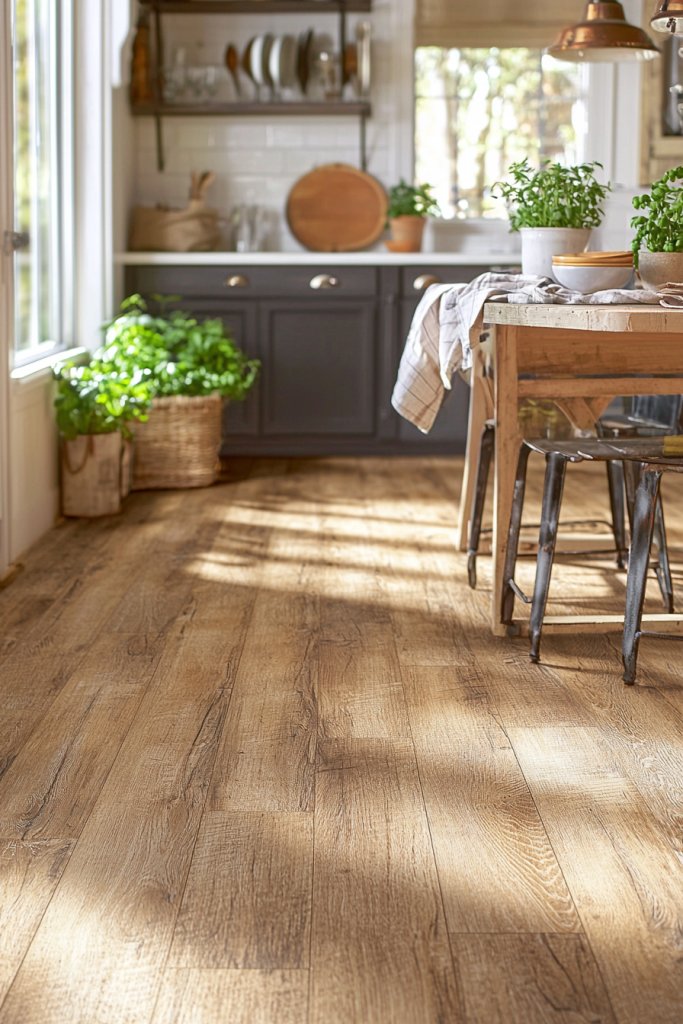
Vinyl plank flooring delivers impressive wood-look realism at a practical price point, making it one of the most popular farmhouse kitchen choices today. Modern embossing technology creates realistic grain textures and colour variation that hold up beautifully under daily kitchen scrutiny.
Choose a luxury vinyl plank product with a thick wear layer of at least twelve mils to ensure lasting performance in a high-traffic kitchen. Its complete waterproof core makes vinyl plank an especially smart choice for households where spills and splashes happen constantly.
8. Natural Cork Floors
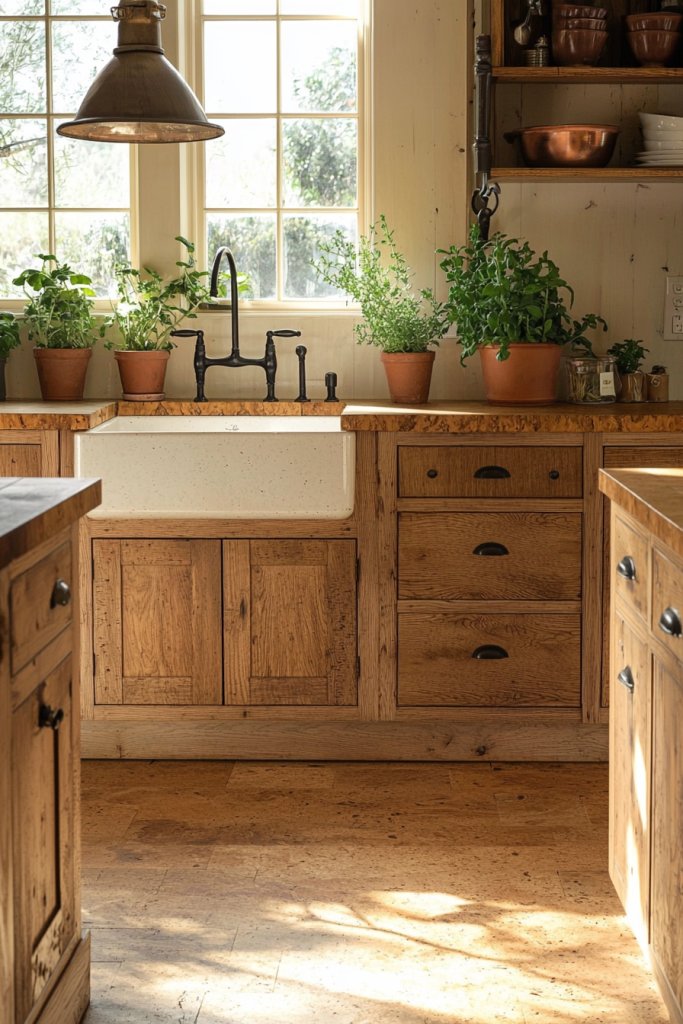
Natural cork gives a farmhouse kitchen a soft, cushioned feel underfoot that no other flooring material quite replicates. Its warm, speckled surface in tones of tan, caramel, and brown adds organic texture that feels instantly cosy and inviting.
Seal cork floors with a quality polyurethane finish to protect against moisture and the inevitable kitchen spills. Cork pairs especially well with painted shaker cabinets in soft white or sage green, creating a gentle, nature-inspired farmhouse palette.
9. Painted Wood Floors
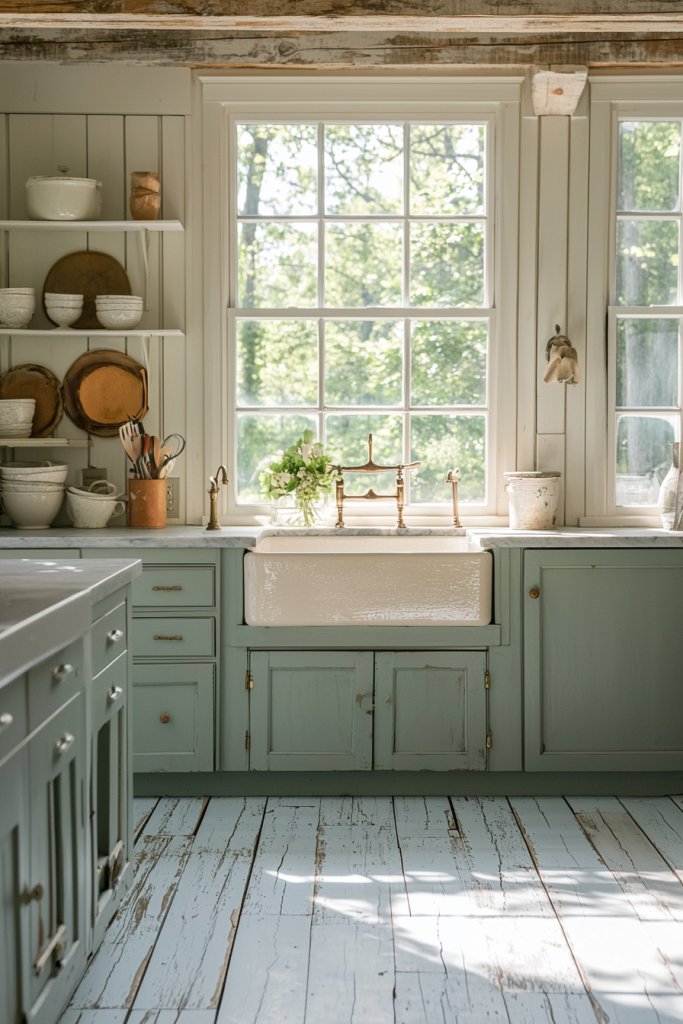
Painted wood floors inject personality and charm into a farmhouse kitchen, allowing you to introduce colour directly through the floor itself. Classic choices include crisp white, warm cream, and soft grey, all of which make the space feel bright, airy, and intentionally styled.
Use a porch and floor enamel paint for maximum durability, then apply two or three coats to build genuine resilience against foot traffic. Add a stencilled border or geometric pattern near the room’s perimeter to bring a handcrafted, artisan quality to the finished floor.
10. Concrete Kitchen Floors
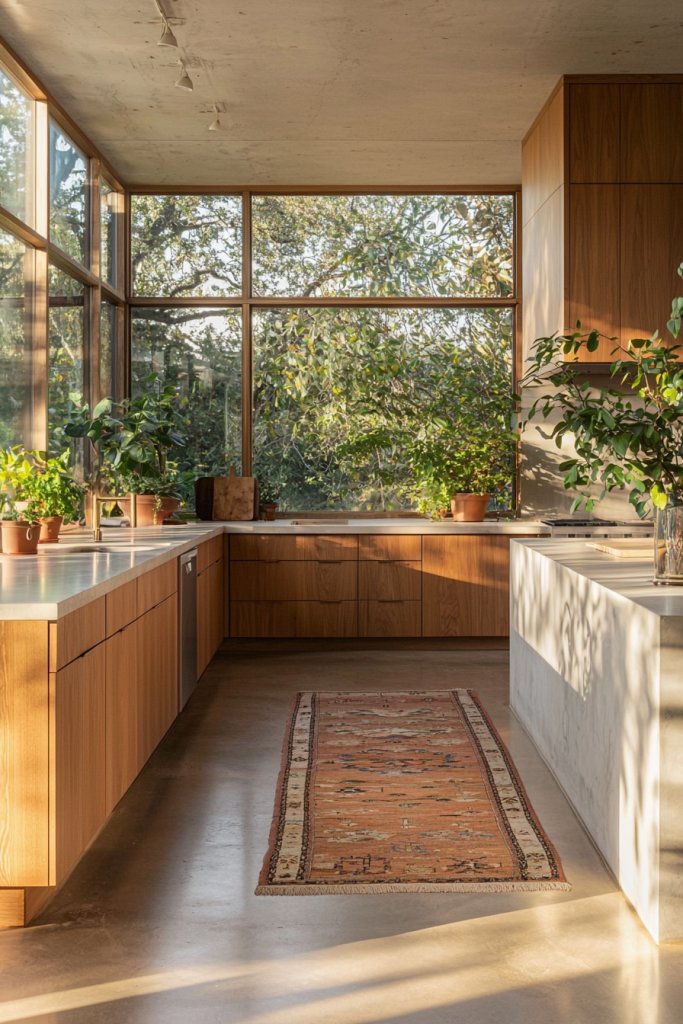
Concrete flooring brings an industrial edge to the farmhouse kitchen that balances beautifully against warm wooden furniture and soft textiles. Its smooth, neutral surface in shades of pale grey and warm putty creates a grounded, unpretentious backdrop for the whole room.
Polish the concrete to a low-sheen finish rather than a high gloss to keep the aesthetic feeling relaxed and genuinely farmhouse-appropriate. Add large woven rugs in natural jute or cotton to soften the hard surface and introduce warmth underfoot near the sink and cooking zones.
11. Hexagon Mosaic Tiles
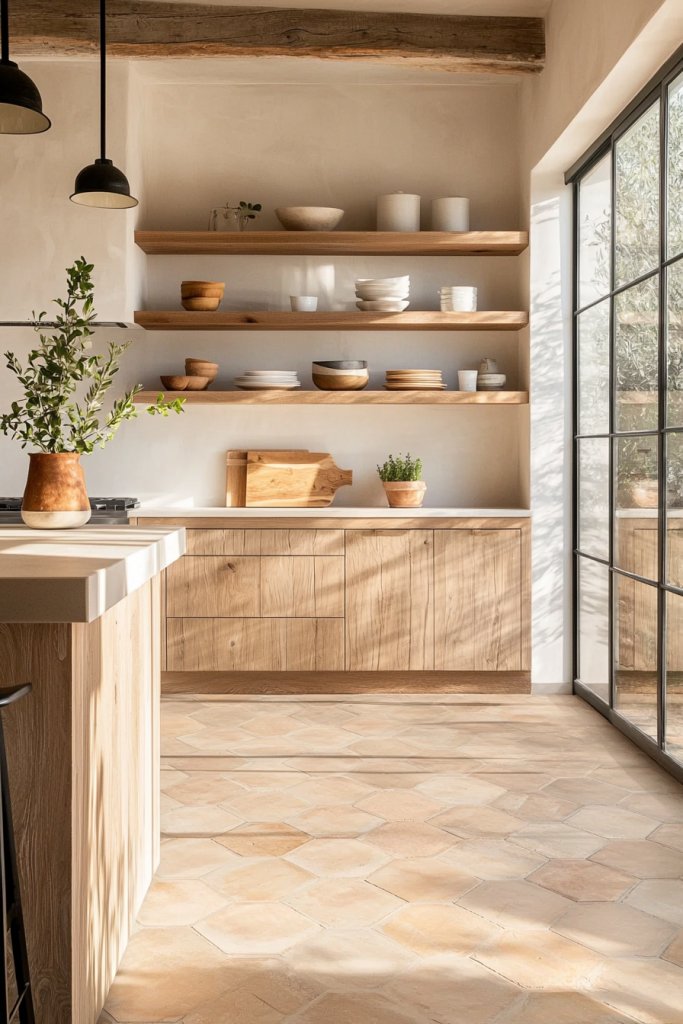
Hexagon mosaic tiles bring a vintage, geometric energy to a farmhouse kitchen floor that feels both playful and timeless. Small matte hex tiles in white, black, or warm stone tones create intricate surface patterning that draws the eye downward in the best possible way.
Use a warm grey or putty grout rather than bright white to give the mosaic floor a softer, more aged farmhouse quality. Keep the surrounding walls and cabinetry simple and neutral so the detailed tile floor becomes the clear focal point of the room.
12. Slate Kitchen Flooring
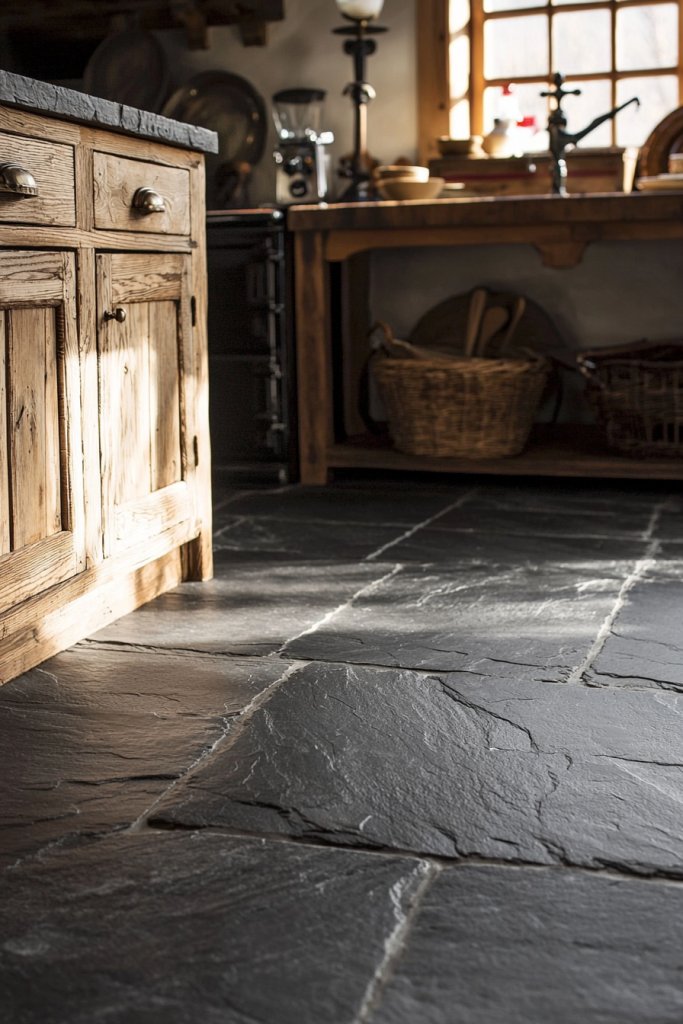
Slate flooring brings deep, moody colour and natural texture to a farmhouse kitchen, with tones ranging from charcoal and plum to warm brown and green. Its cleft surface creates tactile variation underfoot that feels genuinely organic and connected to the natural world.
Seal slate annually with a penetrating stone sealer to protect its porous surface from oil and moisture absorption in the kitchen environment. Pair dark slate floors with warm cream cabinetry and brass hardware to balance the depth and keep the space feeling welcoming.
13. Terrazzo Kitchen Floors
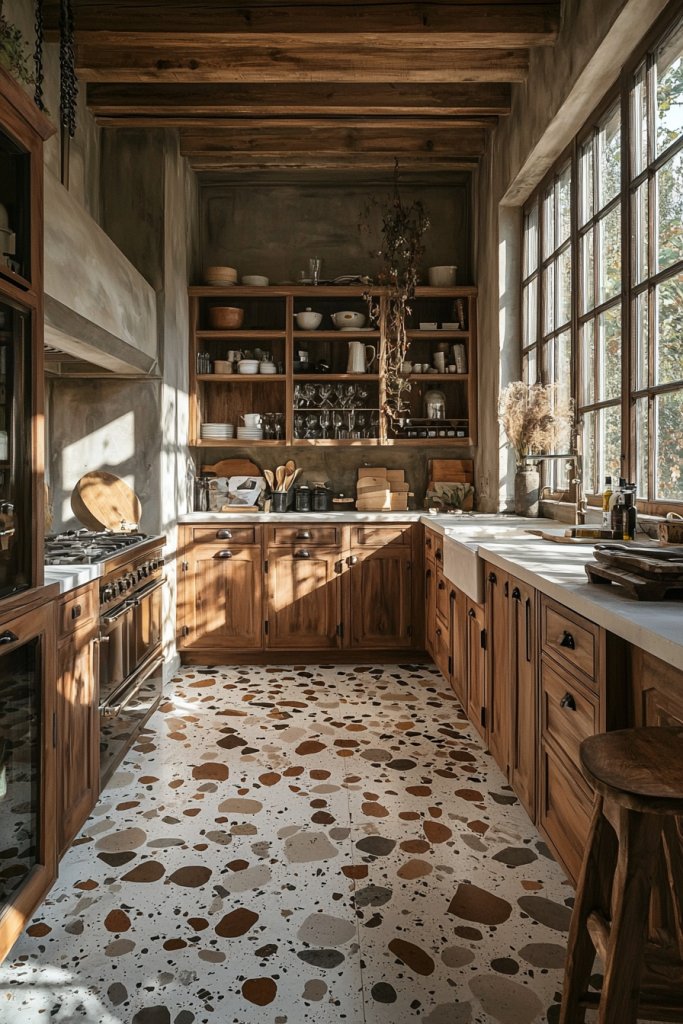
Terrazzo flooring adds a joyful, speckled surface to a farmhouse kitchen, with chips of stone, glass, and marble embedded in a smooth base. Warm terrazzo blends in cream, tan, terracotta, and soft grey create a floor that feels both artisanal and quietly sophisticated.
Choose a honed finish over a high-gloss polish to keep terrazzo feeling relaxed and appropriate for a casual farmhouse kitchen aesthetic. Introduce complementary colours from the terrazzo pattern into your cushions, ceramics, and textiles to tie the whole room together intentionally.
14. Engineered Wood Floors
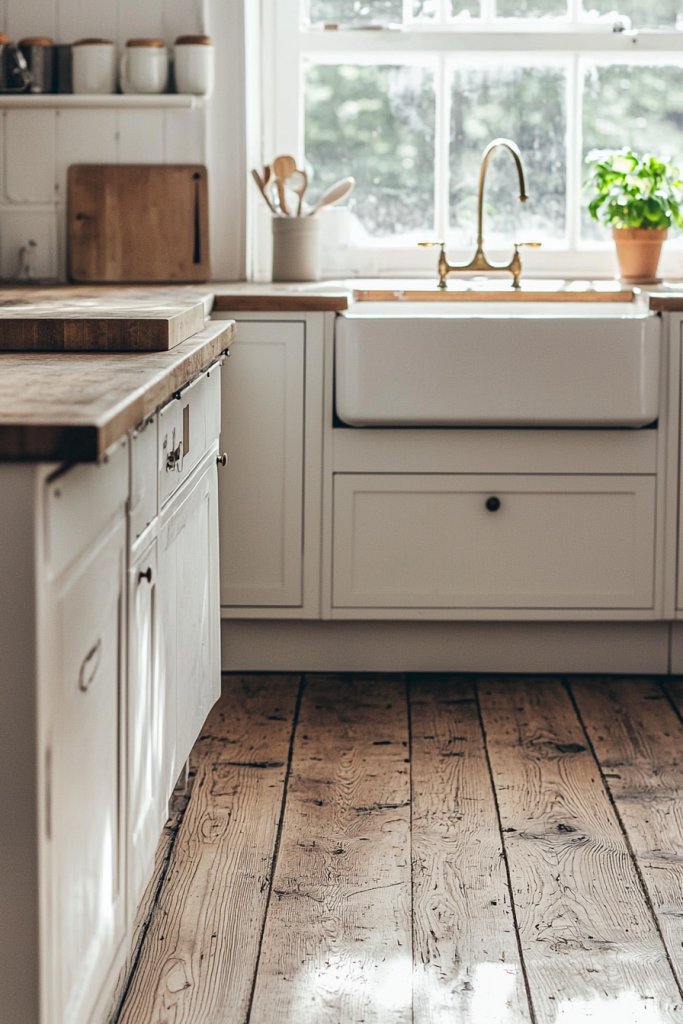
Engineered wood flooring delivers the authentic look of solid hardwood with significantly better resistance to kitchen humidity and temperature changes. Its layered construction provides real structural stability, and the top veneer shows genuine wood grain, knots, and natural colour variation.
Choose a wide-plank engineered oak or walnut in a brushed, matte finish to maximise the rustic farmhouse character of the floor. Engineered wood works beautifully with underfloor heating systems, making it a smart choice for kitchens where warmth underfoot matters.
15. Linoleum Country Floors
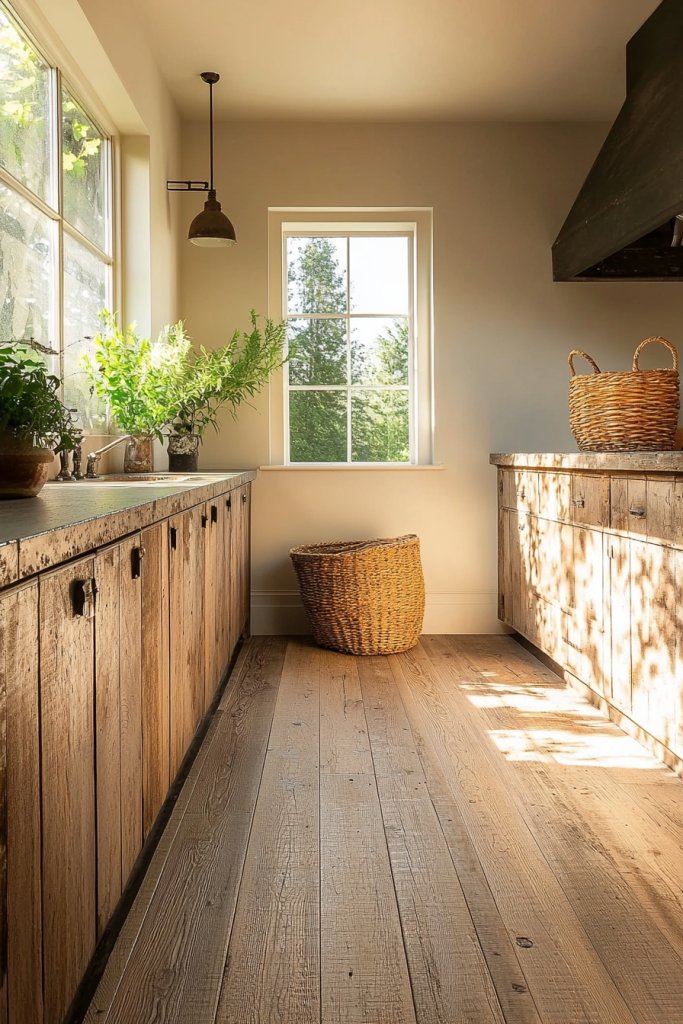
Country-style linoleum brings warm pattern and colour to a farmhouse kitchen floor in a format that feels refreshingly retro and unpretentious. Modern linoleum comes in earthy checks, simple florals, and stone-inspired designs that all read as charmingly rural and relaxed.
Select linoleum in a warm cream, terracotta, or sage green colourway to keep the floor rooted in a classic farmhouse colour story. Linoleum’s natural composition from linseed oil and wood flour makes it a genuinely sustainable choice for the environmentally conscious home decorator.
16. Stained Concrete Floors
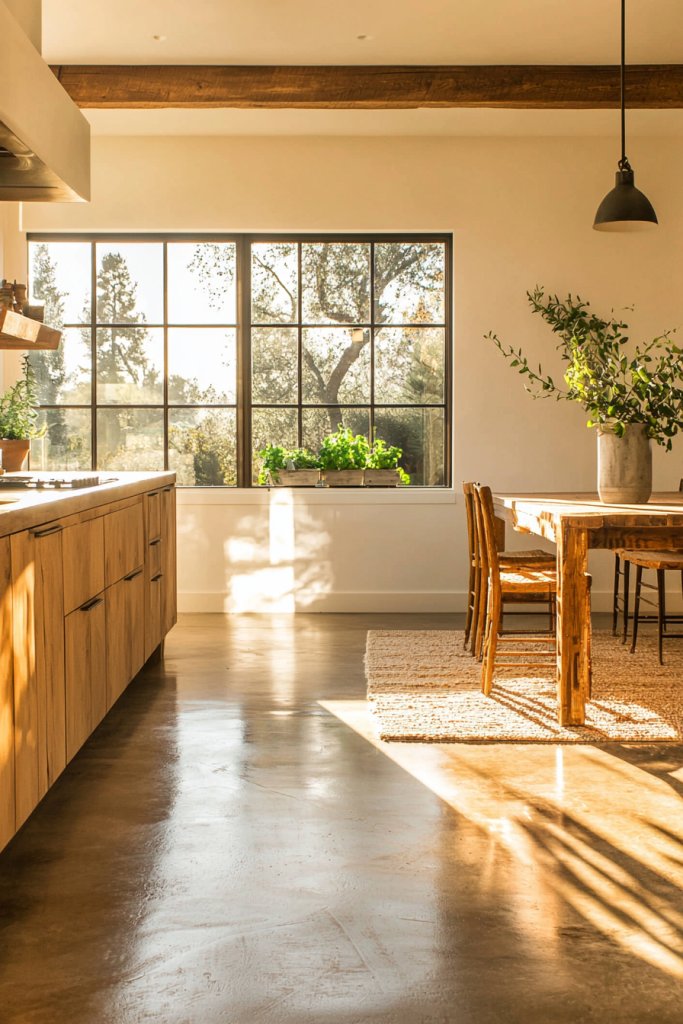
Stained concrete transforms an ordinary kitchen floor into a rich, colour-washed surface with subtle tonal depth that feels genuinely artisanal. Acid stains in amber, sienna, and walnut create mottled, earthy tones that complement the natural materials central to farmhouse style.
Apply a penetrating sealer after staining to lock in colour and protect the surface from the grease and moisture a working kitchen produces. Warm up a stained concrete floor with oversized jute rugs and wooden bar stools to prevent the space from feeling too industrial.
17. Stone Tile Floors
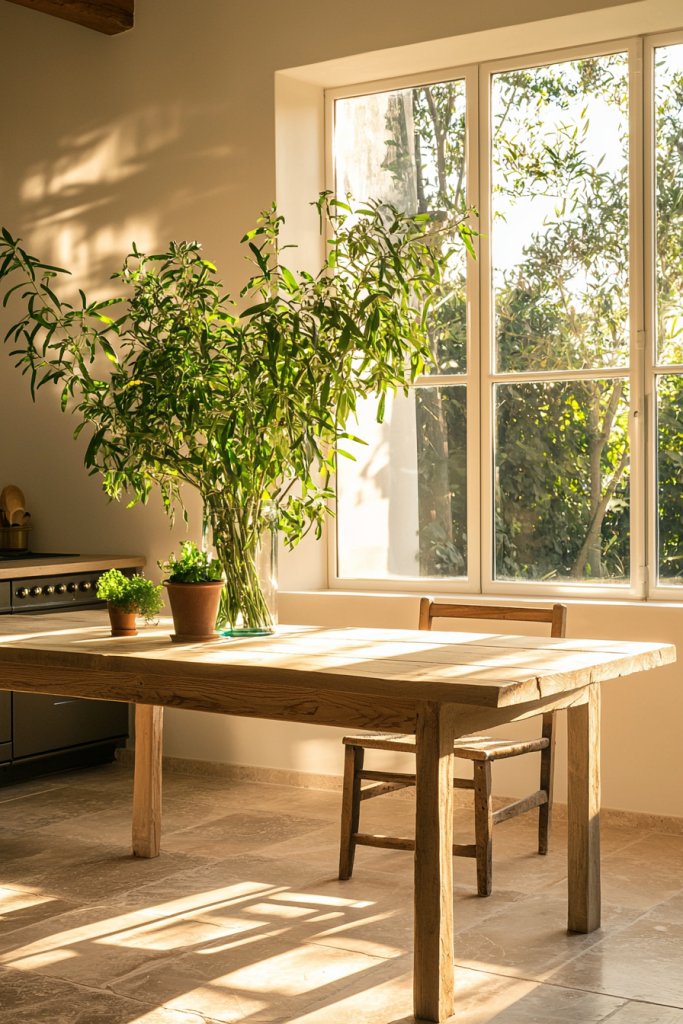
Natural stone tiles give a farmhouse kitchen a sense of permanence and quiet luxury, with each tile carrying its own unique veining, colour, and surface character. Limestone, travertine, and sandstone all work beautifully in this setting, offering warm, earthy tones that feel genuinely connected to nature.
Seal stone tiles before grouting and reseal them annually to protect the porous surface from kitchen spills and staining. Combine stone floors with wooden open shelving and hand-thrown ceramic dishware to create a kitchen that feels curated, warm, and deeply considered.
18. Herringbone Pattern Flooring
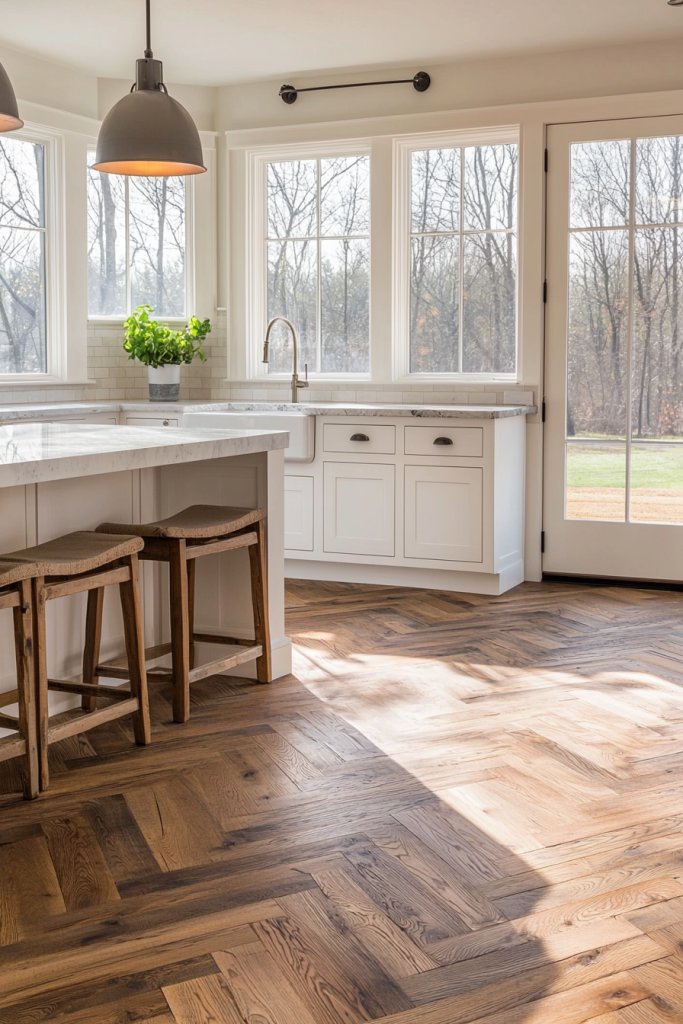
Herringbone pattern flooring introduces sophisticated geometric energy into a farmhouse kitchen while keeping the material choice warm and natural. Wood, engineered planks, or rectangular tiles laid in this classic zigzag arrangement create instant visual movement and a strong sense of craftsmanship.
Choose a warm oak or terracotta tile in a herringbone layout to keep the pattern feeling rooted in traditional farmhouse design rather than contemporary minimalism. Use a contrasting grout or wood stain between planks to make the herringbone geometry read clearly and confidently across the floor.
19. Whitewashed Wood Floors
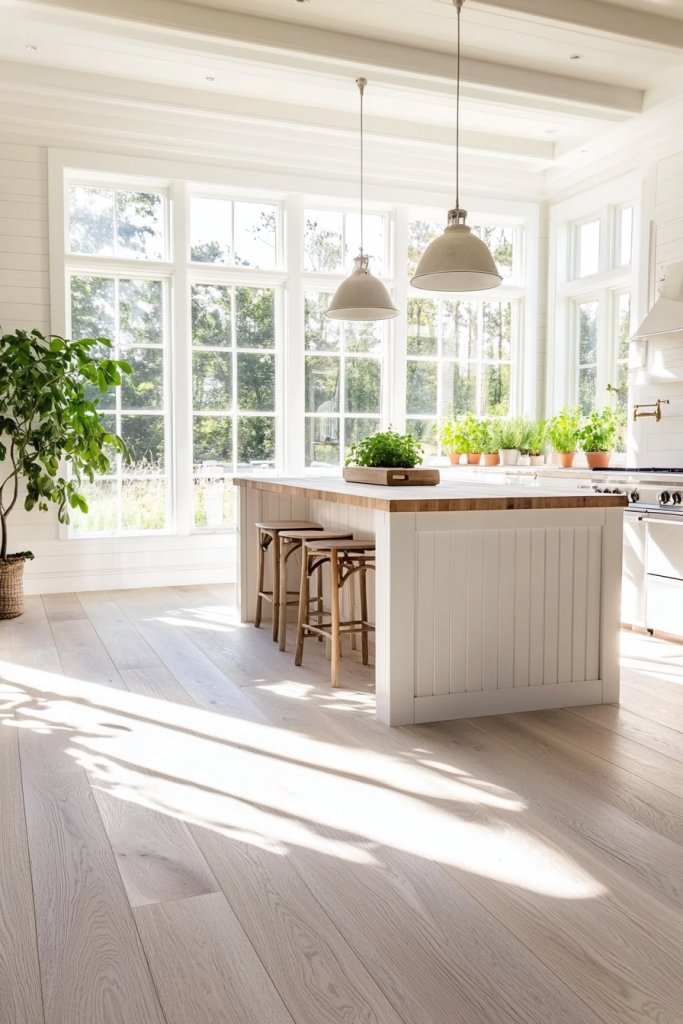
Whitewashed wood floors bring a light, sun-bleached quality to a farmhouse kitchen that feels effortlessly coastal and relaxed. The pale, limed finish softens the natural grain of the wood while maintaining its texture, creating a surface that feels both airy and genuinely organic.
Apply a white-pigmented hardwax oil to achieve a true whitewash effect that penetrates the grain rather than sitting on top as a thick coating. Pair whitewashed floors with navy, sage, or soft terracotta accents in your kitchen textiles to create beautiful colour contrast against the pale base.
20. Vintage-Inspired Tile Floors
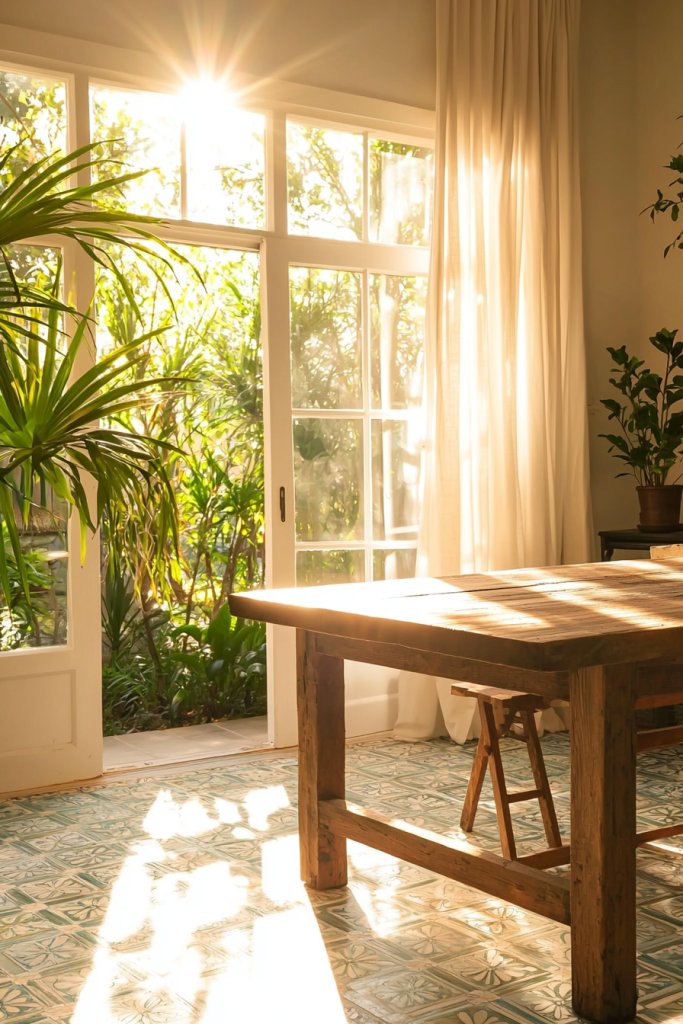
Vintage-inspired tiles fill a farmhouse kitchen floor with pattern, colour, and a sense of history that no plain material can replicate. Hand-painted Moroccan tiles, encaustic cement tiles, and patterned Victorian-style ceramics all bring extraordinary decorative richness to the floor plane.
Focus patterned vintage tiles in a defined zone, such as the central kitchen area, and frame them with a simple border tile to contain the design. Keep walls and cabinetry calm and neutral so the detailed tile floor commands full visual attention without overwhelming the whole room.
21. Faux Stone Vinyl
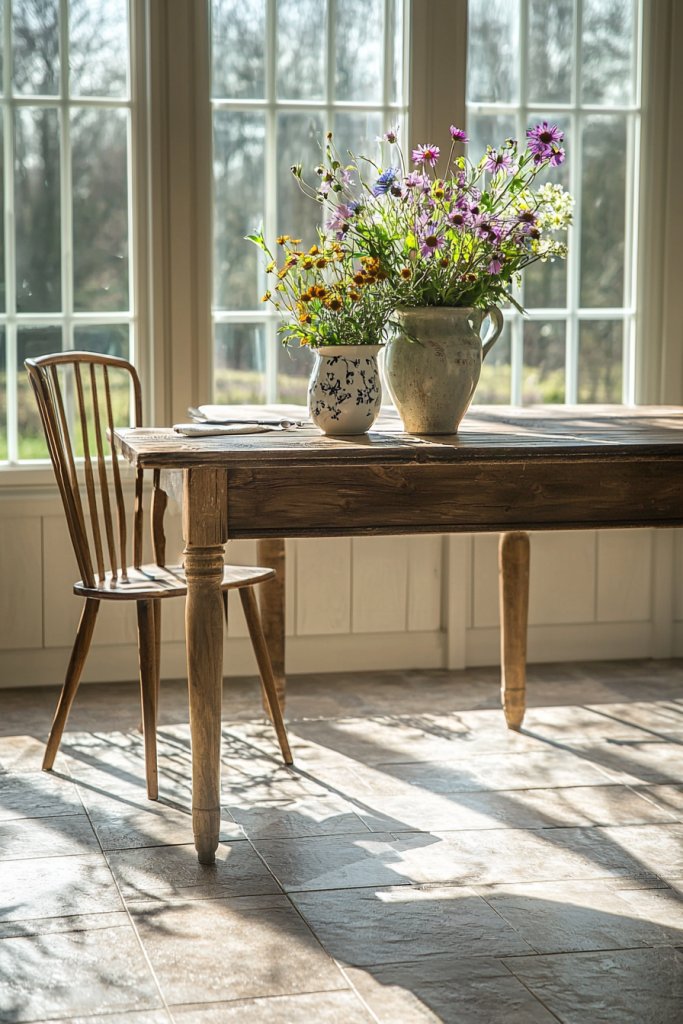
Faux stone vinyl flooring replicates the look of natural stone with impressive realism, offering the visual weight of slate or travertine without the cold, hard surface. Modern printing technology captures subtle colour variation, surface texture, and even the natural irregularities of real stone convincingly.
Choose a faux stone vinyl with a registered emboss finish, where the texture aligns precisely with the printed pattern, for the most realistic result. Its completely waterproof surface and cushioned underlayer make faux stone vinyl a highly practical farmhouse kitchen flooring choice for families.
22. Brick Paver Floors
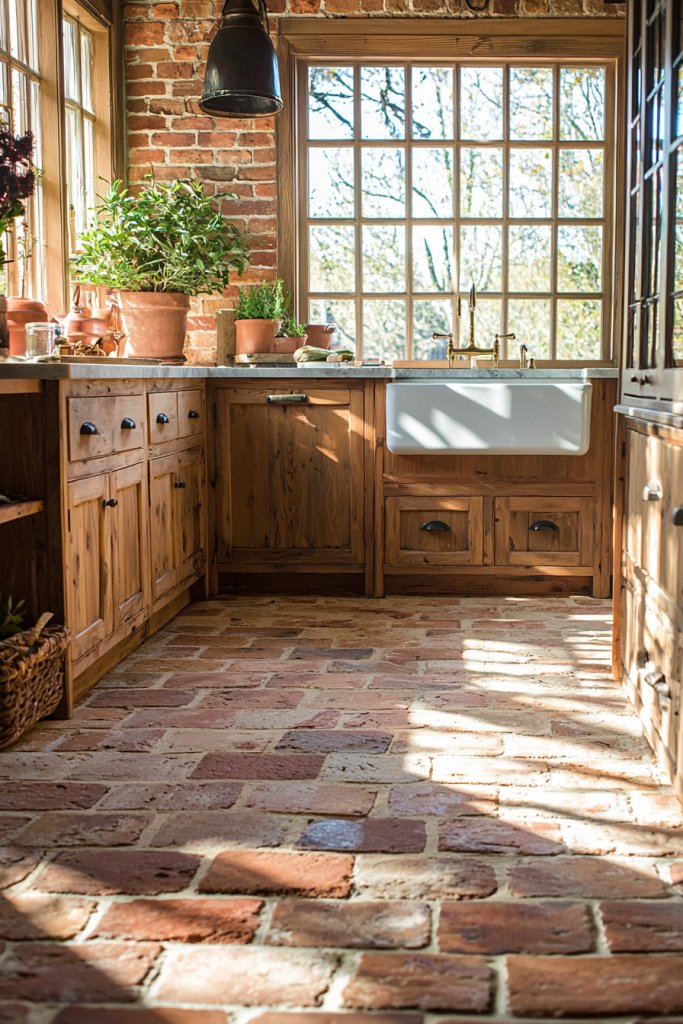
Brick pavers bring raw, rustic warmth to a farmhouse kitchen, with their rough surface and rich terracotta tones evoking old European farmhouses and country cottages. Their irregular edges and handmade quality create a floor that feels genuinely aged and full of honest character.
Seal brick pavers with a matte topical sealer to protect against kitchen grease and moisture while preserving their naturally earthy, unpolished appearance. Combine a brick paver floor with cream painted cabinetry and copper pendant lighting to create a richly layered farmhouse kitchen interior.
23. Parquet Wood Floors
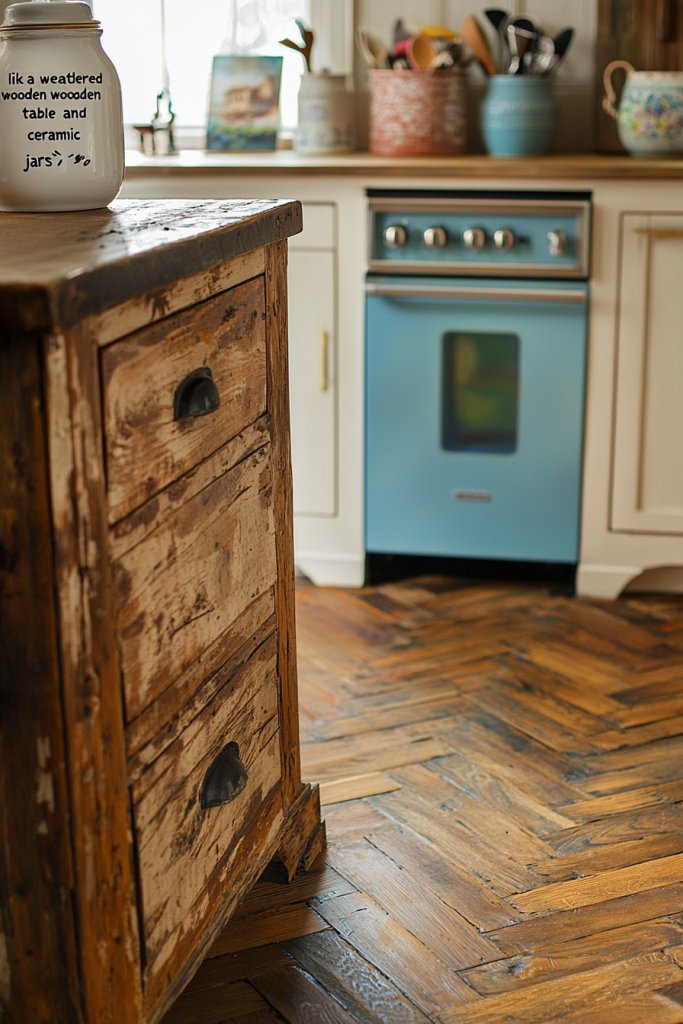
Parquet flooring brings geometric pattern and decorative warmth to a farmhouse kitchen through its intricate arrangement of small wooden blocks. The classic basket-weave and finger-block patterns feel both traditional and visually compelling, adding a layer of crafted detail directly into the floor.
Choose a warm oak or walnut parquet in a brushed and oiled finish to keep the floor feeling warm, natural, and farmhouse-appropriate. Restore or refresh existing parquet with a light sand and a fresh coat of hardwax oil to revive its colour and protect its patterned surface.
24. Natural Stone Floors
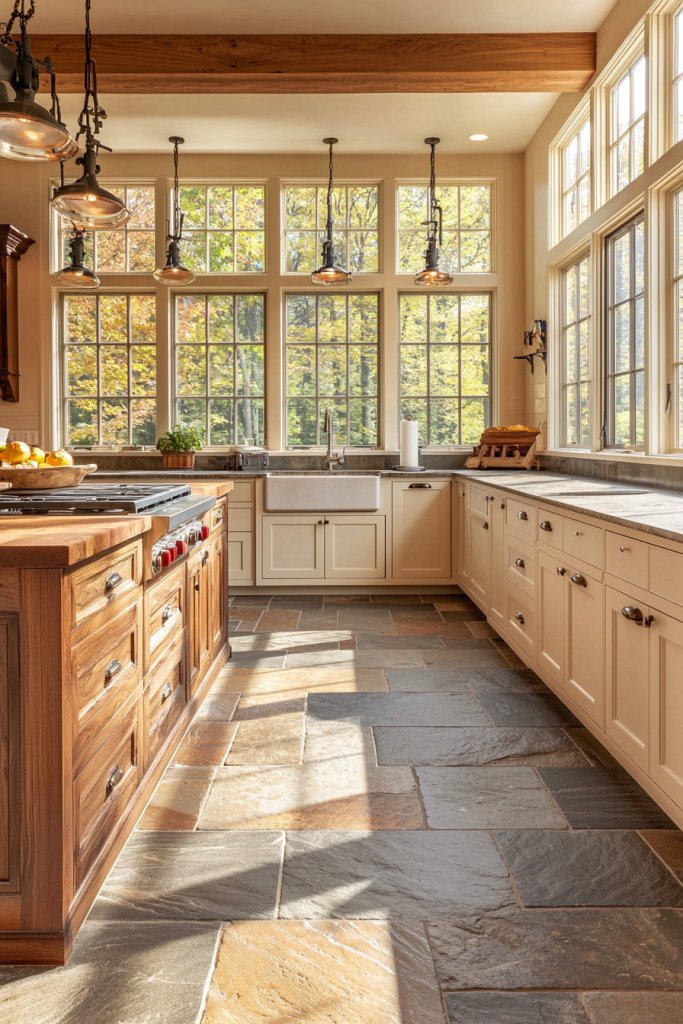
Natural stone flooring anchors a farmhouse kitchen with genuine geological beauty, bringing unique veining, colour depth, and surface texture that no manufactured material fully replicates. Marble, granite, limestone, and travertine each offer a distinct personality, from quiet and earthy to bold and dramatically patterned.
Select a honed or brushed finish rather than a polished one to keep natural stone feeling relaxed and grounded in farmhouse style. Warm the room around a stone floor with wooden furniture, woven baskets, and soft pendant lighting in aged brass or antique bronze finishes.
25. Subway Tile Kitchen Floor
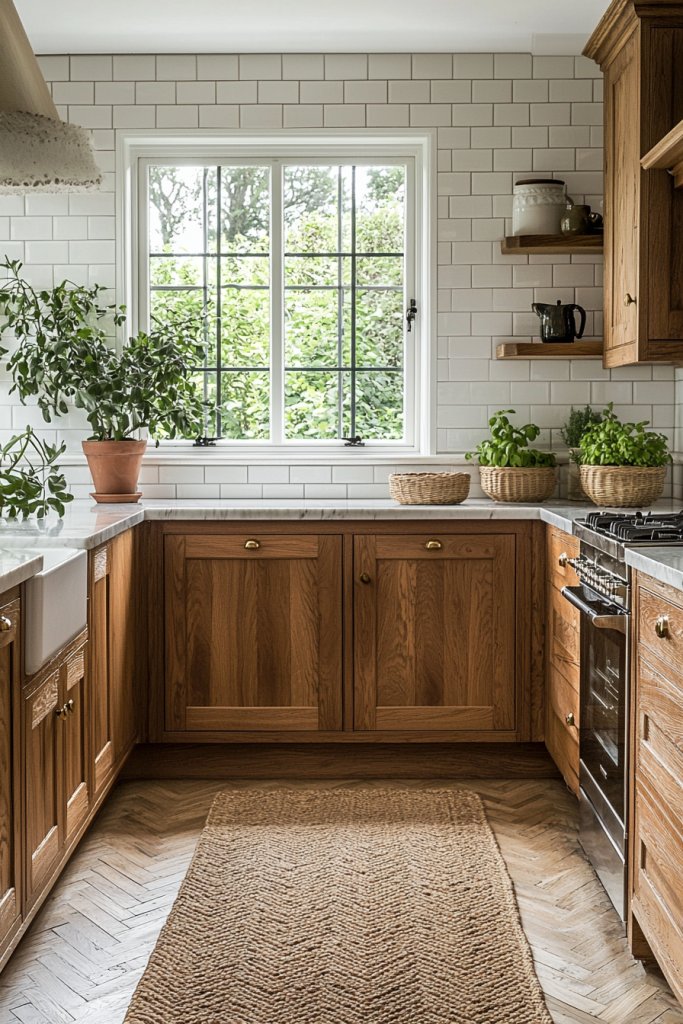
Subway tiles on the kitchen floor bring a clean, classic quality to the farmhouse aesthetic, with their simple rectangular form and glossy or matte surface creating a bright, timeless base. White, cream, and soft grey subway tiles all work beautifully, reflecting light and making the kitchen feel open and crisply styled.
Lay subway tiles in a classic brick-bond pattern or a more graphic stacked arrangement to vary the visual energy of the floor. Use a slightly contrasting grout in warm grey or putty to define each tile clearly and add a layer of subtle pattern to the finished floor.
Choose the farmhouse kitchen floor that matches both your lifestyle and your decorating vision, then build the rest of your interior outward from that foundation. Once your floor is decided, explore complementary wall colours, cabinet finishes, and lighting styles to complete your rustic kitchen transformation.

I’m Sumayya and I love turning ordinary spaces into ones you’ll never want to leave. Whether it’s cozy cottagecore corners, bold maximalist magic, or sleek modern minimalism, I’m here to help you discover your style and bring it to life without spending a fortune. Ready to refresh your space? Let’s make it happen!