
22 Montessori Bedroom Ideas That Support Independence and Feel Beautifully Calm

A Montessori bedroom gives children the tools to build confidence, independence, and calm through intentional design. Every furniture choice, color decision, and storage solution works together to create a space where children genuinely thrive.
Montessori-inspired interiors prioritize accessibility, simplicity, and respect for a child’s natural pace of development. Designers and parents alike choose this approach because it makes daily routines smoother and rooms more visually peaceful.
The core principle centers on child-height everything, from shelves and hooks to mirrors and light switches. When children can reach and manage their own space, they develop responsibility and self-reliance naturally through their environment.
1. Low Open Shelves for Kids
Open shelves painted in soft, muted tones sit perfectly at a child’s eye level, holding woven baskets and wooden trays filled with toys and folded clothing. The mix of textures, smooth wood against natural linen baskets, adds visual warmth and makes the entire storage wall feel intentional and inviting.
Choose sturdy shelving units with rounded edges and secure them into wall studs for safety. Organize items into clear categories and add picture labels so your child can find and return belongings without adult help, building genuine tidying habits over time.
2. Floor Bed for Child Independence

A floor bed sits directly on a soft area rug, keeping the sleeping surface low, safe, and completely accessible to your child at any hour. The bed frame, often simple wood in a natural finish, anchors the room visually while keeping the overall aesthetic clean and grounded.
Place the bed against one wall to define the sleeping zone and leave open floor space for morning movement. Add a fitted sheet in a soft, neutral linen and layer a lightweight cotton quilt to keep the styling minimal and the sleep environment genuinely cozy.
3. Open Wardrobe Kids’ Clothing

A child-size open wardrobe displays clothing on a low hanging rail, allowing your child to see every outfit and make independent dressing choices each morning. Folded items sit on accessible shelves below the rail, organized by category so the entire wardrobe functions as a visual, easy-to-navigate system.
Keep only the current season’s clothing inside to prevent overwhelming visual clutter and help your child make faster decisions. Use slim wooden or velvet hangers in a consistent color to create a tidy, cohesive look that feels calm rather than chaotic.
4. Clutter-Free Surfaces for Focus
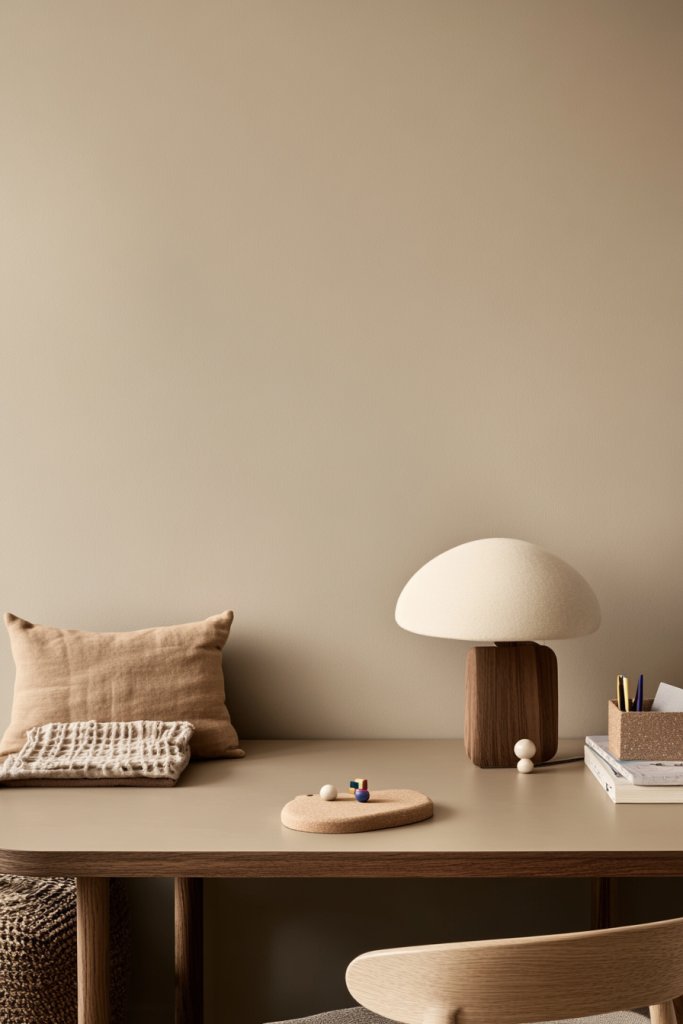
Minimalist surfaces in a Montessori bedroom feature only one or two intentional objects, such as a small plant or a single framed print, keeping the room visually quiet and mentally calming. Clear tabletops and uncluttered shelves allow the eye to rest and help children focus on one activity at a time.
Rotate decorative objects and toys seasonally rather than displaying everything at once to maintain that clean, purposeful aesthetic. A weekly reset routine where your child puts surfaces back in order reinforces both tidiness and a genuine sense of pride in their space.
5. Low Mirror for Self-Awareness

A full-length mirror mounted low on the wall, with its bottom edge just above the baseboard, allows children to observe themselves at eye level during dressing, grooming, and imaginative play. A simple wooden frame in a natural or white finish keeps the mirror looking intentional and elegant within the room’s overall palette.
Position the mirror near the wardrobe or dressing area to create a functional grooming station your child uses independently each morning. Secure the mirror flush against the wall using appropriate wall anchors and avoid propping it to keep the installation completely safe.
6. Daily Skills Practice Station
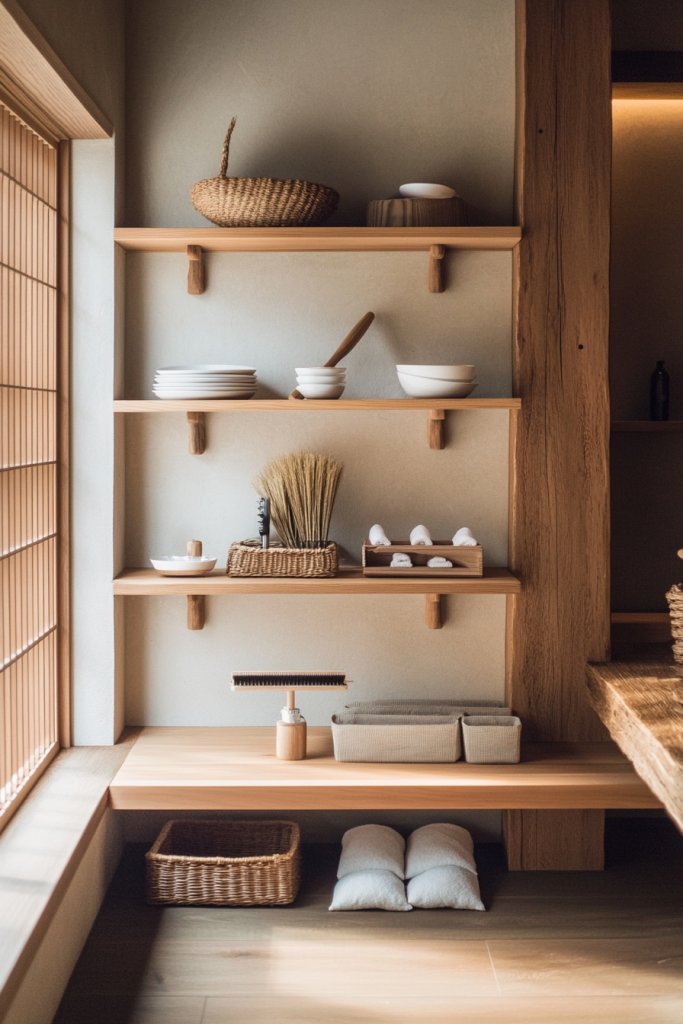
A practical life station occupies a small corner of the room with a low table holding a few purposeful items, such as a button-up dressing frame, a small brush set, or a simple folding activity. The station uses natural materials like wood and cotton, keeping the visual style consistent with the rest of the room’s warm, minimal aesthetic.
Rotate the activities on the station every couple of weeks to match your child’s current developmental interests and maintain genuine engagement. Keep the table surface clear except for the active activity so your child approaches it with focus rather than distraction.
7. Sensory Wall Panels for Exploration

Sensory wall panels combine materials like cork, felt, smooth wood, and woven fabric arranged in a grid or gallery-style layout at child height, creating a tactile feature wall that invites curious hands. The mix of textures adds visual depth and warmth to the room while giving the wall a purposeful, designed quality.
Mount panels securely using appropriate wall fixings and keep the overall color palette cohesive by choosing textures in warm neutrals or soft earth tones. Swap individual panels as your child grows to introduce new materials and keep the sensory experience fresh and genuinely stimulating.
8. Child-Height Lamps and Switches
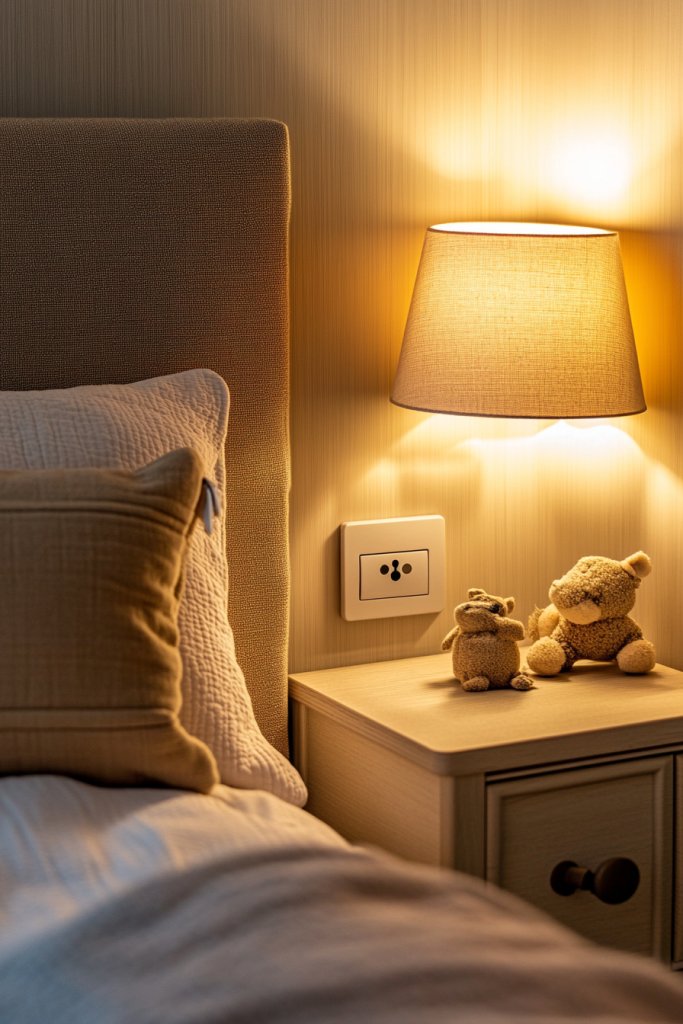
A small table lamp placed on a low nightstand or a clip-on light positioned at a reachable height gives children the power to control their own lighting independently throughout the day and evening. Choosing a lamp with a warm-toned bulb and a simple ceramic or wooden base keeps the styling refined and consistent with a Montessori interior.
Install a rocker-style light switch at your child’s shoulder height to complement the lamp and complete the independent lighting setup. Choose switch plates in white or soft grey to blend seamlessly with the wall color and maintain a clean, uncluttered look.
9. Child’s Creative Art Corner
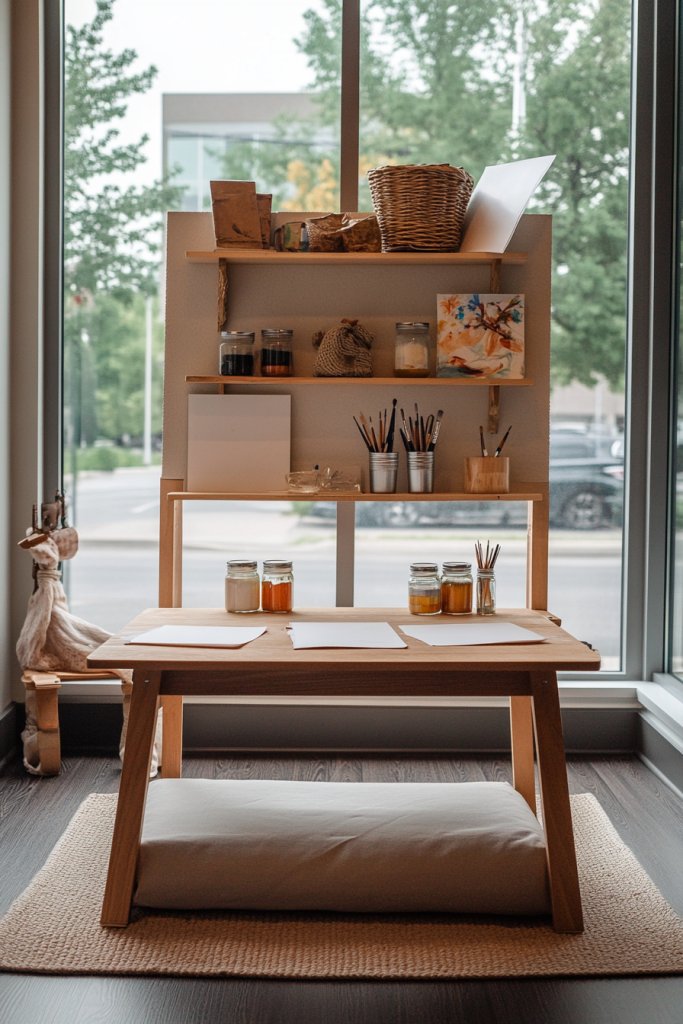
A dedicated art corner features a low wall-mounted rail holding rolls of paper, a small cup of crayons on the shelf below, and a simple wooden easel angled toward natural light. The supplies stay visible and accessible so your child initiates creative sessions without asking for adult setup help.
Keep the art corner tidy by limiting supplies to a curated selection and storing extras in a labeled drawer or basket nearby. Use a washable paint on the surrounding wall section or hang a large piece of craft paper to protect the surface and add a playful, functional design detail.
10. Low Hooks for Kids’ Belongings
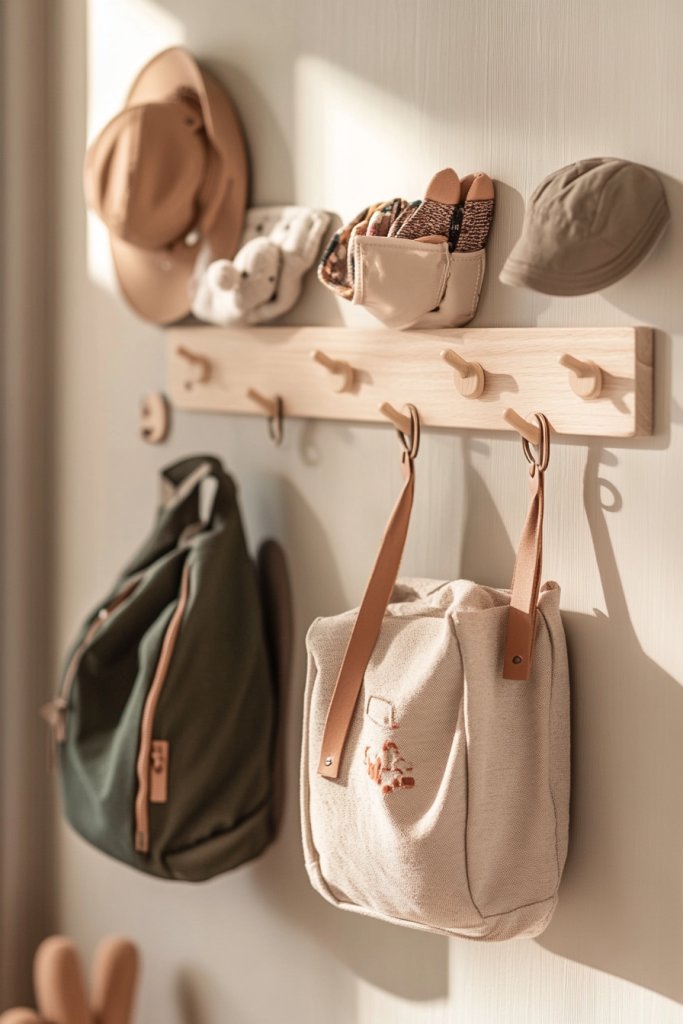
A row of low wall hooks installed at a child’s shoulder height creates a dedicated spot for backpacks, jackets, hats, and dress-up accessories right inside the bedroom door. Choosing hooks in natural wood or simple matte metal keeps the installation looking refined and intentional within the room’s overall design.
Space hooks evenly and leave enough wall room between each one so items hang without overlapping, making it easy for your child to grab and return things independently. Add a small label or picture below each hook to assign specific items and reinforce consistent organization habits.
11. Cozy Reading Nook Corner
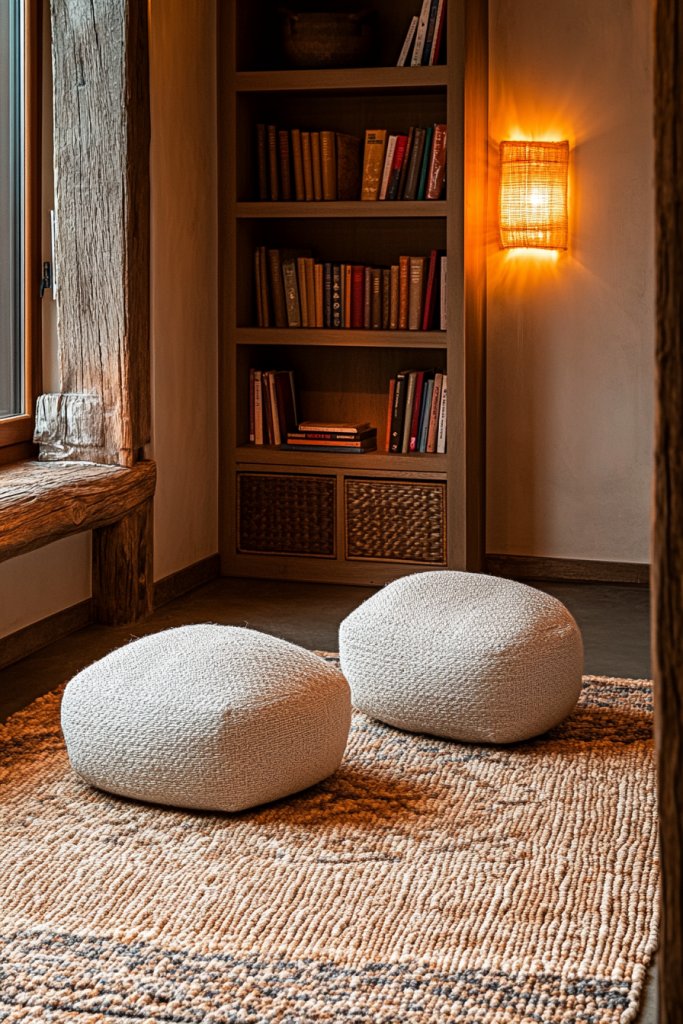
A reading nook tucks into a corner with a floor cushion in a soft boucle or cotton fabric, a low bookshelf displaying books face-out, and a small warm-toned lamp creating an inviting pool of light. The enclosed feeling of the nook, created with a simple canopy or a low shelf overhead, gives children a genuine sense of personal ownership over that space.
Keep the book selection rotating by displaying only eight to ten titles at a time and storing the rest in a basket nearby to swap weekly. Choose cushion covers and a small blanket in the room’s existing neutral palette so the nook feels like a natural, cohesive extension of the entire room.
12. Neutral Color Palette for Calm
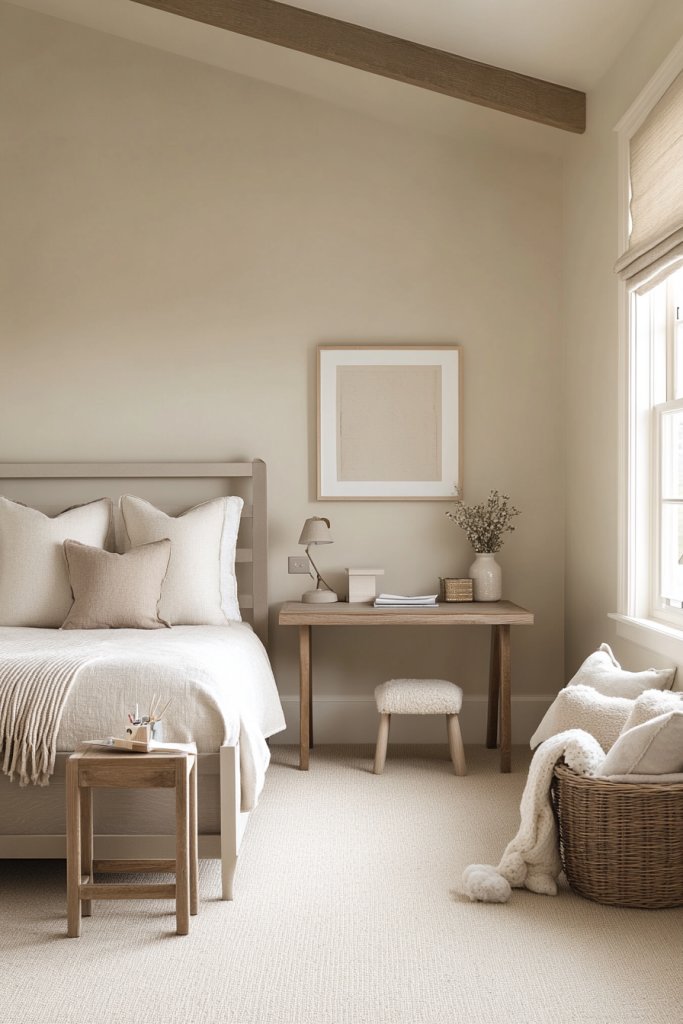
A Montessori bedroom uses a soft, neutral color palette of warm whites, gentle taupes, and muted sage greens across walls, furniture, and textiles to create a visually calm and focused environment. The restrained use of color lets natural materials like wood grain and woven textures take center stage and add depth without visual noise.
Paint all four walls in the same soft neutral and introduce color only through small, intentional accents like a terracotta pot or a dusty blue cushion. This approach keeps the room feeling cohesive and calm as your child grows, requiring only minor updates rather than full redecorating.
13. Modular Furniture for Growing Kids
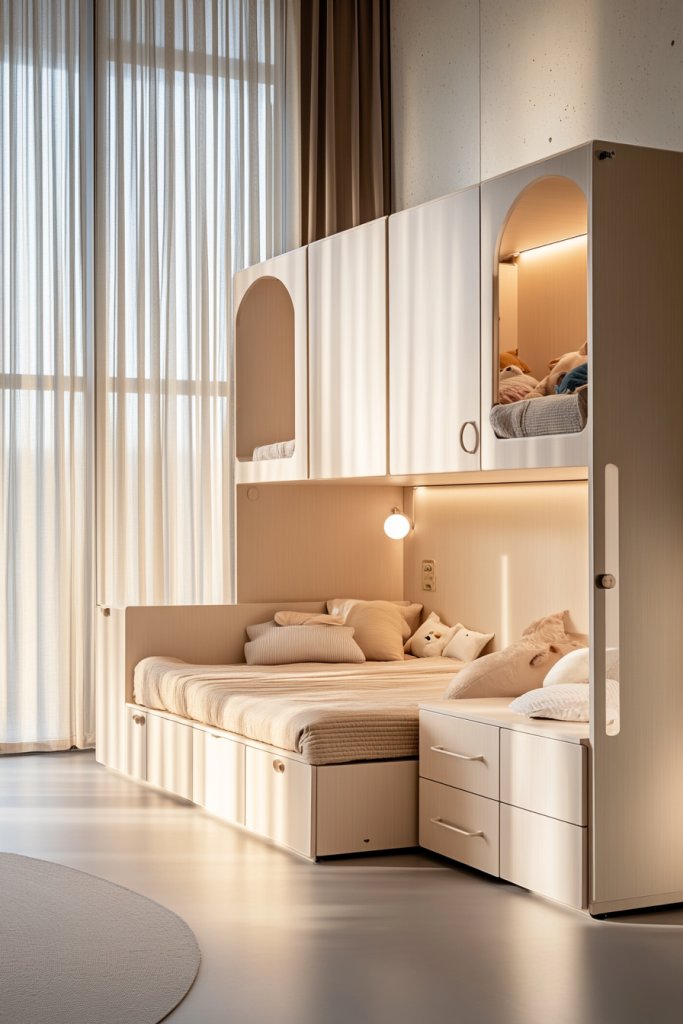
Modular furniture systems use stackable shelves, convertible desks, and adjustable-height components that parents rearrange as the child’s needs shift through different developmental stages. The clean, boxy silhouettes of most modular pieces suit a Montessori aesthetic perfectly, keeping the room looking intentional and uncluttered at every configuration.
Choose a modular system in a single natural wood finish so every combination looks cohesive rather than mismatched. Start with a basic shelf and desk configuration and add components gradually so the room grows with your child without requiring a complete furniture overhaul.
14. Visual Labels for Room Organization

Clear labels combining a simple picture and a printed word attach to baskets, drawer fronts, and shelf edges, turning every storage surface into a self-explanatory organizational system your child navigates independently. Using a consistent label style in one font and one color keeps the room looking intentional rather than cluttered with mismatched signage.
Print labels on kraft paper or white card stock and attach them with a small wooden clip or washi tape to keep them easy to update as the room evolves. Involve your child in creating the labels so they feel genuine ownership of the system and stay motivated to maintain it.
15. Accessible Night Light Setup
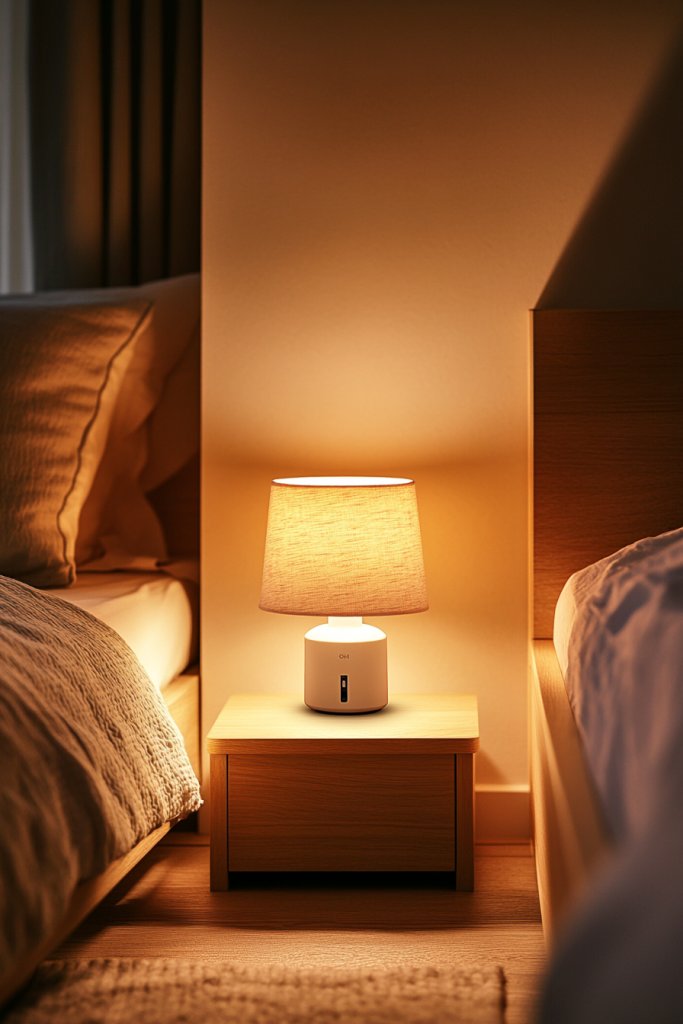
A plug-in night light with a warm amber glow sits in a low outlet near the bedroom door or bed, casting enough gentle light for your child to move safely through the room during nighttime hours. Choosing a night light in a simple geometric or animal shape adds a quiet decorative detail without disrupting the room’s minimal, calm aesthetic.
Position the night light so it illuminates the path between the bed and the door without shining directly into the sleeping area and disturbing rest. Look for a model with an automatic dusk-to-dawn sensor so your child never needs to manage it, keeping the nighttime routine genuinely simple.
16. Child-Operated Window Blinds
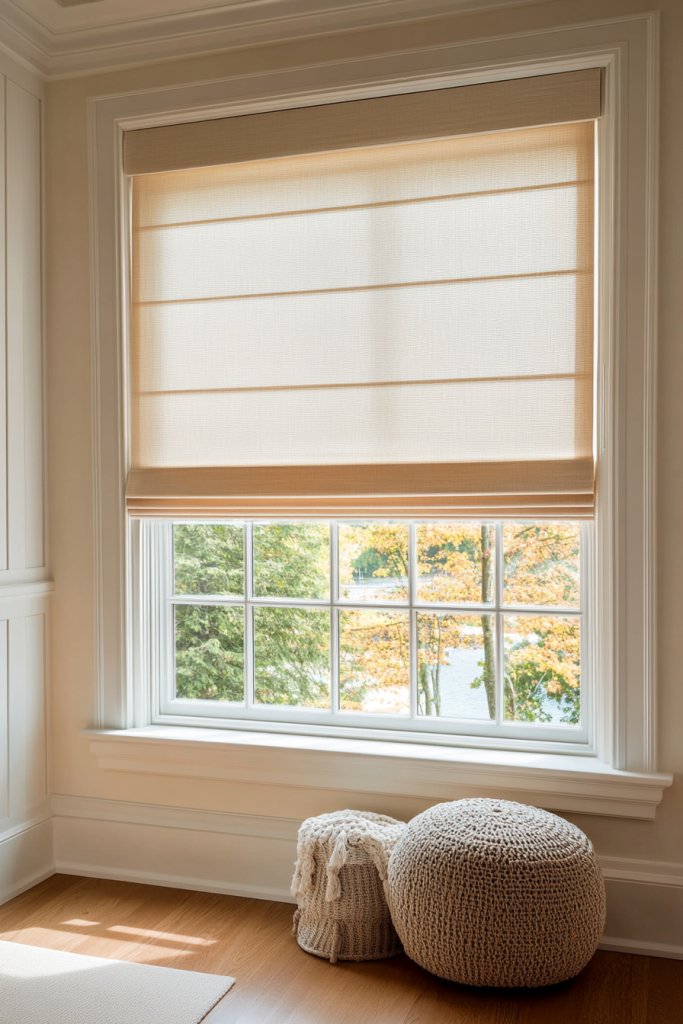
Cordless roller blinds or simple tab-top curtains in a soft linen or cotton fabric give children the ability to open and close their own window coverings independently throughout the day. The fabric choice matters as much as the function, so selecting a textured natural weave in a warm neutral keeps the window treatment looking refined and cohesive within the room.
Install cordless blinds at a height where the bottom hem sits within easy reach of your child’s outstretched hand. Pair the blind with a lightweight sheer curtain panel to diffuse harsh afternoon light while still allowing your child full control over their own privacy and daylight.
17. Personal Growth Display Wall
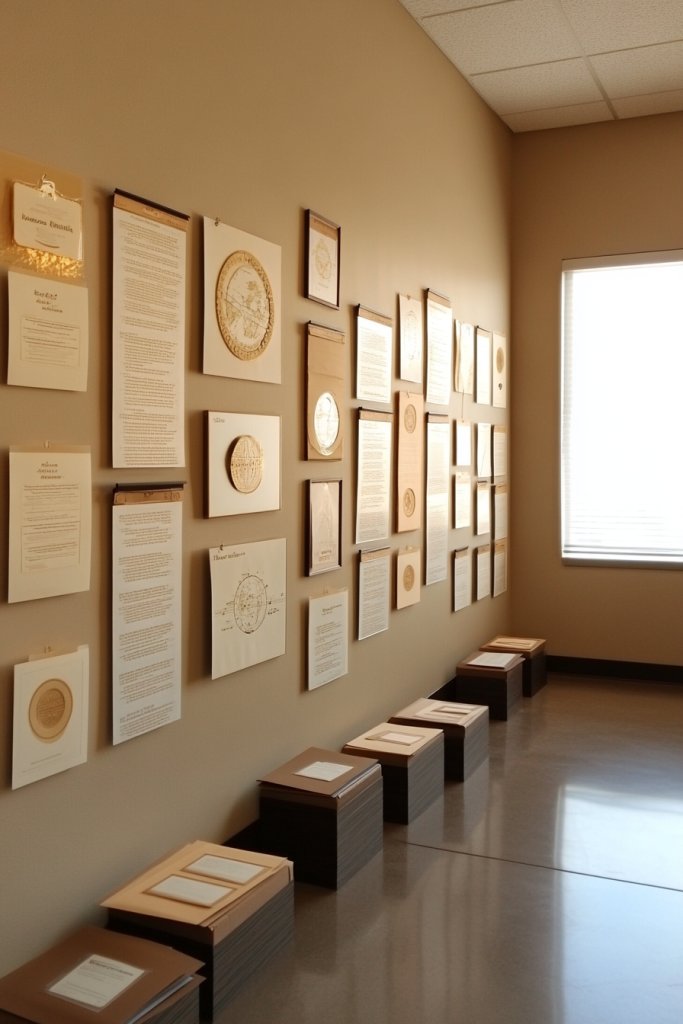
A growth display wall uses a low-mounted corkboard or a simple gallery rail to showcase your child’s drawings, achievement certificates, and personal goal cards in a curated, rotating display. The wall becomes a genuine design feature when you use matching frames or a single consistent pinboard style rather than mixing different display methods.
Keep the display current by swapping items monthly so the wall always reflects your child’s most recent progress and interests. Hang the display at your child’s eye level so they interact with it directly, reading their goals and celebrating their achievements independently without adult prompting.
18. Child-Size Desk for Independent Work
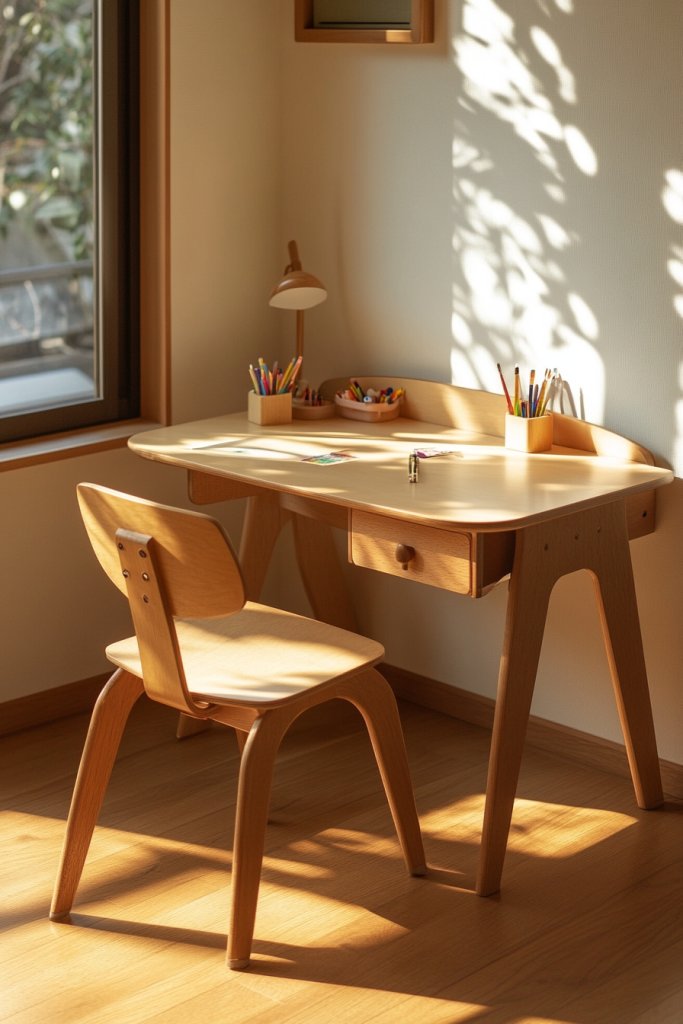
A child-size desk with a smooth wooden surface and a simple chair in a matching finish creates a dedicated, purposeful work zone that signals to your child that this spot belongs to them for drawing, writing, and independent projects. Keeping the desktop clear except for one active project maintains the Montessori principle of uncluttered, focused work surfaces.
Position the desk near the room’s primary window to maximize natural light during daytime work sessions and reduce eye strain. Choose a chair with a solid seat and a back that supports good posture, selecting one in the same wood tone as the desk for a cohesive, intentional look.
19. Maximizing Natural Bedroom Light
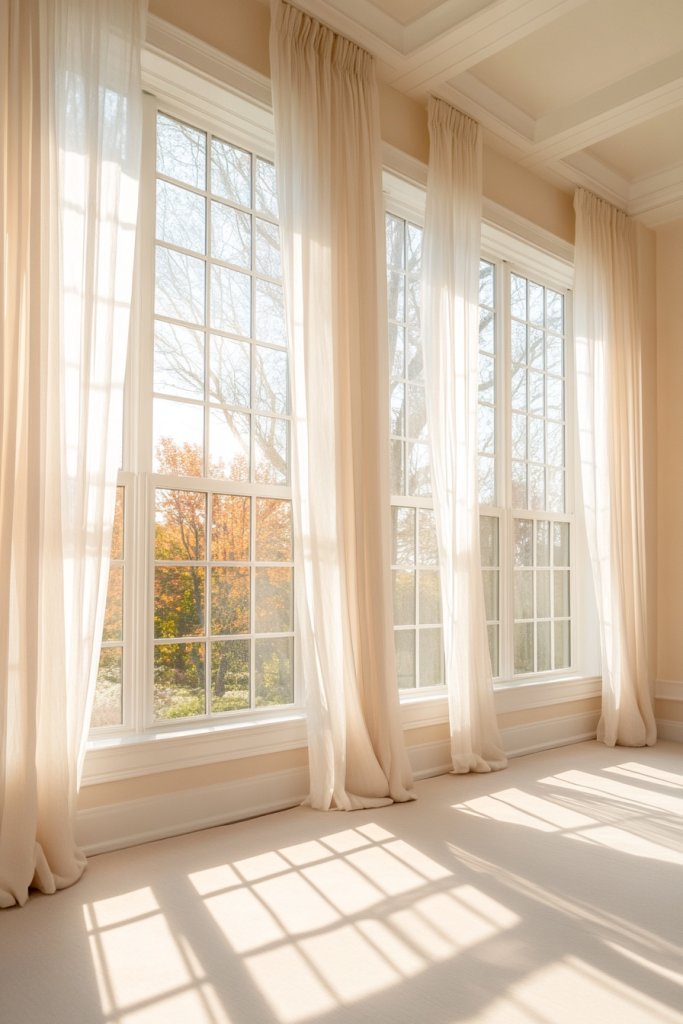
Positioning a child’s primary activity areas, including the desk, reading nook, and art corner, along the wall closest to the window ensures these spaces receive the best natural light throughout the day. Light-colored walls in warm white or soft cream reflect incoming daylight deeper into the room, making even smaller bedrooms feel genuinely bright and open.
Keep window sills completely clear of furniture and decorative objects to allow maximum light entry and maintain clean sightlines through the glass. Use a sheer curtain panel rather than heavy drapes to filter harsh direct sun while still flooding the room with that soft, warm natural glow.
20. Clear Pathways for Safe Movement

Open floor pathways running between the bed, desk, and door allow children to move freely through their bedroom, supporting physical confidence and safe navigation during both daytime play and nighttime routines. Arranging furniture against the walls rather than in the center of the room preserves this open floor plan and gives the space a clean, intentional visual flow.
Place a soft area rug in the center of the cleared floor space to define the movement zone and add warmth underfoot. Choose a low-pile rug in a simple geometric pattern or solid neutral so it grounds the room’s aesthetic without adding visual clutter to the open space.
21. Child-Managed Laundry Area
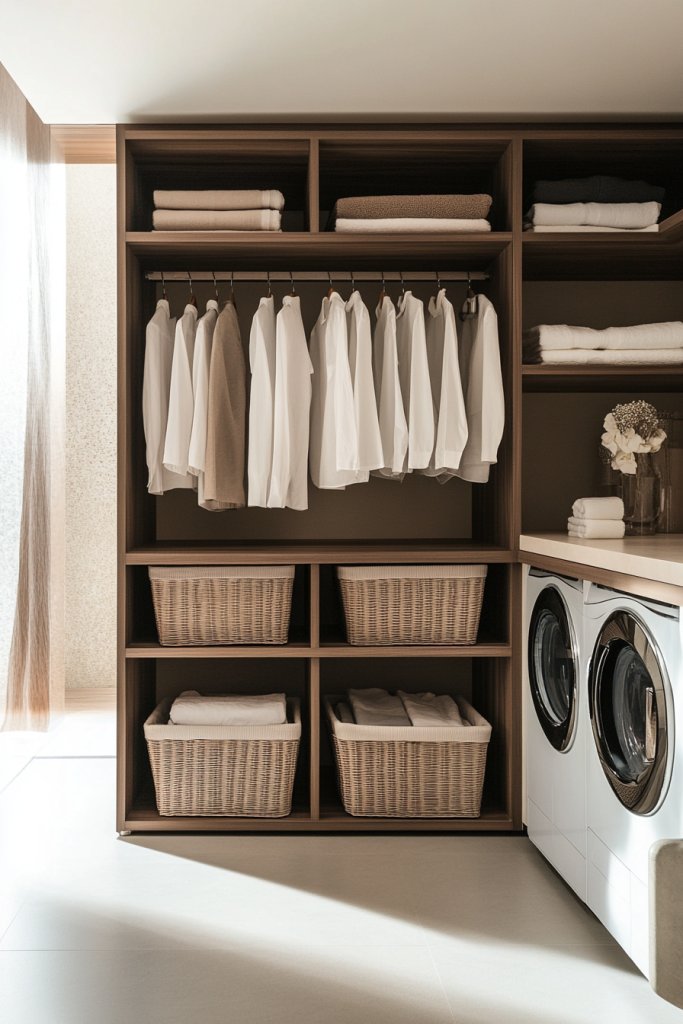
A small laundry area within the bedroom uses a low hamper with a wide opening and a simple folding surface at child height, giving your child full responsibility over managing their own dirty clothing and basic folding tasks. Choosing a hamper in a woven seagrass or natural cotton material keeps this functional zone looking warm and considered within the room’s overall styling.
Place the hamper in an accessible corner near the wardrobe so dropping in worn clothing becomes a natural part of your child’s undressing routine. Add a simple folded-laundry basket on the shelf above so clean, folded items have a clear designated landing spot before your child puts them away.
22. Zoned Space for Rest and Play
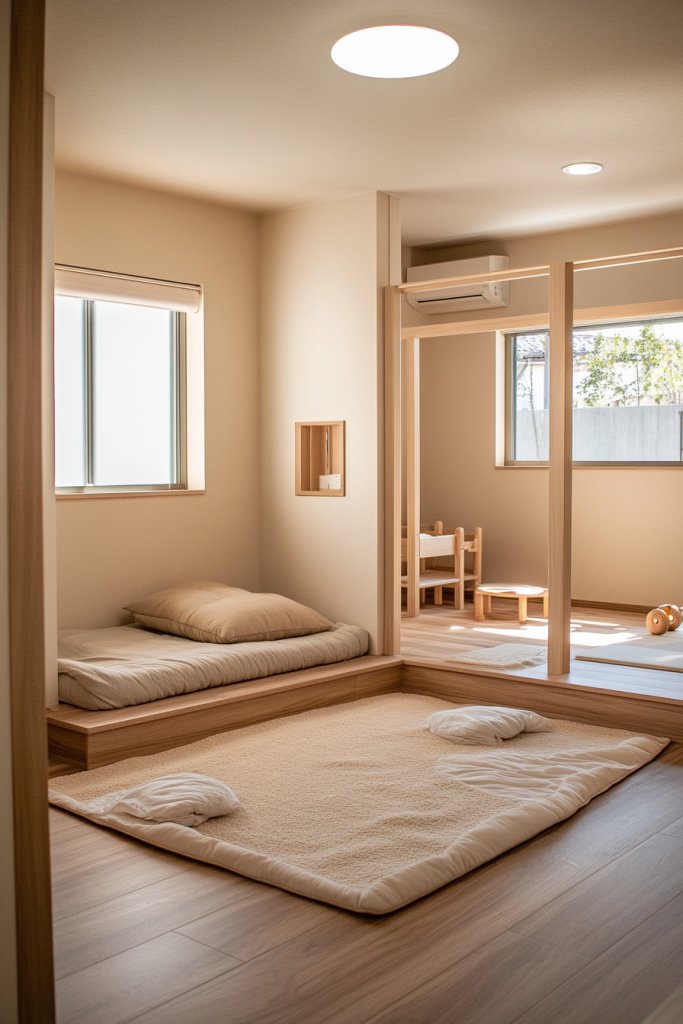
Dividing the bedroom into two clearly defined zones, one for rest using the floor bed and soft textiles, and one for active play using an open rug and accessible toy storage, gives children a spatial understanding of different activities and the transitions between them. Using a low bookshelf or a simple curtain panel as a soft room divider reinforces the zoning without closing off the space visually.
Keep the rest zone in the quietest corner of the room away from natural light to support sleep, and position the play zone near the window where light and energy naturally gather. Using consistent flooring across both zones while varying the rugs and textiles signals the shift between spaces with warmth and intention.
Start with one or two changes, such as lowering your storage or adding a floor-level reading nook, and build the rest of the room gradually around your child’s evolving needs. A well-designed Montessori bedroom pays off every single day in a calmer morning routine and a more confident, independent child.

