18 Practical DIY Chicken Coop Plans for Small Backyards and Large Flocks
DIY chicken coop plans help you choose the right size, layout, ventilation, run, and cleaning features before you buy lumber. These 18 designs give you practical ways to build a safe chicken coop that fits your yard, flock, budget, and daily routine.
18 DIY Chicken Coop Plans for Every Backyard
1. Classic Gable-Roof Chicken Coop
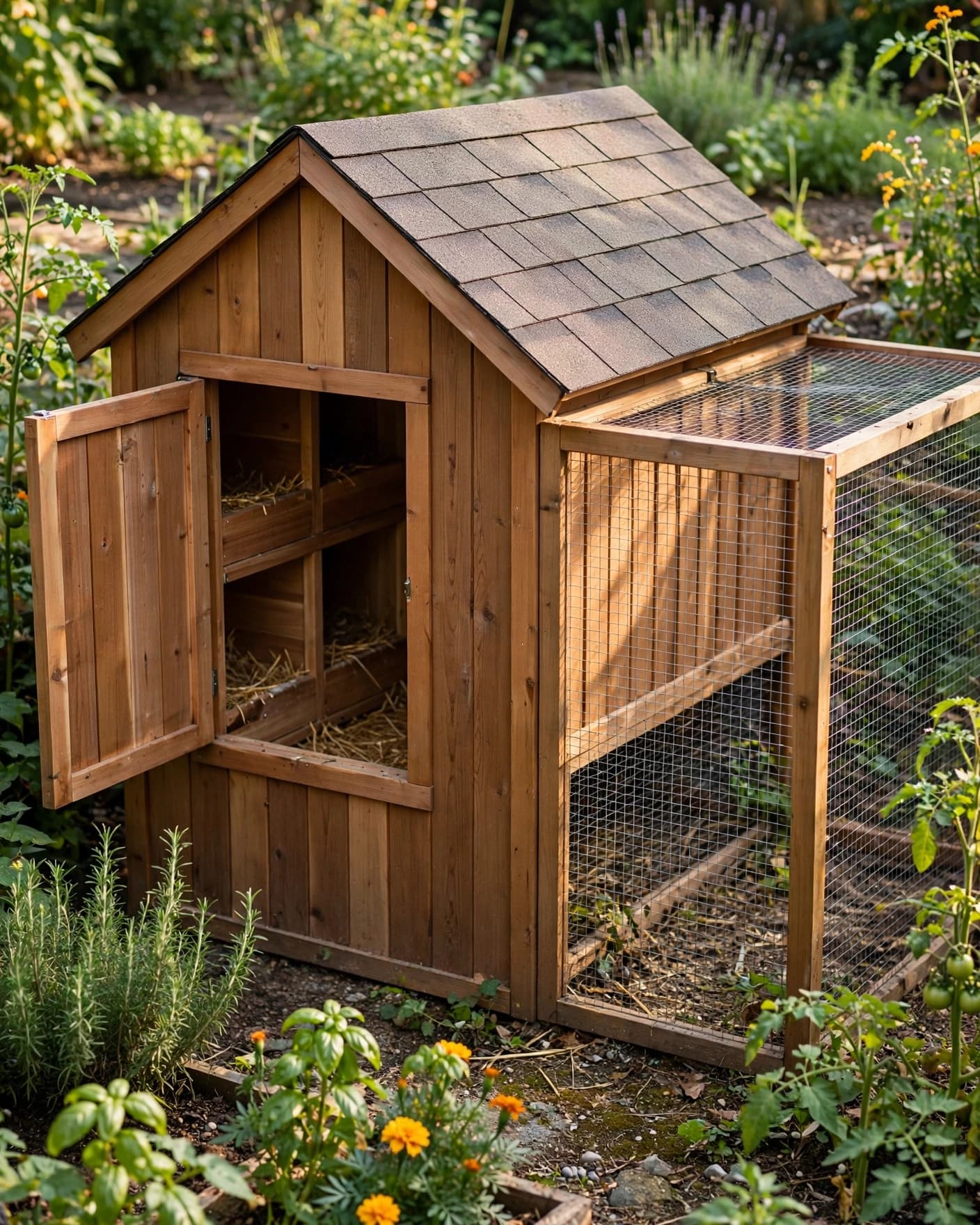
A classic gable-roof chicken coop gives you a simple shape that fits most backyards. The sloped roof helps shed rain, while the tall center section gives you room to add high vents above the roosts.
This design works well for a small flock because you can place the nesting boxes along one wall and the roosting bars along the opposite side. Add a covered wire run beside the coop so your chickens can leave the sleeping area without wandering into the garden.
Choose solid wood flooring and make the main door wide enough for cleaning tools. You can also include an open side panel or exterior access door so you can check the nesting boxes without entering the coop.
For feeding, Grandpa’s Feeders Automatic Galvanized-Steel Poultry Feeder gives you a dedicated place to keep feed off the floor.
2. Raised Chicken Coop With a Ramp
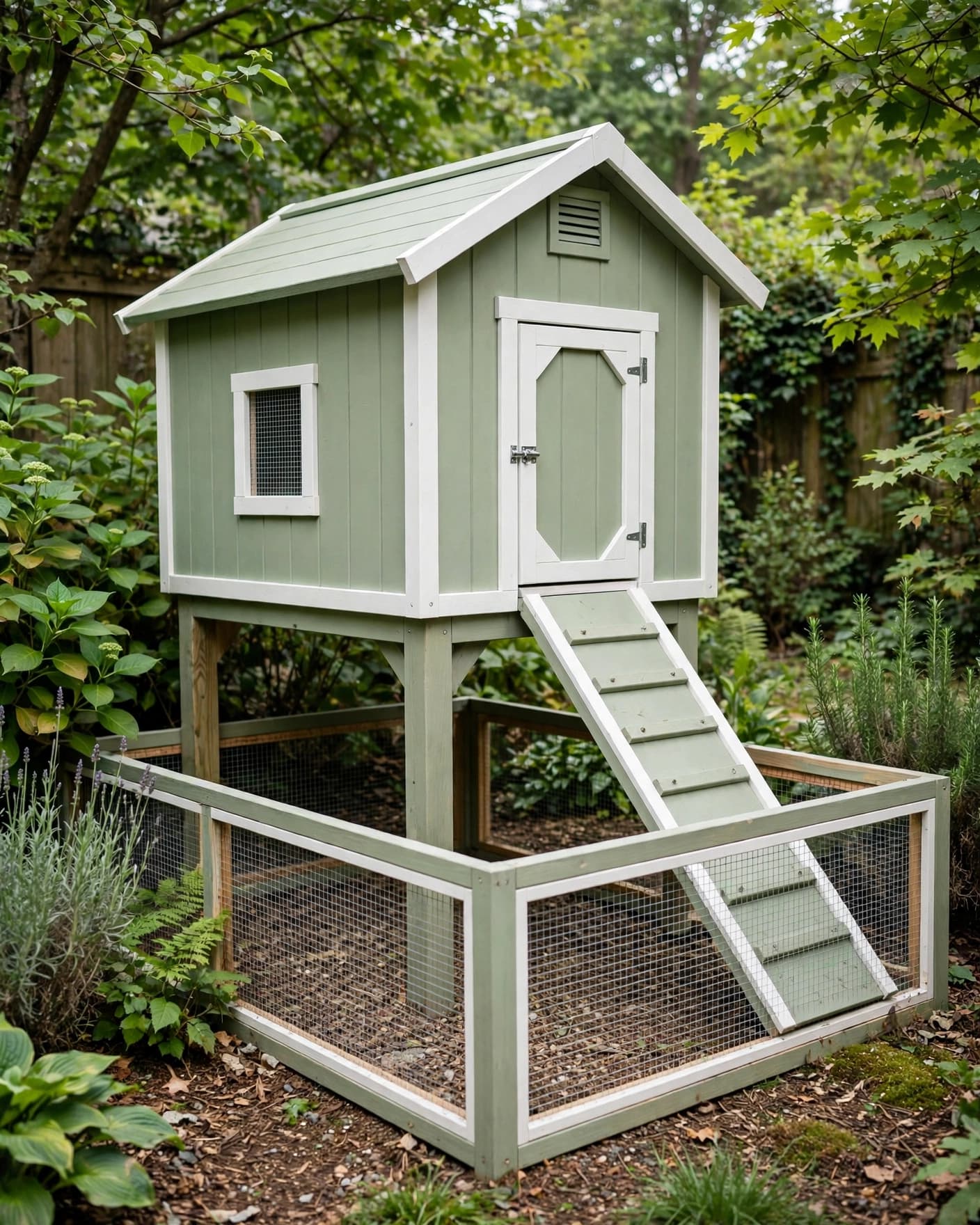
A raised chicken coop lifts the sleeping area above the ground and creates a shaded space underneath. The extra height can help keep the floor drier and give your birds a cool place to rest during warm weather.
Build the base at least 1 foot above the ground if your yard allows it. Oregon State Extension also recommends secure flooring, such as solid wood or a concrete slab, so the coop stays stable and resists damage from moisture.
Add a ramp with shallow steps or narrow cleats so your chickens can reach the raised doorway. Keep the ramp wide enough for several birds to pass without crowding each other.
A Chicken Coop Ramp With Wooden Cleats can add traction and make the raised design easier for younger or smaller chickens to use.
3. Walk-In Chicken Coop With a Covered Run
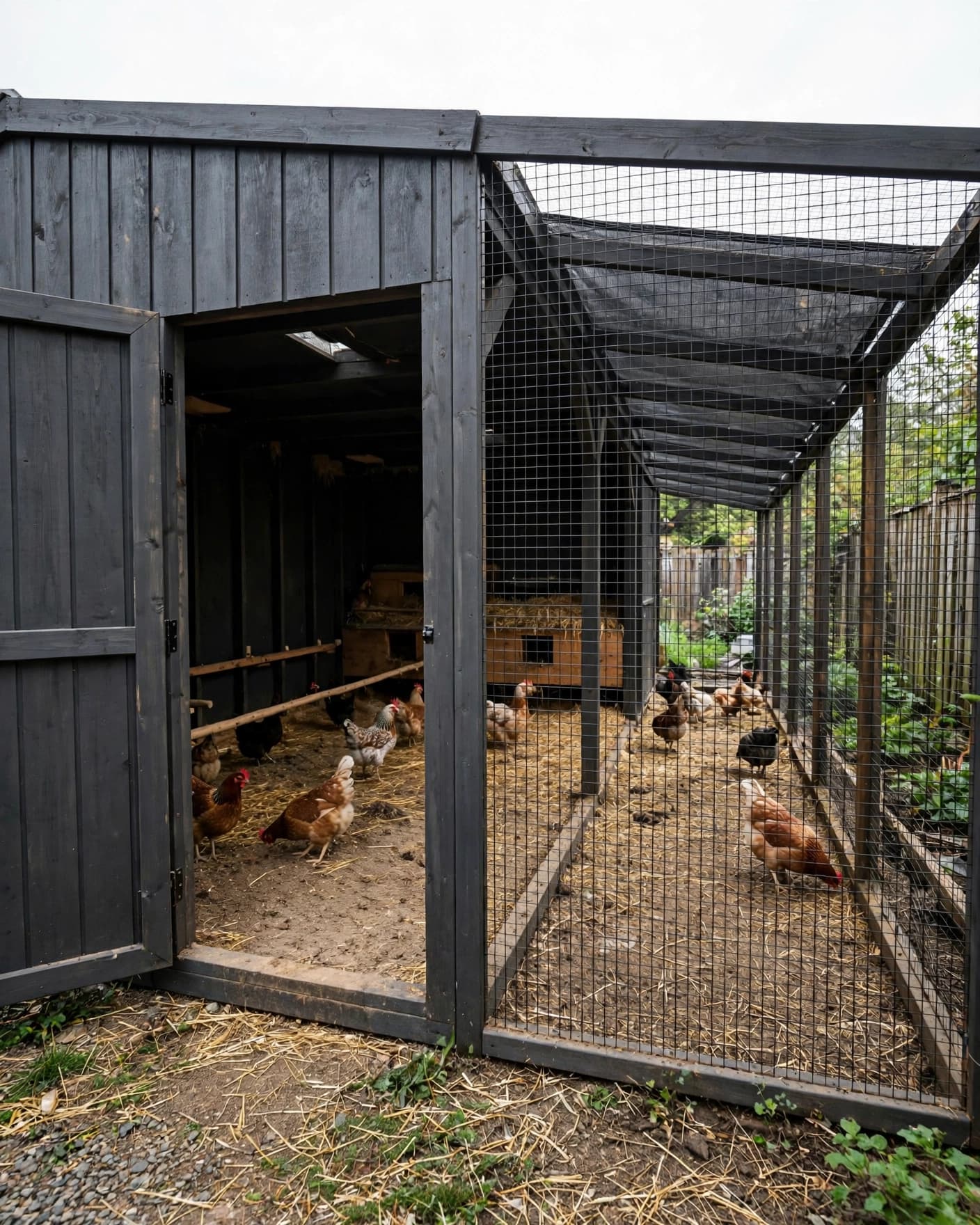
A walk-in coop gives you enough room to enter the structure for cleaning, repairs, feeding, and flock checks. You won’t need to crawl through a small door or reach into dark corners with a long-handled tool.
Use a full-height door and place the roosts, nesting boxes, and feeder where you can reach each one without moving the whole setup. A wide covered run lets your chickens spend time outside while staying protected from rain and some predators.
This plan needs more yard space than a compact coop, but it can save time every week. It also gives you room to adjust the layout as your flock grows.
A Walk-In Chicken Coop Door Latch can help you close the main entrance securely each night.
4. Compact Pallet-Wood Chicken Coop
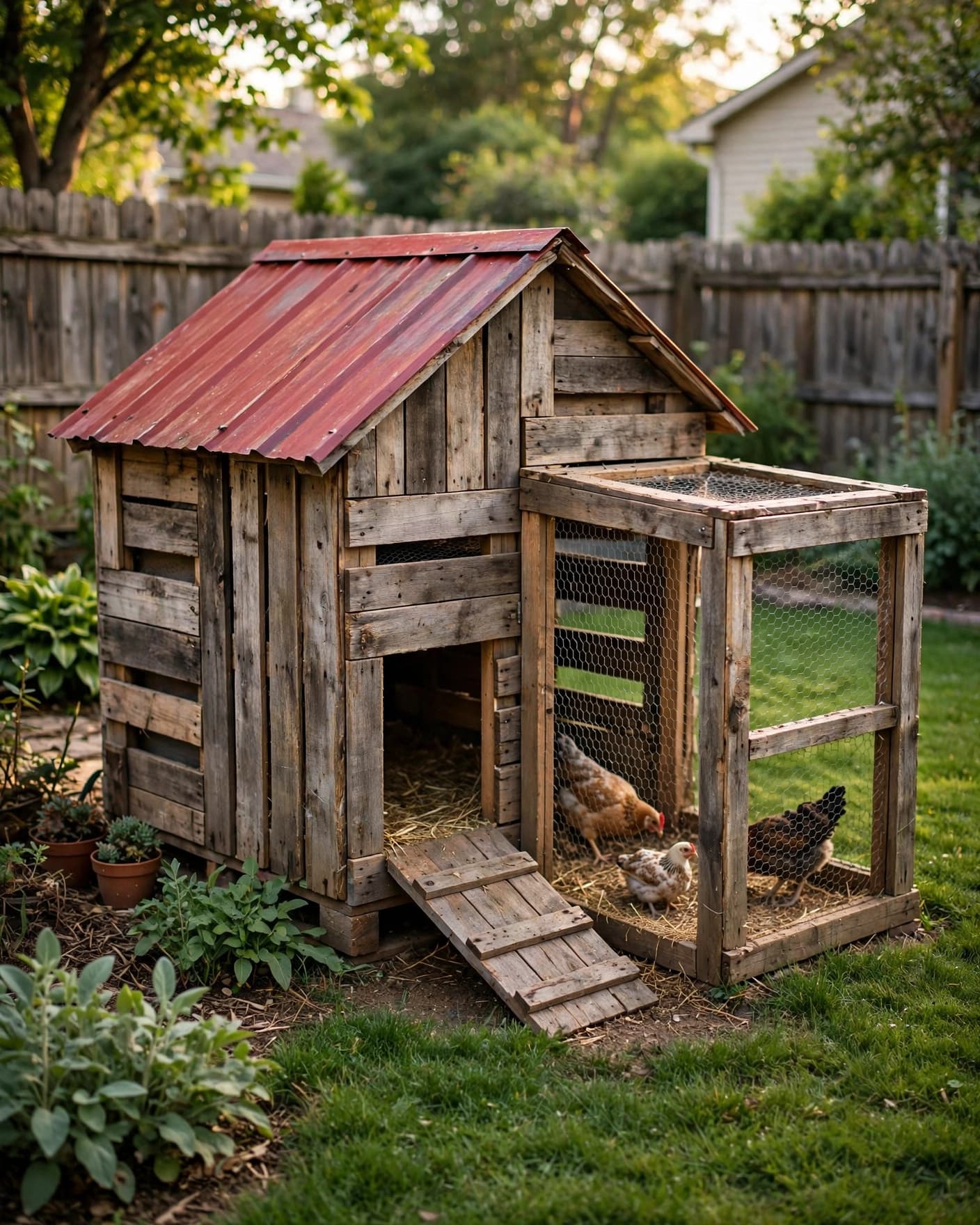
A pallet-wood coop gives you a rustic look and a compact footprint for a small flock. Reclaimed boards can create the walls, trim, and nesting-box frame, but you should inspect every board for rot, nails, chemicals, and sharp edges before using it.
Keep the interior smooth enough to clean and seal gaps where rain could enter. A simple red metal roof adds color while protecting the wood from standing water.
This plan works best when you build the run separately from the sleeping box. That layout lets you replace or expand the run without rebuilding the entire coop.
Add a Galvanized Hardware Cloth Roll around the run instead of relying on thin decorative wire. Secure the lower edge well so predators can’t push under the fence.
5. Modern Cedar Chicken Coop With Clean Lines
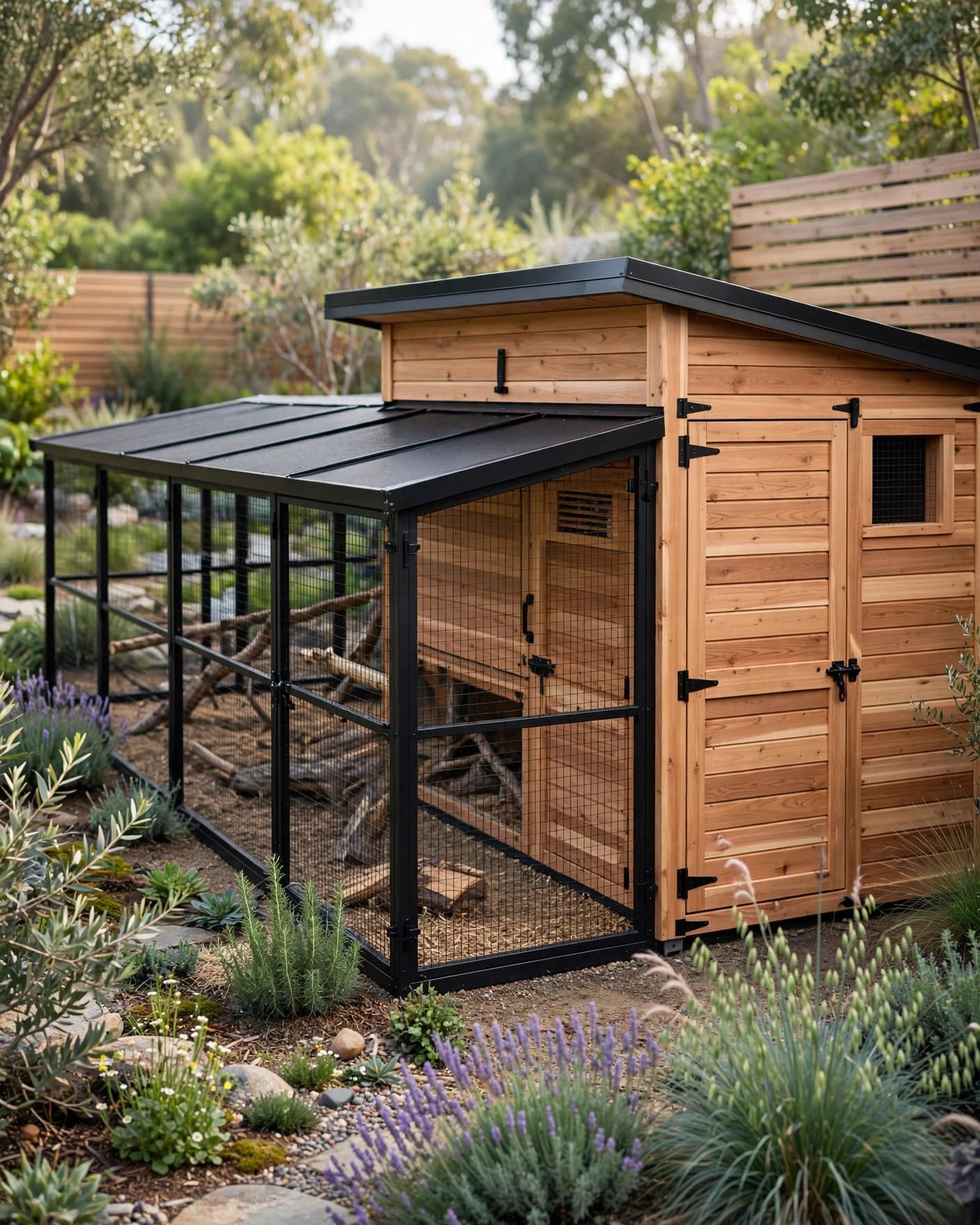
A modern chicken coop uses horizontal cedar boards, a low-sloped roof, and dark hardware for a clean backyard look. The simple shape can blend with a contemporary garden without looking like an afterthought.
Keep the interior practical even when the exterior looks polished. You still need high ventilation openings, easy access for cleaning, secure doors, and enough room for the flock.
A covered run connects well with this style because it continues the strong horizontal lines of the coop. You can also use matching cedar for the run frame and keep the hardware dark for a consistent finish.
A Solar-Powered Outdoor LED Light can add soft light near the entrance without running a long electrical cord.
6. Converted Garden Shed Chicken Coop
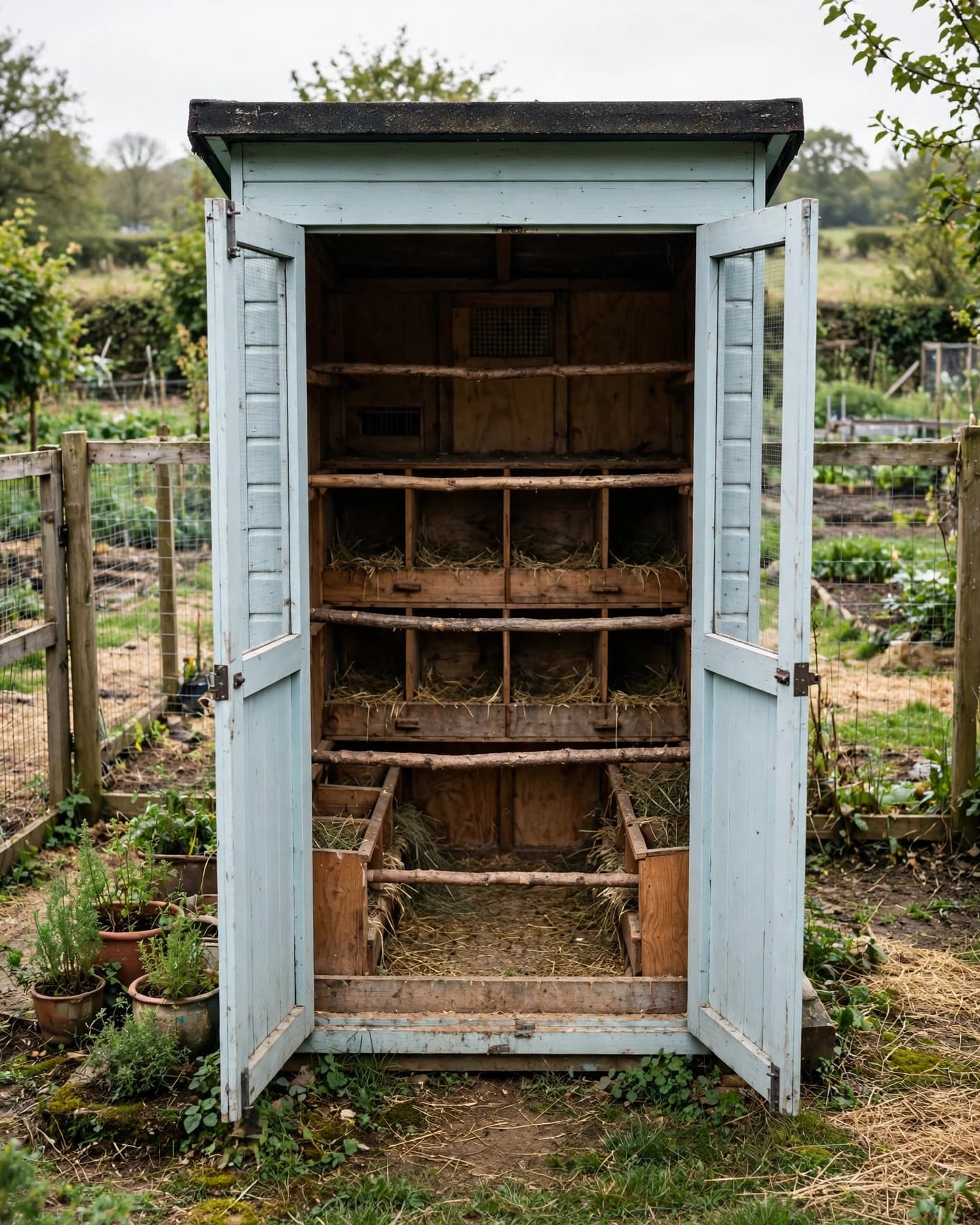
A garden shed can give you a ready-made shell for a chicken coop. You can save construction time by using the existing walls and roof, then focus your work on ventilation, flooring, doors, roosts, nesting boxes, and the attached run.
Remove stored materials before bringing in the chickens, and inspect every corner for holes or weak boards. Iowa State Extension recommends regular checks for openings and other conditions that could let predators reach the flock.
Place vents high on the walls or near the roof so air can escape without blowing directly across the roosts. You can also add a screened window that opens during hot weather and closes during storms.
A Poultry Netting and Fence Repair Kit can help you close small openings around the converted shed and run.
7. Lean-To Chicken Coop for a Narrow Yard
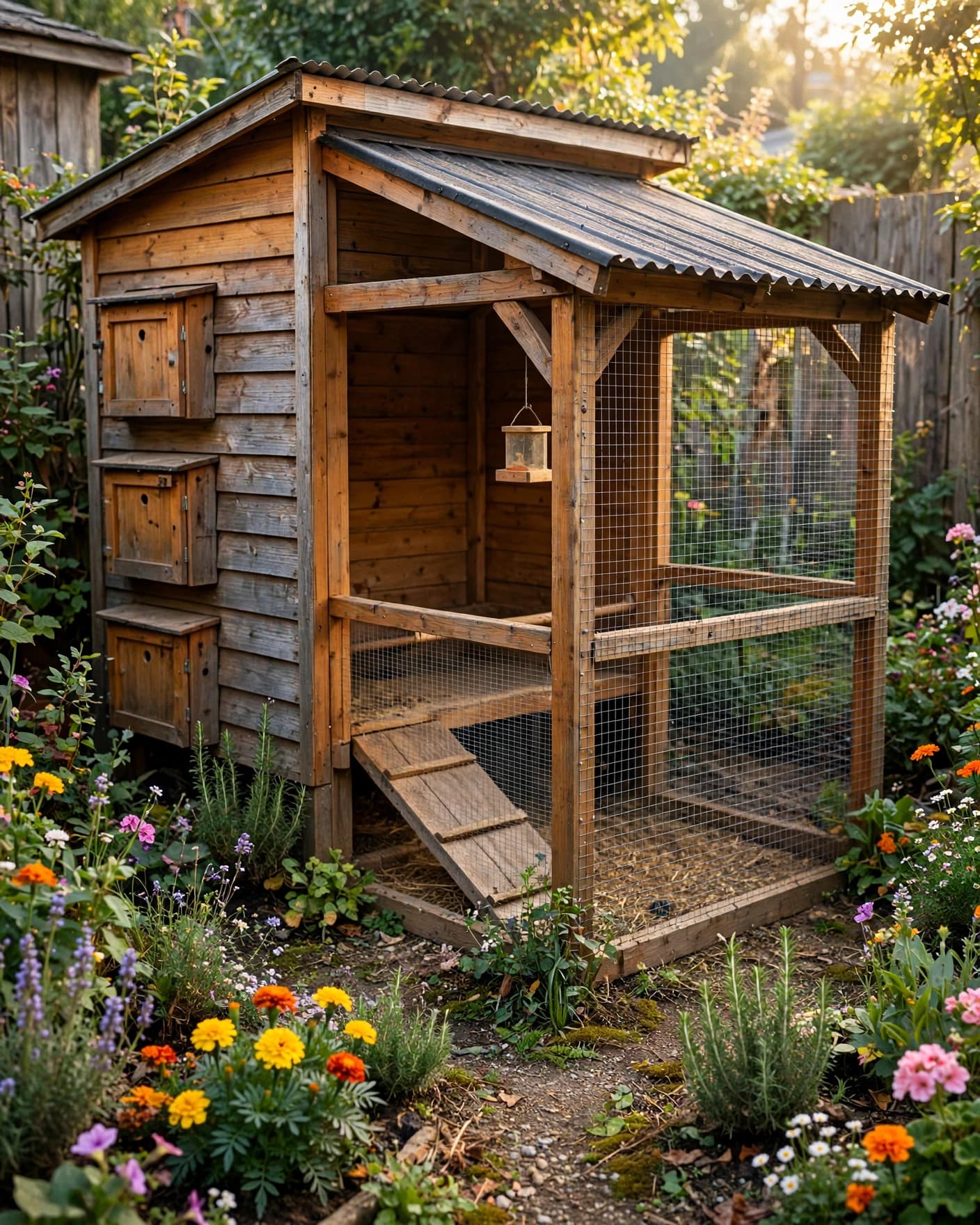
A lean-to coop fits well beside a garage, shed, fence, or garden wall. The sloped roof uses a narrow footprint while giving rain a clear path away from the entrance.
Keep the coop slightly separated from the wall so air can move around the structure. You can also place the run along the open side, which gives your flock outdoor space without taking up much extra width.
A small covered porch protects the entrance from rain and gives you a dry place to stand while you open the door. Use the porch area for feed storage only if you can keep the containers sealed from moisture and pests.
A Weatherproof Outdoor Storage Box can hold feed and cleaning supplies near the coop while keeping them away from the birds.
8. Mobile Chicken Tractor for Fresh Grass
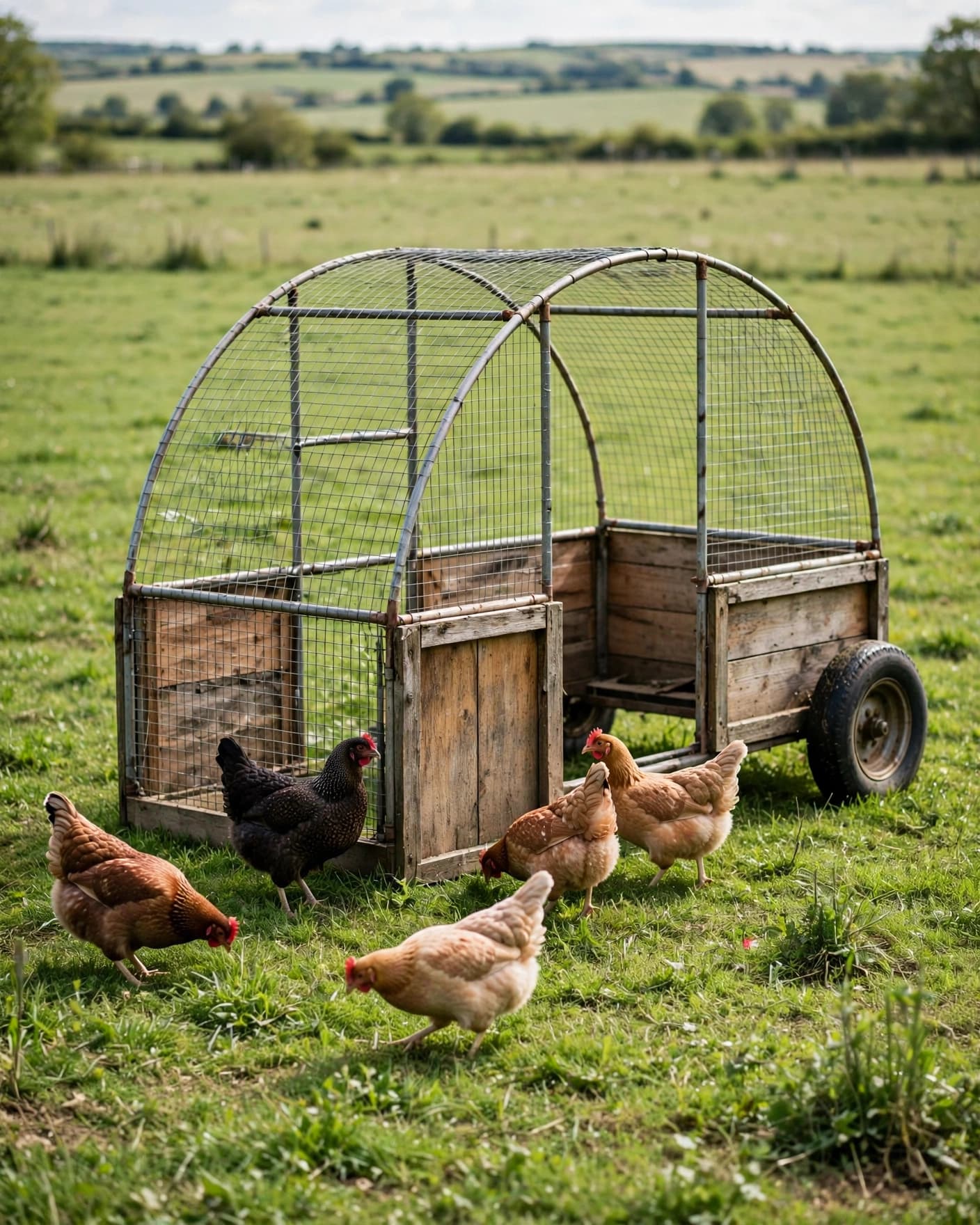
A mobile chicken tractor lets you move the coop and run across the yard. The wheels or handles make it easier to place the flock on fresh grass while keeping the birds inside a controlled area.
Use a lightweight frame that still resists tipping and bending. The roof should protect the birds from sun and rain, while the lower frame should stay close to the ground so chickens can’t slip out.
Check the tractor after every move because uneven ground can create gaps under the frame. Add sturdy handles or large wheels if you plan to move it often.
A Portable Chicken Waterer With Hanging Handle makes it easier to move water with the tractor and keep it off the grass.
9. Insulated Chicken Coop for Cold Weather
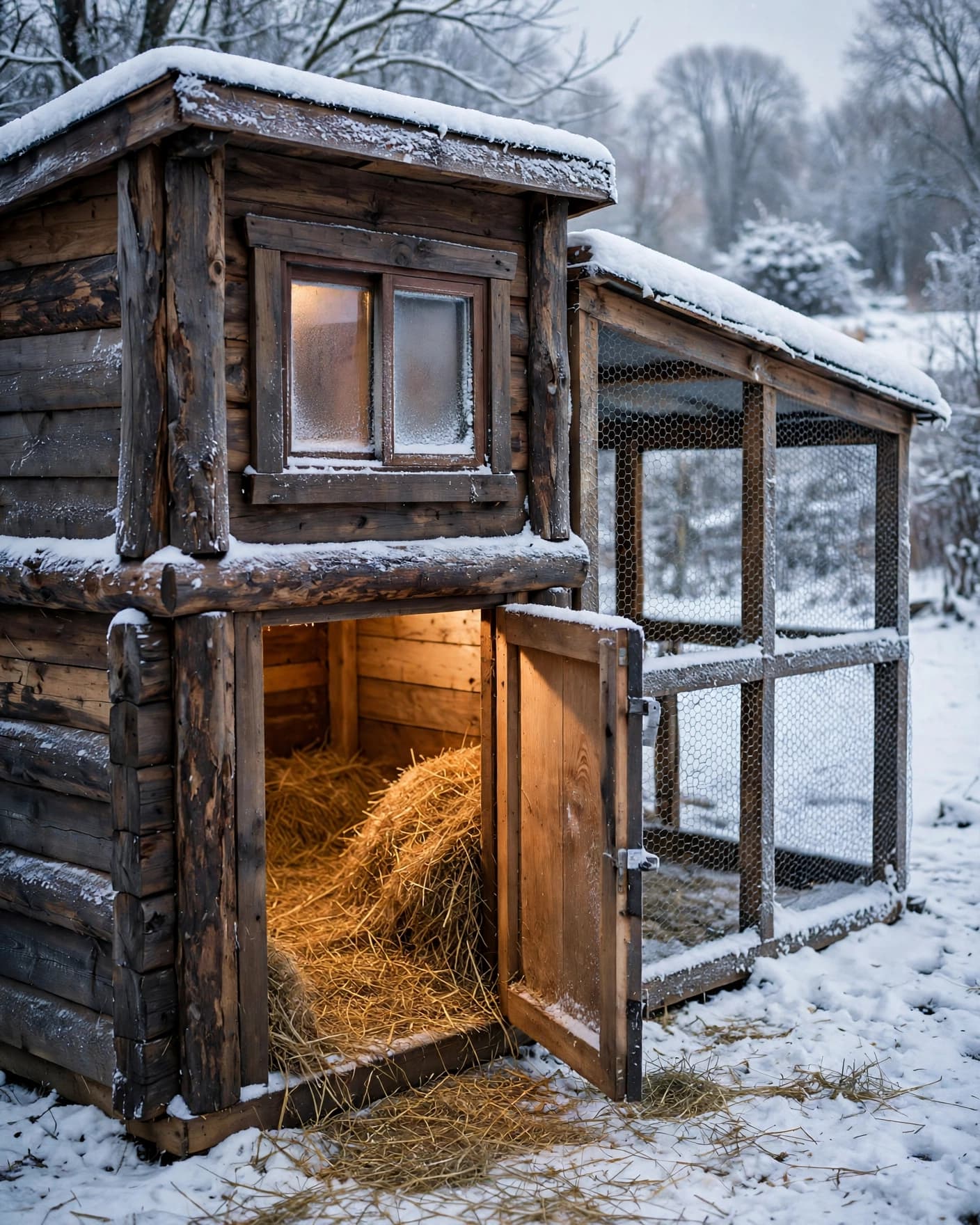
A cold-weather chicken coop needs a dry interior, solid walls, secure doors, and enough ventilation to remove moisture. Thick walls can help protect the flock from severe weather, but you shouldn’t seal the building so tightly that damp air remains trapped inside.
Place vents above the roosts and keep openings away from direct wind paths. Oregon State Extension notes that insulation isn’t required when you exclude drafts, so focus first on wall gaps, roof leaks, and poorly fitted doors.
Use deep, dry bedding and check it often after snow or freezing rain. A covered run also gives your chickens a place to move around when the ground outside turns wet or icy.
A Heated Poultry Waterer Base can help keep drinking water from freezing when you use it according to its product instructions.
10. Predator-Resistant Chicken Coop and Run
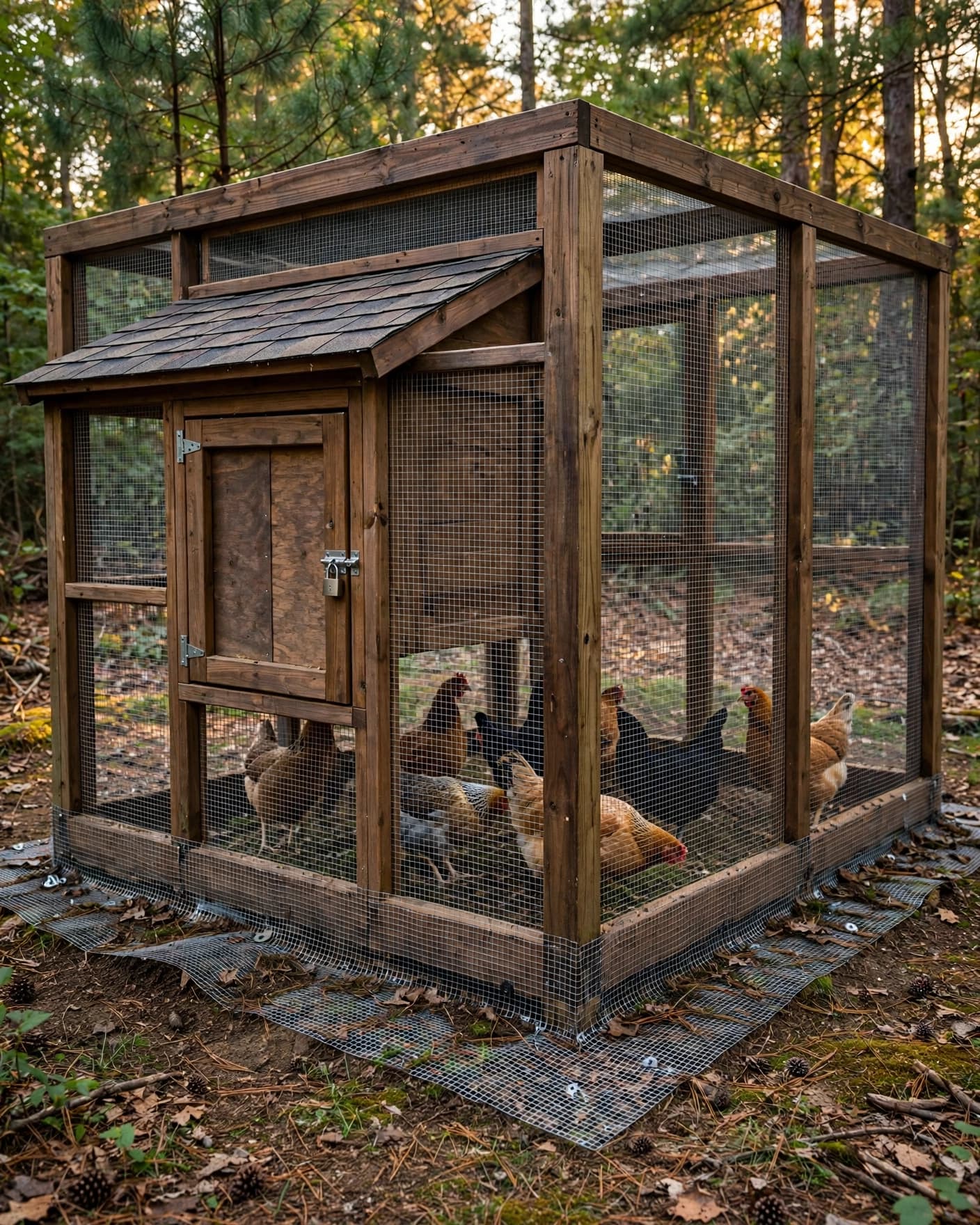
A predator-resistant coop combines strong doors, secure latches, sturdy mesh, and a protected floor edge. The run should keep animals out from the sides and discourage digging beneath the fence.
Oregon State Extension recommends burying fencing about 6 inches to 1 foot to help deter digging predators. You can also create a buried wire apron that extends outward from the run wall.
Cover the top of the run when hawks, climbing animals, or neighborhood pets create a risk. Check every corner after storms because loose mesh can create openings that weren’t there during construction.
A Raccoon-Proof Chicken Coop Latch can add another layer of protection to the main door.
11. Small Urban Chicken Coop With a Vertical Layout
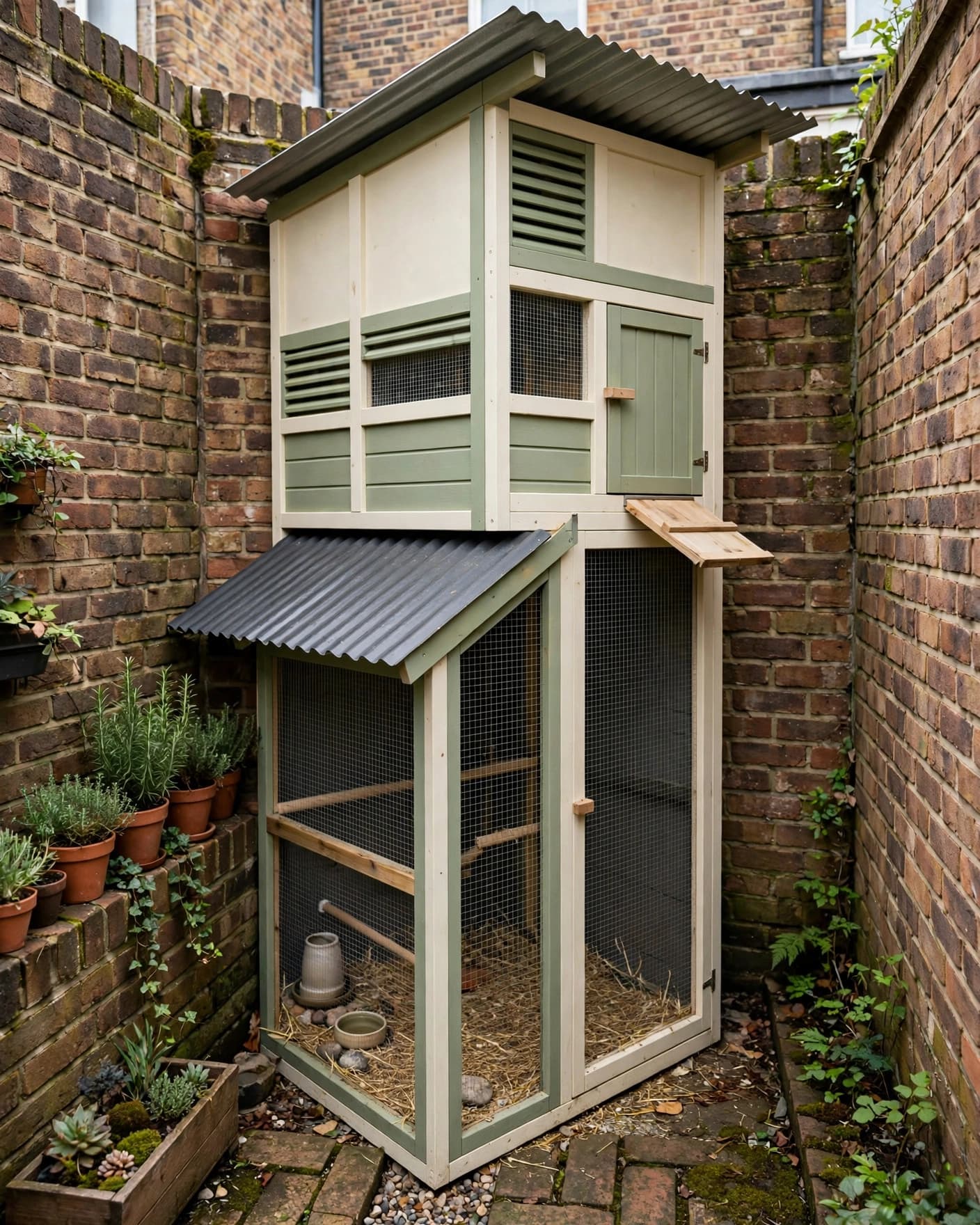
A vertical coop uses height when your backyard has limited floor space. You can place the sleeping area above the run and add a sheltered section below for daytime use.
Keep the design easy to reach because narrow urban coops can become difficult to clean. A front door that opens fully and a removable tray can make a small interior much more manageable.
Check local rules before you build, since cities and neighborhoods may set limits for flock size, setbacks, or coop placement. Also choose a location that won’t send strong odors toward your home or a neighbor’s windows.
A Compact Chicken Coop Feeder can reduce floor clutter inside a small structure.
12. Cottage-Style Chicken Coop With a Garden Run
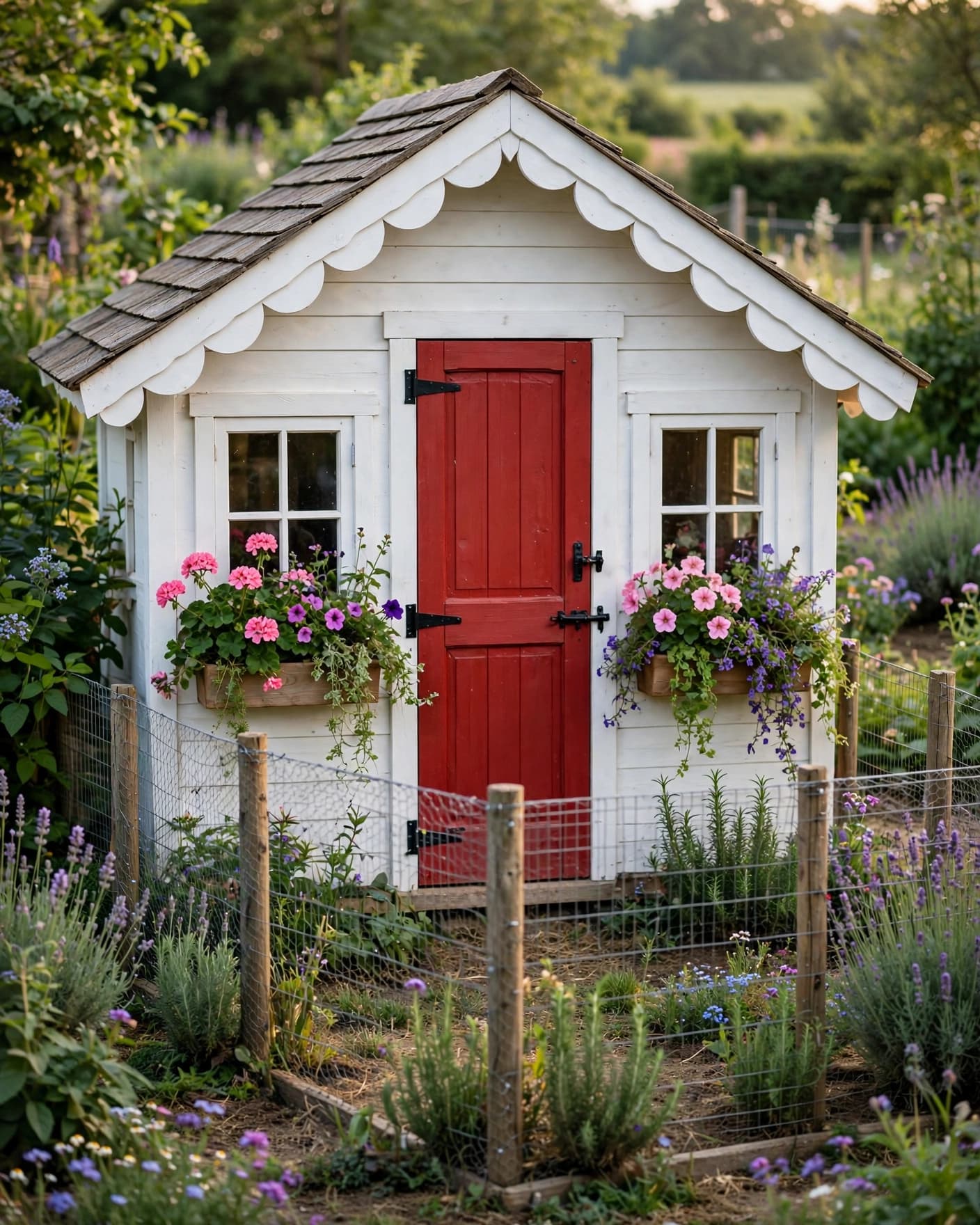
A cottage-style coop adds scalloped trim, painted siding, window boxes, and a bright door to a practical chicken house. You can use decorative details without giving up secure doors, strong flooring, and good airflow.
Keep flowers and edible plants outside the run unless you know they are safe for chickens. A fenced garden border can also help you separate the birds from young plants and delicate herbs.
Choose exterior paint that works well with your yard and avoid leaving rough edges where moisture can collect. Inside, use simple surfaces that you can wipe or replace when they become soiled.
A Chicken Coop Window With Ventilation Screen can add light and airflow while keeping the opening covered.
13. Chicken Coop With a Covered Run
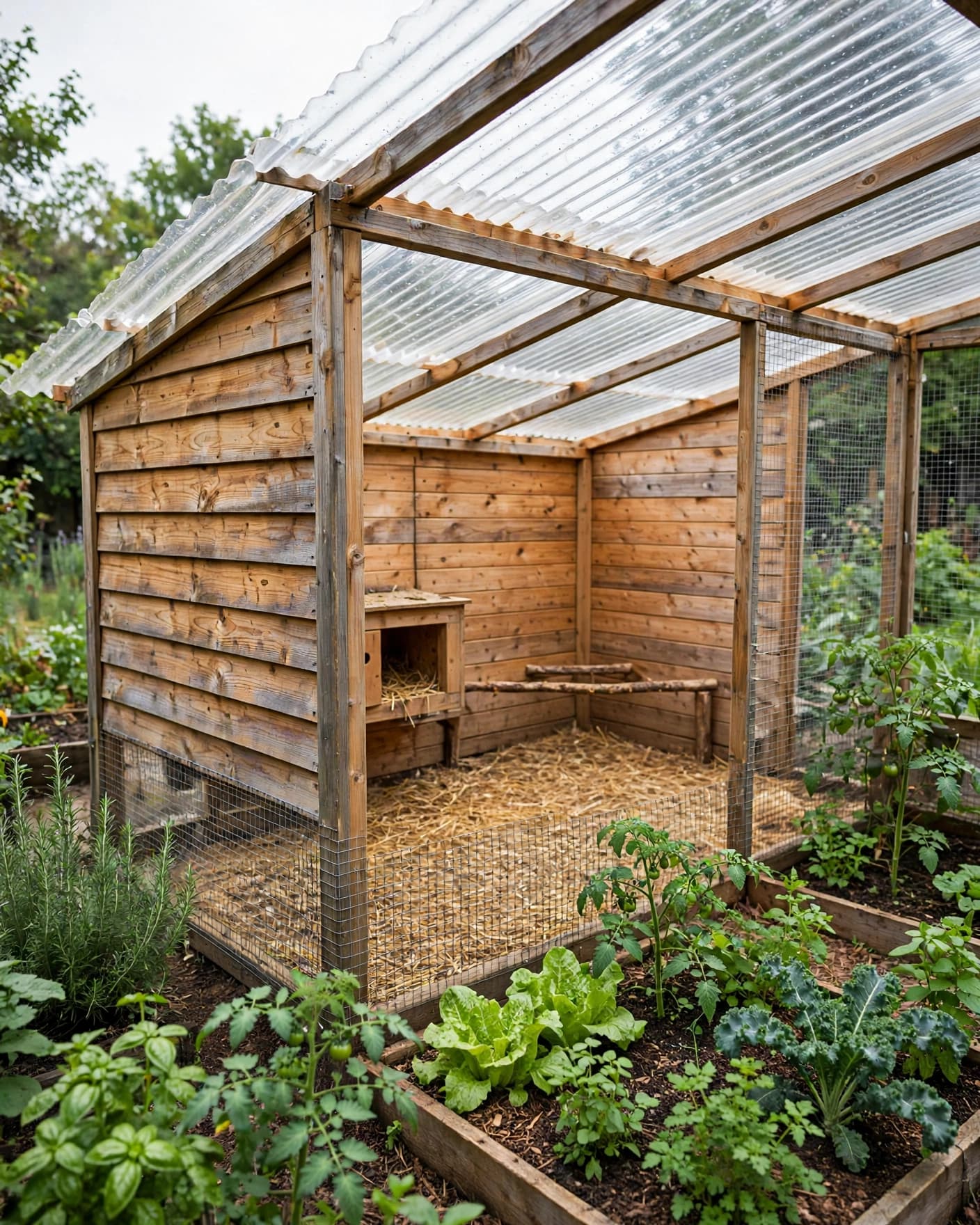
A covered run gives your chickens outdoor space during rain and strong sun. A clear roof can bring in daylight while keeping much of the ground below dry.
Use a roof pitch that lets rain drain away from the coop entrance. Leave enough open mesh on the sides for air exchange, and avoid turning the run into a sealed plastic tunnel during warm weather.
This plan works especially well in yards with frequent rain or muddy soil. Add a dry surface beneath the roof, such as packed gravel or another material that drains well and doesn’t stay wet.
A Clear Corrugated Polycarbonate Roofing Panel can help you build a bright roof over the run.
14. Easy-Clean Chicken Coop With Exterior Nesting Boxes
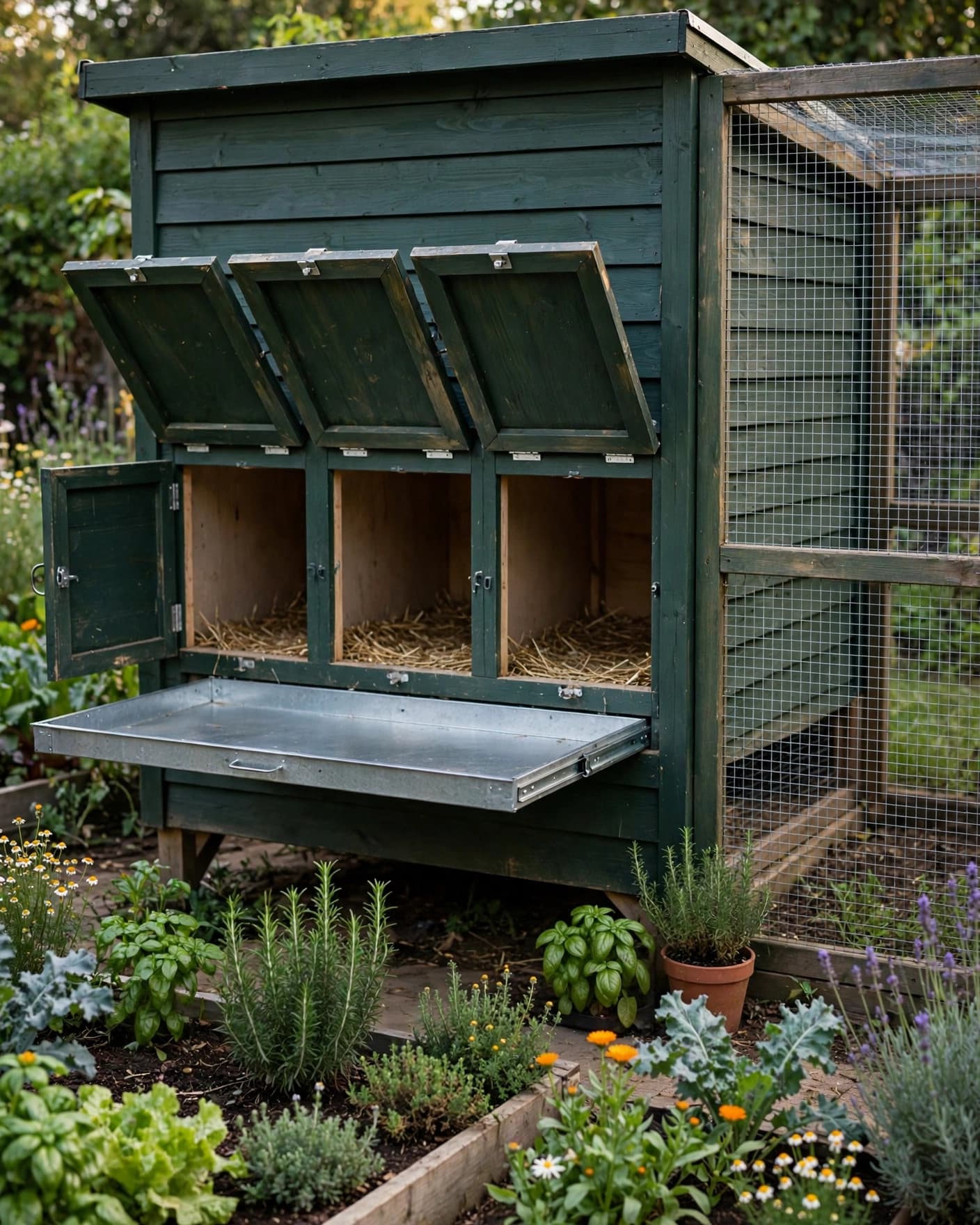
An easy-clean coop puts the main maintenance points within reach. Exterior nesting boxes let you collect eggs without stepping into the coop, while removable trays help you take out soiled bedding.
Place the nesting boxes below the roosts because chickens often sleep on the highest available surface. Keep the box openings protected from rain and make sure the lids close firmly.
Leave enough room around the roosts so you can remove trays without knocking over feeders or waterers. A large access door also makes it easier to inspect the walls, floor, and corners.
A Four-Hole Galvanized Chicken Nesting Box can organize several nesting spaces in one exterior unit.
15. Well-Ventilated Cedar Chicken Coop
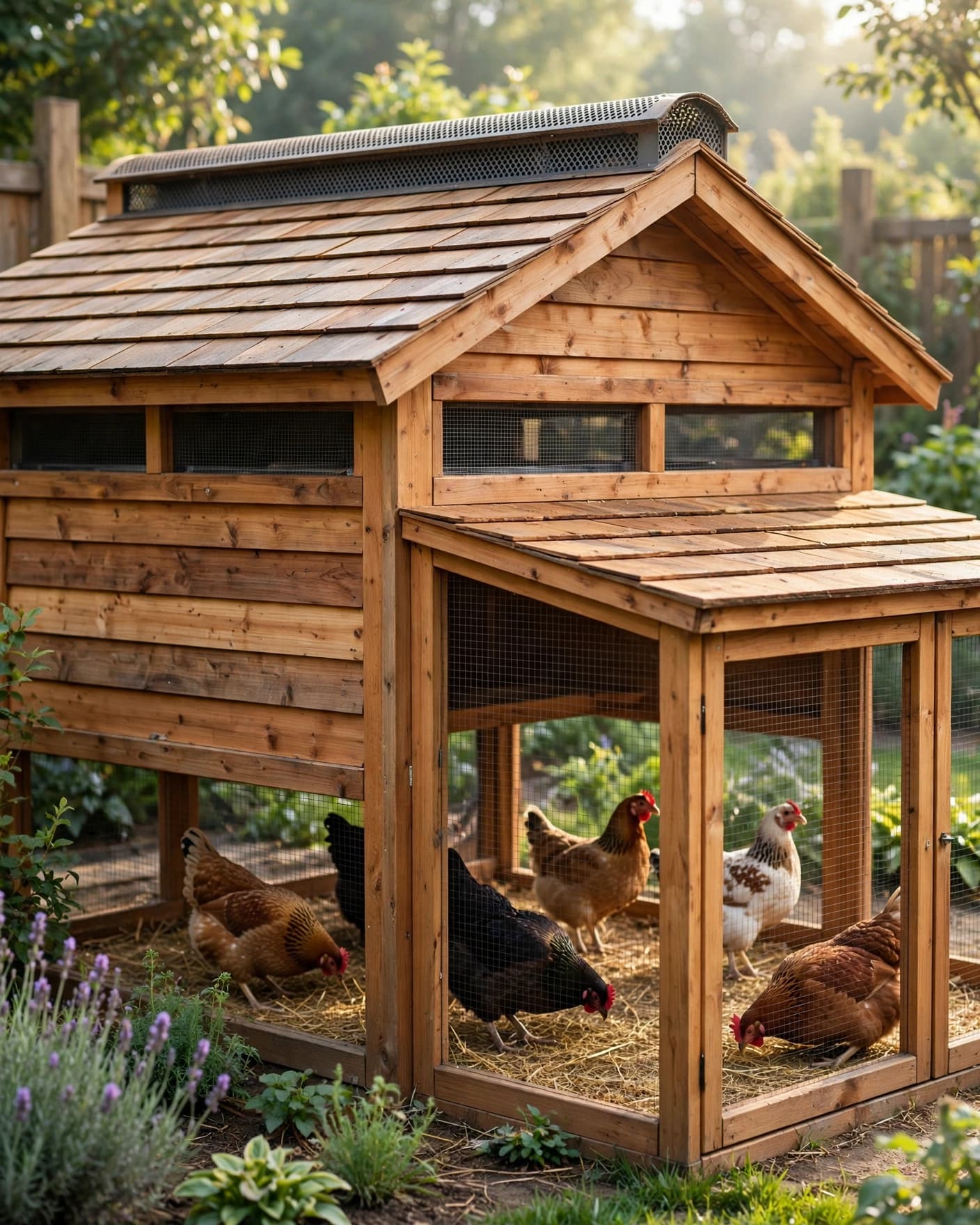
A well-ventilated coop lets stale, moist air leave without creating a cold draft across the birds. High openings under the eaves, in the gables, or near the roof can help move air above the roosting area.
Oregon State Extension recommends ventilation that removes moisture, carbon dioxide, and ammonia fumes while avoiding drafts. Use screened openings so insects and wild animals can’t enter through the vents.
Don’t block every opening during winter because trapped moisture can create a damp interior. Instead, close openings that face strong wind and keep protected high vents available.
A Galvanized Vent Cover With Insect Screen can protect a high wall or gable opening.
16. Large Chicken Coop for a Growing Flock
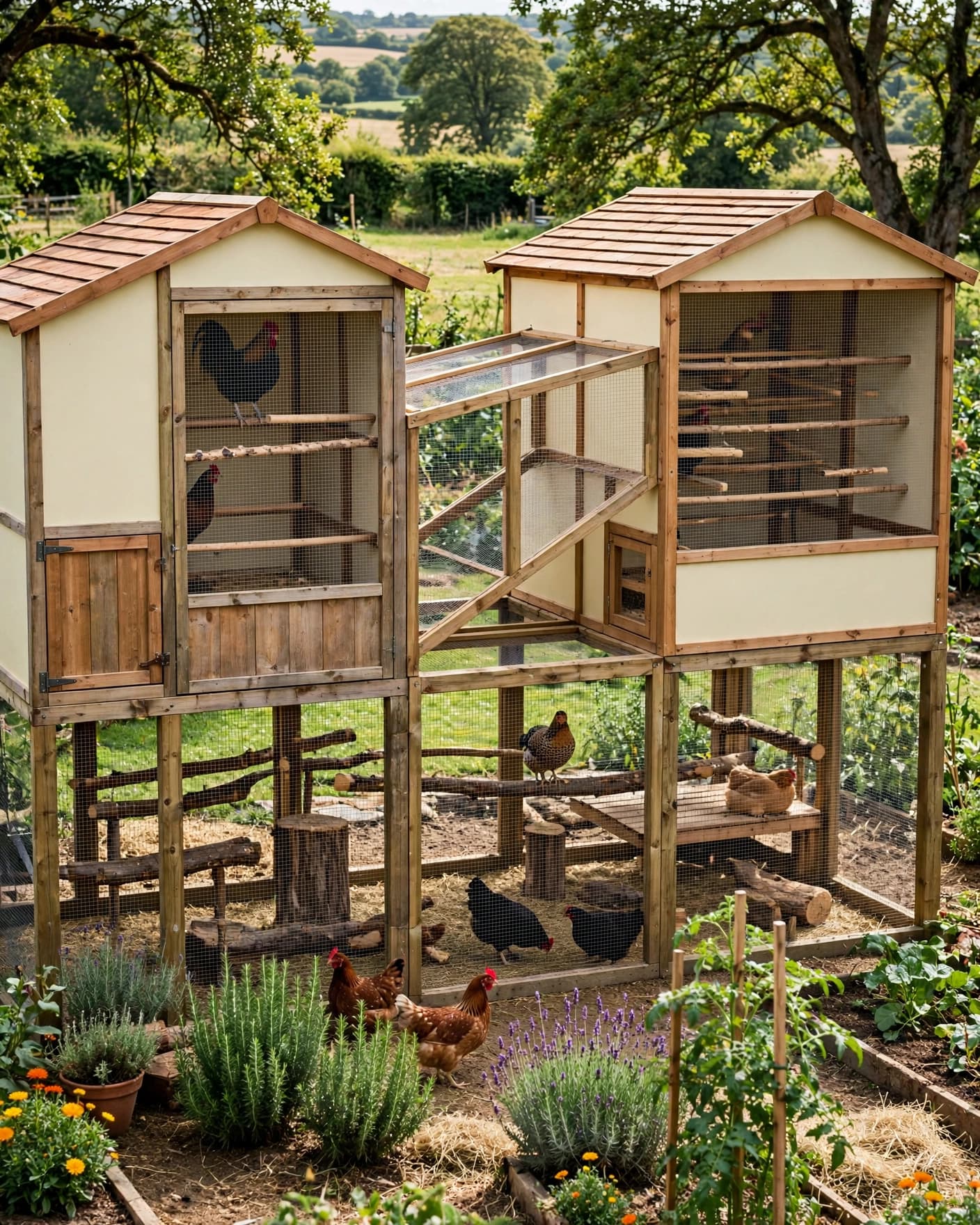
A large chicken coop gives you room to separate feeding, nesting, roosting, and cleaning areas. Two connected sections can also help you isolate an injured bird or keep new chickens apart while they adjust.
Plan the size around the number of birds you intend to keep, not the number you own today. Poultry Extension recommends 3 to 4 square feet of indoor space per laying hen and 10 square feet of outdoor space per hen, while Oregon State Extension recommends at least 3 square feet per bird when the flock has access to a run.
Keep the run wide enough for the birds to move without crowding. Add several roosting bars at different heights, but make sure the lower birds can still reach food and water.
A Large-Capacity Hanging Chicken Feeder can help keep feed available while reducing floor mess.
17. Repurposed Playhouse Chicken Coop
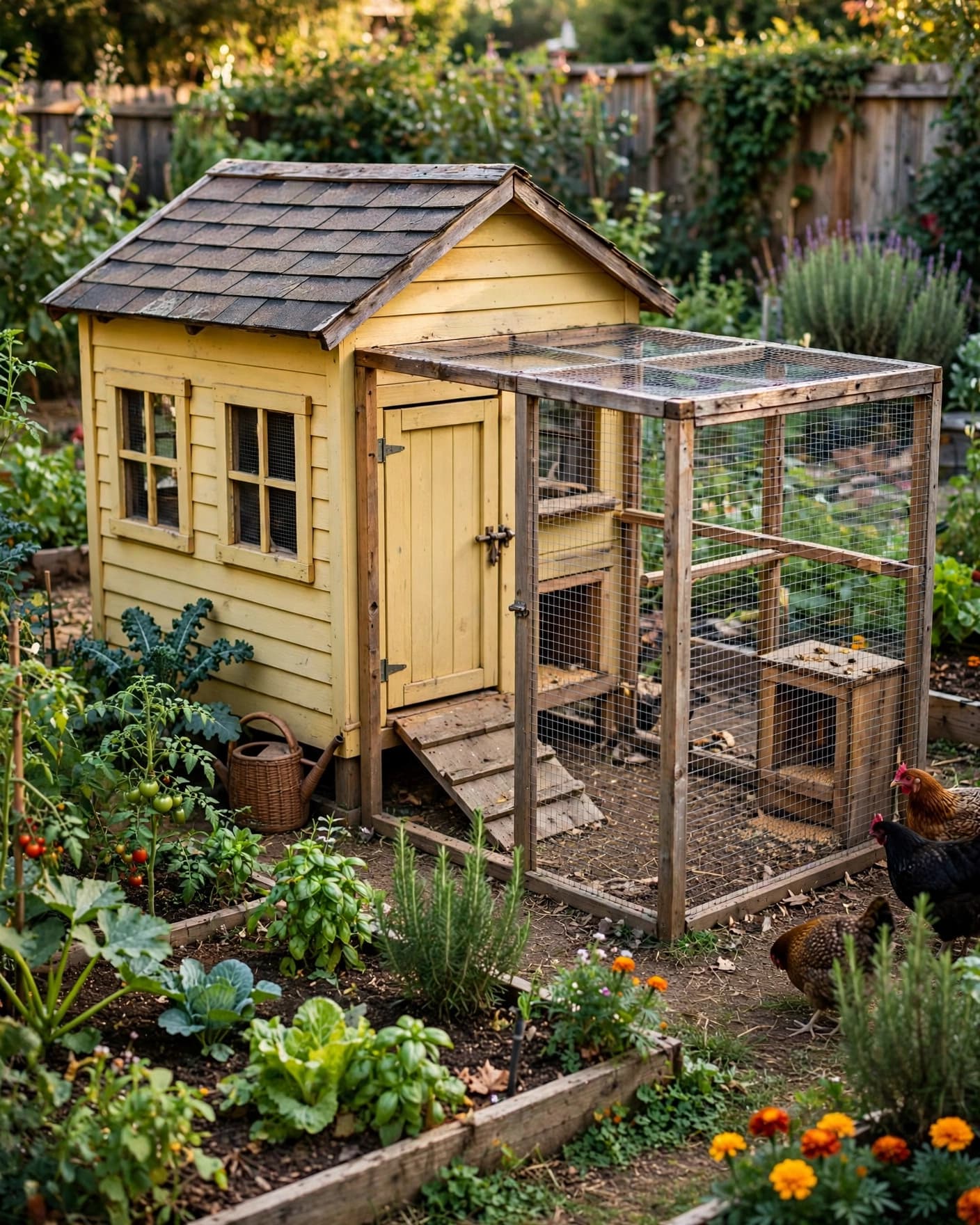
A small playhouse can become a distinctive chicken coop when the structure has a sound roof, stable walls, and enough interior room. You can remove unsafe features, seal sharp edges, add ventilation, and attach a secure run to the existing doorway.
Check the floor before using the building because playhouses may sit directly on soil. Raise the structure or add a stable floor that resists moisture and makes cleaning easier.
Use the existing windows for natural light, but cover openings with strong mesh. Add a lockable door and inspect the structure for gaps before moving the flock inside.
A Chicken Coop Automatic Door Opener can help manage the entrance on a repurposed structure when you install it securely.
18. Solar-Ready Chicken Coop With an Enclosed Run
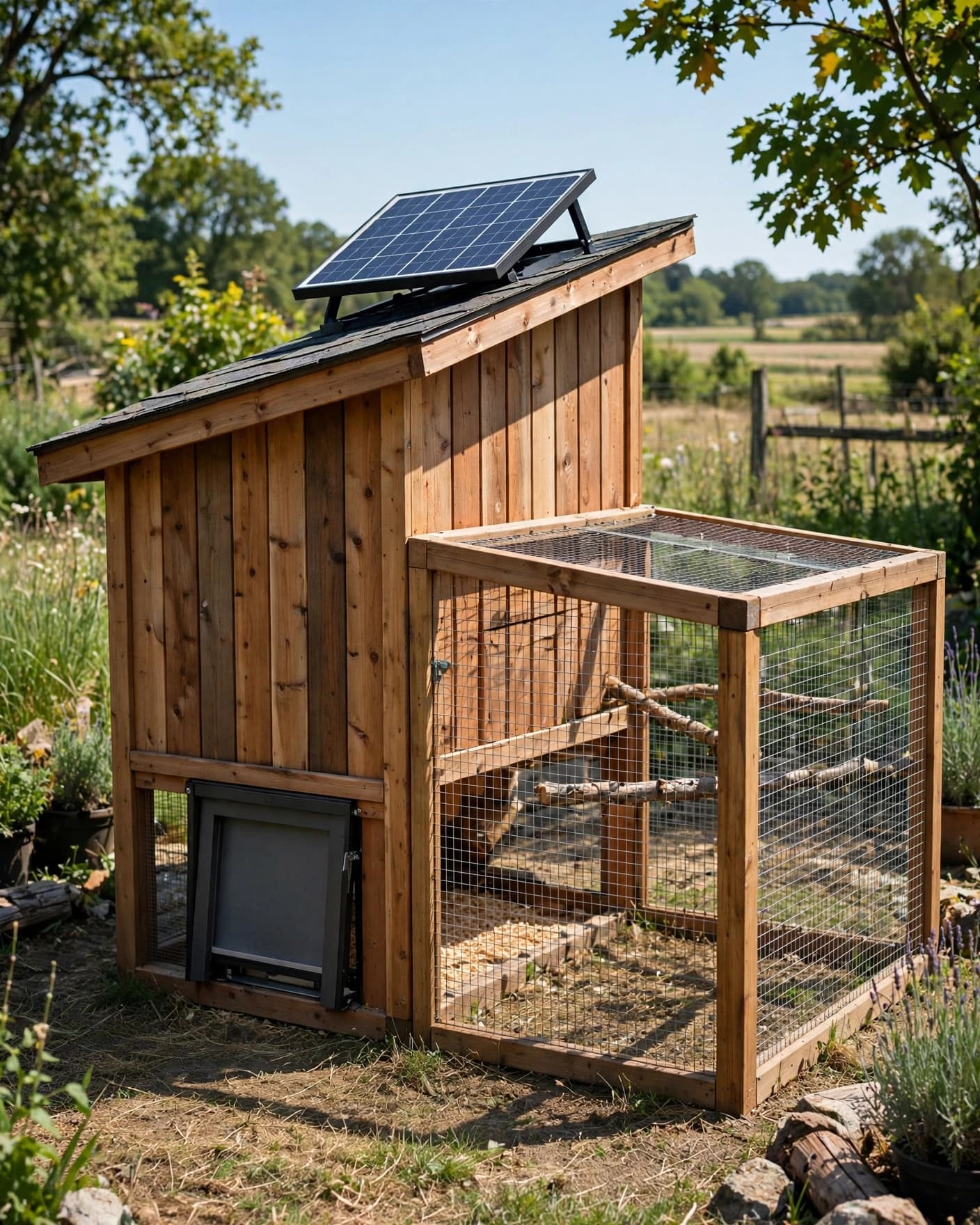
A solar-ready coop can support a small light, an automatic door, or another low-power feature without a long cable across the yard. Mount the panel where trees and rooflines won’t shade it for most of the day.
Keep the electrical parts protected from rain, pecking, bedding, and curious birds. Route cables through sealed openings and place batteries or controls in a protected area outside the sleeping space.
The roof still needs enough slope to shed water, even when you add a panel. Pair the solar setup with an enclosed run so your chickens have a secure outdoor area while the door system manages access.
A 12-Volt Solar Panel Kit for Chicken Coop Doors can provide a dedicated power source for a small automatic setup.
Choose the Right DIY Chicken Coop Plan
Start with the number of chickens you plan to keep, then measure your yard and mark the space for the coop and run. Compare the classic gable, raised, walk-in, mobile, converted, and compact layouts before you buy materials.
Save the plan that matches your daily routine, especially the features that make cleaning, feeding, egg collection, ventilation, and nighttime security easier. Use the space allowances for backyard poultry flocks and the backyard chicken coop design guide to check your measurements before construction.

I’m Sumayya and I love turning ordinary spaces into ones you’ll never want to leave. Whether it’s cozy cottagecore corners, bold maximalist magic, or sleek modern minimalism, I’m here to help you discover your style and bring it to life without spending a fortune. Ready to refresh your space? Let’s make it happen!