21 Bathroom Remodeling Trends and Ideas for a Warmer, More Functional Space
Bathroom remodelling trends and ideas now favor warm colors, natural materials, better storage, and spa-like comfort without wasting useful floor space. These 21 bathroom designs will help you picture a remodel that fits your room, your routine, and your personal style.
21 Bathroom Remodelling Trends Ideas
1. Warm Plaster Walls
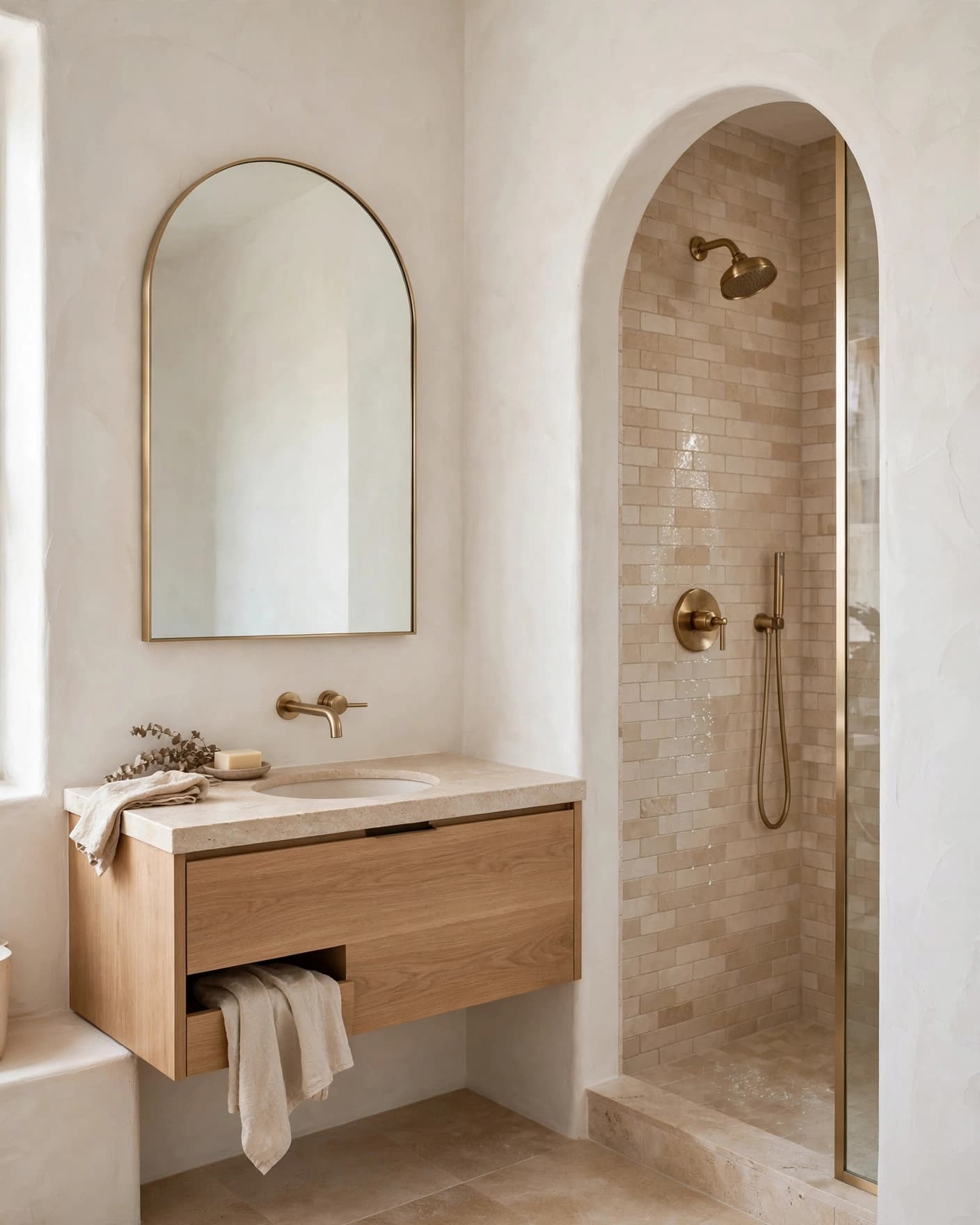
Warm plaster walls give your bathroom a soft, calm finish that feels less cold than bright white paint or glossy tile. A creamy plaster tone also pairs well with light oak, brushed brass, stone, and woven bathroom textiles.
Use this idea on all four walls for a quiet, color-drenched look, or keep it on the main vanity wall. Choose a moisture-friendly wall finish for bathroom use, and keep tile in areas that receive direct water unless your chosen plaster system allows more.
The subtle texture works well in small bathrooms because it adds interest without creating a busy pattern. You can also repeat the wall color on the trim or ceiling for a more complete look.
2. Green-and-White Checkerboard Floors
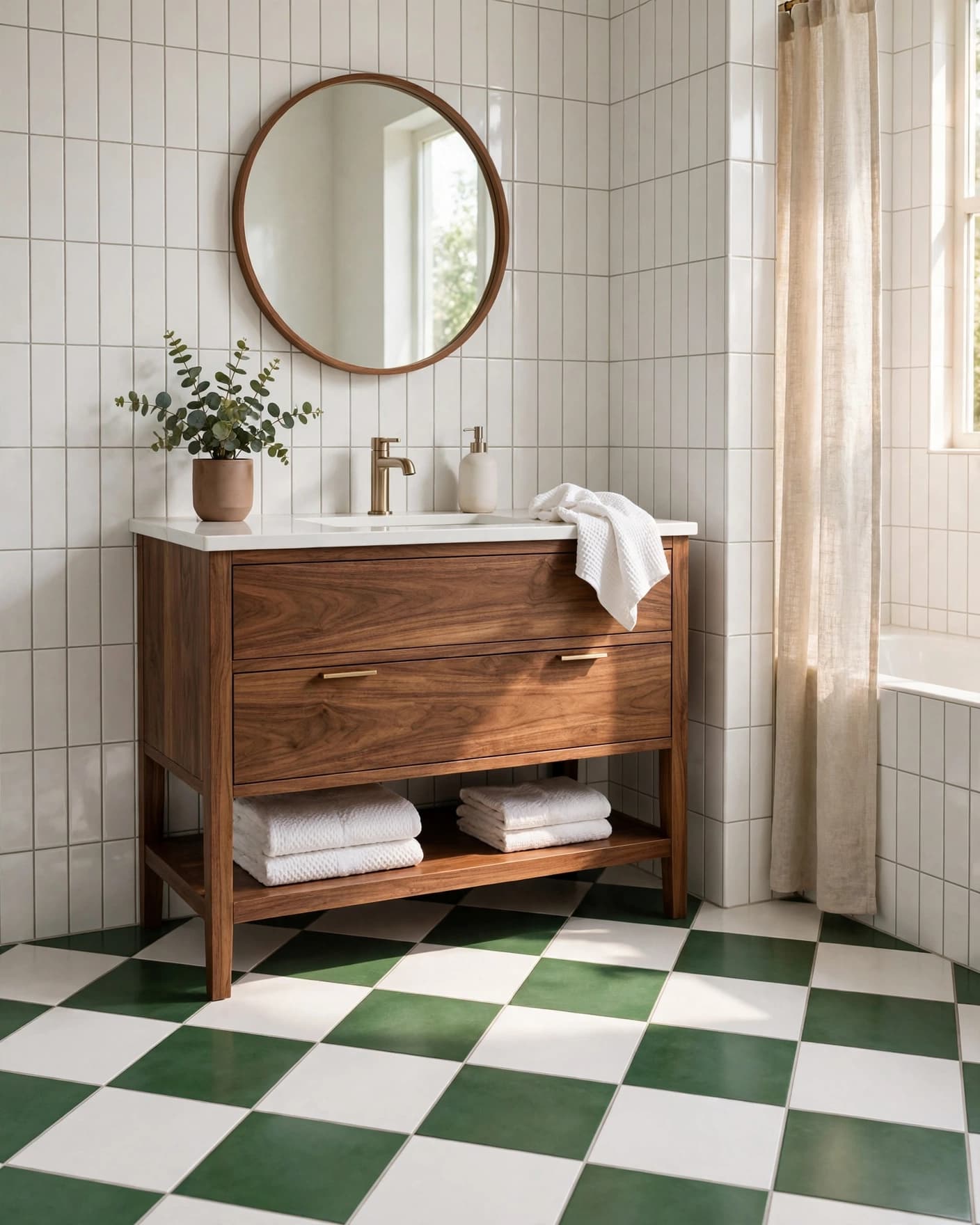
Green-and-white checkerboard flooring brings classic character into a bathroom without making the walls compete for attention. The soft green squares feel fresher than black, while the white squares keep the room bright.
Pair the floor with simple white wall tile and a walnut vanity so the pattern stays in control. A round mirror can soften the strong grid and add a more relaxed shape above the sink.
Keep the rest of the room quiet if you choose a large checkerboard pattern. Small bathrooms can handle this look well when the floor uses two gentle colors instead of sharp, high-contrast shades.
3. Fluted-Glass Shower Enclosures
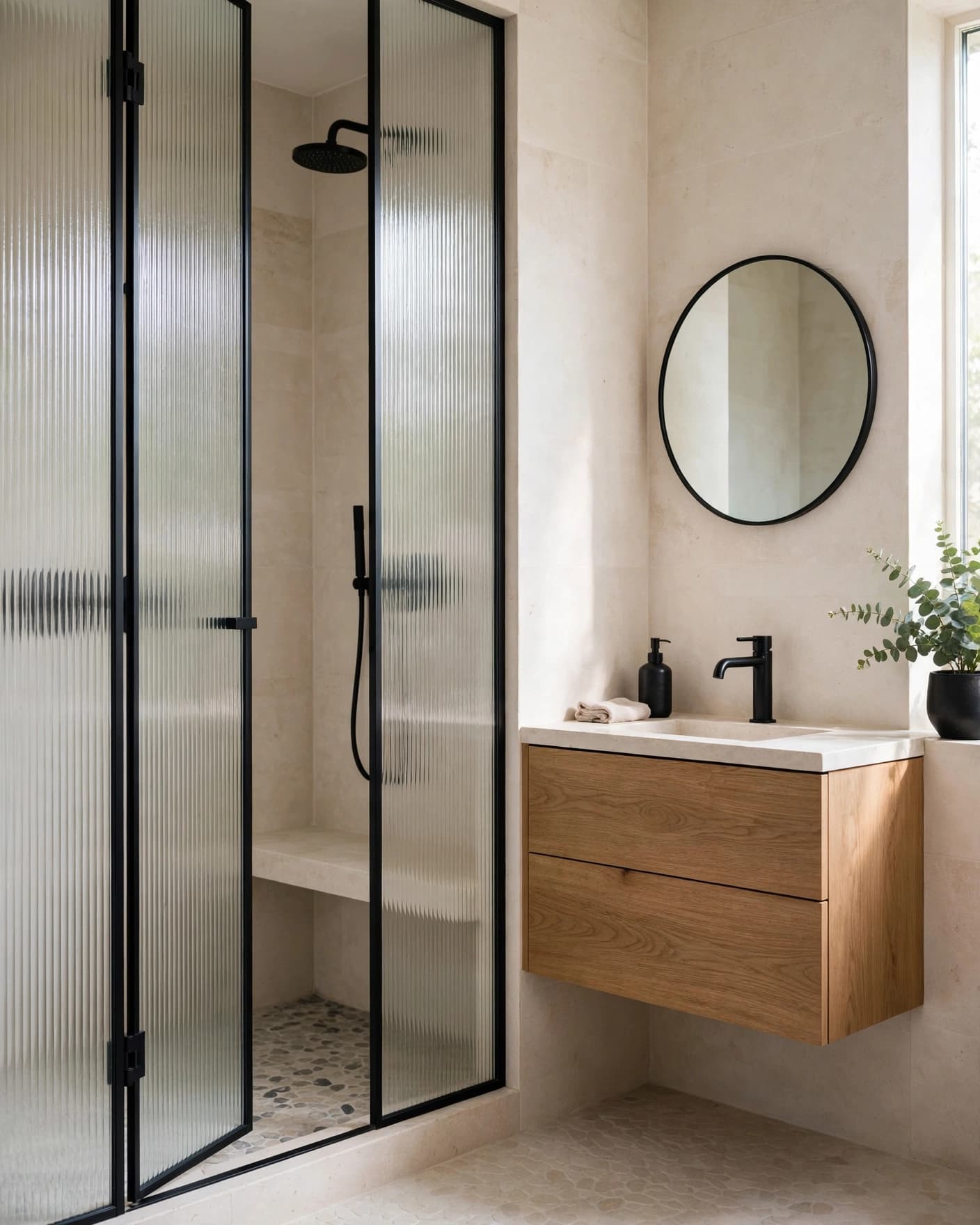
Fluted glass gives your shower privacy while still allowing light to pass through the room. Its vertical texture also adds detail without the visual weight of a solid shower wall.
Use fluted glass for a full enclosure or for one fixed panel beside an open shower entrance. Pale stone tile and a floating oak vanity keep the room feeling light and make the textured glass the main feature.
This finish works especially well when your bathroom faces a bedroom or hallway. The glass hides some of the shower area, but it still keeps the room connected and open.
4. Freestanding Soaking Tubs
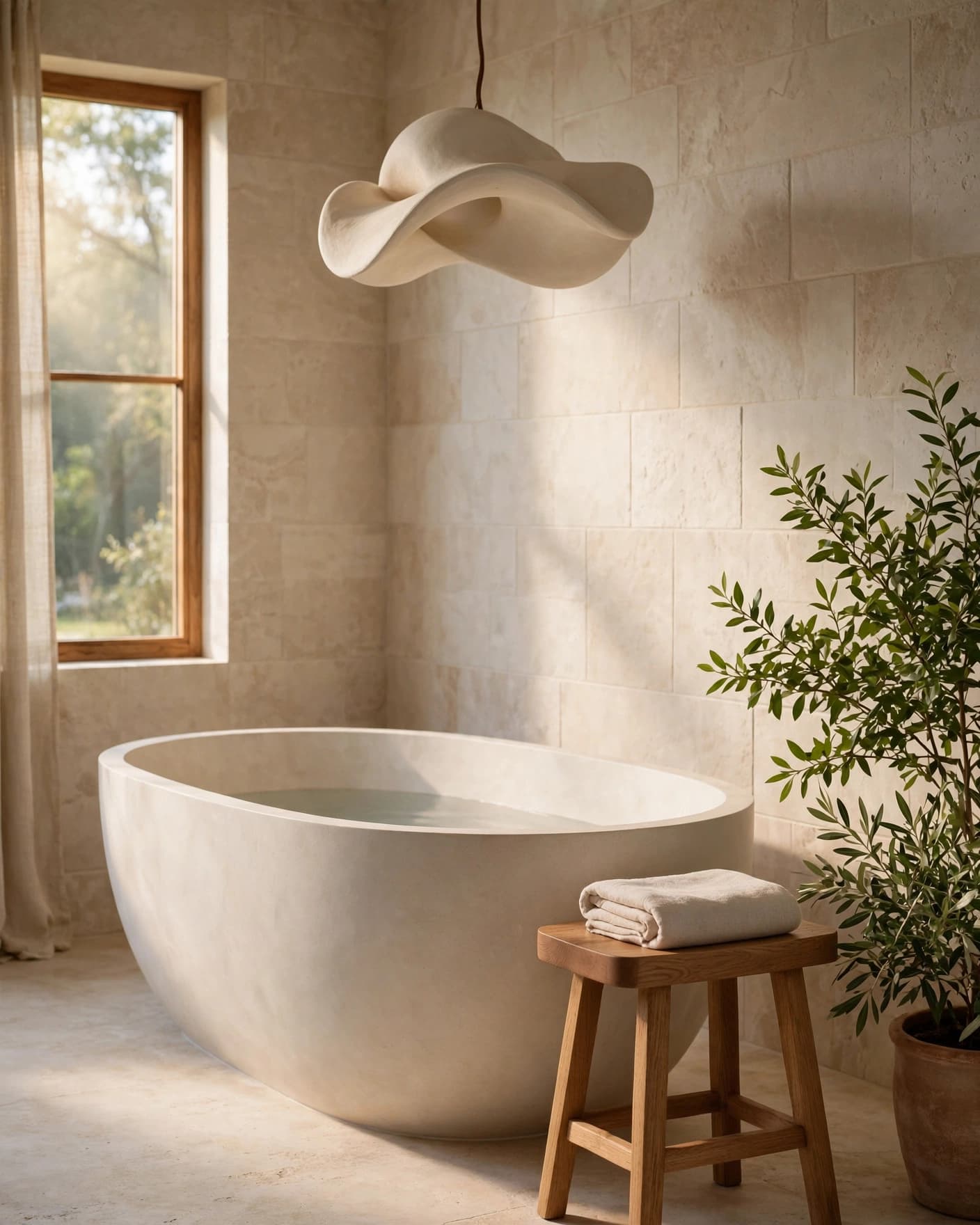
A freestanding soaking tub gives your bathroom a strong focal point and creates a relaxed spa-style mood. An oval tub feels softer than a sharp rectangular model, especially when you pair it with curved accessories.
Place the tub near a window if your layout allows it, but leave enough room around it for cleaning and movement. A small wood stool can hold towels without adding a bulky cabinet beside the tub.
A freestanding tub needs more open floor area than a built-in tub, so measure your room before choosing one. If you rarely take baths, use the space for a larger shower or extra storage instead.
5. Navy Blue Vanities
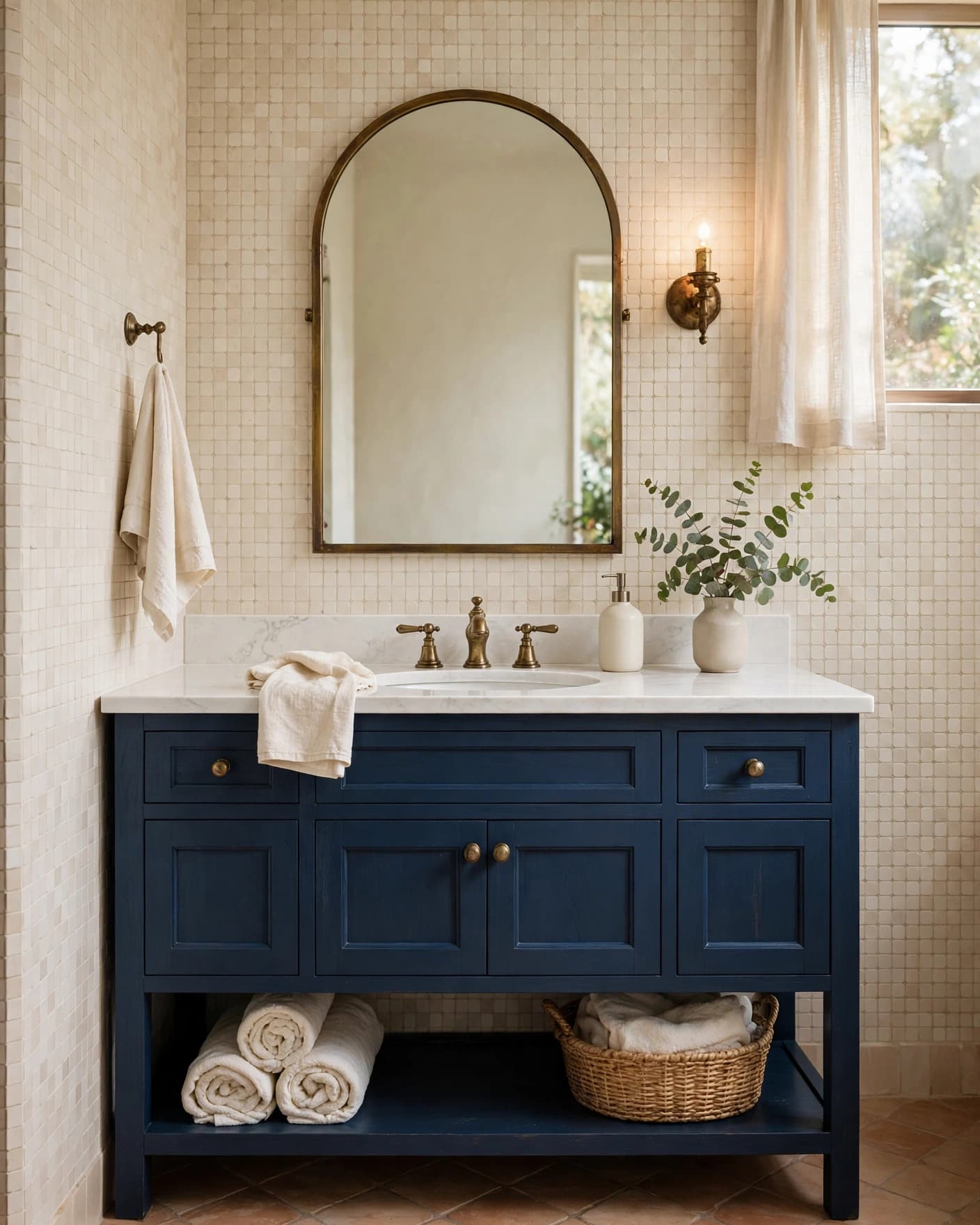
A navy vanity adds color while keeping the bathroom polished and easy to style. The deep blue works with white tile, pale stone, warm wood, and aged brass hardware.
Use a white quartz or stone countertop to create a clear break between the dark cabinet and the wall. An arched mirror also softens the strong horizontal shape of the vanity.
Navy works in large and small bathrooms, but the room needs enough light to keep the color from feeling heavy. Add a wall light on each side of the mirror so the vanity stays useful at night.
6. Wet-Room Layouts
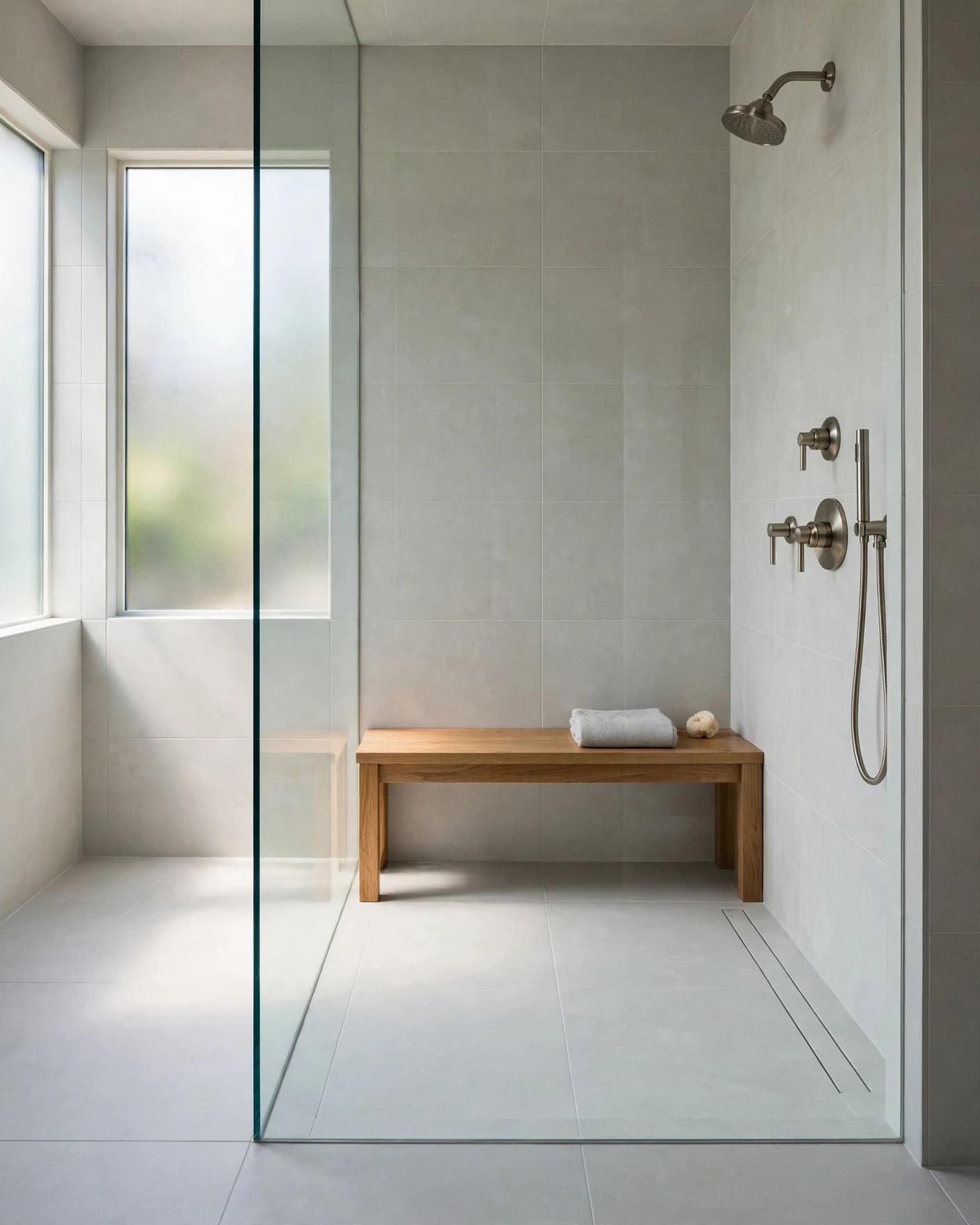
A wet-room layout places the shower and other water-safe areas in one open, waterproofed zone. The continuous floor and wall tile create a clean look and can make a compact bathroom feel larger.
Use a fixed glass panel to reduce splashing while keeping the room open. A built-in bench adds comfort, gives you a place to sit, and creates useful space for towels or shower items.
This layout needs careful planning for drainage, waterproofing, and floor slope. Choose slip-resistant flooring and keep the toilet or vanity outside the main spray area when possible.
7. Terracotta Shower Tile
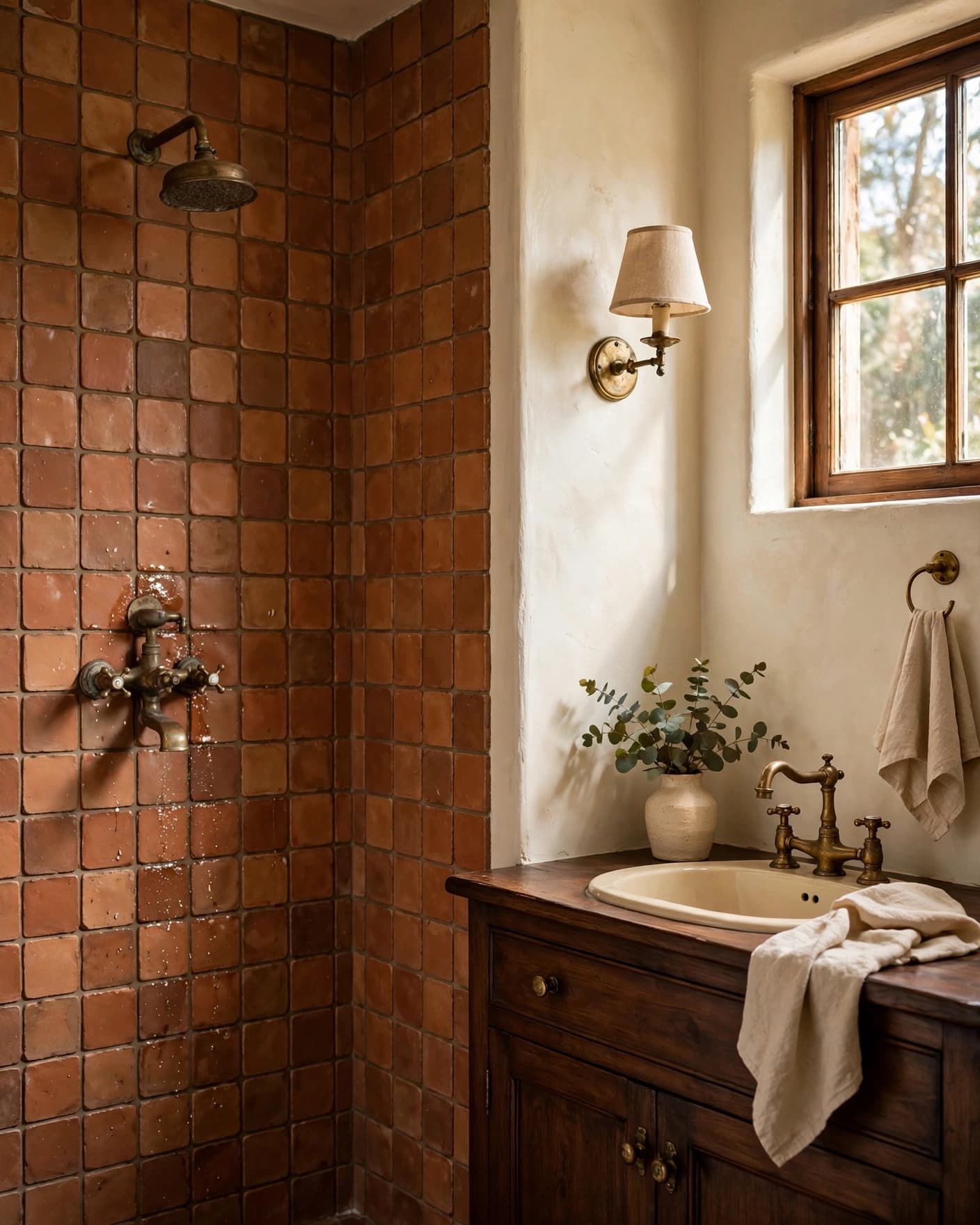
Terracotta shower tile brings earthy warmth to a bathroom and works well with cream walls, dark wood, and aged brass. Handmade-looking tile adds small variations that keep the shower from feeling too perfect or flat.
Use terracotta on the shower walls while keeping the floor a lighter stone or porcelain tile. This approach gives you a strong color moment without covering every surface in a dark shade.
Check the tile’s water rating and maintenance needs before placing it inside the shower. A suitable grout color can hide small marks, but you still need proper cleaning and ventilation.
8. Floating Fixtures
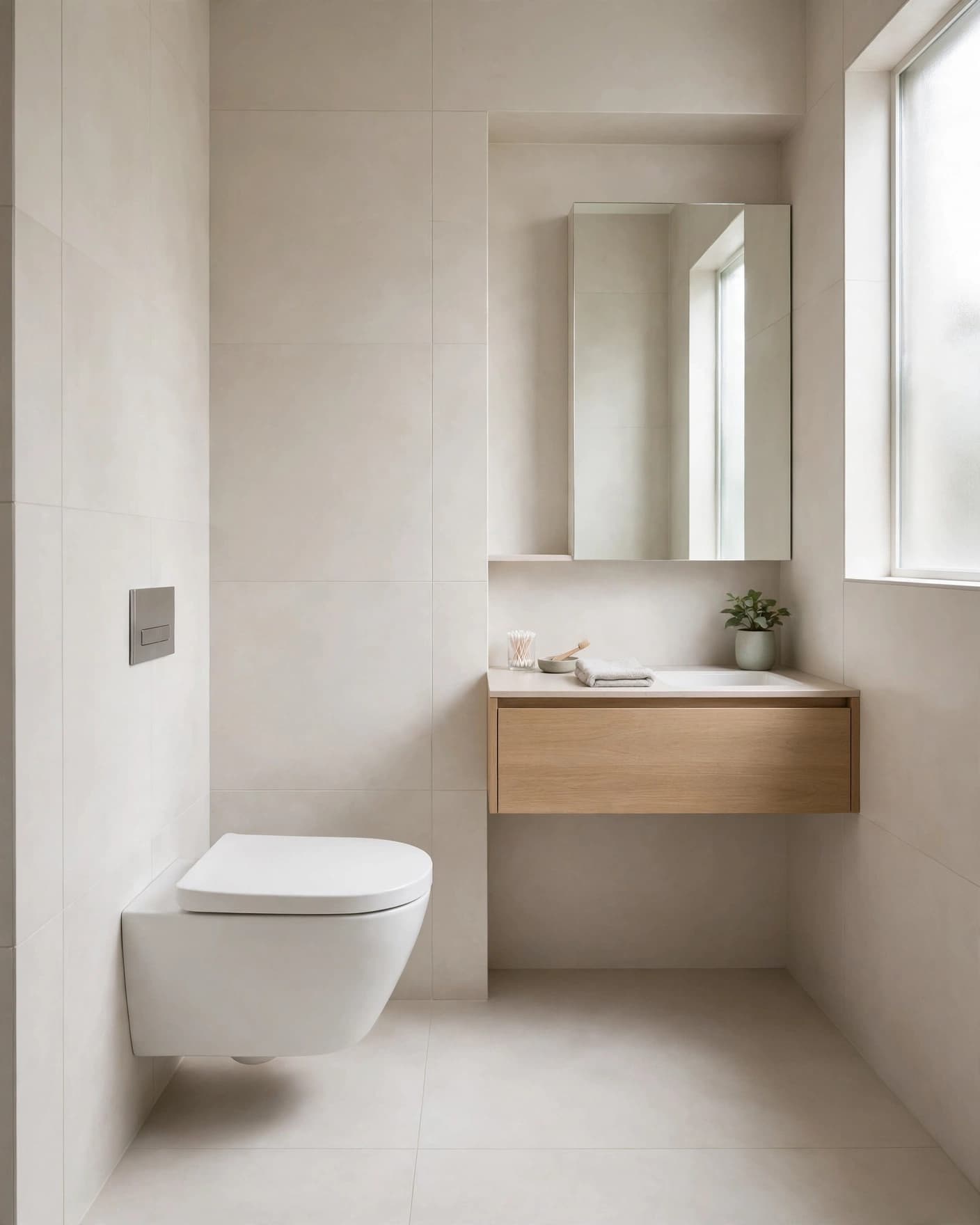
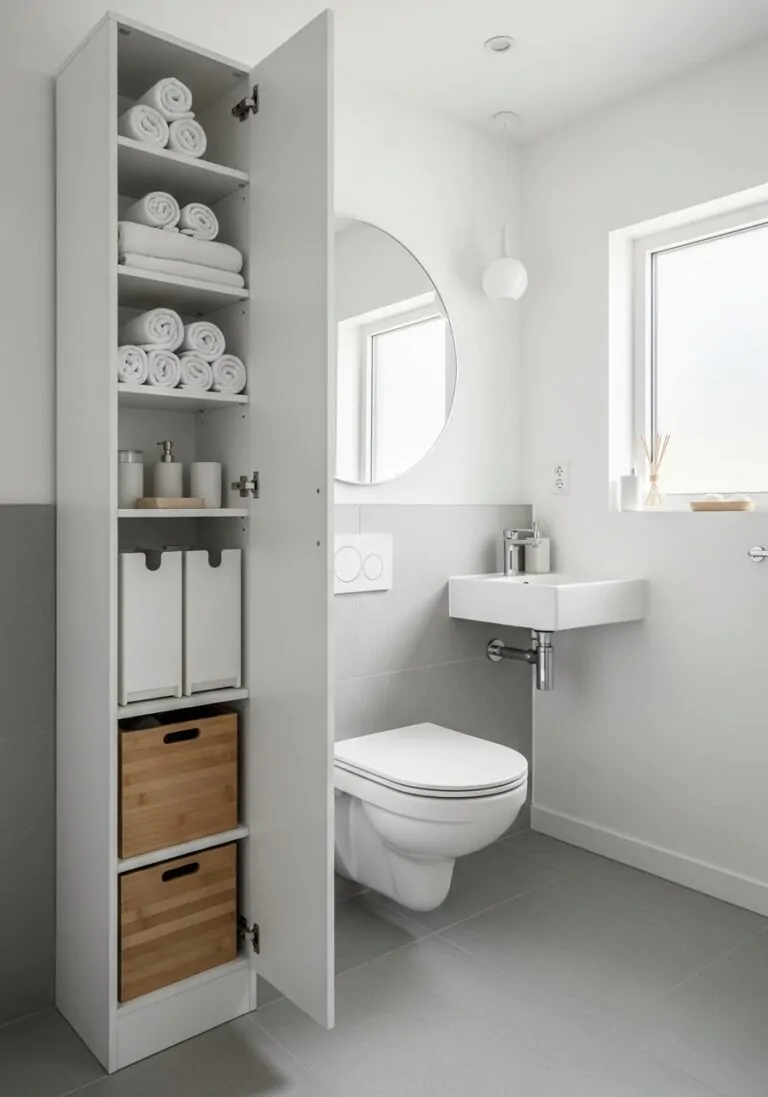
A wall-mounted toilet and floating vanity leave more visible floor beneath the fixtures. That open strip can make a small bathroom feel less crowded and makes floor cleaning easier.
Choose a slim vanity with drawers instead of a deep cabinet when every inch matters. Pale porcelain tile and a recessed medicine cabinet can add even more storage without filling the room.
Floating fixtures often require careful planning behind the wall because the plumbing sits inside the wall structure. Confirm the wall depth, support needs, and access points before ordering your fixtures.
9. Marble Slab Shower Walls
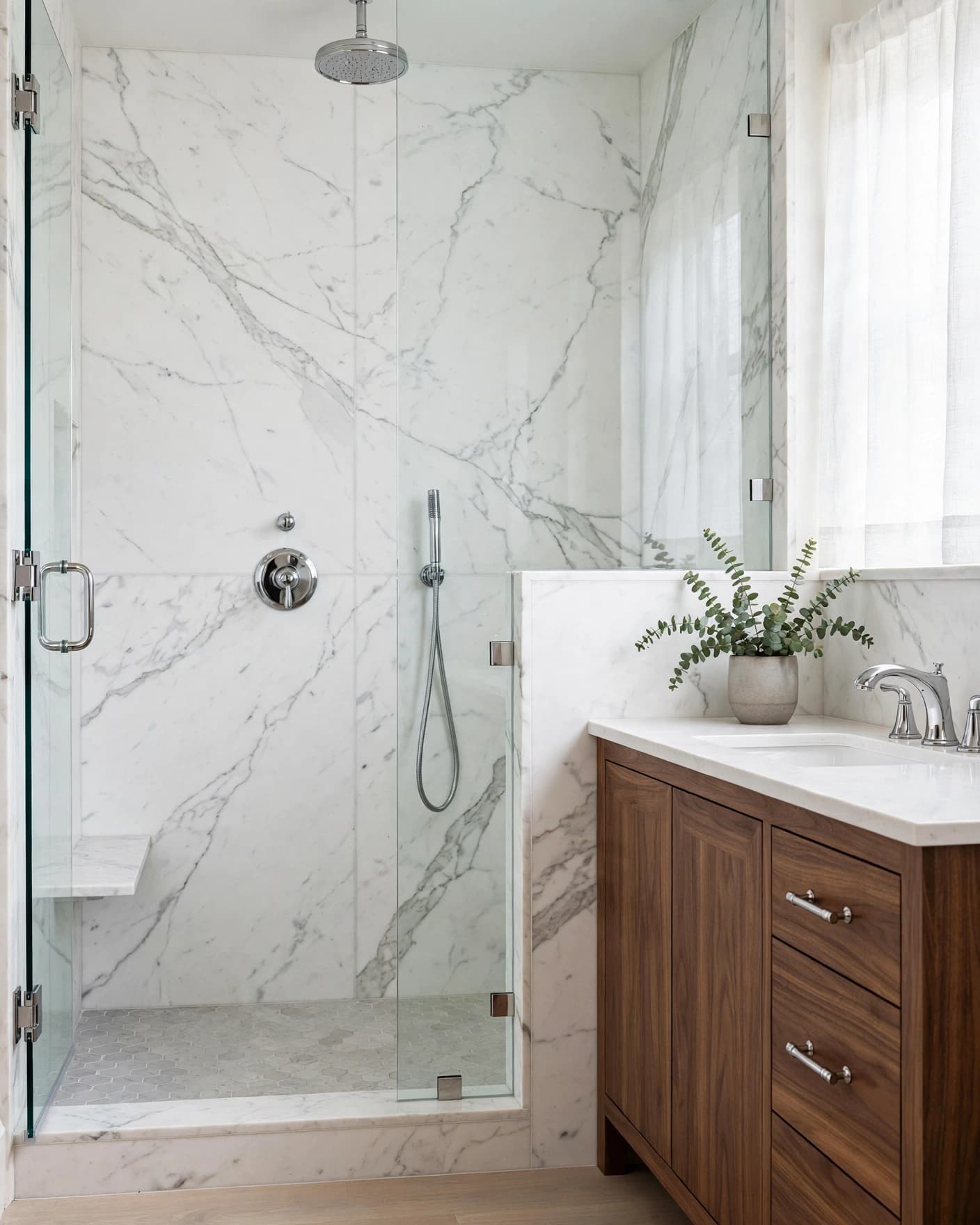
A marble slab shower wall creates a quiet, continuous surface with fewer grout lines than small tile. The natural veining adds movement while the broad panels keep the room feeling calm.
Pair the slab with a simple walnut vanity and clear glass so the marble remains the main feature. Polished chrome or brushed nickel fixtures can support the cool tones in white or gray stone.
Slabs require careful measuring and handling, so plan the installation before demolition begins. If you prefer a lower-maintenance option, look for large-format porcelain made to resemble marble.
10. Patterned Floor Tile
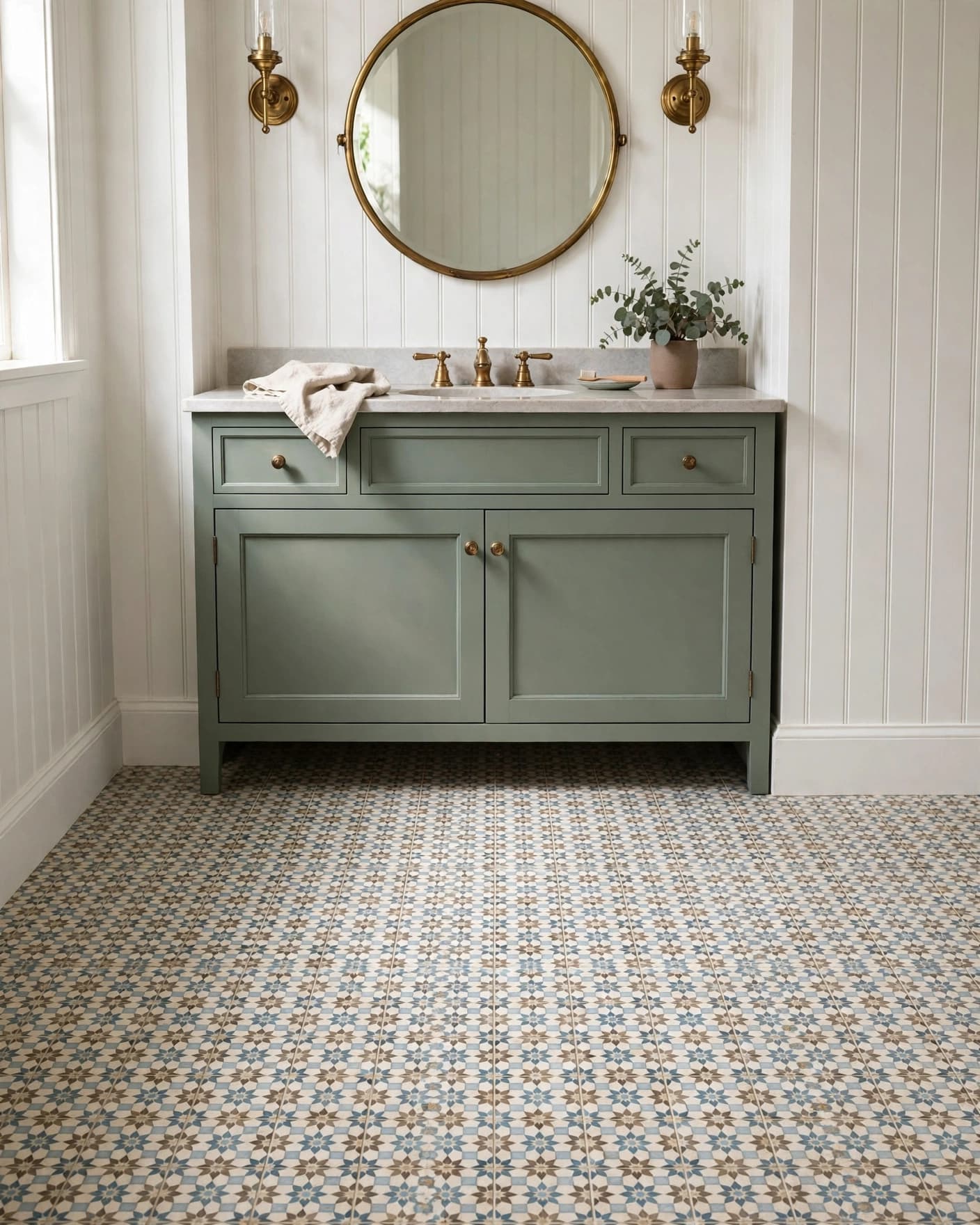
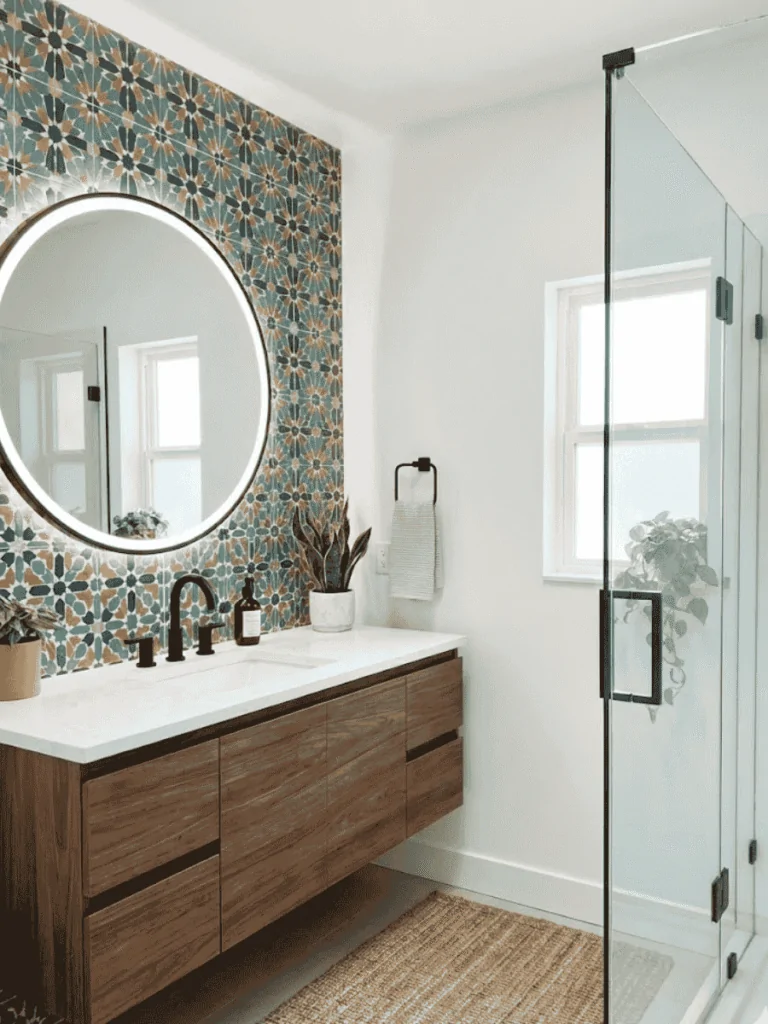
A patterned floor lets you add personality while keeping your walls and fixtures simple. Geometric designs work well with a plain vanity, white wall tile, and one metal finish.
Choose a small-scale pattern for a narrow room or a larger motif for a spacious primary bathroom. Sage green, cream, clay, and muted blue patterns feel easier to live with than very bright colors.
Bring home tile samples before making your choice because grout changes the way a pattern reads. A matching grout creates a smoother look, while a contrasting grout makes every shape stand out.
11. Double Vanities With Rounded Mirrors
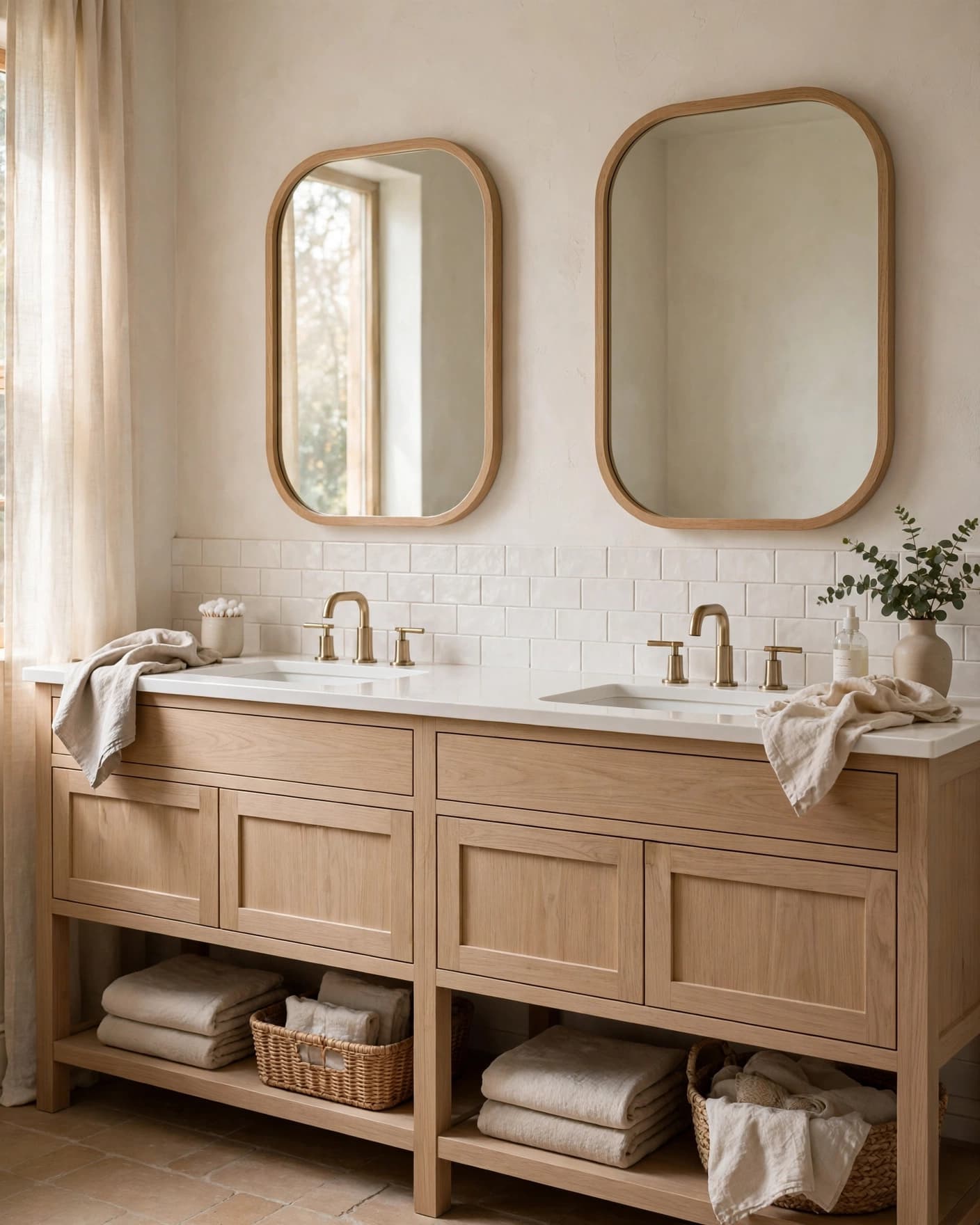
A double vanity gives two people room to get ready without sharing one small sink. Pale oak cabinets keep the long unit from feeling too heavy, especially when you use a light countertop.
Two rounded mirrors break up the wide cabinet and give each sink its own visual zone. Add separate wall lights so each person gets better illumination at the mirror.
Measure the wall and door swing before choosing a double vanity. You need enough clearance in front of the cabinet for drawers, movement, and comfortable use.
12. Botanical Bathroom Wallpaper
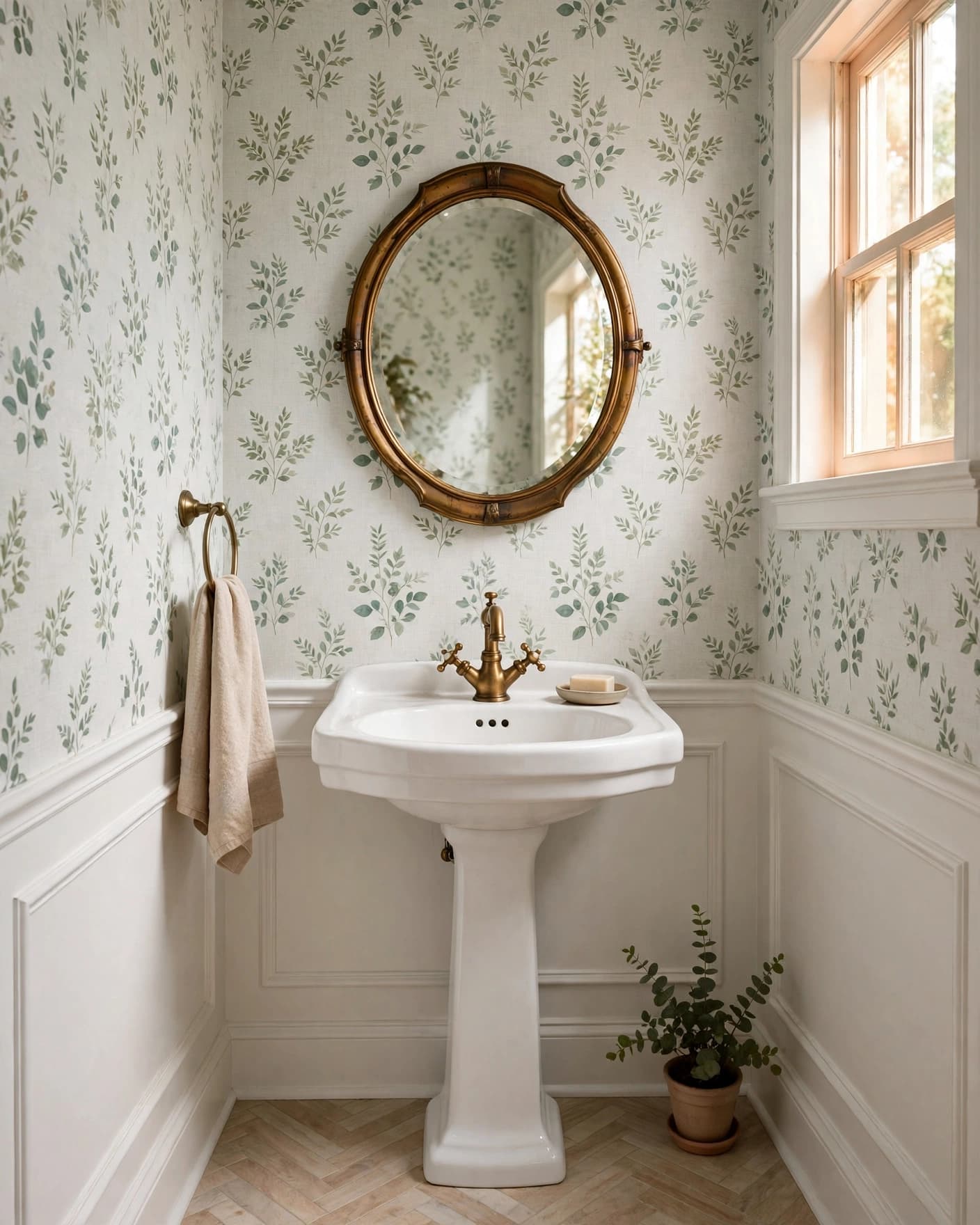
Botanical wallpaper adds pattern to a powder room or bathroom vanity wall without taking up floor space. A small leaf print can make a compact room feel collected, while a larger print creates a bolder statement.
Use painted trim and a simple pedestal sink to keep the wallpaper as the focus. Brass hardware and a framed mirror can bring warmth to green, blue, cream, or charcoal botanical designs.
Keep wallpaper away from direct shower spray unless the product supports that setting. Strong ventilation also helps manage moisture and keeps the paper looking fresh.
13. Vertical Shower Tile
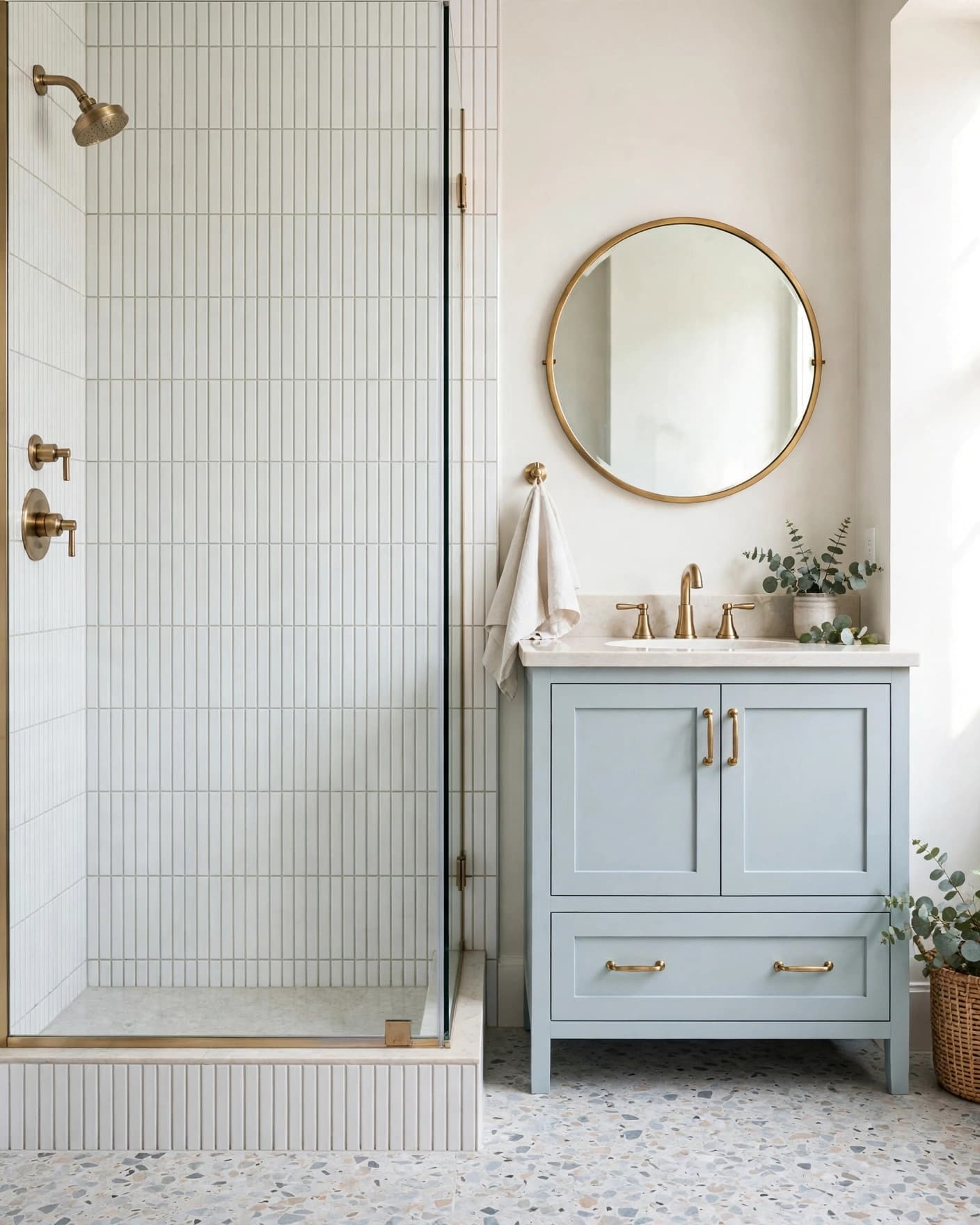
Vertical tile draws your eye upward and can make a bathroom ceiling feel taller. Stacked white tile creates a clean modern look, while narrow handmade tile adds more texture.
Pair the tile with a pale blue vanity and terrazzo floor for a fresh color palette. A round mirror adds contrast to the straight grout lines and gives the vanity area a softer finish.
Choose a grout color that matches the tile if you want the wall to look calm and continuous. A darker grout creates a graphic grid, but it also makes every grout line more visible.
14. Color-Drenched Beige Bathrooms
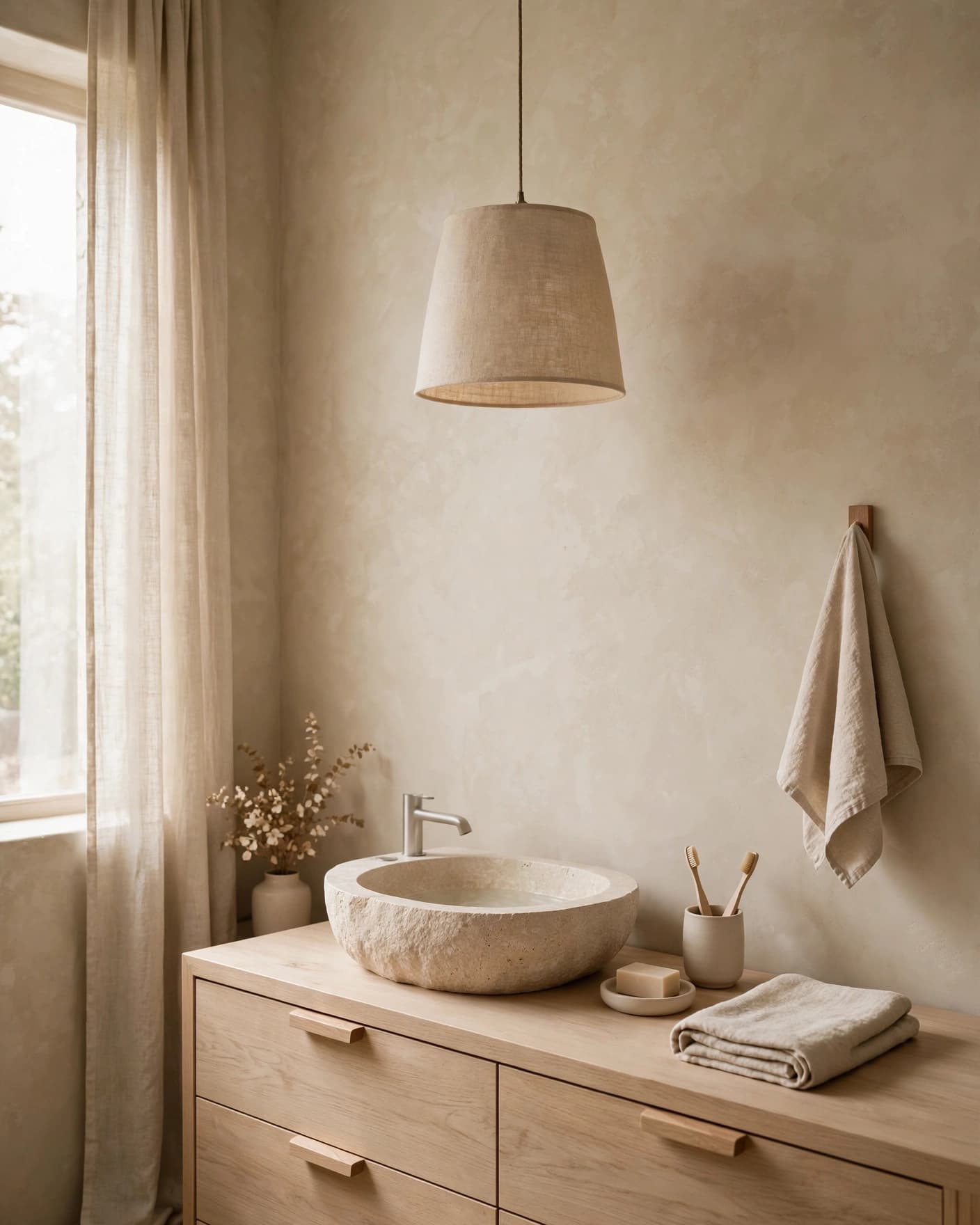
A color-drenched beige bathroom uses related beige tones across the walls, trim, cabinetry, and accessories. The result feels warm and calm without relying on a single bright white surface.
Use light wood and a stone sink to add natural variation. A linen pendant or fabric shade can soften the room, but choose lighting made for the moisture level in your bathroom.
Beige looks different under warm and cool bulbs, so test your paint and tile at several times of day. Keep the undertones consistent so the room doesn’t look yellow beside a cool gray floor.
15. Colorful Shower Niches
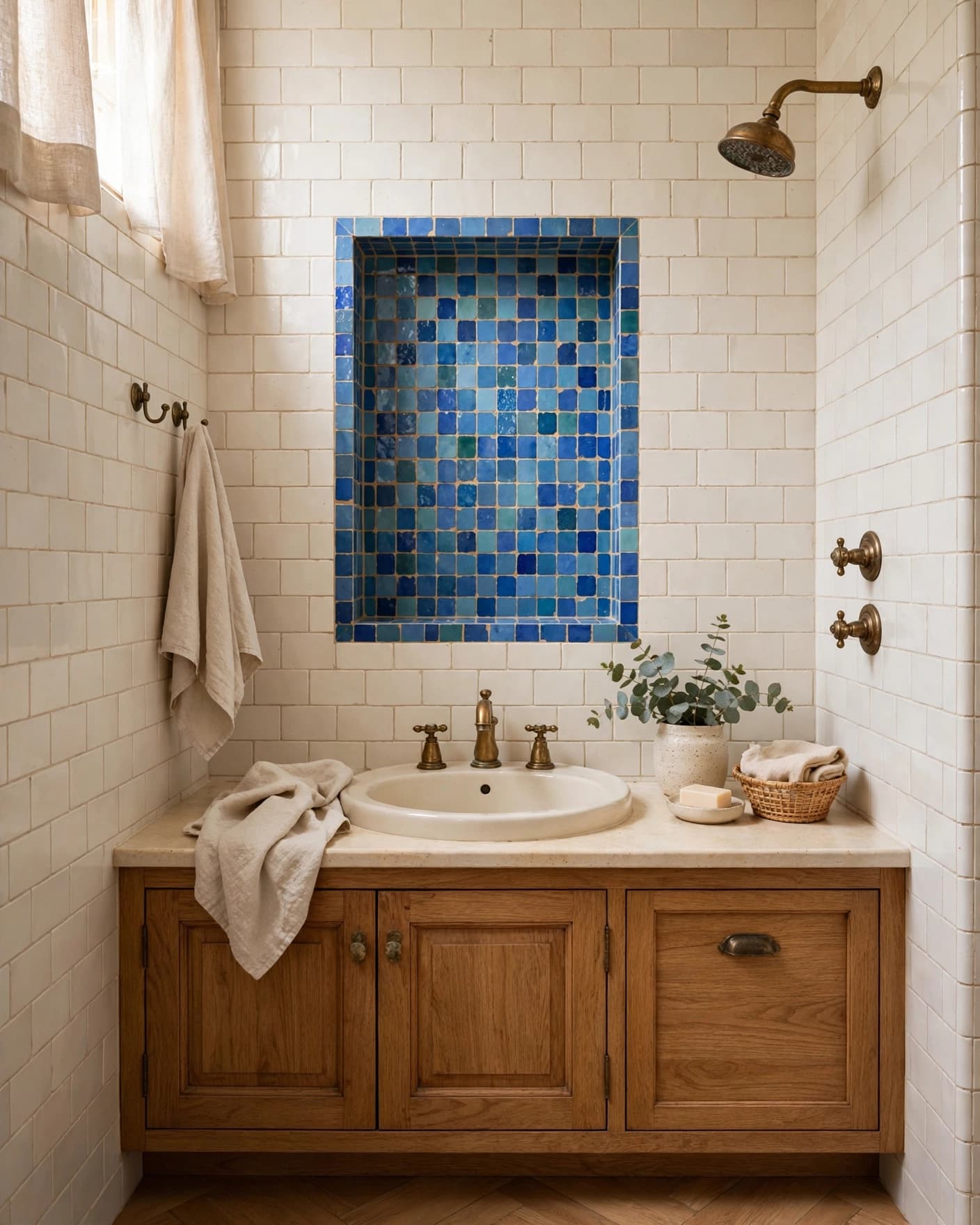
A colorful shower niche gives you a small place to use a strong tile color without covering the entire shower. Blue zellige-style tile adds texture and brings focus to an otherwise neutral wall.
Repeat one color from the niche in your towels, vanity, or accessories so the feature feels connected to the room. Keep the surrounding tile quiet when the niche has a varied handmade finish.
Plan the niche before the wall gets closed because its height and depth depend on the wall structure. Add enough room for the bottles you use, and slope the bottom slightly so water doesn’t collect.
16. Vintage Clawfoot Tubs
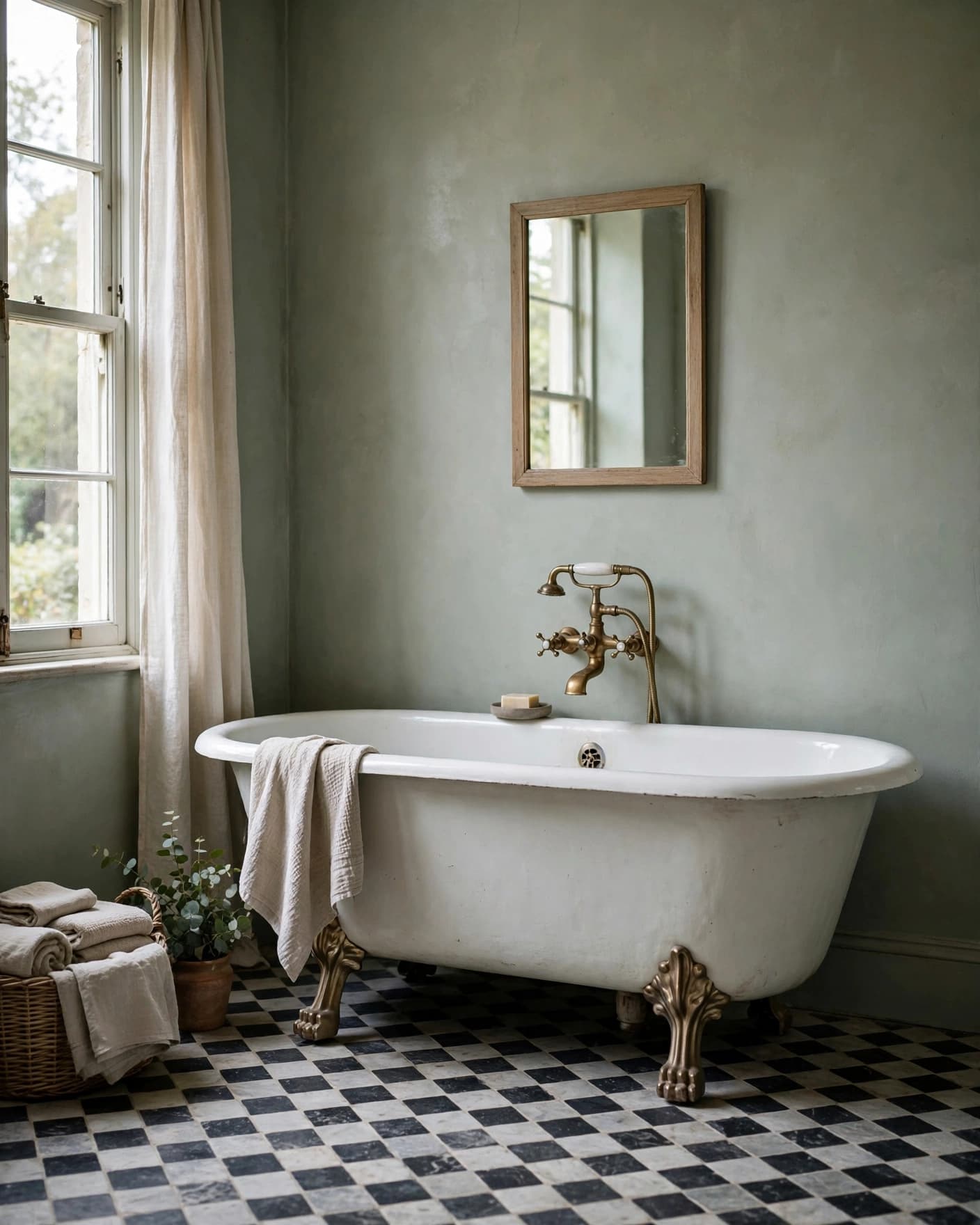
A clawfoot tub brings vintage character through its raised feet, curved basin, and exposed plumbing. Sage walls and a checkerboard floor help the tub feel classic without turning the room into a period set.
Use a wall-mounted faucet or a floor-mounted filler based on your layout and plumbing plan. An antique-style mirror can support the look, while modern lighting keeps the room practical.
A vintage tub can weigh more than a modern acrylic model, especially when full. Check the floor support and make sure the surrounding area allows easy access for cleaning and maintenance.
17. Curved Vanities
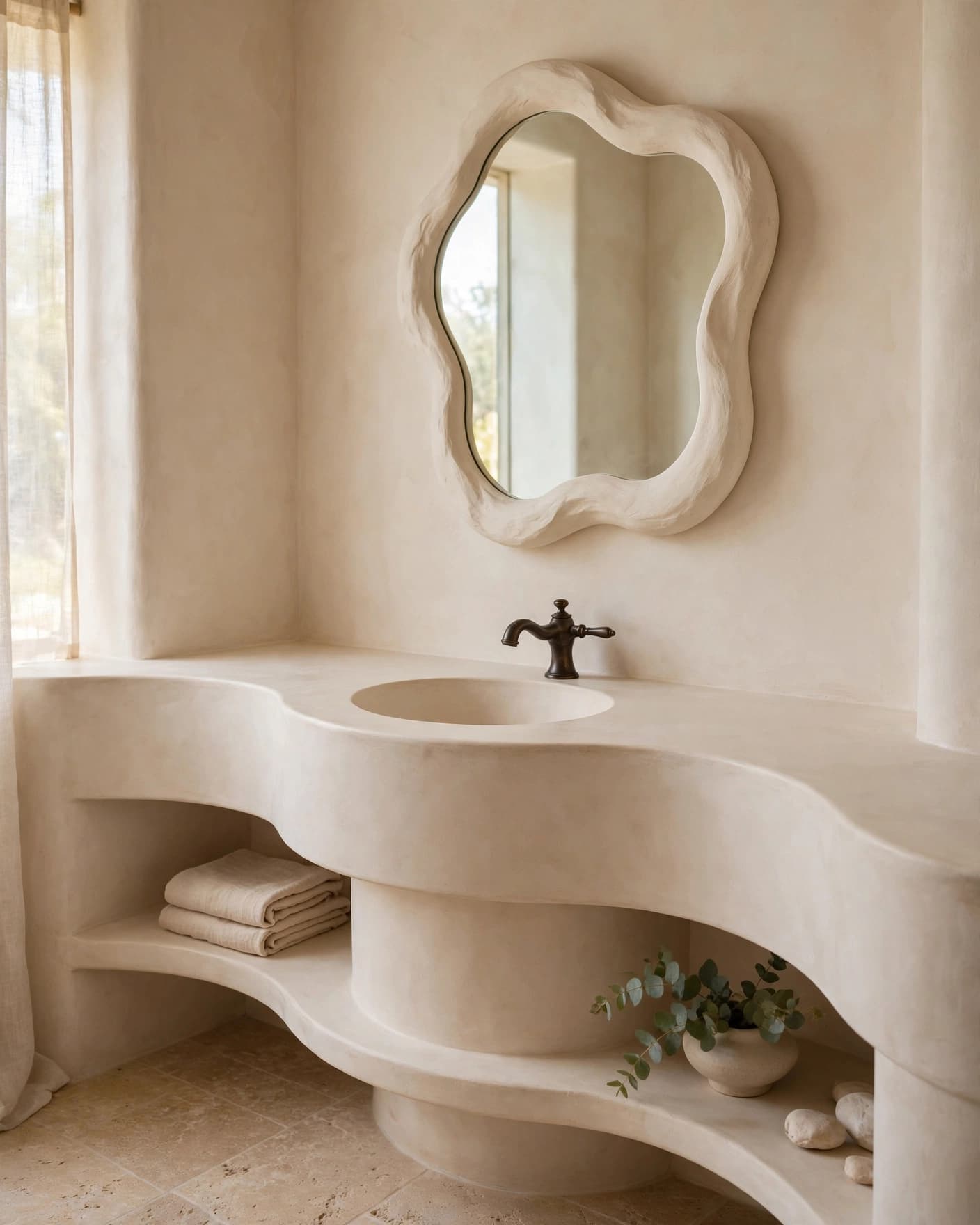
A curved vanity softens the strong lines found in most bathrooms. Rounded cabinet fronts work well with a round basin, sculptural mirror, and bronze faucet.
This shape can help a narrow room feel easier to move through because the corners take up less visual space. Use a pale cream finish if you want the vanity to blend with the walls.
Curved cabinetry may cost more than standard rectangular units and can limit drawer space. Measure the storage you need before choosing the shape, especially if the bathroom serves more than one person.
18. Terrazzo Countertops and Accents
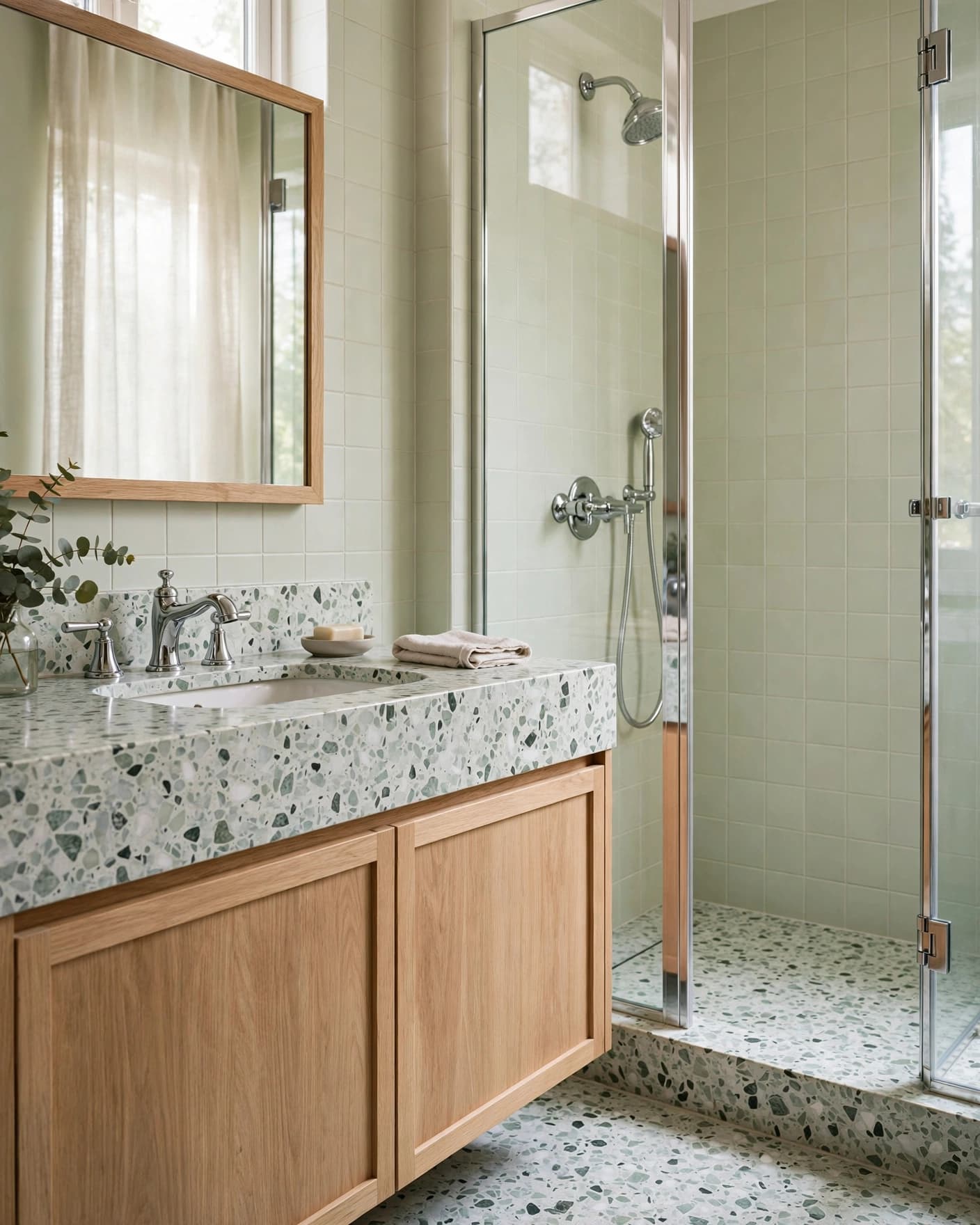
Terrazzo adds small chips of color to a bathroom countertop, threshold, shelf, or floor. It can connect several colors in the room, which makes it easier to pair with green tile, oak, white, or muted pink.
Use terrazzo in one or two areas instead of covering every surface. A terrazzo vanity top can provide enough pattern while the walls stay simple.
Ask how your chosen material handles stains, cleaners, and moisture before installation. Matching the background color to your wall tile creates a calmer transition between surfaces.
19. Ceiling-Mounted Rainfall Showers
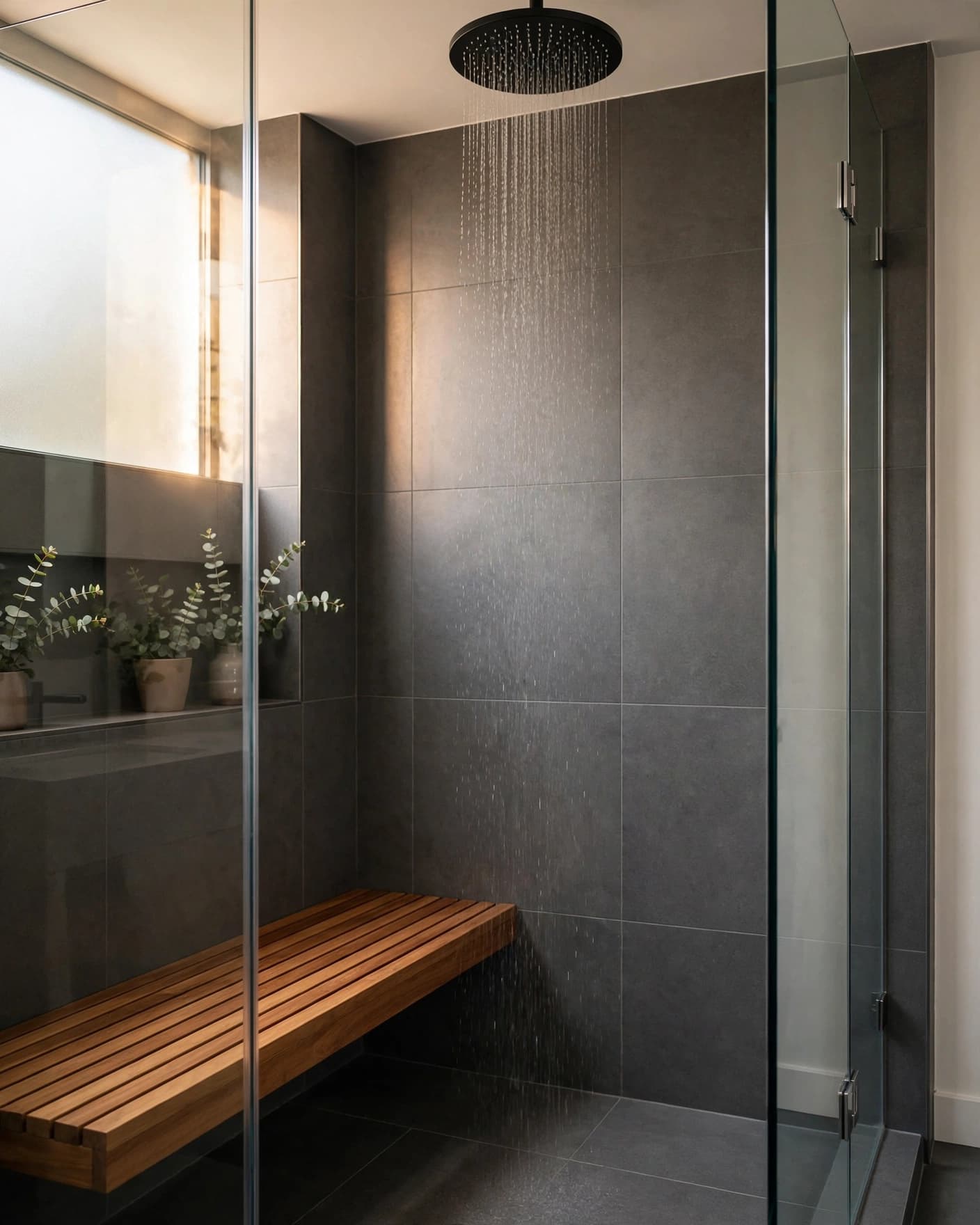
A ceiling-mounted rainfall shower creates a relaxed shower experience and gives the enclosure a clean, uncluttered look. Dark tile and a teak bench add contrast while keeping the fixture as the main feature.
Use a handheld shower beside the rainfall head if you need more control for rinsing or cleaning. A separate control near the entrance also lets you start the water without standing beneath the spray.
Check your home’s water pressure and plumbing capacity before selecting a large showerhead. You can also compare efficient options through the Department of Energy’s faucet and showerhead guidance.
20. Open Oak Storage
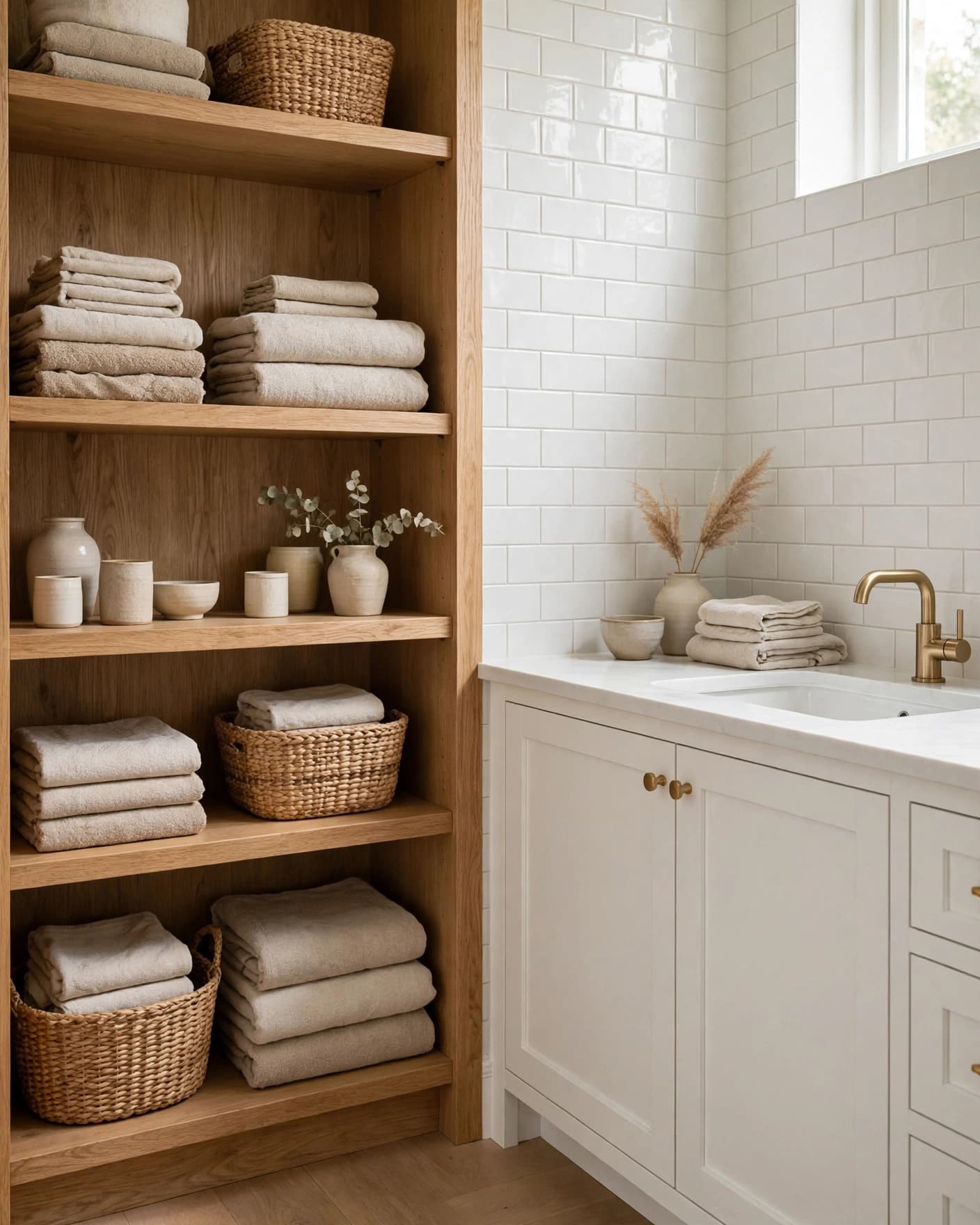
Open oak shelves give you quick access to towels, baskets, and daily bathroom items. The wood adds warmth beside white tile and prevents the room from feeling too hard or clinical.
Keep the shelves beside the vanity or outside the direct shower spray. Use baskets for small items so the shelves look tidy without hiding everything behind cabinet doors.
Open storage works best when you choose what stays visible. Fold towels in one color family, group matching containers together, and leave some shelf space clear.
21. Black-and-White Contrast
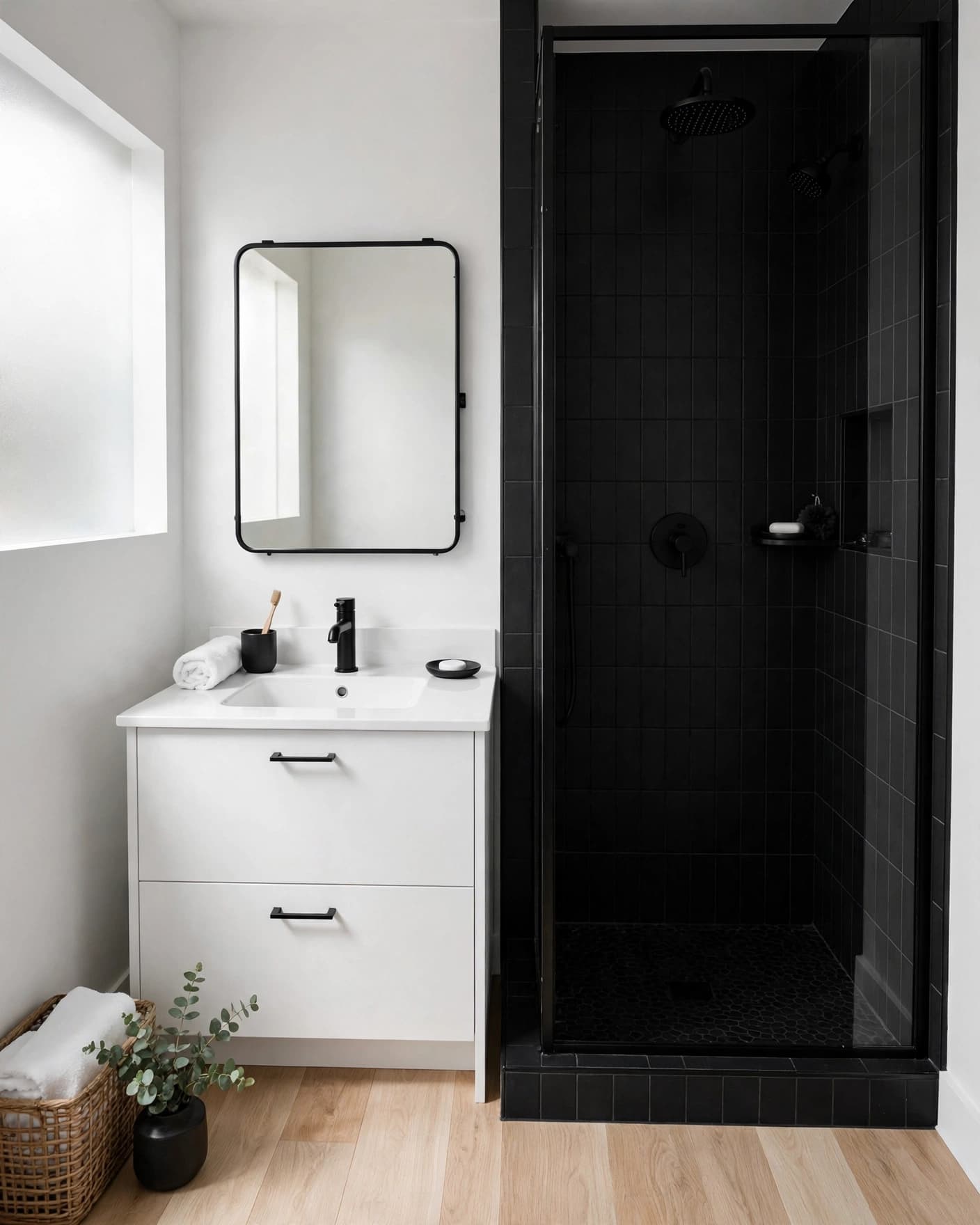
Black-and-white contrast gives your bathroom a crisp look that can work with modern, traditional, or transitional furniture. Matte black shower tile creates depth, while a white vanity and mirror frame keep the room bright.
Use black on one main area if you have a small bathroom, such as the shower wall or floor. Add white walls, pale wood, or warm towels to keep the palette from feeling harsh.
Black fixtures show water spots more easily than some lighter finishes, so consider the cleaning routine before choosing them throughout the room. For faucets, you can also compare WaterSense-labeled bathroom fixtures designed to use water efficiently while maintaining everyday performance.
Choosing the Right Bathroom Remodeling Ideas
Start with the layout before choosing paint, tile, or hardware. Decide whether your bathroom needs more storage, a larger shower, a better vanity, or a clearer path through the room.
Lighting should support the way you use the space. Combine mirror lighting with general ceiling light, and choose warm bulbs that show skin tones and tile colors accurately.
Storage needs attention early because cabinets, niches, shelves, and medicine cabinets affect wall space and plumbing locations. Plan a home for towels, cleaning supplies, toiletries, and the items you use every day.
If you want a more accessible bathroom, review the ADA Accessibility Standards and check your local requirements before finalizing the layout. Features such as a wider entry, stable grab-bar support, a low-curb shower, and clear floor space can make the room easier to use for more people.
Water efficiency also belongs in the planning stage. Consider WaterSense-labeled faucets and shower fixtures, then confirm that your selections match your household’s water pressure and daily needs.
Finally, separate the visual work from the hidden work. New paint and hardware can change the mood quickly, while waterproofing, drainage, electrical changes, ventilation, and plumbing determine how well the remodeled bathroom performs over time.
Create a Bathroom That Fits Your Routine
The best bathroom remodeling trend is a room that feels good to use every day. Save the ideas that match your space, choose one main feature, and build the rest of the design around its color, material, and practical needs.

I’m Sumayya and I love turning ordinary spaces into ones you’ll never want to leave. Whether it’s cozy cottagecore corners, bold maximalist magic, or sleek modern minimalism, I’m here to help you discover your style and bring it to life without spending a fortune. Ready to refresh your space? Let’s make it happen!