21 Small Bedroom Ideas With Wardrobe Storage That Look Stylish and Spacious
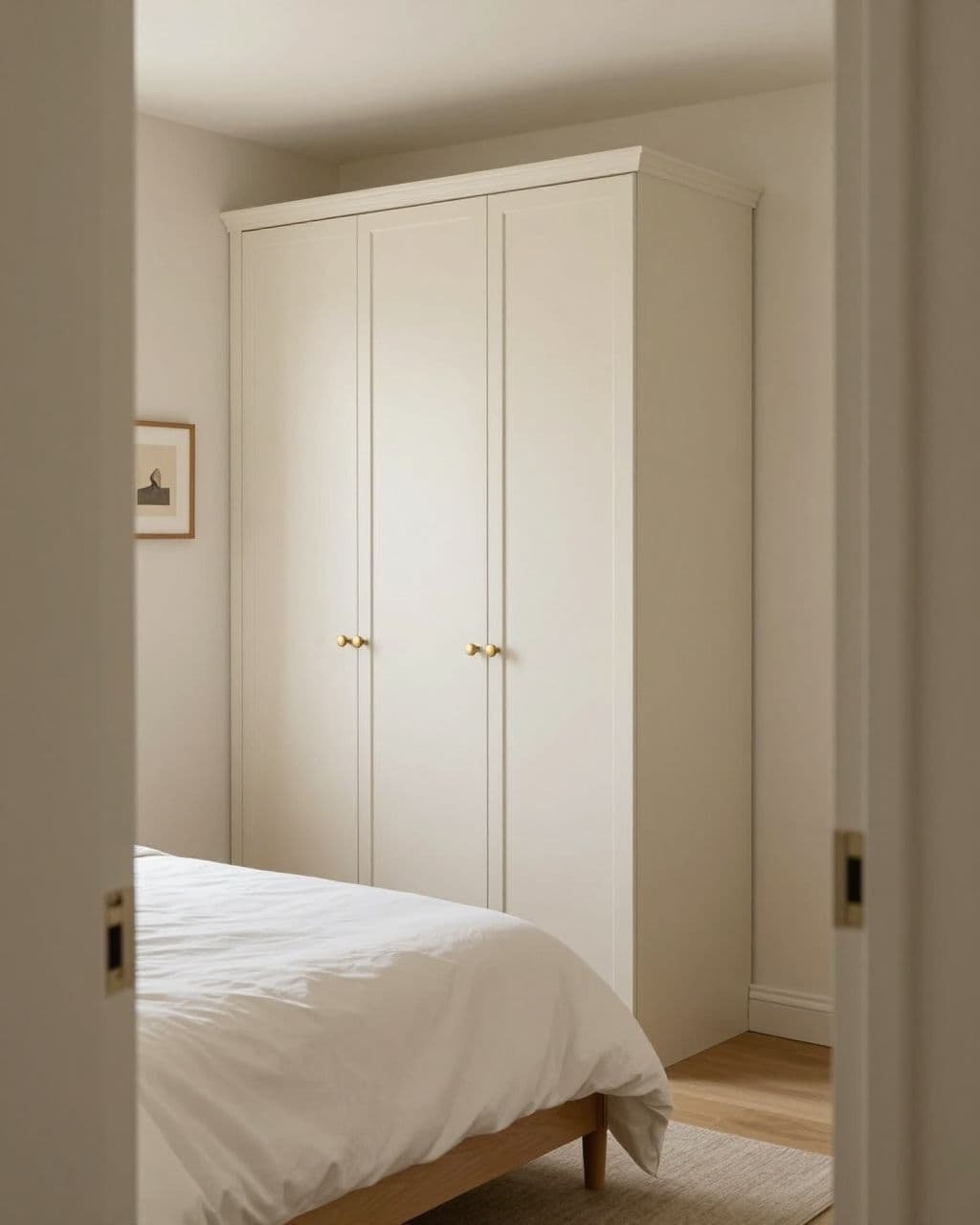
Small bedroom ideas with wardrobe storage can help you keep clothes, bedding, and daily essentials organized without making the room feel crowded. With the right wardrobe shape, color, and placement, you can make every inch work harder while keeping your bedroom calm and comfortable.
21 Small Bedroom Ideas With Wardrobe Storage
1. Floor-to-Ceiling Mirrored Wardrobe
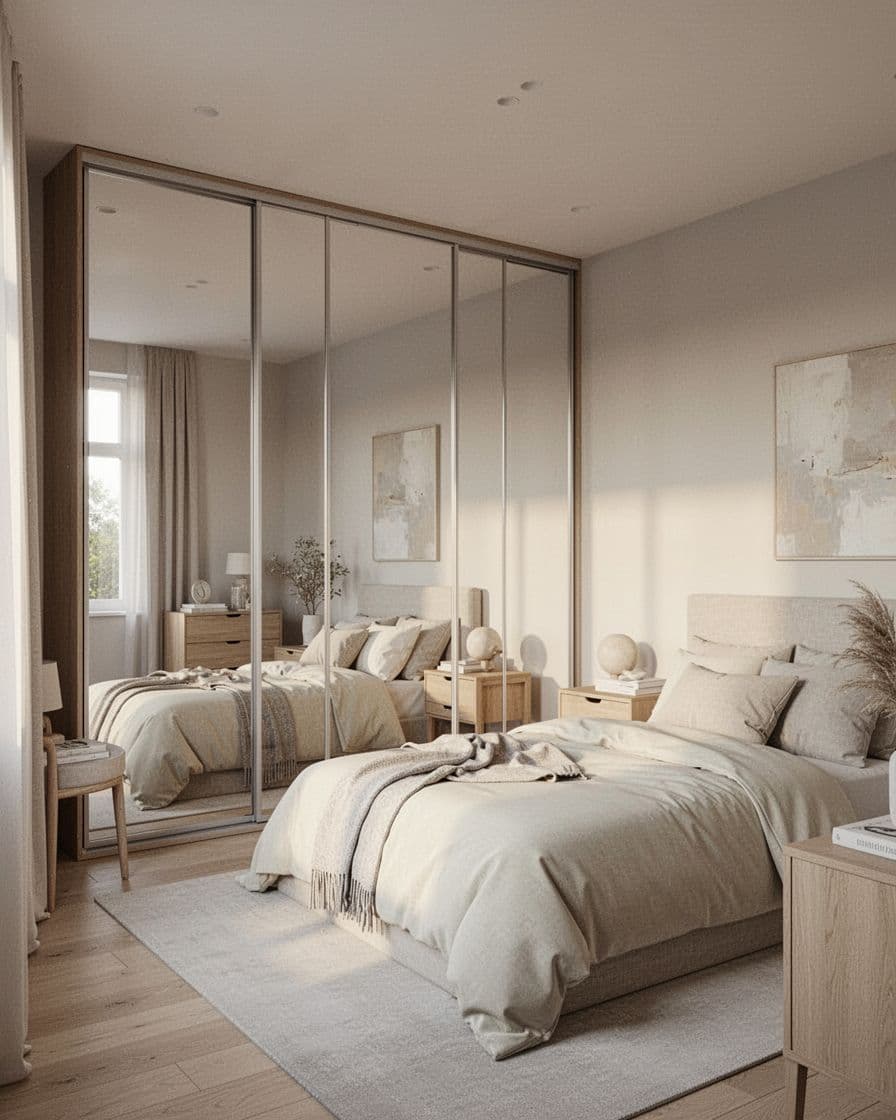
A floor-to-ceiling mirrored wardrobe gives you generous storage while making the room feel wider and brighter. The reflective doors bounce daylight across the bedroom, so the wardrobe feels lighter than a solid, dark unit.
Place the wardrobe on the longest wall if you can. Choose slim hangers, so more clothing fits inside without crowding the rail.
Mirrored doors also give you a full-length dressing mirror without taking up floor space. Keep the rest of the room soft and simple, with pale bedding and light wood furniture, so the reflection doesn’t create visual clutter.
2. Slim Sage Green Built-In Wardrobe
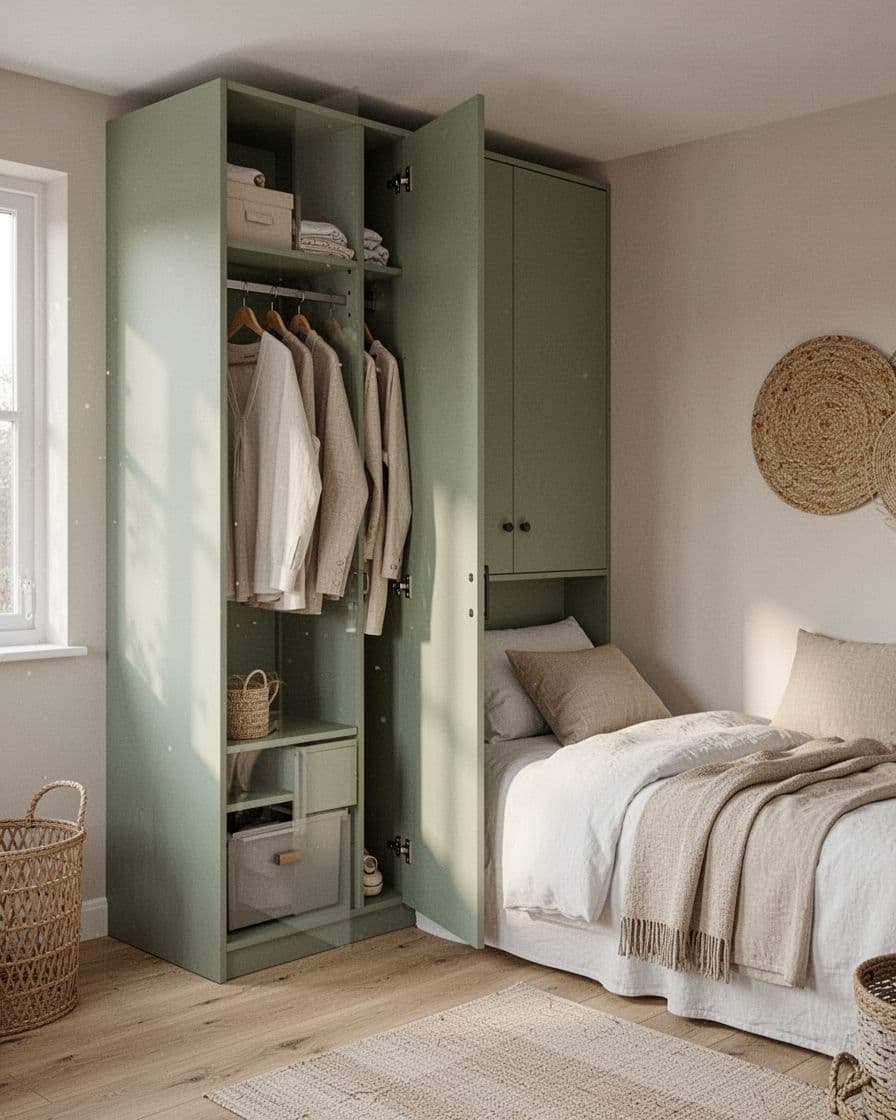
A slim built-in wardrobe can fit into the narrow gap beside your bed and still provide useful hanging space. Sage green adds color without the heavy look that deeper shades can create in a small room.
Choose doors with a shallow profile and simple handles. If you rent, look for a narrow freestanding wardrobe in a similar green shade, or use removable furniture film on smooth doors.
The wardrobe should sit flush with the wall whenever possible. That layout keeps the walkway open and stops the bed from feeling trapped between bulky furniture.
3. Wardrobe Wall Around the Bed
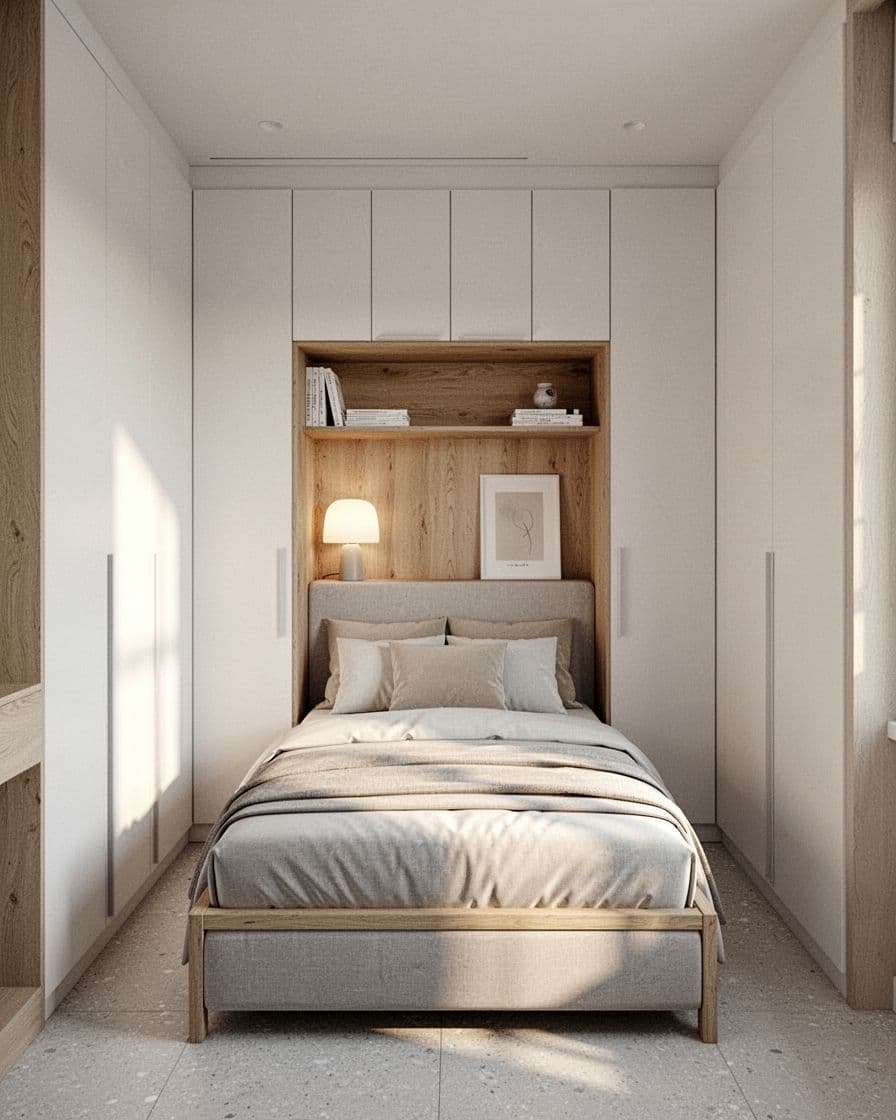
A wardrobe wall around the bed turns one section of the room into a complete storage zone. Tall cabinets on both sides create a frame, while overhead cupboards use the space above the headboard.
White doors keep the arrangement from looking too heavy. Add a warm wood niche above the bed for a small lamp, a few books, or a framed print with a plain design.
This layout works best when you use a narrow bed frame and shallow cabinets. Leave enough room on both sides of the bed to move comfortably and open the wardrobe doors without hitting the bedding.
4. Freestanding Rattan Wardrobe
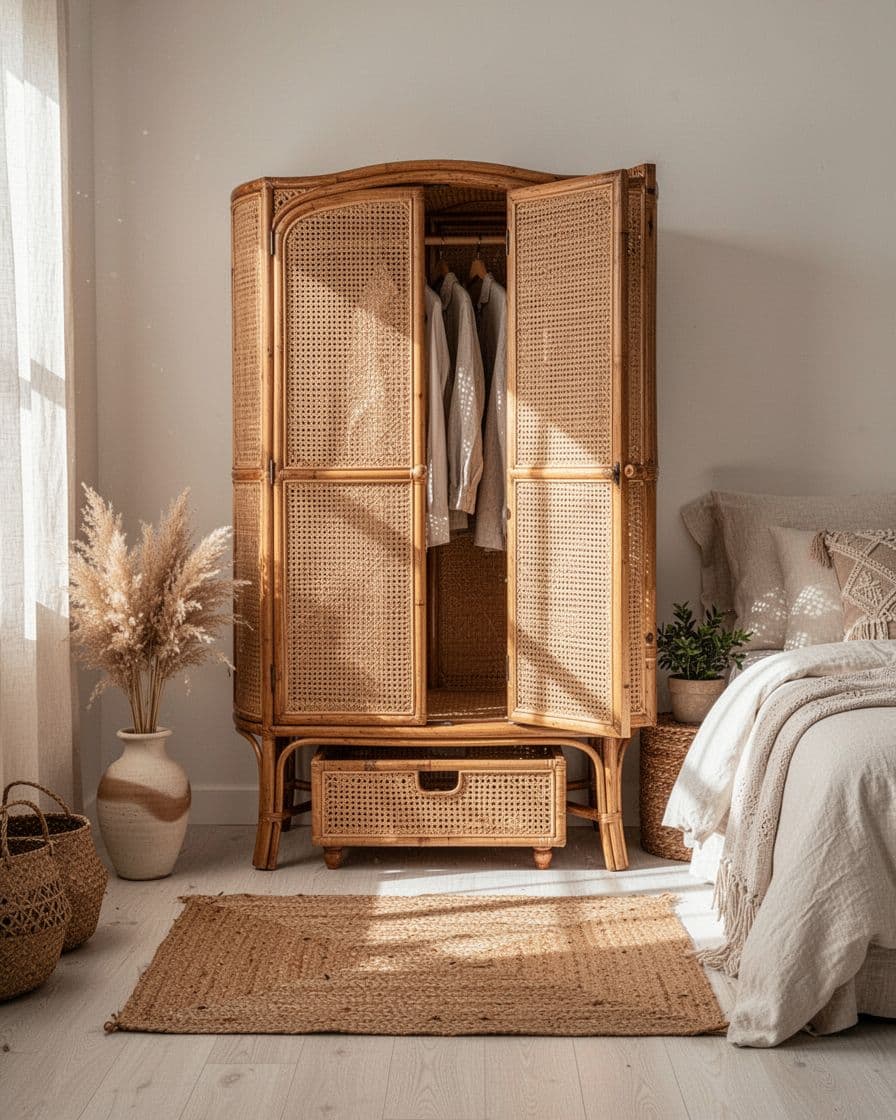
A freestanding rattan wardrobe adds texture and warmth to a small bedroom without the solid, boxed-in look of glossy furniture. The woven doors bring a relaxed boho feel and pair well with linen bedding, wood floors, and woven rugs.
Look for a wardrobe with raised legs so you can see more of the floor beneath it. That small gap makes the furniture feel less bulky and gives you a place to slide in a slim storage box.
Keep the surrounding colors calm, such as cream, sand, and pale brown. Too many strong patterns can compete with the rattan texture and make the compact room feel busy.
5. Tall White Wardrobe With a Floating Nightstand
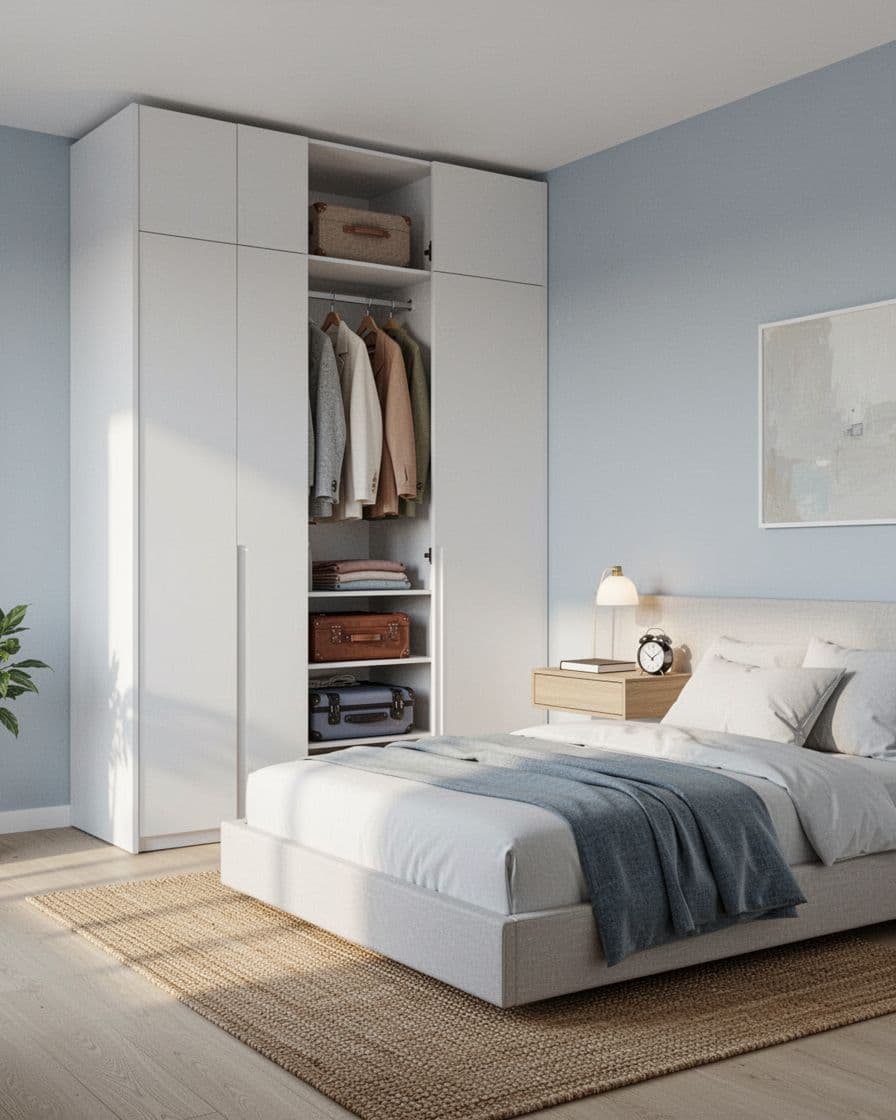
A tall white wardrobe uses vertical space while leaving the floor open around the bed. Pair it with a floating nightstand so you can keep your alarm, book, and lamp nearby without adding another piece of furniture.
White works well in bedrooms with pale blue-gray walls because it creates a clean contrast without adding visual weight. Choose a low platform bed to make the ceiling feel higher.
Use the upper shelves for seasonal clothing and travel bags. Store everyday pieces at eye level so you don’t need to move several items each morning.
6. Wardrobe Hidden Behind Linen Curtains
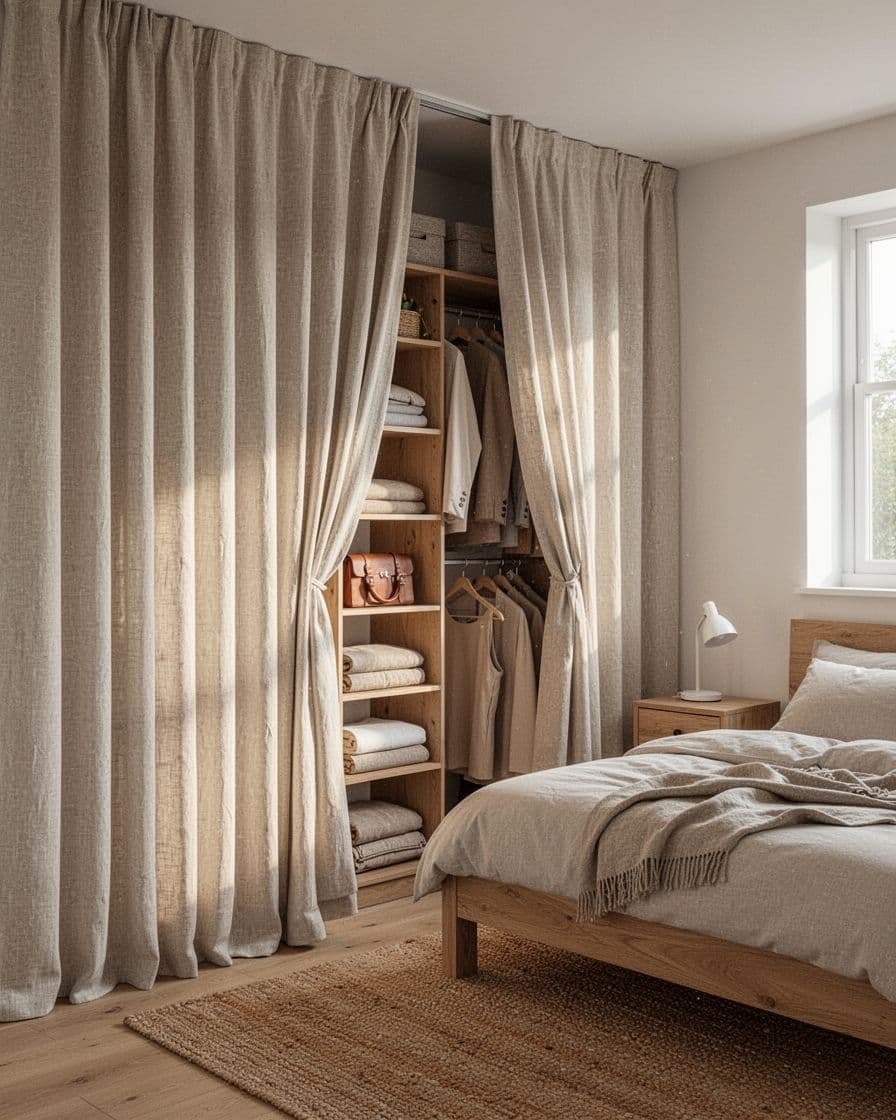
A curtain-covered wardrobe gives you flexible storage without the visual weight of hinged doors. Soft oatmeal linen adds movement and texture, while the fabric hides open shelving, clothing rails, and storage boxes.
Install the curtain on a ceiling track or a slim wall-mounted rod. Make sure the fabric reaches the floor so the wardrobe reads as one clean vertical shape.
This idea suits rental bedrooms because you can create a clothing zone with a simple rail and shelving unit. Choose a curtain with enough fullness to cover the wardrobe when closed, then keep the colors close to your walls for a seamless look.
Use slim hangers inside the space so the curtain doesn’t bulge across the rail.
7. Navy Statement Wardrobe
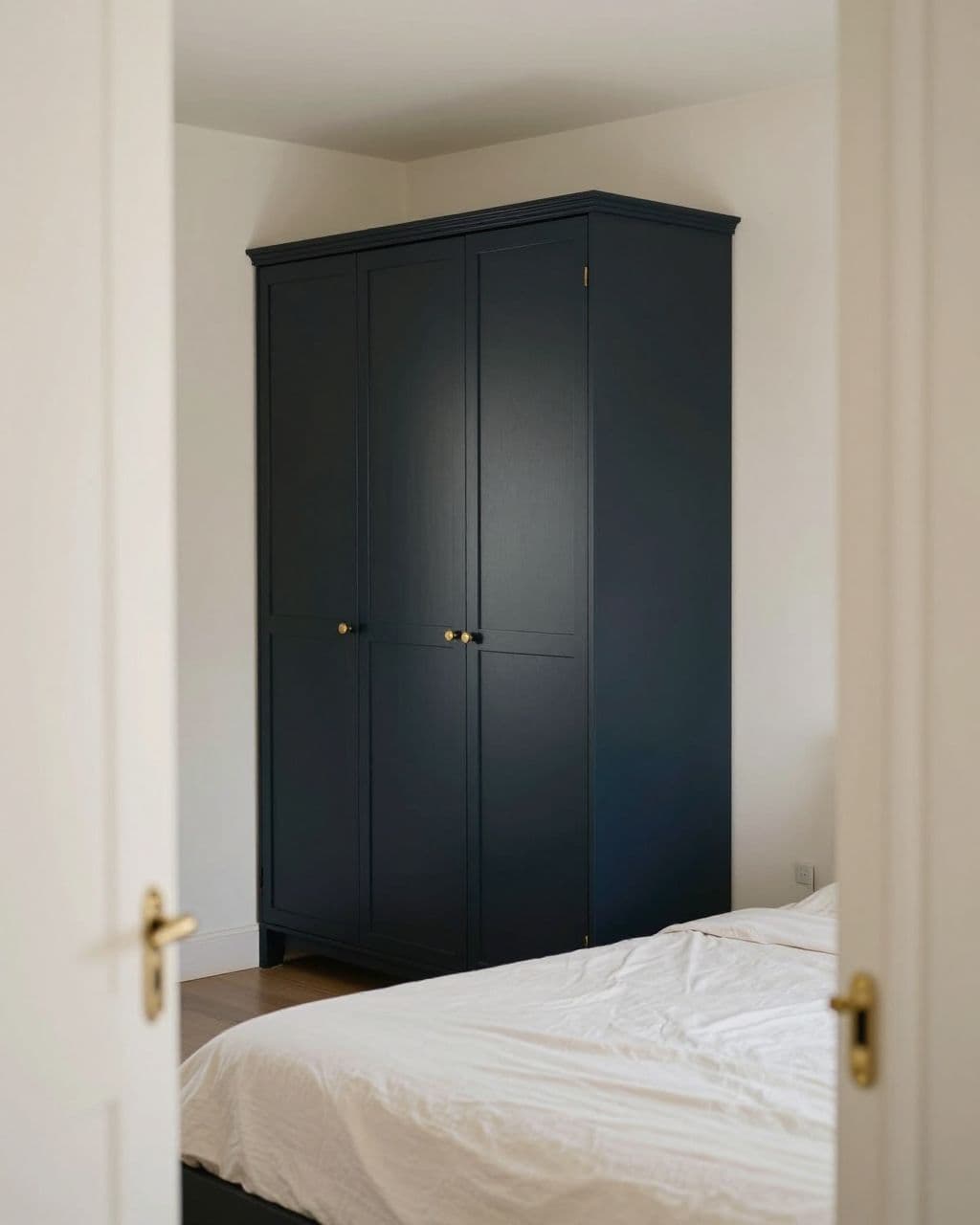
A navy wardrobe can anchor a small bedroom and give the space a rich, tailored look. Warm white walls and pale bedding keep the dark cabinet from closing in the room.
Choose brass pulls to bring warmth to the deep blue finish. A light rug beneath the bed also creates a visual break between the dark wardrobe and the floor.
Keep the wardrobe as the main color feature. Use one or two small navy accessories elsewhere in the room so the palette feels connected without becoming too matched.
8. Wardrobe in the Entry Alcove
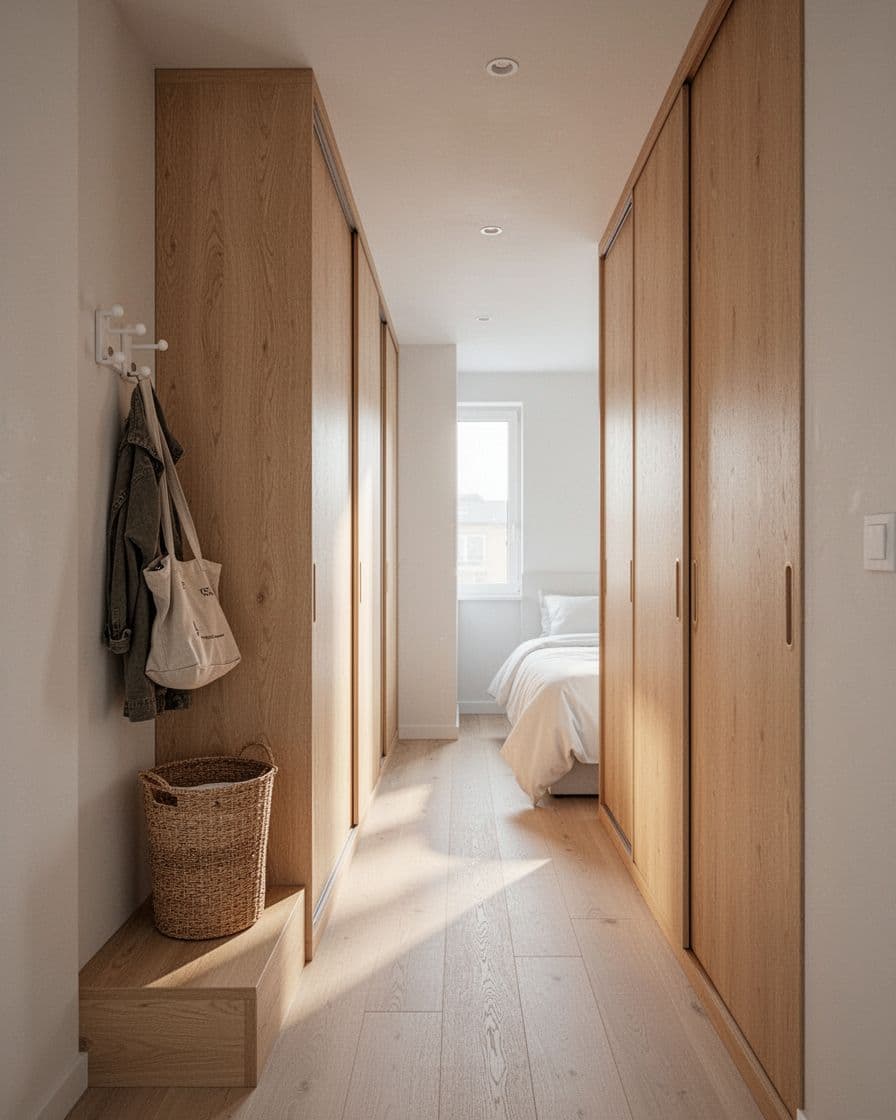
An entry alcove makes a natural home for your wardrobe because it keeps storage close to the door and away from the sleeping area. Sliding light oak doors add warmth while preserving the central floor space.
This layout works well in long, narrow bedrooms. Place the bed farther into the room, then use the area near the entrance for clothing, coats, and bags.
Choose sliding doors when hinged doors would block the walkway. Leave a small landing area beside the wardrobe for a laundry basket or a wall hook, but avoid filling the passage with extra furniture.
9. Wardrobe With Open Cubbies and Closed Cabinets
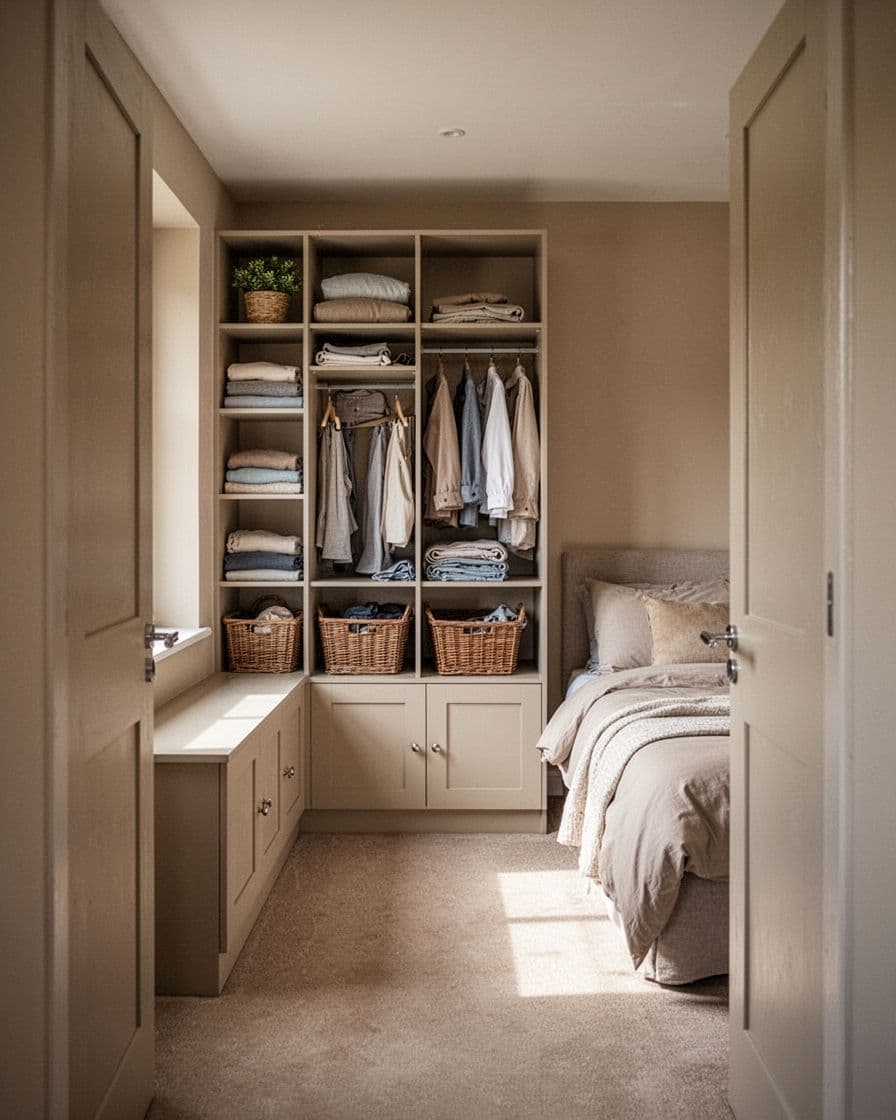
A wardrobe with both open and closed storage lets you display a few useful items while hiding the pieces that create mess. Open cubbies work well for folded sweaters, baskets, or a small group of accessories.
Use the closed lower cabinets for shoes, laundry supplies, and bags. Keep the open shelves edited so they don’t become a second clutter zone.
Choose baskets that match the wardrobe finish to create a calmer view. Beige, cream, and natural fiber baskets work especially well with a neutral bedroom palette.
10. Low Wardrobe Under a Sloped Ceiling
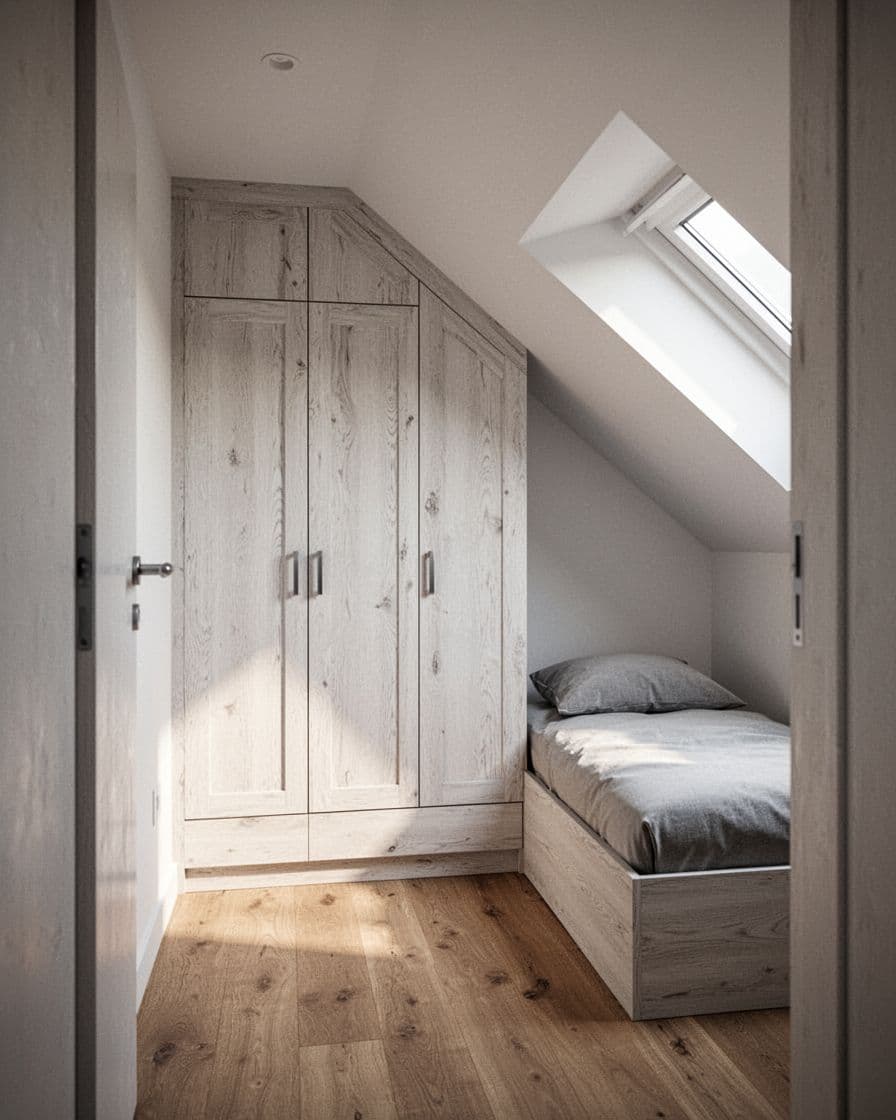
A sloped ceiling doesn’t need to limit your storage. A low wardrobe can follow the height of the wall and turn an awkward attic corner into a useful clothing zone.
Use the tallest section for hanging clothes and the shorter section for drawers or shelves. Custom doors create a tidy finish, but modular low cabinets can also work when you arrange them carefully.
White oak helps the furniture blend with the ceiling and floor. Add simple baskets inside the lower section so every inch stays easy to use.
11. Slim Wardrobe Beside a Window
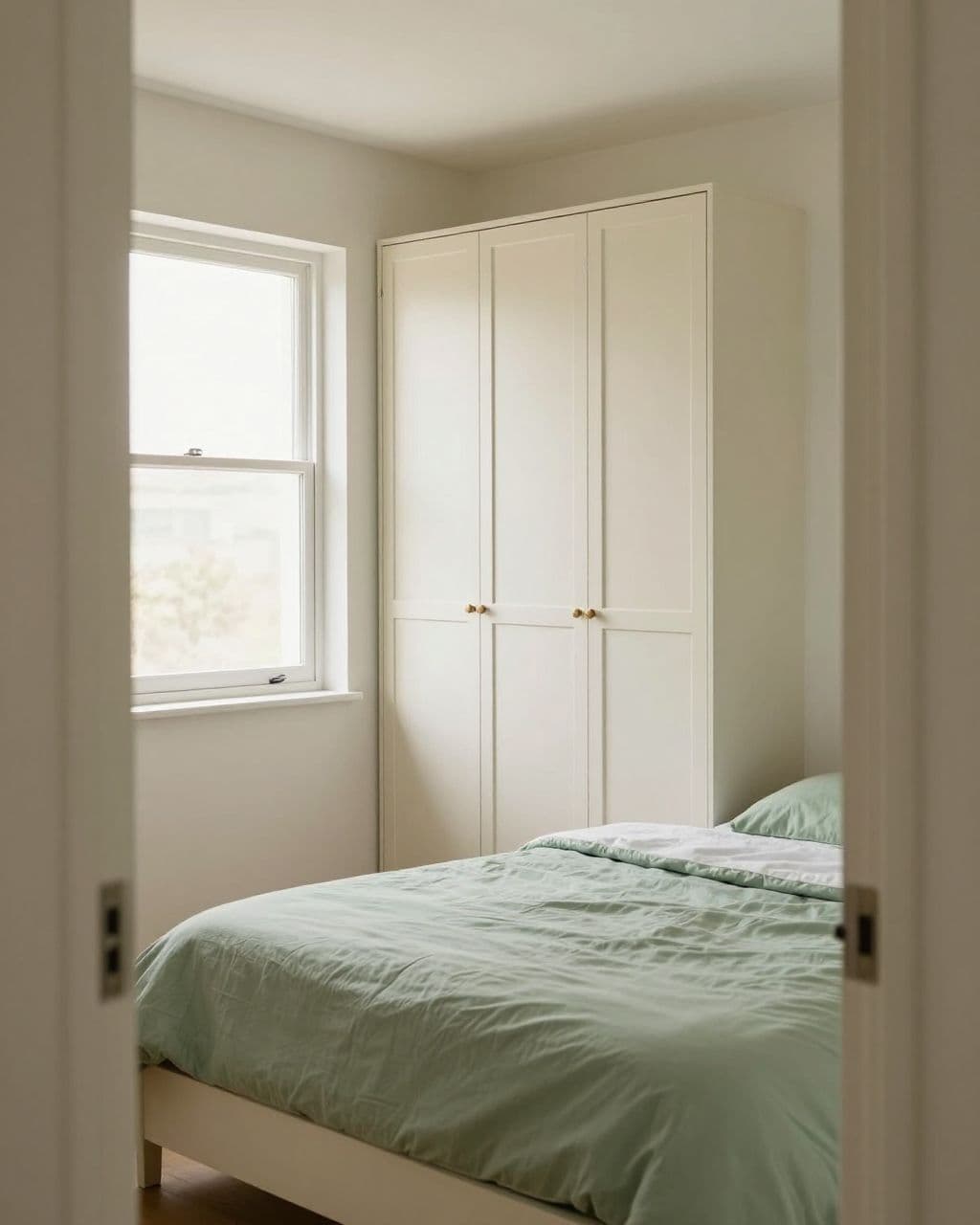
A slim wardrobe beside the window gives you storage while keeping natural light in the room. Cream doors soften the cabinet and work well with pale green bedding or other nature-inspired colors.
Choose a narrow design that doesn’t cover the window trim or interfere with curtains. Keep the wardrobe slightly lower than the window if the opening sits close to the floor.
The area beside a window can feel visually heavy when you add tall furniture. Balance it with a light bed frame and a clear surface beneath the window.
12. Pale Oak Japandi Wardrobe
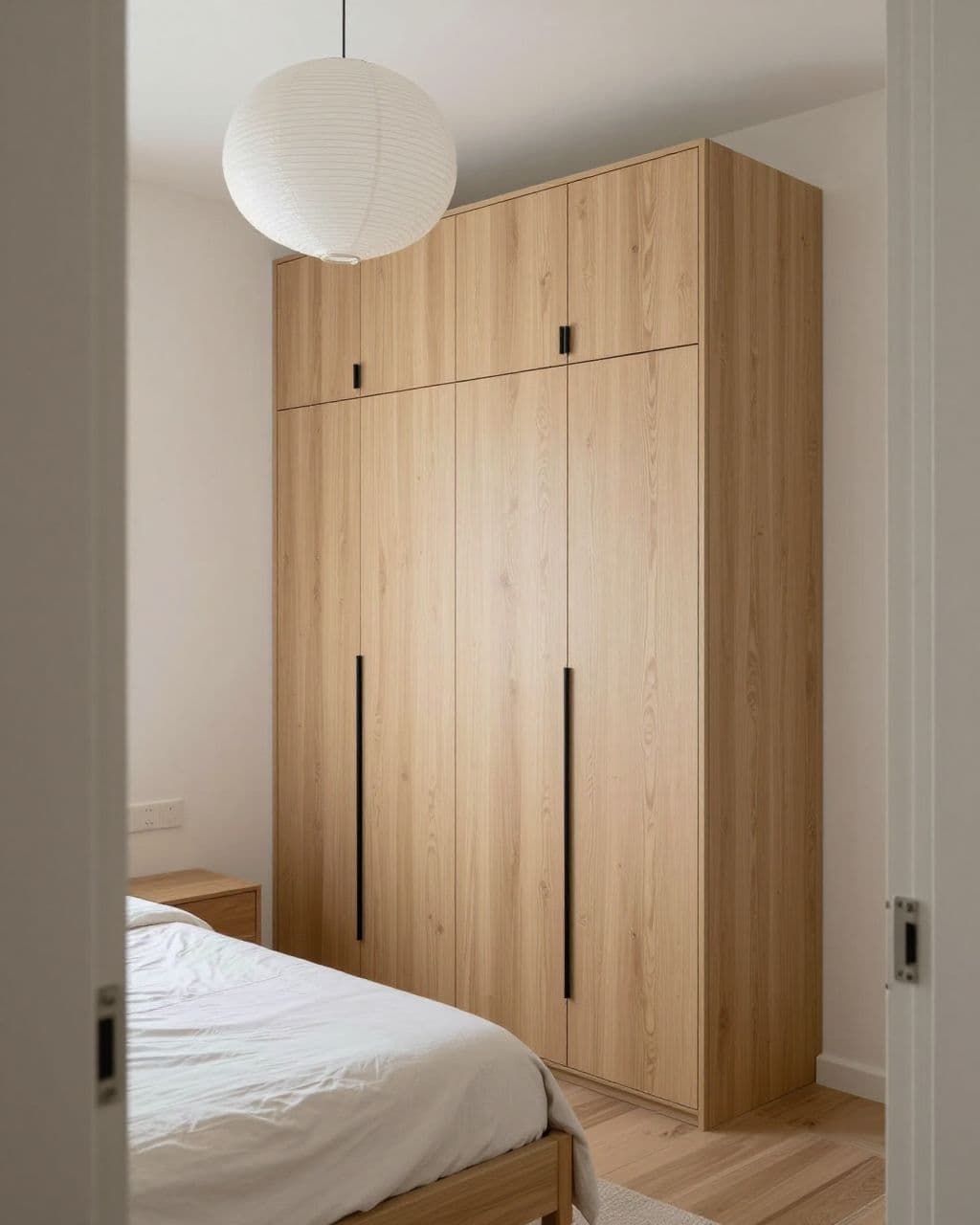
A pale oak wardrobe gives a small bedroom the calm look associated with Japandi interiors. Flush doors, a low bed, and a paper pendant keep the lines clean without making the space feel bare.
Choose a wardrobe with a matte wood finish and small black pulls. The contrast adds definition while keeping the design quiet.
Limit the room to useful furniture and a few tactile pieces. A linen duvet, woven mat, or ceramic lamp adds warmth without taking up valuable floor space.
13. Wardrobe With a Fold-Down Desk
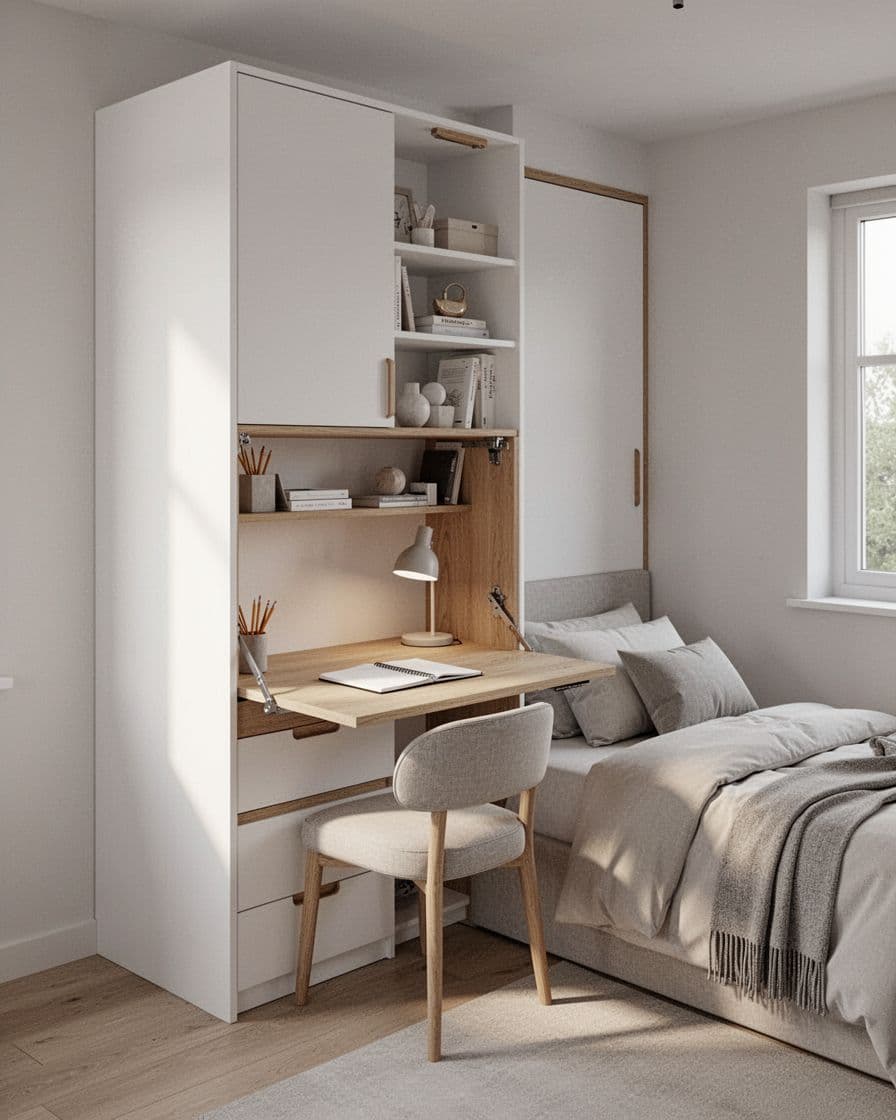
A wardrobe with a fold-down desk gives you a place to work without adding a full-size desk to the bedroom. White cabinetry keeps the unit visually light, while warm wood accents stop it from feeling too plain.
Close the desk when you finish working so the room can return to a restful layout. Choose a chair that slides fully beneath the work surface.
Keep the desktop clear and store stationery inside the wardrobe. This approach works well when your bedroom also functions as a study area, guest room, or dressing room.
14. Dusty Rose Wardrobe With Arched Doors
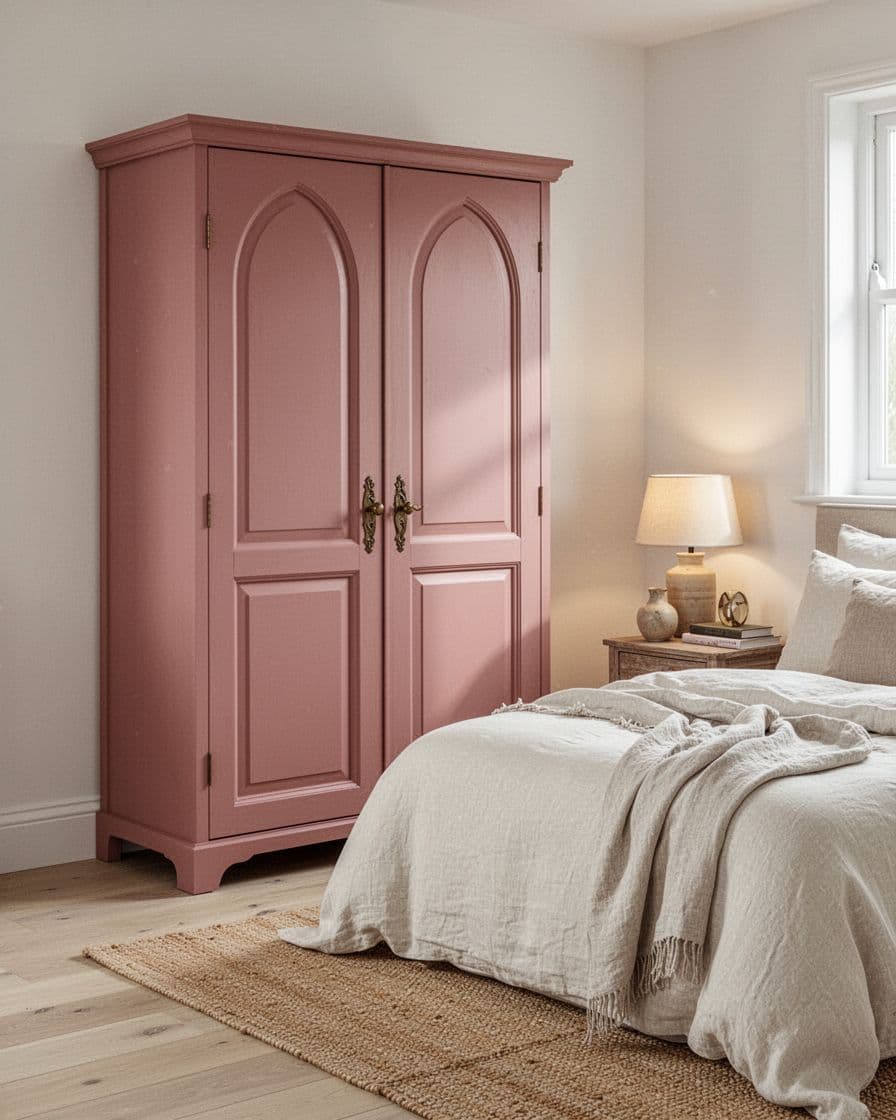
A dusty rose wardrobe adds a gentle color statement without overwhelming a small bedroom. Arched door details and vintage brass hardware give the unit a soft, collected feel.
Pair the wardrobe with cream bedding and warm white walls. These lighter tones keep the pink finish from looking too strong in a compact space.
Use a matte or eggshell finish so the doors look smooth under both daylight and lamp light. Keep nearby accessories simple, because the curved doors already provide plenty of visual detail.
15. Full-Height Wood-Paneled Wardrobe Wall
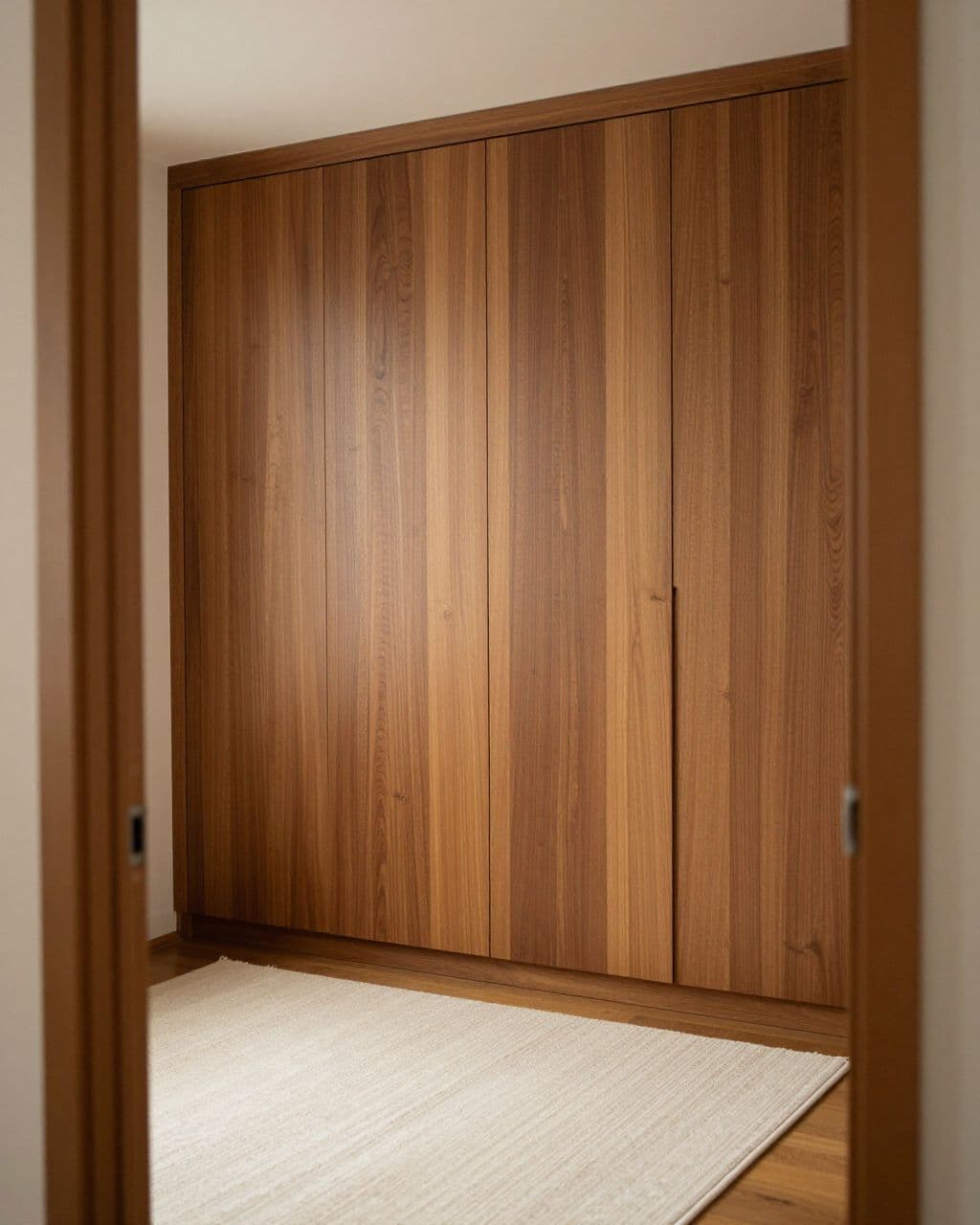
A full-height wood-paneled wardrobe wall hides storage behind a warm architectural finish. The walnut tone makes the wardrobe feel like part of the room rather than a separate piece of furniture.
Use flat doors with matching wood grain for the most seamless result. Push-to-open hardware can remove the need for visible handles, though small pulls can make daily use easier.
Balance the rich wood with a cream rug and light bedding. A small room can handle dark wood when you keep the remaining surfaces bright and uncluttered.
16. Wardrobe Opposite the Bed
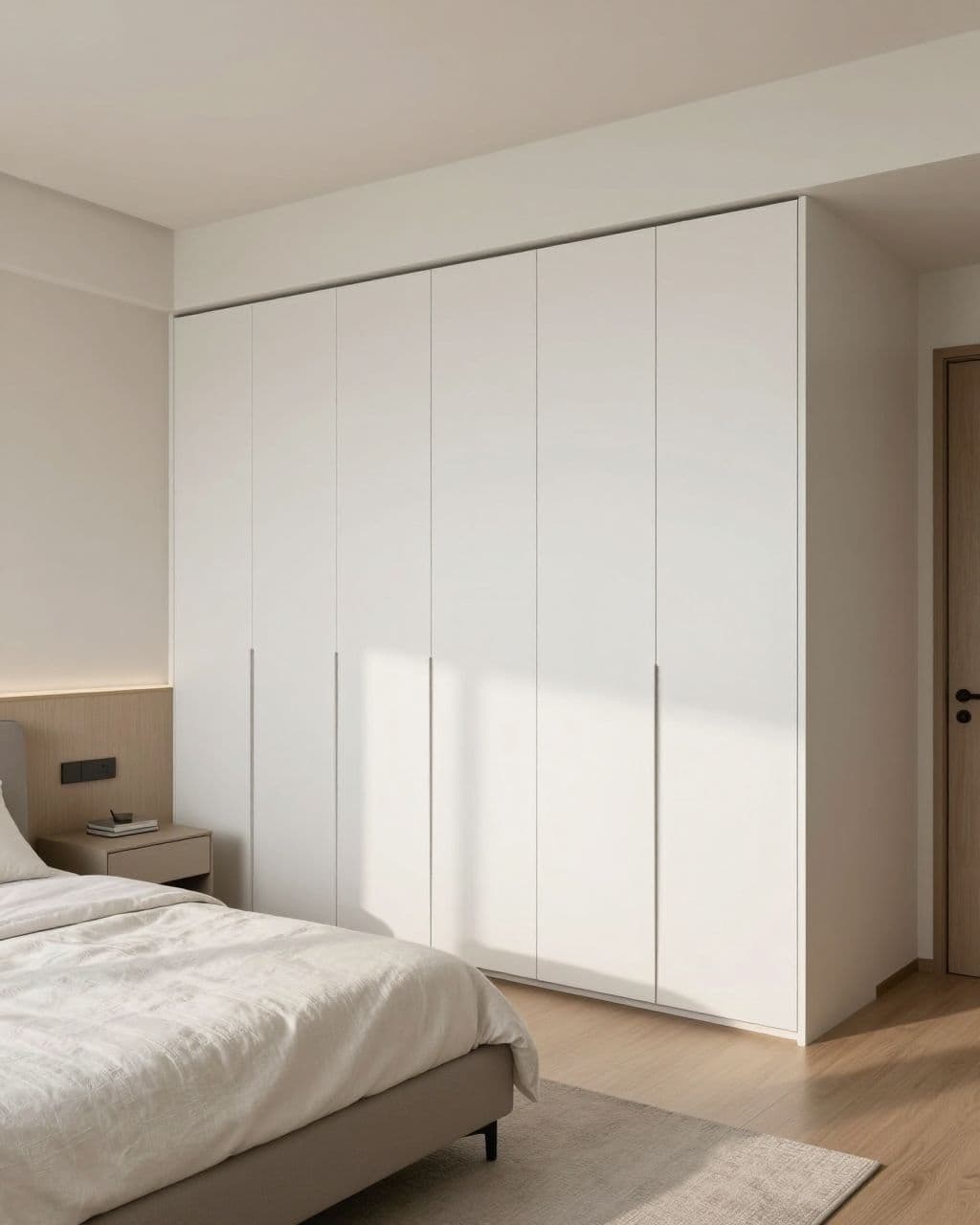
Placing the wardrobe opposite the bed creates a clear and practical room layout. White sliding doors keep the central walkway open and prevent the wardrobe from colliding with the bed when you open it.
This arrangement suits rectangular bedrooms with a wall that faces the headboard. Keep the gap between the bed and wardrobe wide enough for comfortable movement.
If you choose hinged doors, check their swing before you place the bed. Sliding doors give you more freedom because they don’t need extra clearance in front of the cabinet.
17. Covered Clothing Rack for a Rental
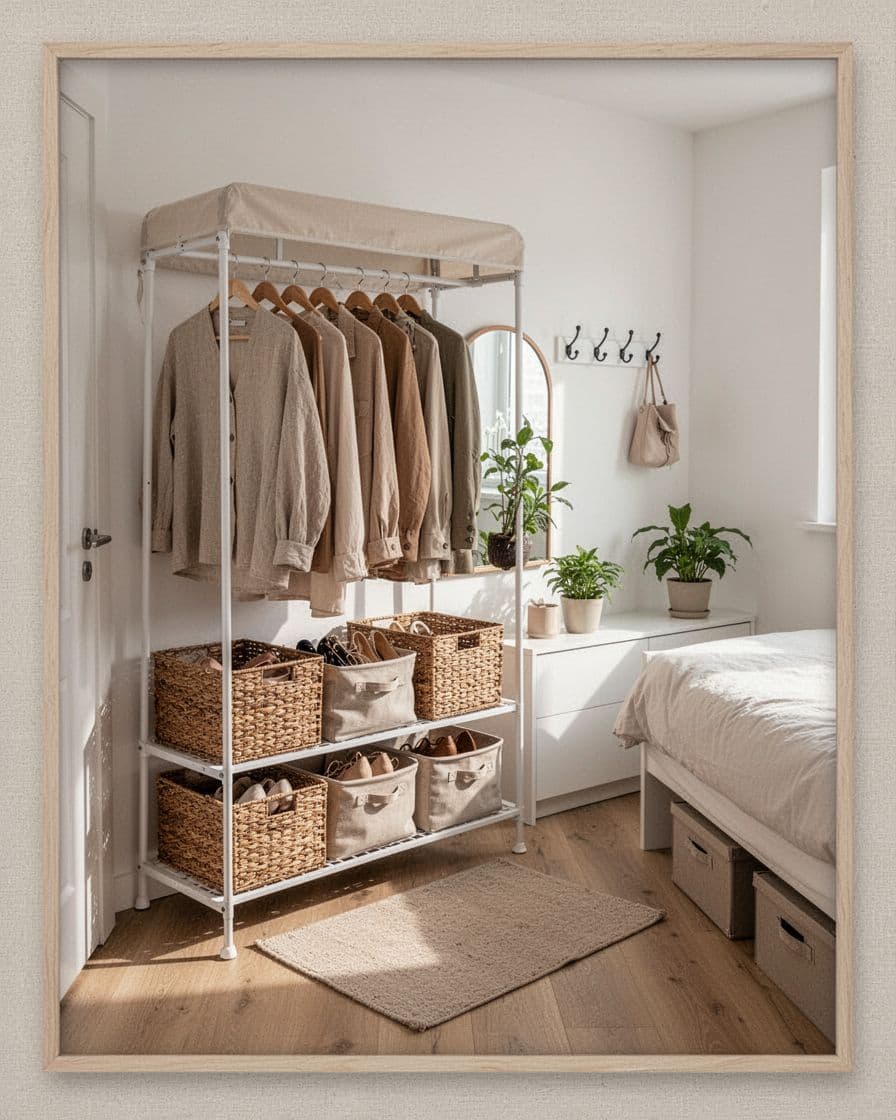
A covered clothing rack gives you a flexible wardrobe when a built-in unit doesn’t fit your budget or rental rules. The canvas cover hides the hanging rail, while baskets below hold shoes, folded clothes, and accessories.
Choose a rack with a stable base and a cover that reaches close to the floor. Add a separate shelf or rolling drawer unit only if you still have enough room to walk around the bed.
This option works well for a minimalist clothing collection. Keep your most-used clothes on the rail and rotate seasonal items into boxes beneath the bed.
18. Ceiling-Height Wardrobe With Overhead Cabinets
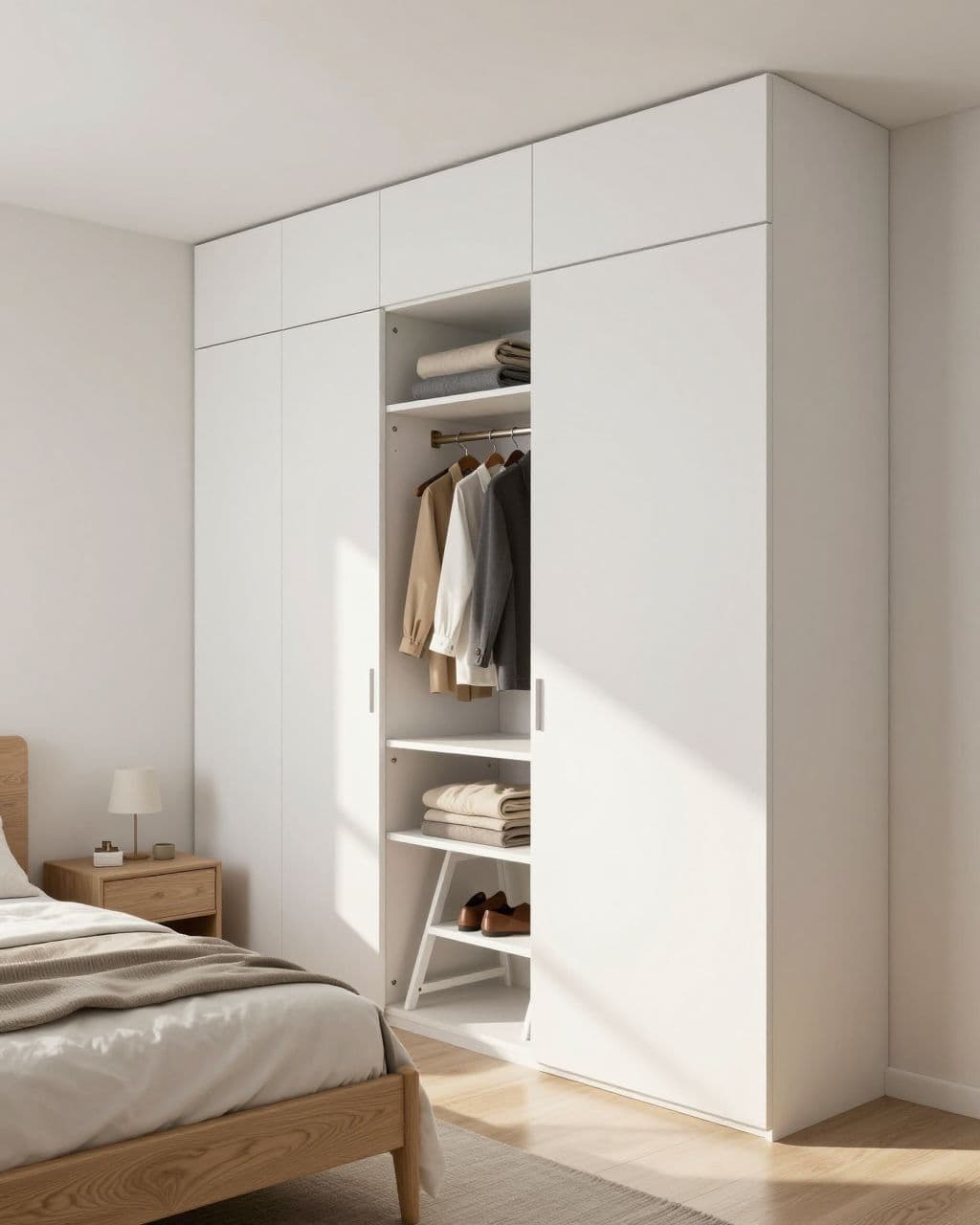
A ceiling-height wardrobe uses the space above your everyday clothing instead of leaving it empty. Overhead cabinets can hold luggage, holiday decorations, spare blankets, and other items you rarely need.
White doors help the tall unit blend into the wall. Add a light oak bed or nightstand to bring warmth into the mostly white room.
Keep daily clothing between waist and eye level. Place heavier items on lower shelves and use the top cabinets for lightweight belongings that you can reach with a stable step stool.This design gives you a large amount of storage in a small footprint.
19. Sage and Cream Two-Tone Wardrobe
A sage and cream two-tone wardrobe brings color into the room while keeping the overall palette light. Sage doors on the lower section and cream cabinets above create a grounded look without making the wardrobe appear taller than it is.
Brass knobs add a warm detail that connects with a lamp or picture frame. Use white bedding and natural wood accents to keep the color scheme fresh.
This layout also helps divide the wardrobe visually into smaller sections. Choose closed doors for the lower half and adjustable shelves above so you can change the storage as your needs shift.
20. Matching Wardrobe and Narrow Dresser
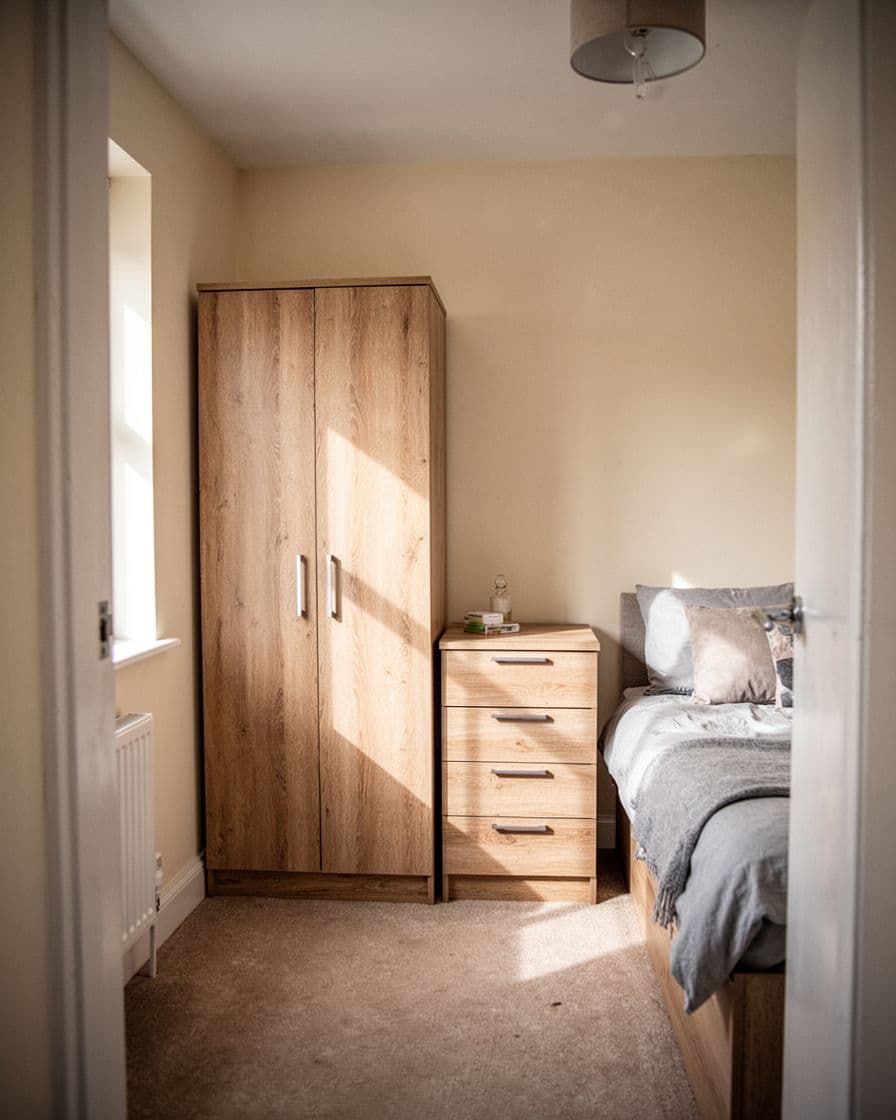
A matching wardrobe and narrow dresser create a calm, coordinated storage wall. Light wood finishes add warmth, while compact furniture proportions leave enough room for the bed and a clear walkway.
Choose a dresser that matches the wardrobe width and finish without extending too far into the room. A narrow design gives you drawers for folded clothes while the wardrobe handles hanging pieces.
Place the two units on the same wall when possible. That arrangement keeps the room’s visual weight in one area and leaves the opposite side open for the bed, mirror, or a slim lamp.
21. Raised Platform Bed With Wardrobe Storage
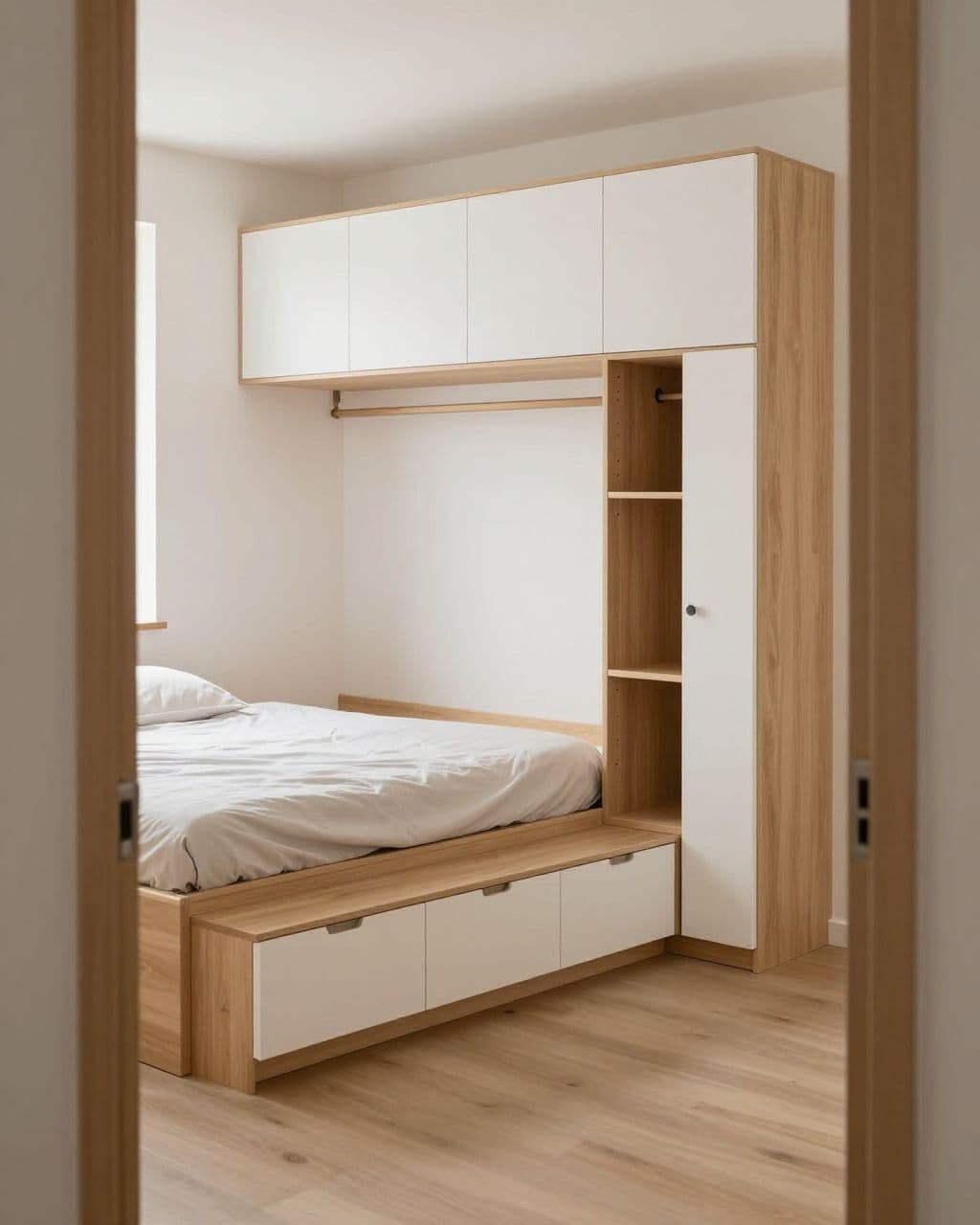
A raised platform bed combines wardrobe storage with drawers beneath the mattress. This design uses the room’s height, so you can keep more belongings without adding several separate cabinets.
Choose drawers that open toward the room’s widest side. You need enough clearance to pull them out fully without hitting a wall, bedside table, or wardrobe door.
Keep the platform low enough for comfortable access to the bed. Add a small step if the height requires it, and use the wardrobe for daily clothing while the drawers hold shoes, linens, and bags.
Conclusion
Your best small bedroom wardrobe idea will match your room’s shape, your storage needs, and the amount of floor space you want to keep open. Save your favorite design, measure the available wall, and choose one wardrobe feature that makes the room easier to live in.

I’m Sumayya and I love turning ordinary spaces into ones you’ll never want to leave. Whether it’s cozy cottagecore corners, bold maximalist magic, or sleek modern minimalism, I’m here to help you discover your style and bring it to life without spending a fortune. Ready to refresh your space? Let’s make it happen!