21 Beautiful Downspout Drainage Ideas for Every Yard
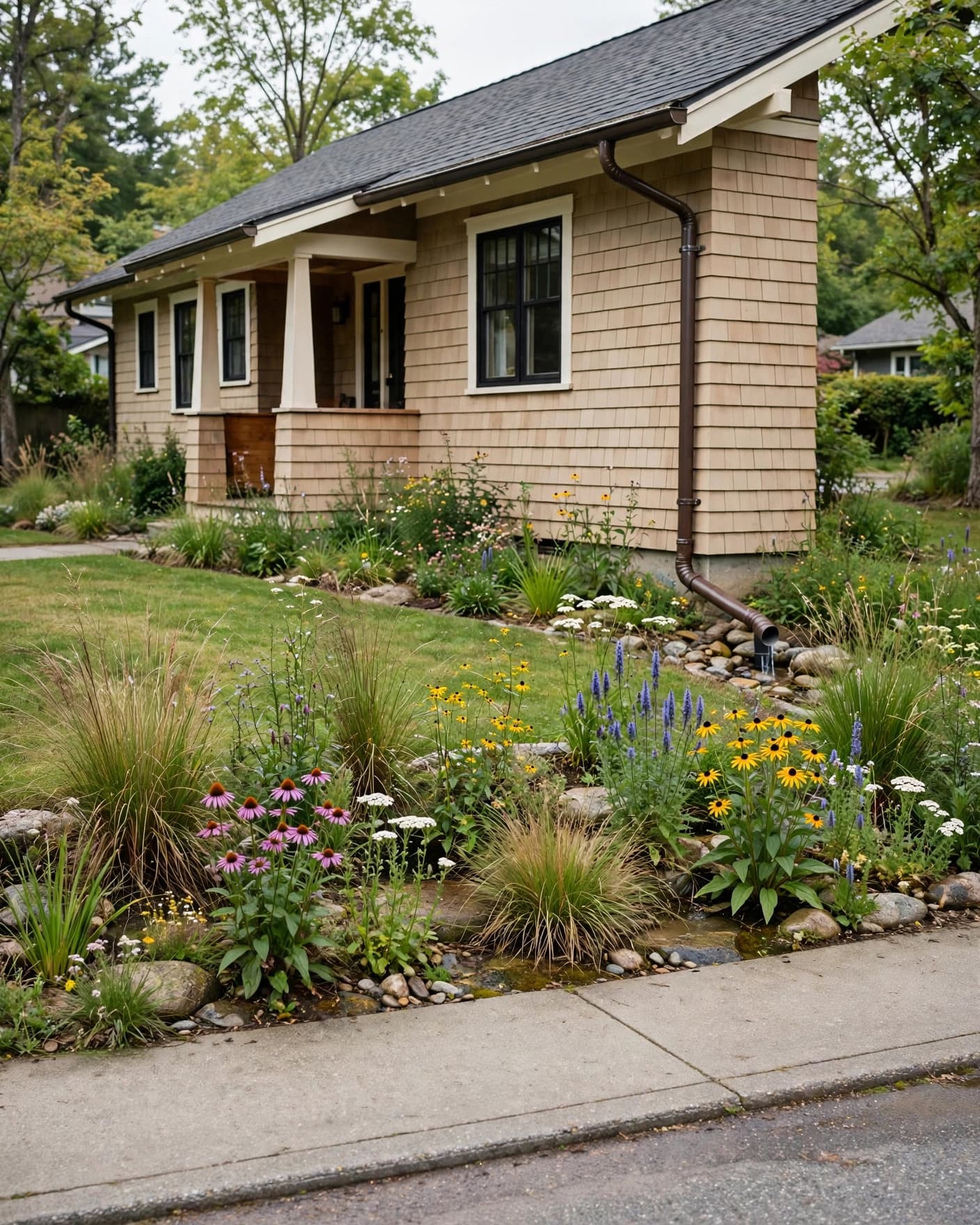
Downspout drainage ideas help you move roof water away from your foundation while adding useful structure to your yard. Choose a simple gravel trench, a planted rain garden, a rain barrel, or an underground outlet based on your soil, slope, space, and existing landscape.
21 Downspout Drainage Ideas for Every Yard
1. Gravel Drainage Trench Beside the Foundation
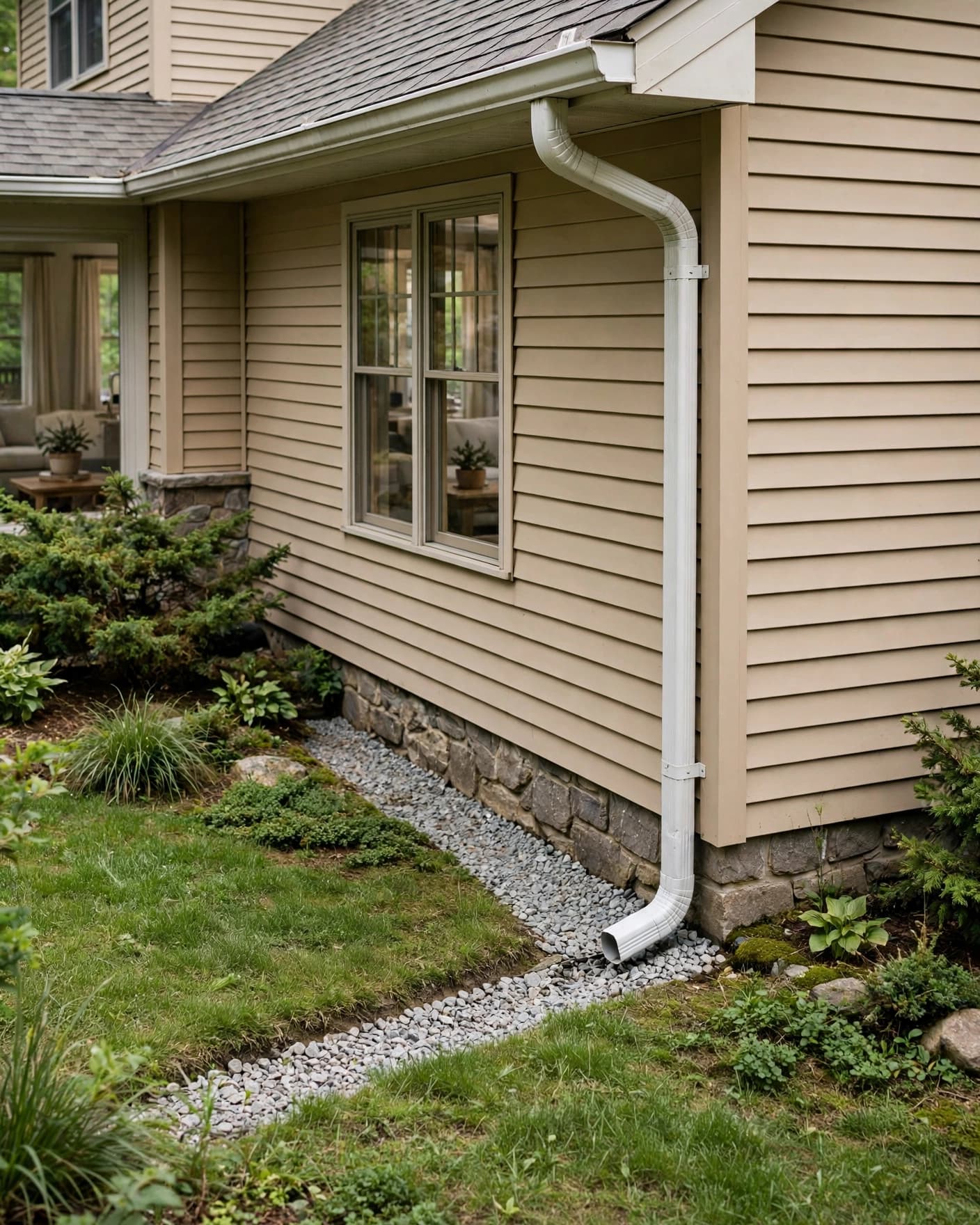
A shallow gravel trench gives downspout water a clear path away from your house. Use rounded stone or crushed gravel in a neat channel that follows the natural slope of your yard.
This idea works well beside lawns, garden beds, and walkways. Keep the outlet pointed away from the foundation, and use a wide enough trench to prevent water from washing soil into the yard.
2. Stone-Edged Rain Garden
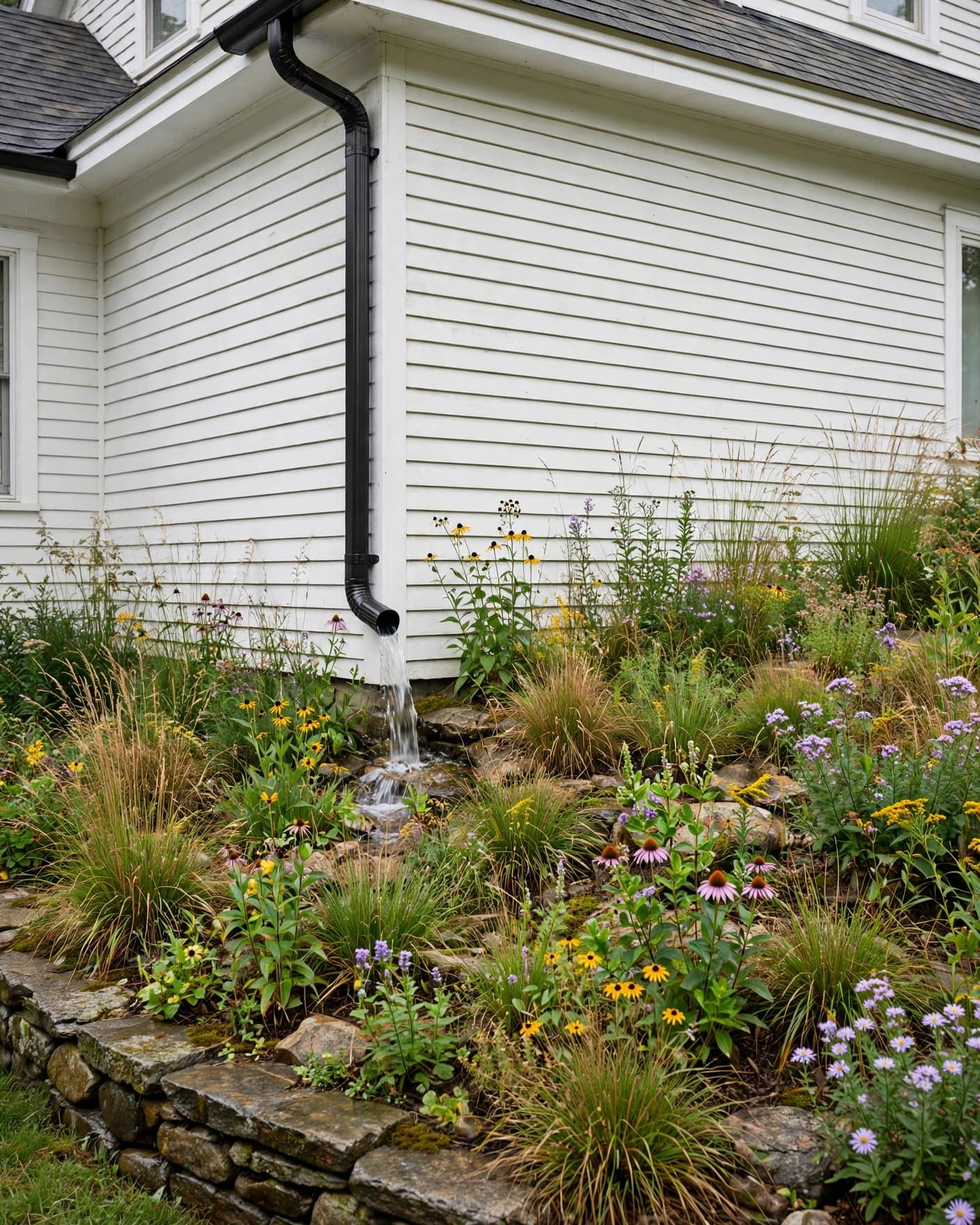
A rain garden collects water in a shallow planted area, then lets it soak into the soil. The basin in this design uses native grasses, flowering plants, and a stone edge to give the drainage area a finished garden look.
The U.S. Environmental Protection Agency describes rain gardens as depressed landscape areas that collect water from roofs, driveways, or streets. Read the EPA’s guide to rain garden design when you want to understand how this type of planting bed handles runoff.
Place the garden where water can reach it without flowing back toward your home. Your soil, groundwater level, and available space will affect how well the basin drains.
3. Curved Grass Swale Across the Lawn
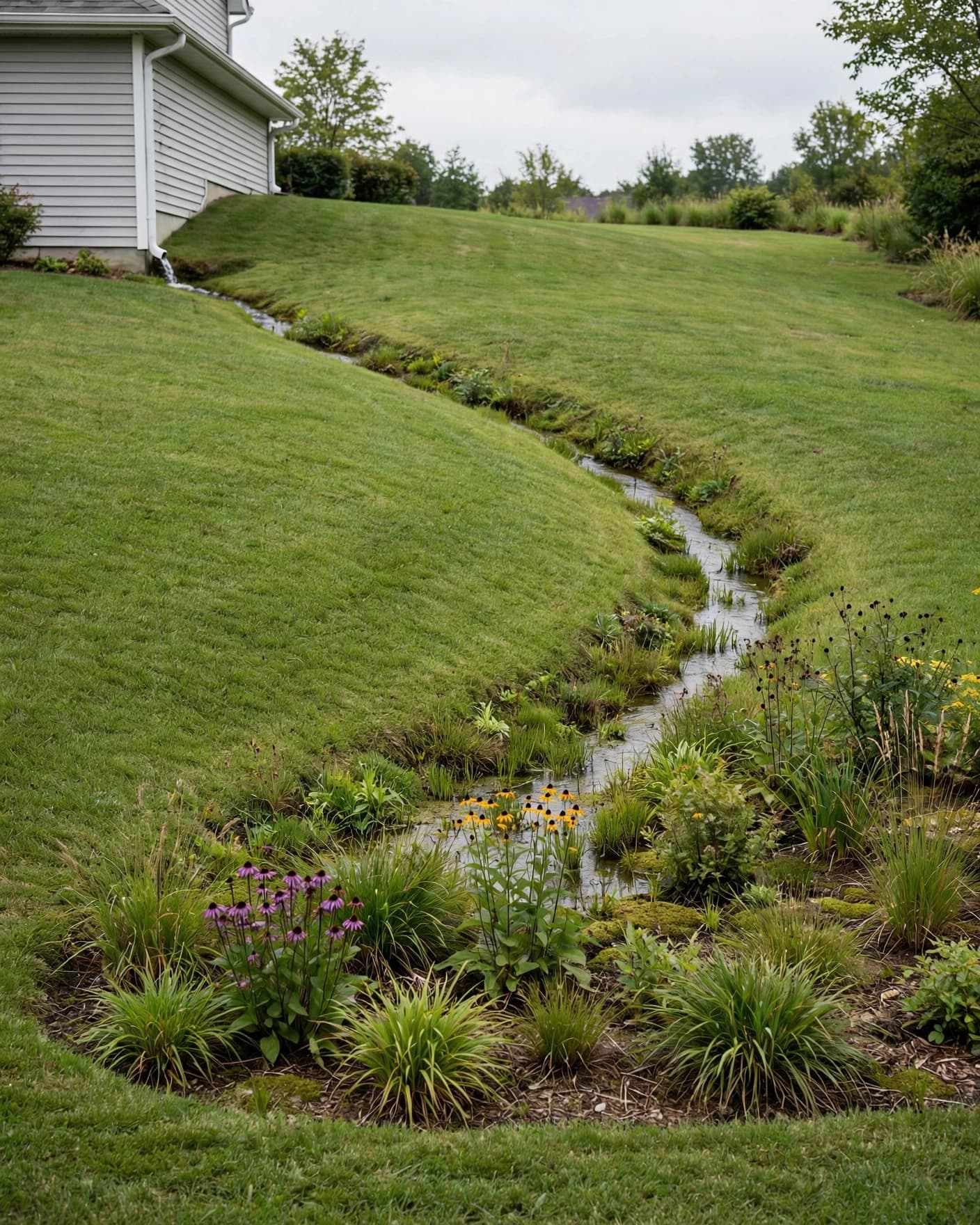
A grass swale is a shallow, gently sloped channel that guides water across your yard. Its wide shape keeps the drainage path soft and natural instead of making it look like a narrow ditch.
This option fits large lawns because you can curve the swale around trees, planting beds, or play areas. Keep the channel shallow enough to mow around, and use strong turf or suitable grasses that can handle occasional wet conditions.
4. Concrete Splash Pad at the Downspout
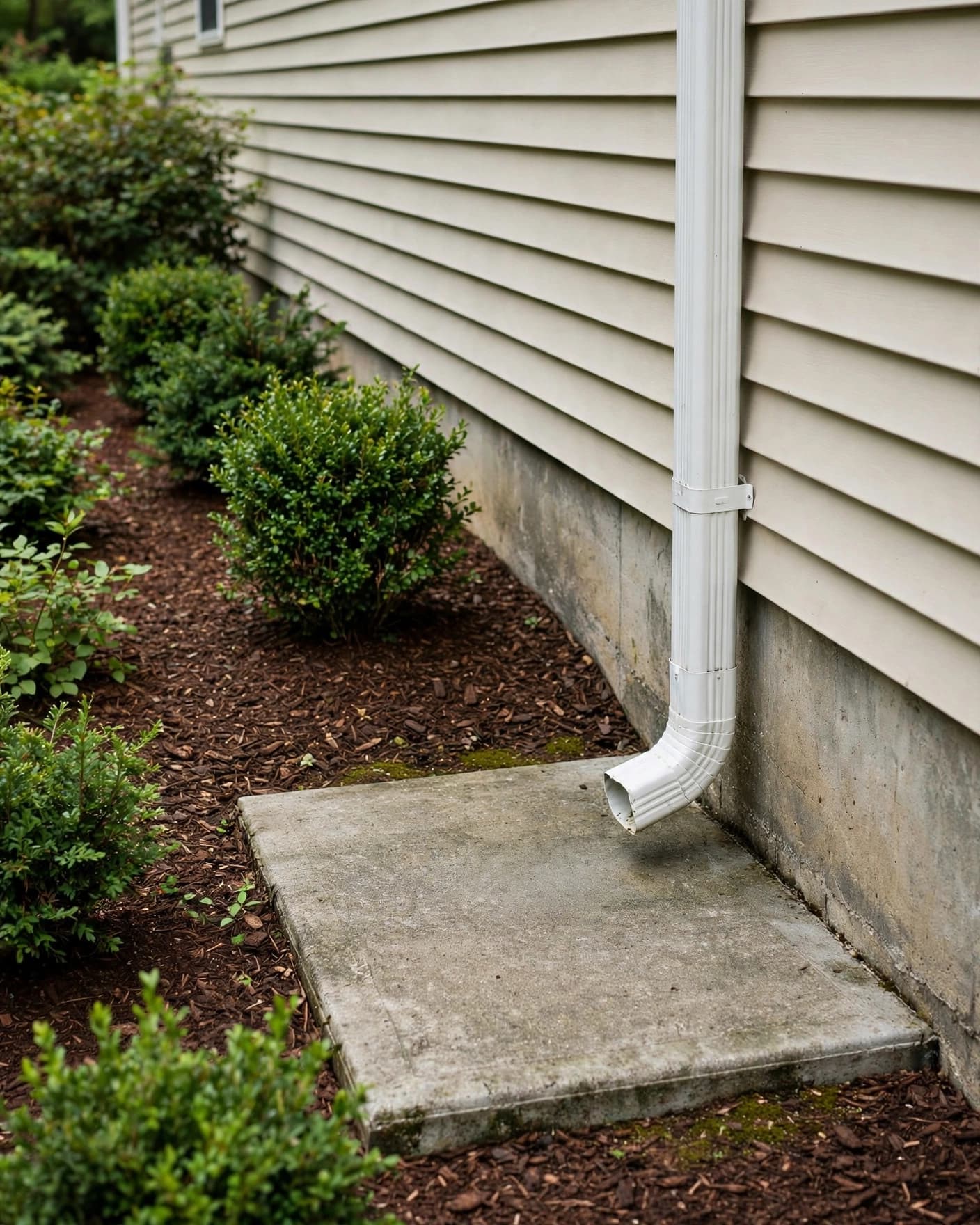
A concrete splash pad creates a firm landing area beneath a downspout. Its angled surface spreads water away from the wall and helps stop drops from digging a hole into mulch or bare soil.
This compact idea suits small yards where you don’t have room for a long drainage channel. Pair the pad with gravel, pavers, or a planted border so it blends into the surrounding landscape.
A splash pad works best when the ground slopes away from the foundation. If water stops at the end of the pad, add a longer surface channel or another drainage feature to carry it farther.
5. Dry Creek Bed With River Rocks
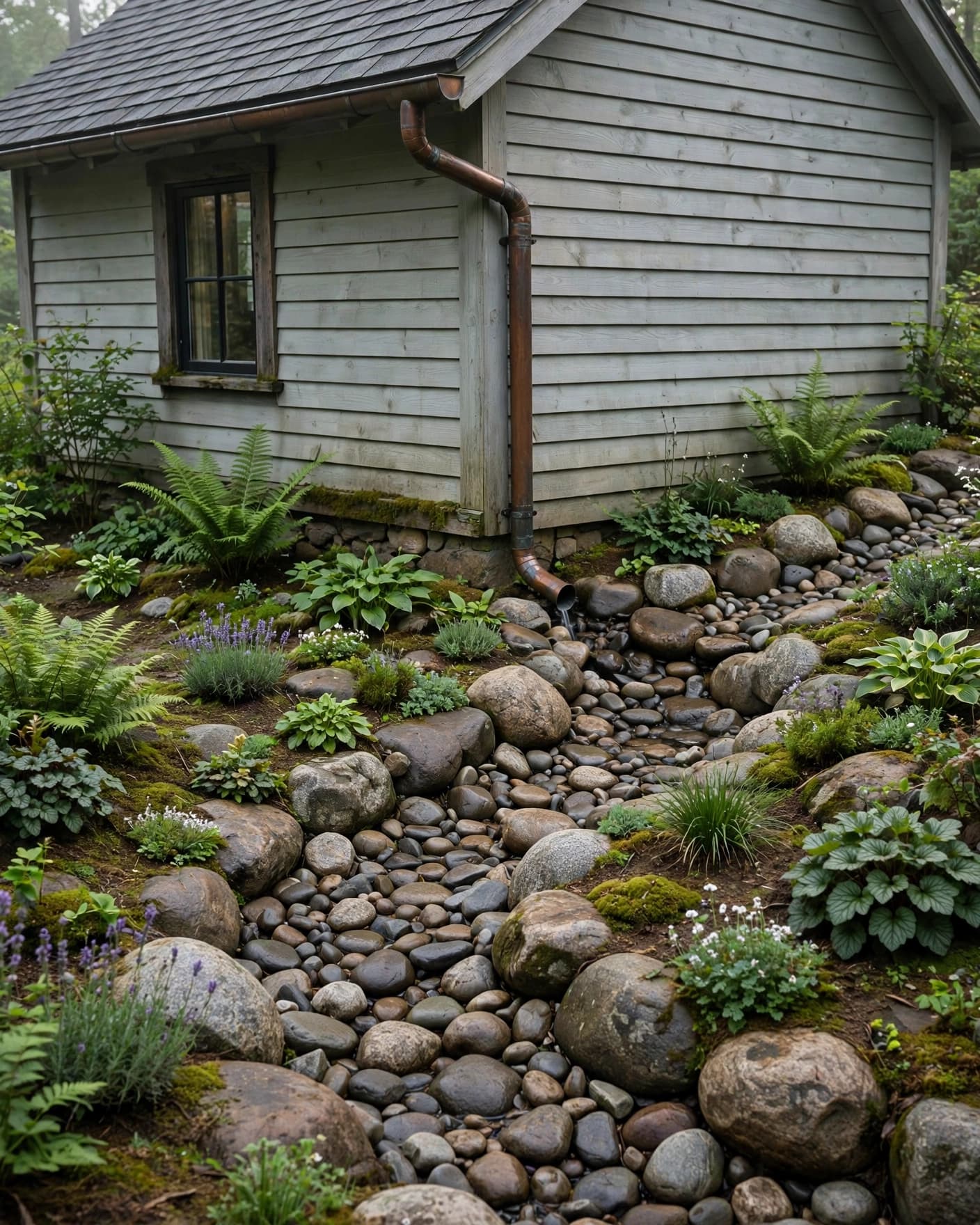
A dry creek bed turns a downspout outlet into a decorative garden feature. Rounded river rocks form the center of the channel, while larger stones define the edges and help slow moving water.
Use different stone sizes to create a natural appearance and reduce erosion. Add ornamental grasses or low plants along the sides, but leave the center open so water can travel through the bed.
This idea suits cottage gardens, Craftsman homes, and informal yards. The visible channel also makes it easier to spot leaves, sediment, and other debris that may block the water path.
6. Pop-Up Emitter in the Lawn
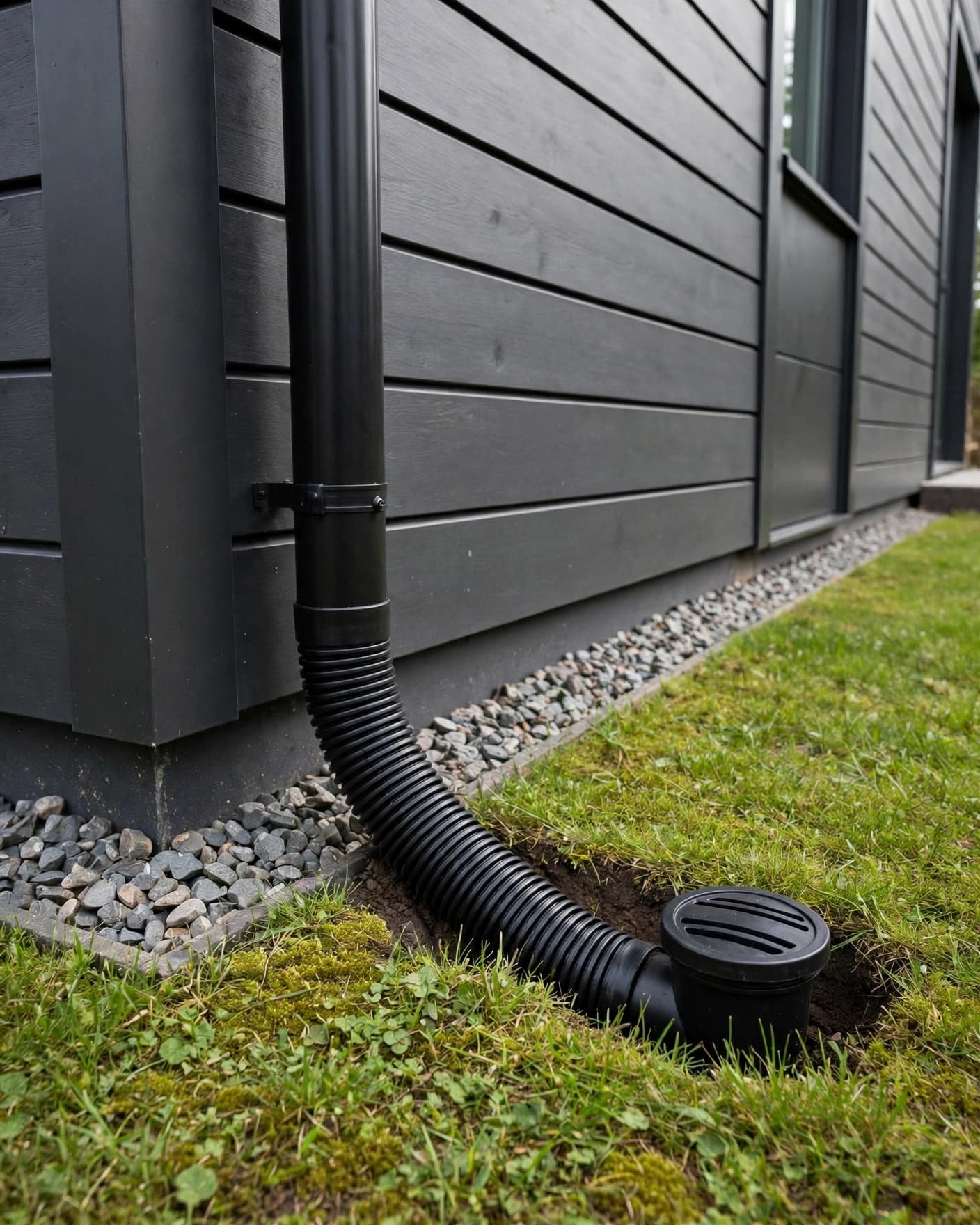
A pop-up emitter connects to an underground drain pipe and releases water through a small surface outlet. The emitter stays nearly level with the lawn, so it doesn’t create a large visible fixture.
This solution keeps the downspout and much of the drainage line out of sight. It works well when you want a clean lawn without a rock trench crossing the grass.
Choose the outlet location with care. The water still needs a safe place to spread, and the underground pipe needs a route that won’t damage tree roots, utilities, or nearby hardscape.
7. French Drain Along a Patio
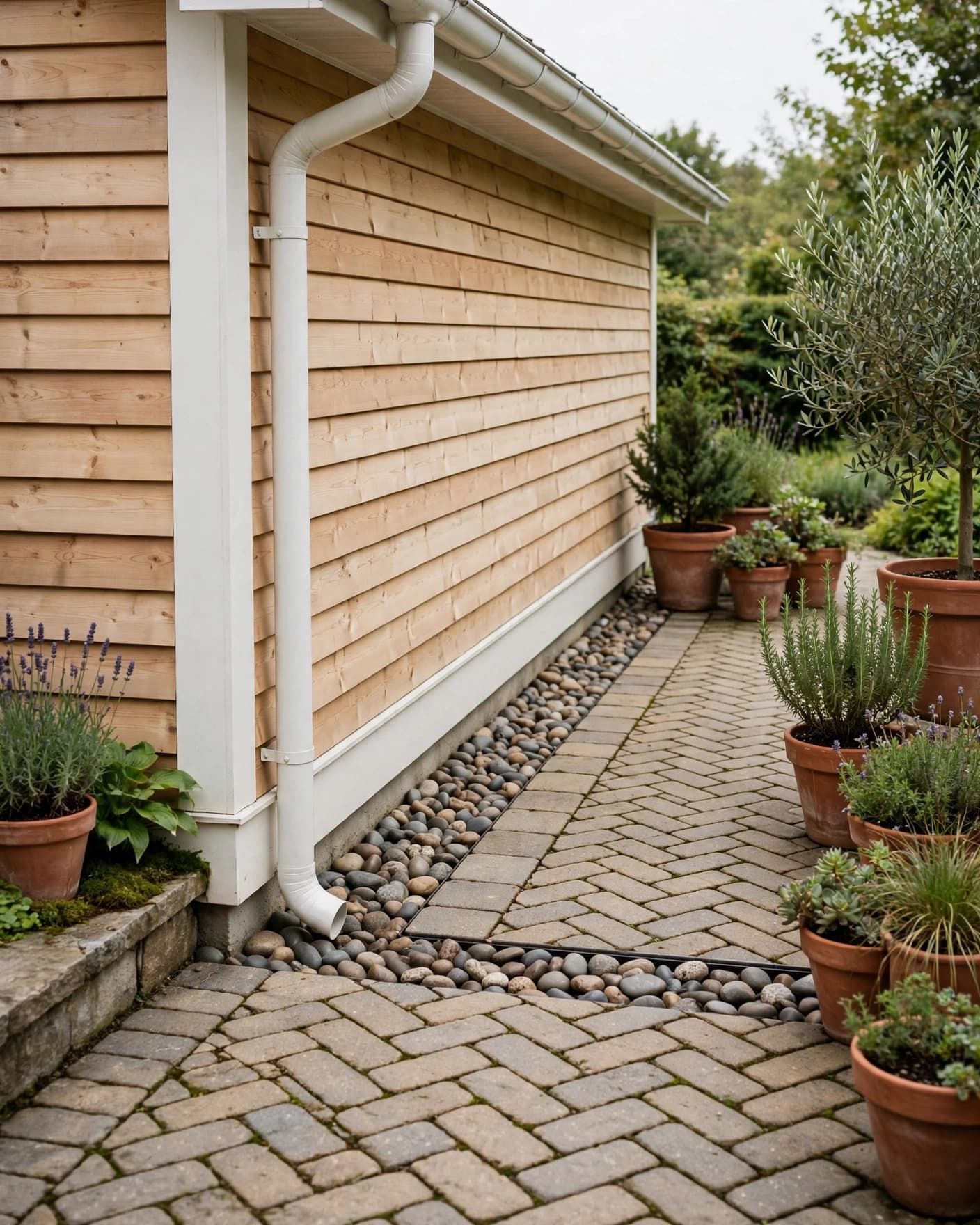
A narrow French drain gives patio edges and paved areas a dedicated water path. In this design, river stones cover the channel and create a clean transition between the pavers and the planted border.
You can use this layout when a downspout outlet sits near a patio, retaining edge, or walkway. The channel carries water away from the hard surface and reduces puddles near foot traffic.
French drains vary in design, so don’t assume every stone-lined trench includes an underground perforated pipe. The soil, slope, and amount of runoff will determine which type fits your yard.
8. Rain Barrel With Garden Overflow
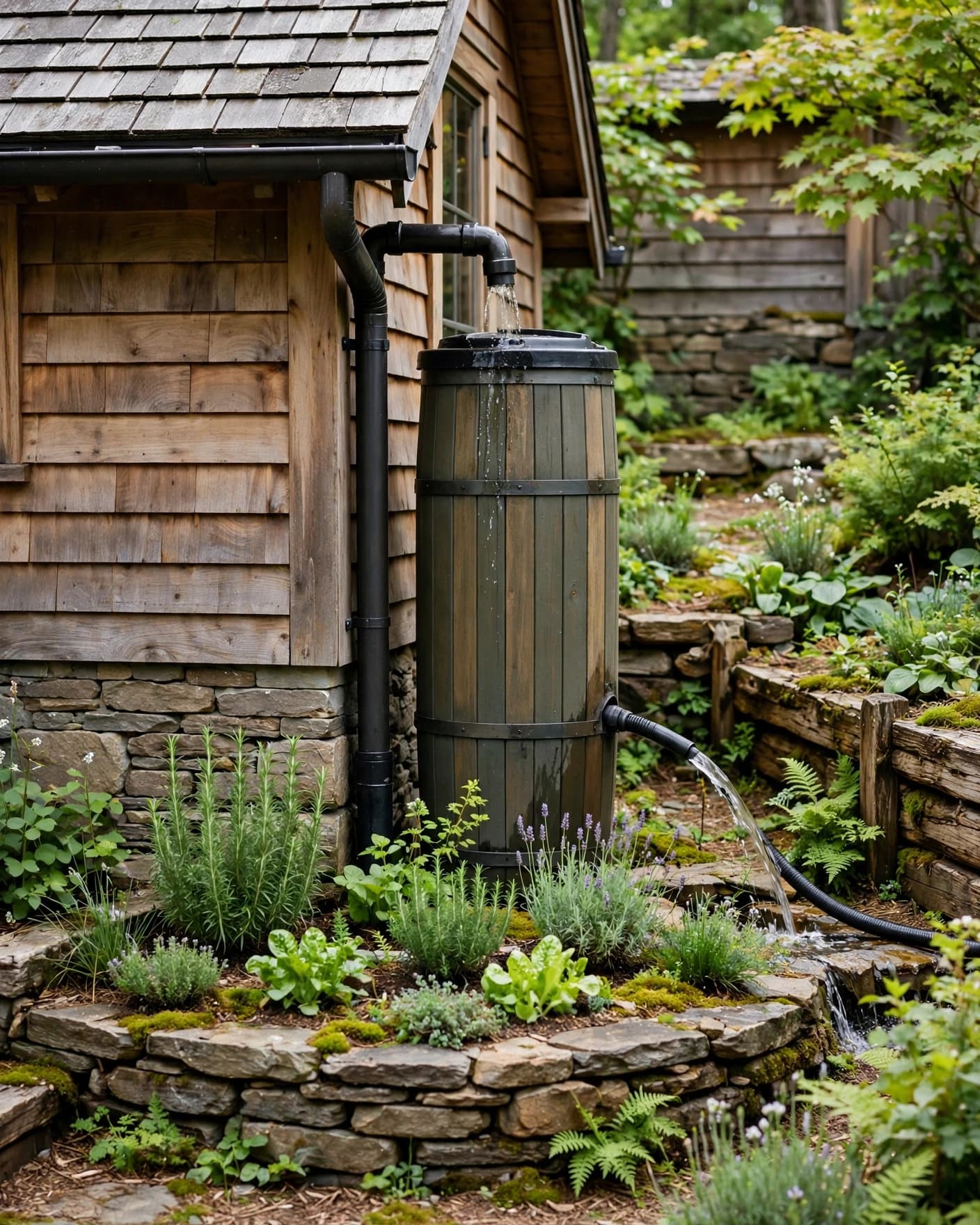
A rain barrel collects water directly from a downspout and stores it beside the house. An overflow hose then directs extra water toward a planted bed instead of letting it collect beside the foundation.
Choose a barrel that fits the style and scale of your home. A wood-look barrel suits cottage gardens, while a dark barrel can blend with modern siding and stone.
The EPA lists rain barrels, lawns, and gardens as common places to redirect downspout water. Its downspout redirection guide explains the basic idea behind disconnecting a downspout and sending water into a suitable landscape area.
9. Rain Chain and Rock Basin
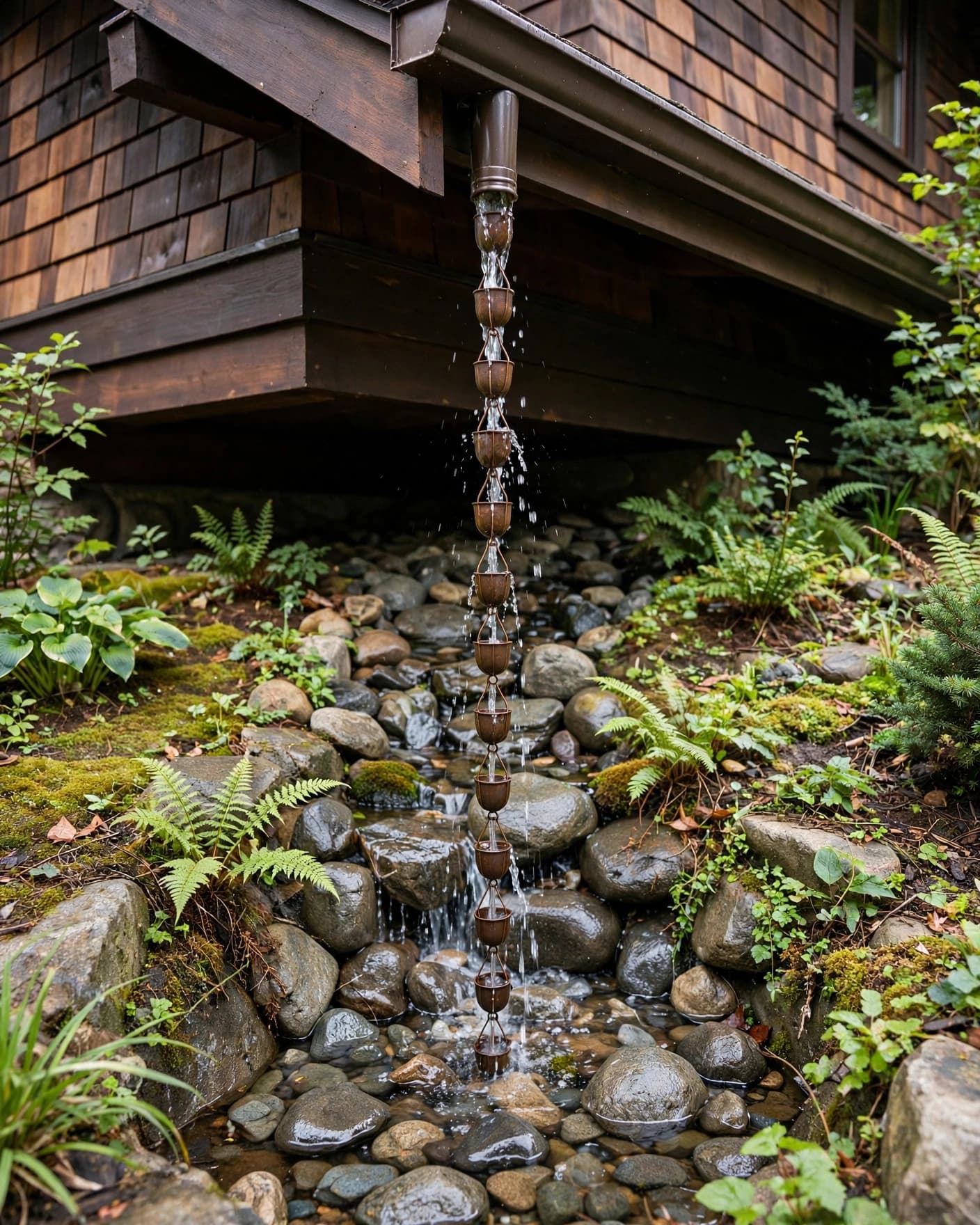
A rain chain replaces the lower section of a traditional downspout and guides water into a basin of stone. The chain adds a decorative vertical detail, while the rock basin slows the water at ground level.
This style works especially well beneath a roof corner, porch gutter, or covered entry. Use a wide basin with plenty of stone so water doesn’t splash onto siding or nearby paths.
For a stronger drainage setup, connect the basin to a gravel trench or planted bed. That second feature gives overflow a clear route during heavy rain.
10. Mulch Drainage Bed
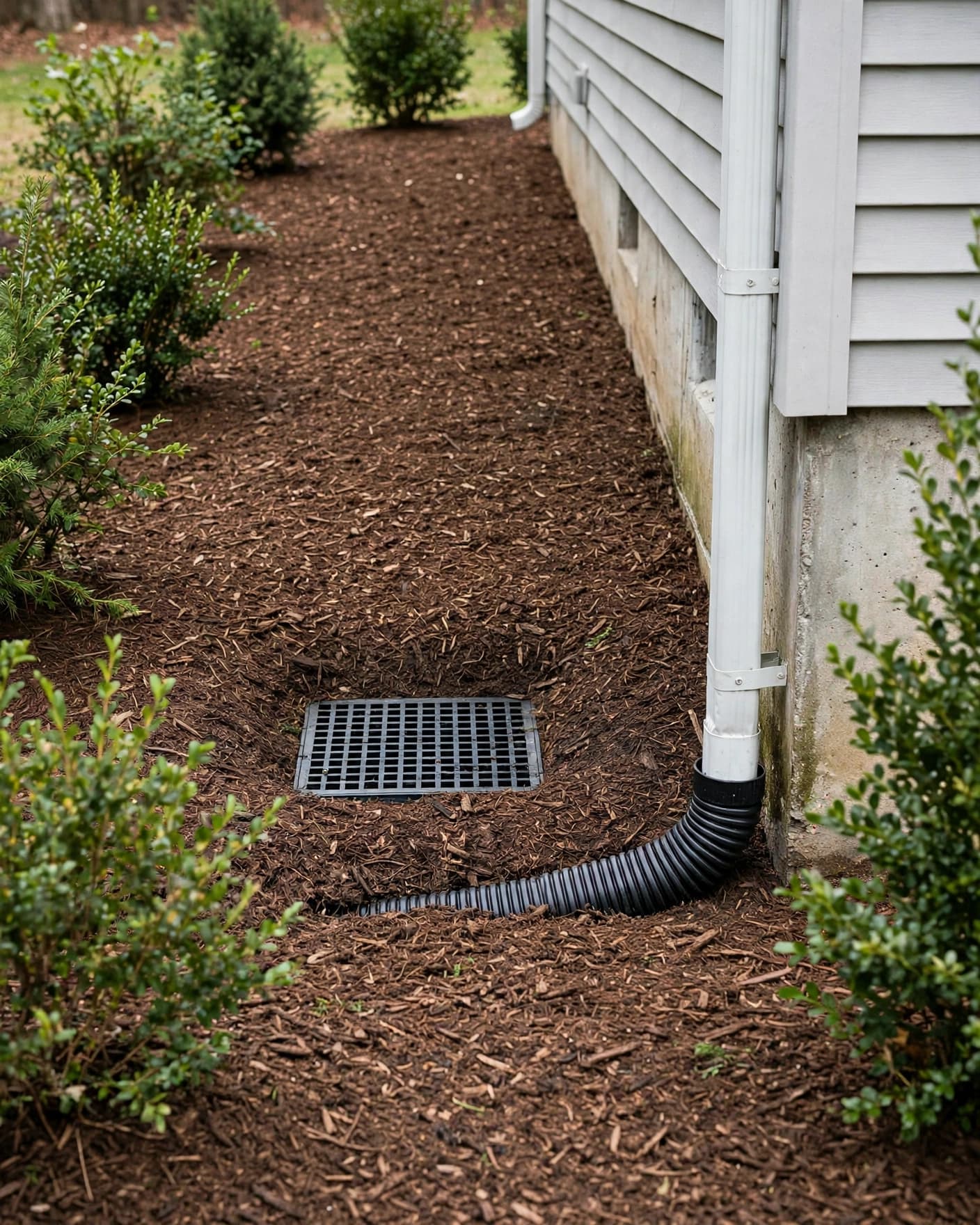
A mulch drainage bed gives you a soft, planted way to carry water through a narrow strip beside the house. Shrubs and ground cover hide parts of the drainage route while the mulch protects the soil from direct water impact.
This idea works well along side walls, under windows, and beneath long rooflines. Keep the bed open enough for water to move, and avoid piling mulch directly against siding or foundation walls.
Use a surface grate or channel where water enters the bed. The visible inlet makes cleaning easier and helps prevent leaves from blocking the drainage route.
11. Long Stone-Lined Drainage Channel
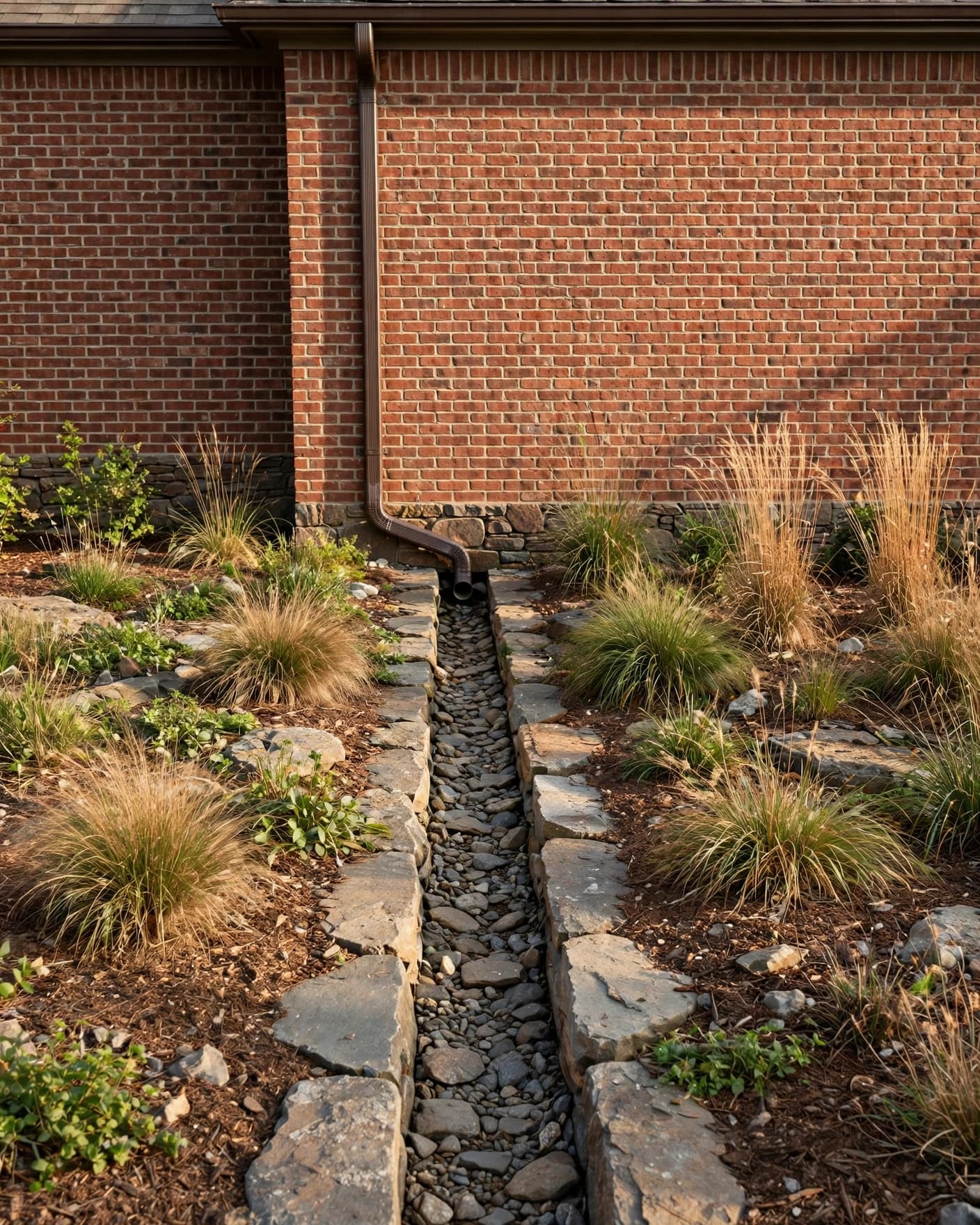
A long stone-lined channel gives runoff a defined route through a broad landscape border. Flat stones create a structured edge, while ornamental grasses soften the sides and add height.
This option fits brick homes and traditional yards because the stone echoes the texture of the masonry. You can run the channel toward a lower garden area, a lawn, or another approved outlet.
Build the channel with a gentle grade rather than a sharp drop. A gradual route slows the water and reduces the chance that it will carry mulch or soil into another part of the yard.
12. Gravel-Covered Dry Well Area
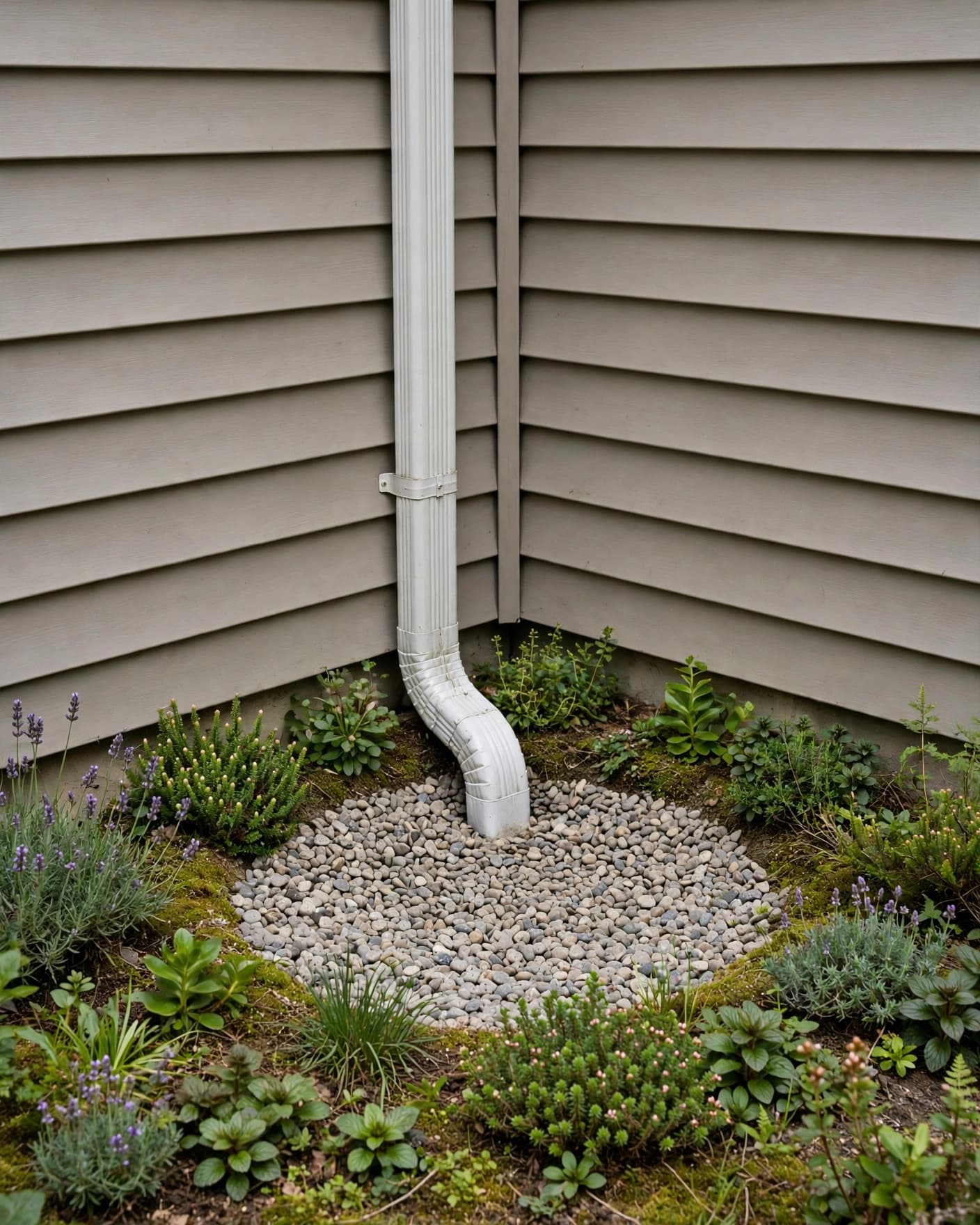
A dry well area collects water below the surface and lets it move into surrounding soil. The gravel cover gives the feature a neat appearance and hides much of the underground structure.
Use this idea only where the soil can accept water and the runoff comes from a clean source, such as a roof. The EPA notes that some dry wells qualify as Class V stormwater drainage wells, so local rules may apply before you install one.
A dry well doesn’t fit every yard. Clay soil, a high water table, shallow bedrock, or contaminated runoff can limit its use.
13. Concrete Channel for a Narrow Side Yard
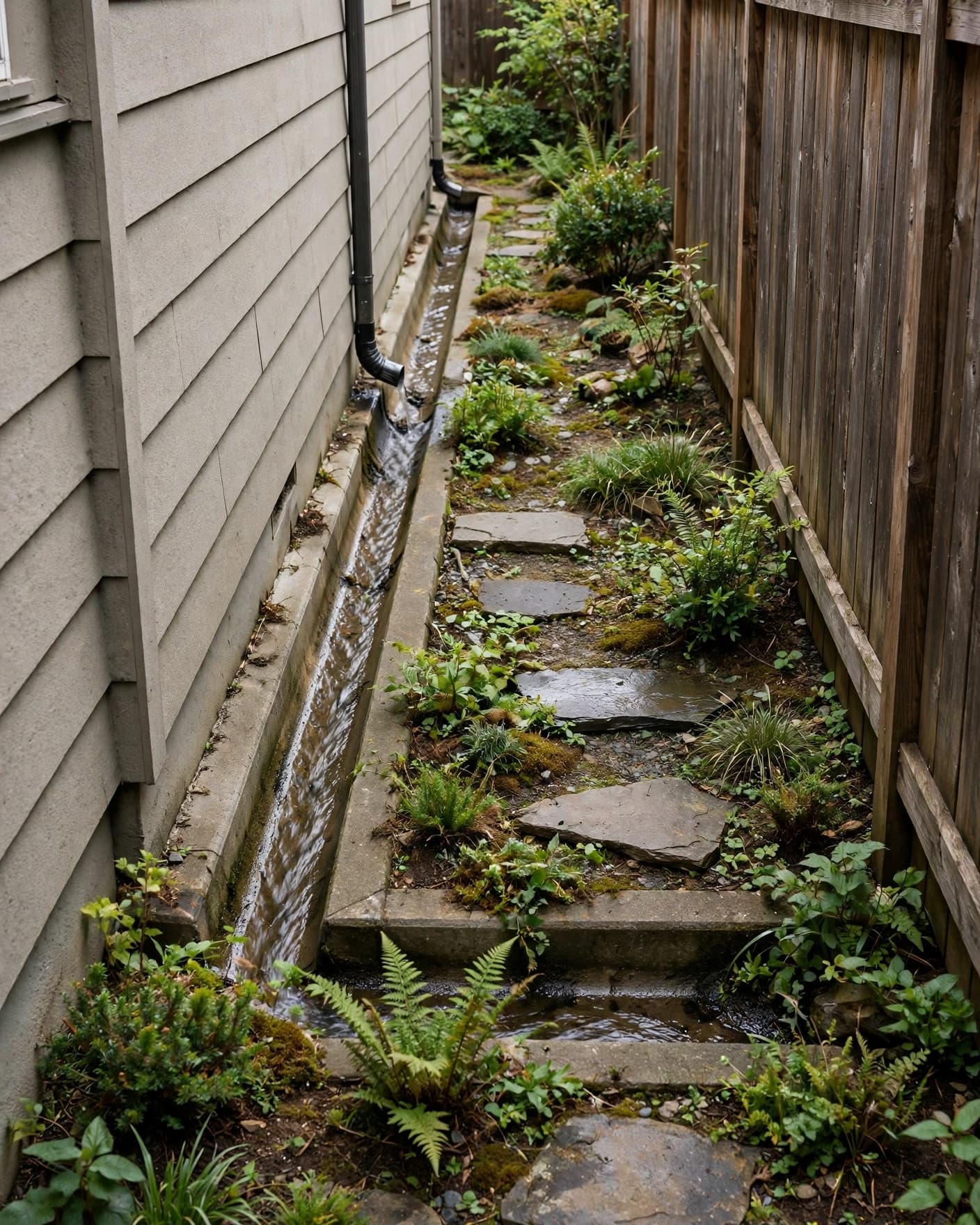
A narrow concrete channel works when a side yard has little room for a wide swale or planted basin. The firm surface guides water past a fence, walkway, or foundation and toward a lower garden bed.
Use a shallow channel with a neat edge so it looks intentional beside stepping stones. The pale concrete also contrasts well with dark mulch, green plants, and wood fencing.
This layout needs a clear outlet at the lower end. Without one, water may pool in the side yard instead of leaving the area.
14. Planted Bioswale
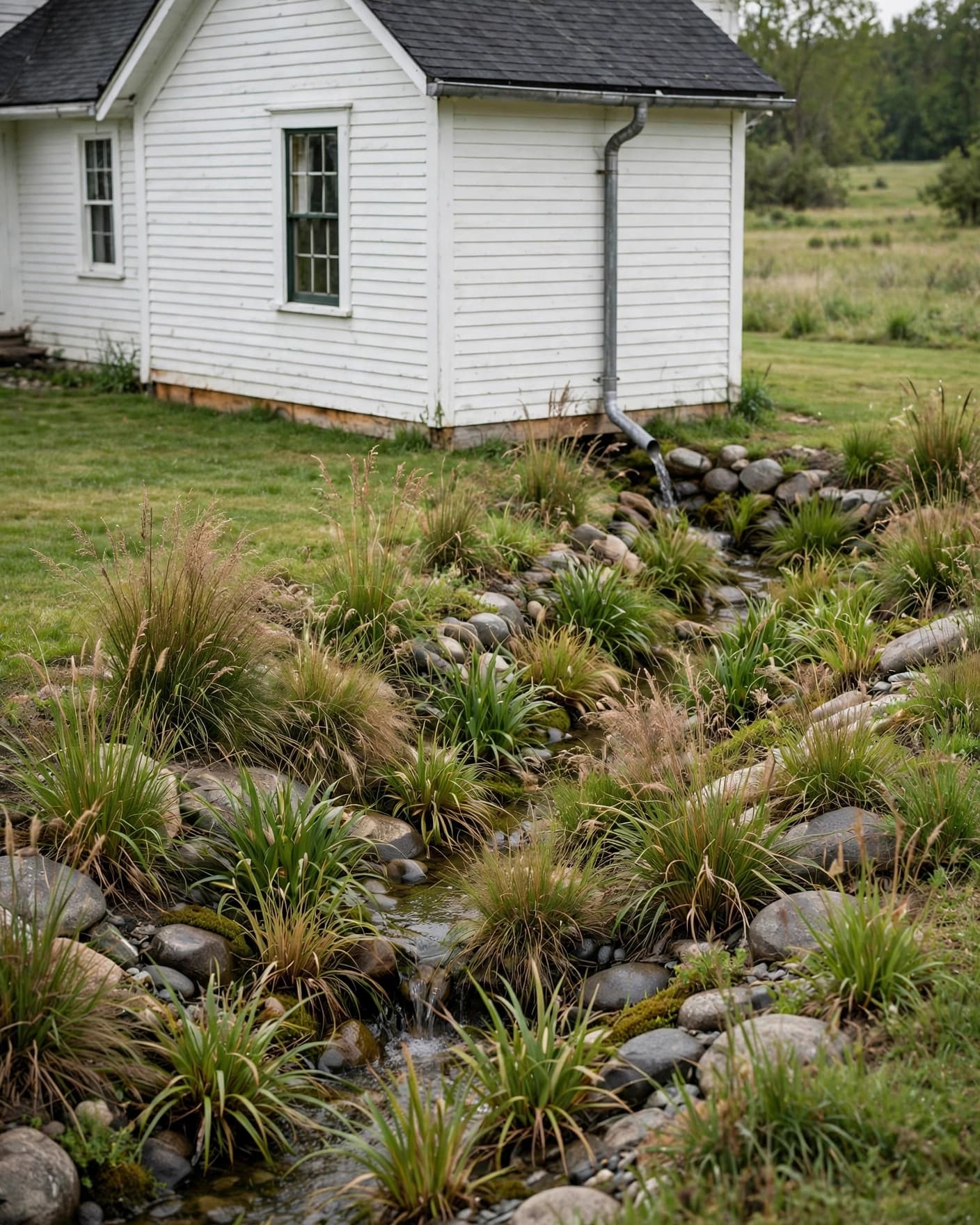
A bioswale is a planted channel that slows and filters runoff as it moves through the landscape. Sedges, native grasses, and stones create a natural drainage strip that fits a farmhouse or large suburban yard.
The EPA describes bioretention areas and other green infrastructure as systems that collect runoff and allow it to soak into the ground or move through an underdrain. Plants also help hold soil in place and filter some pollutants from stormwater.
Use a bioswale where you have enough room for a broad, shallow channel. A tight, steep ditch won’t create the same slow-moving flow that makes a planted swale useful.
15. Decorative Gravel Bed With Steel Edging
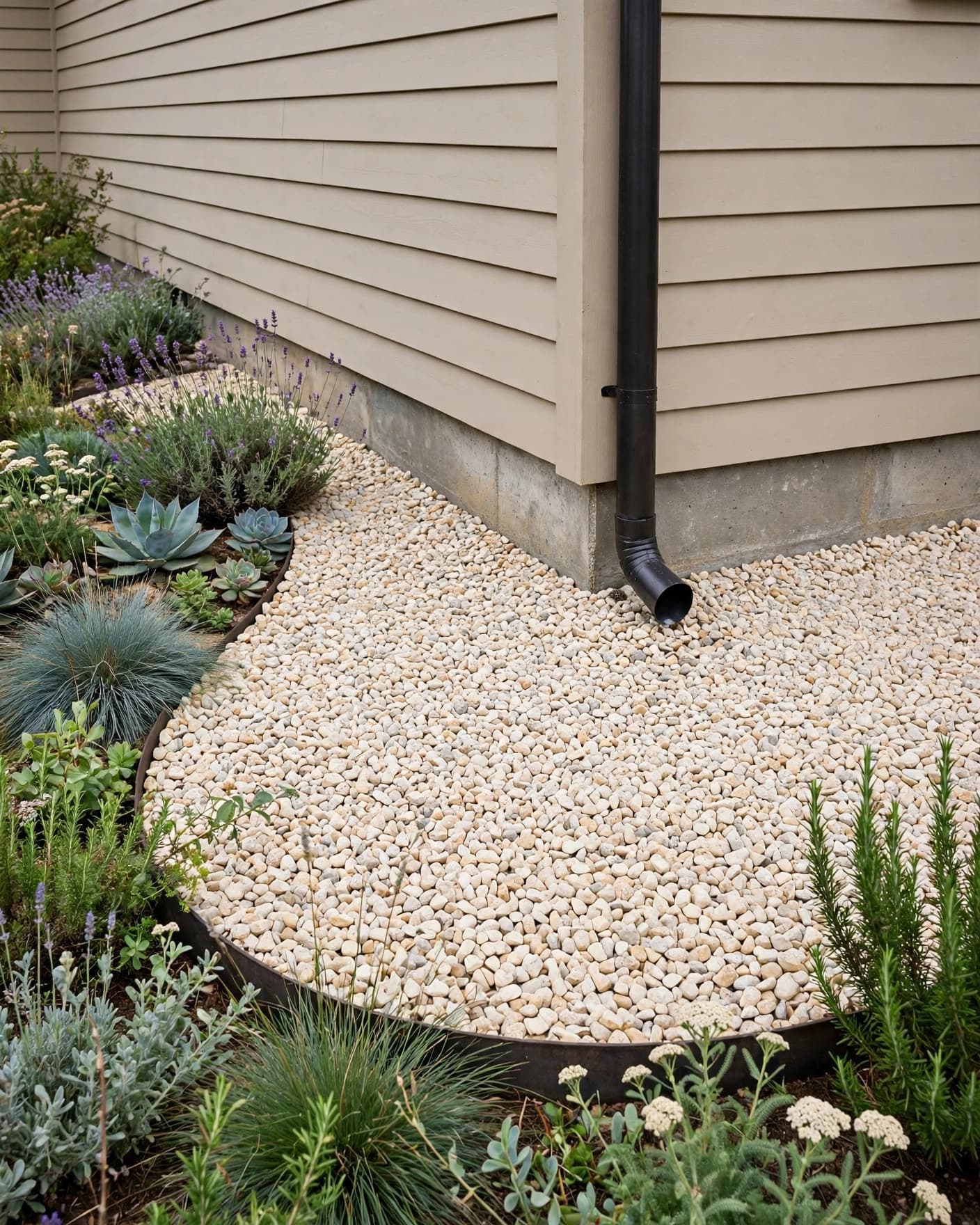
A decorative gravel bed gives downspout water a clean landing area without adding a large garden feature. Steel edging keeps the gravel in place and creates a crisp line beside drought-tolerant plants.
Choose gravel that complements your home’s siding, stonework, or driveway. Pale stone brightens a shaded foundation bed, while charcoal gravel fits a modern exterior.
This option needs a route beyond the gravel if your roof collects a large amount of water. The bed can slow and spread runoff, but it may not hold every storm by itself.
16. Drainage Beneath a Wooden Walkway
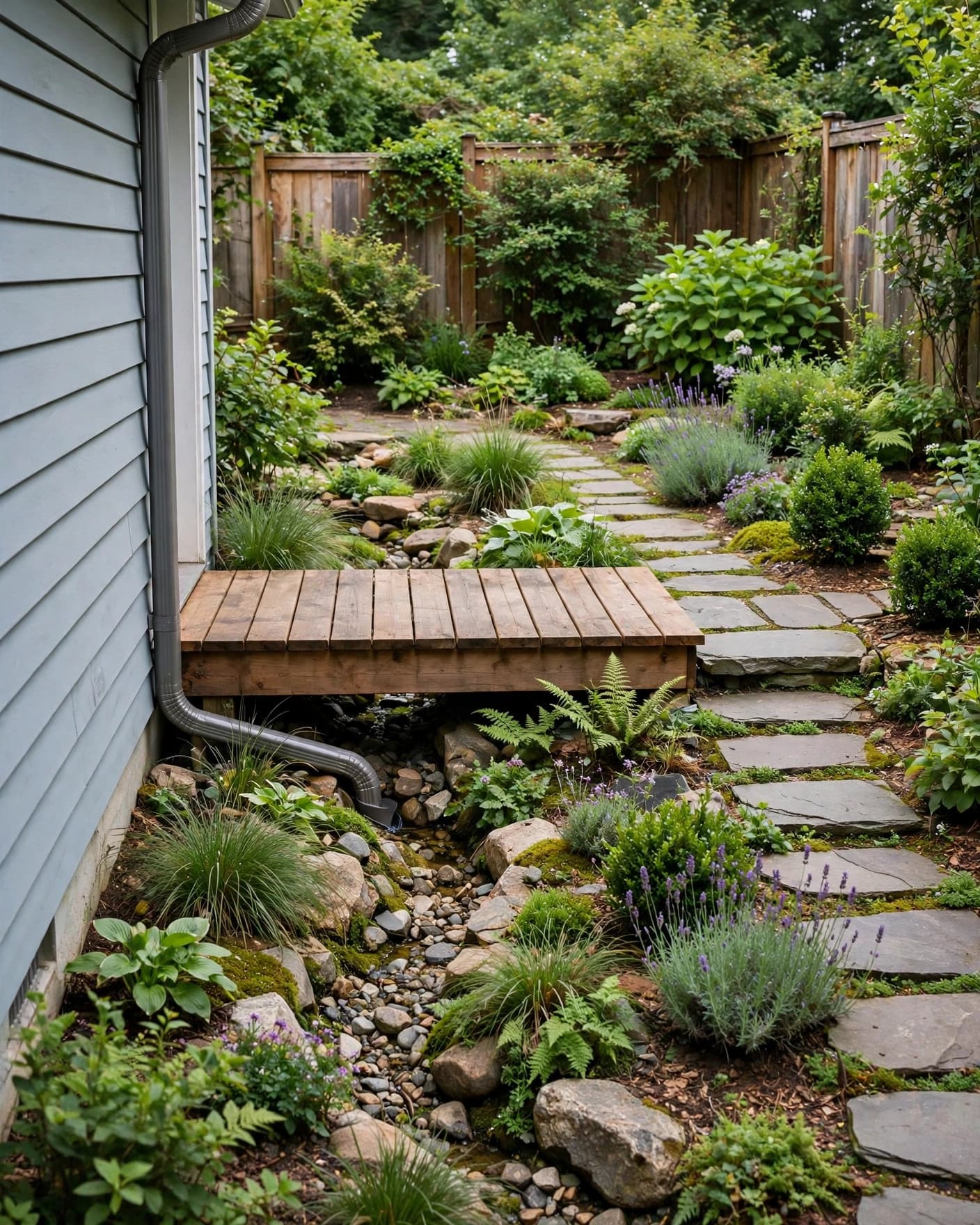
A drainage line beneath a walkway keeps a path open while water travels toward a planted bed. The wood walkway bridges the low area, so you don’t need to route the downspout around the entire garden.
This idea fits backyards with stepping paths, side entrances, and small garden crossings. Use an open, well-drained area beneath the walkway so leaves and soil don’t collect around the water route.
Place the path above the drainage line with enough room for maintenance. You should still be able to clear debris and inspect the outlet without removing the walkway.
17. Catch Basin Beside the Driveway
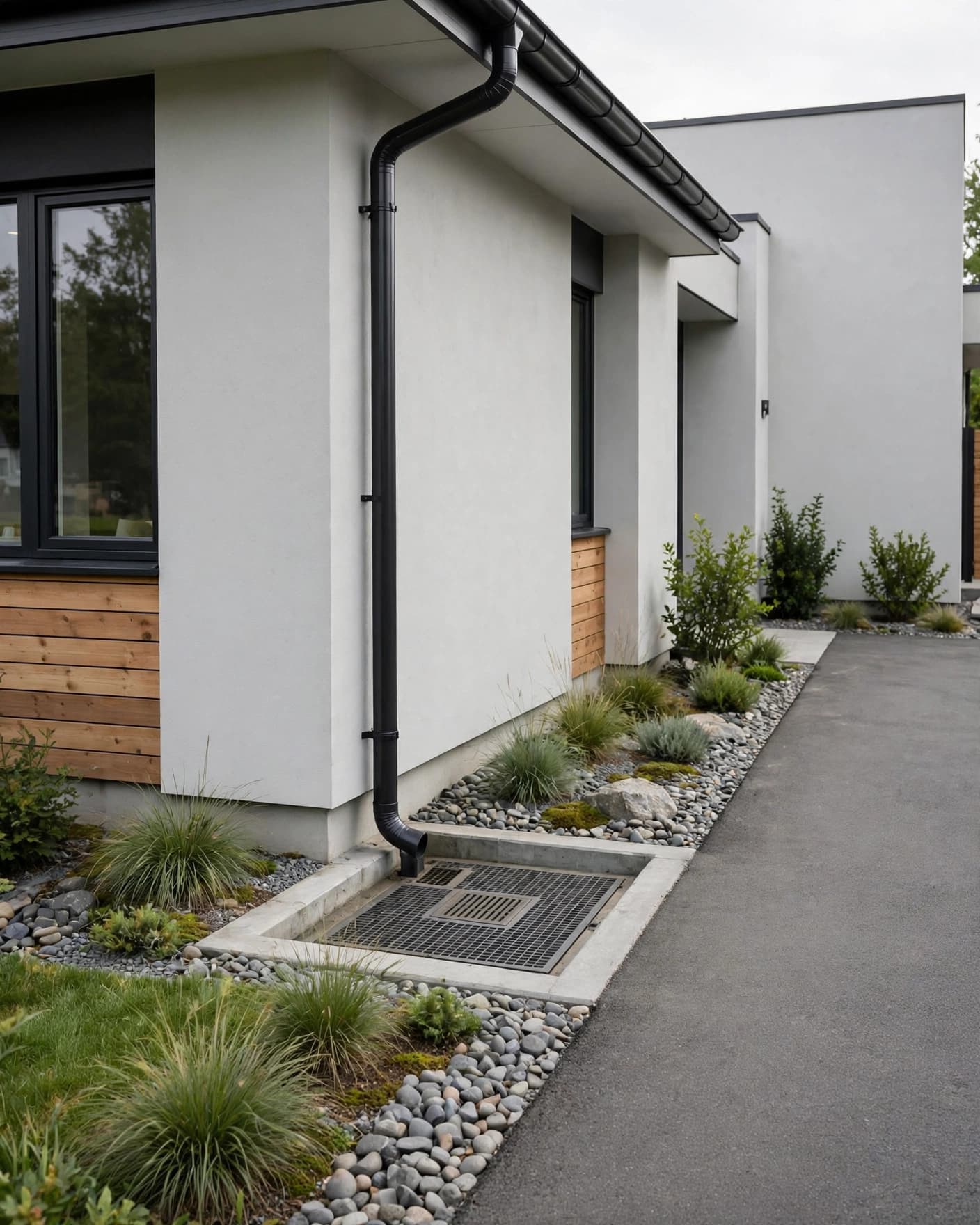
A catch basin collects water at a low point beside a driveway or paved area. A grate sits at the surface, while the basin connects to a drain line that carries water toward a suitable outlet.
This design fits homes where a downspout ends near a driveway and water creates puddles on the pavement. The grate gives the area a finished appearance and makes the collection point easy to find.
Keep leaves, gravel, and driveway debris away from the grate. A blocked catch basin cannot collect water well, especially during a heavy storm.
18. Connected Downspouts Across the Front Yard
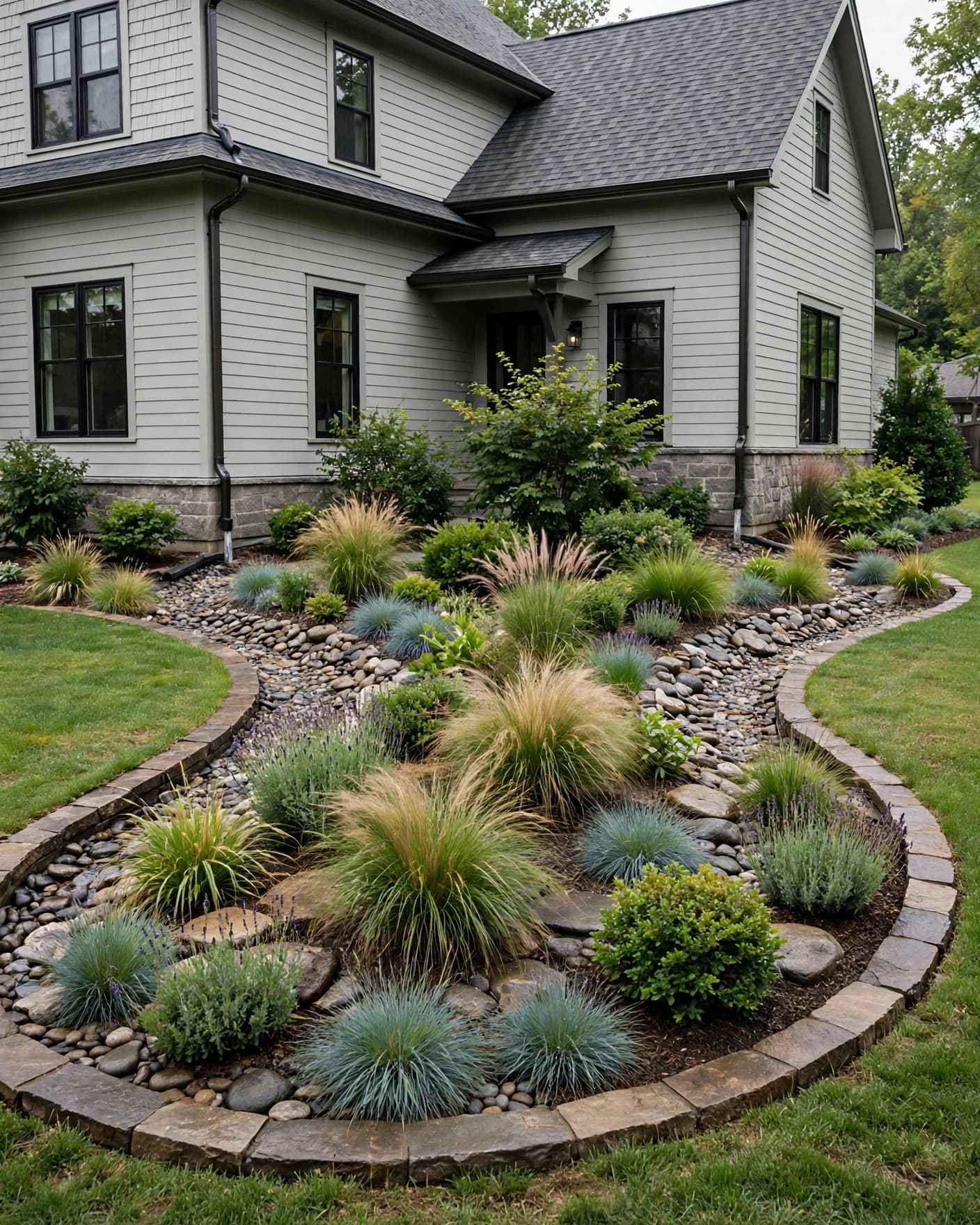
Two downspouts can feed one connected drainage bed when a home has several roof sections. This approach creates one coordinated landscape feature instead of several separate outlets around the foundation.
A curved planting bed helps connect the downspouts visually. Use grasses and shrubs to soften the route while leaving enough open space for water to spread.
The U.S. Geological Survey explains that roofs, driveways, sidewalks, and roads create stormwater runoff because these surfaces don’t absorb water like soil. A coordinated drainage bed gives that water a planned path before it reaches a low spot or street.
19. Fern Basin for a Shady Garden Corner
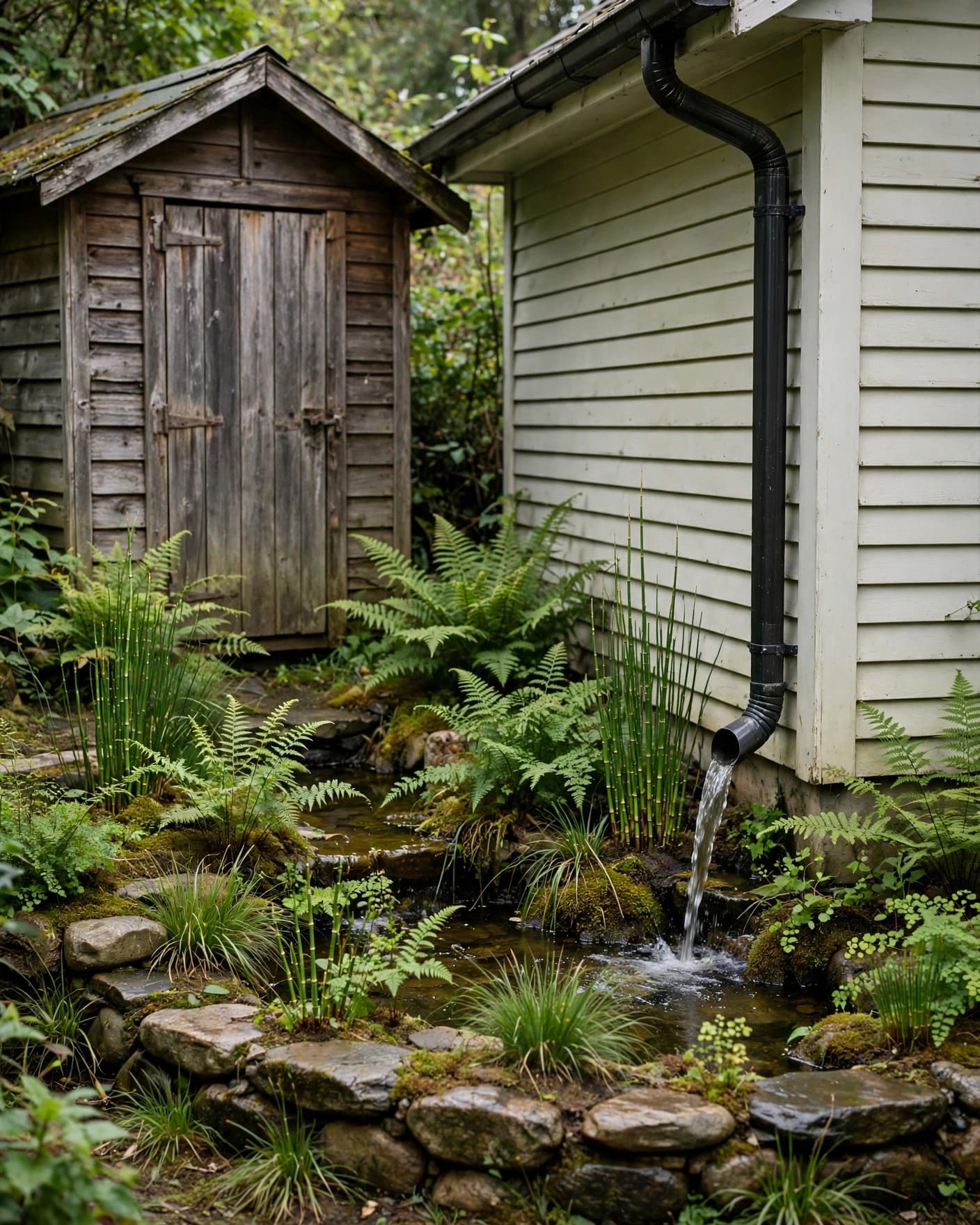
A shallow fern basin turns a wet corner into a lush garden feature. Ferns, sedges, and other moisture-loving plants soften the area around a shed, garden wall, or shaded foundation.
Use natural stone to define the basin and protect the soil around the downspout outlet. Leave room between the wall and the wet planting area so water doesn’t collect against the structure.
This idea suits yards where shade limits sun-loving plants. Choose plants that match your local climate and the amount of water the area receives.
20. Terraced Drainage Basins on a Slope
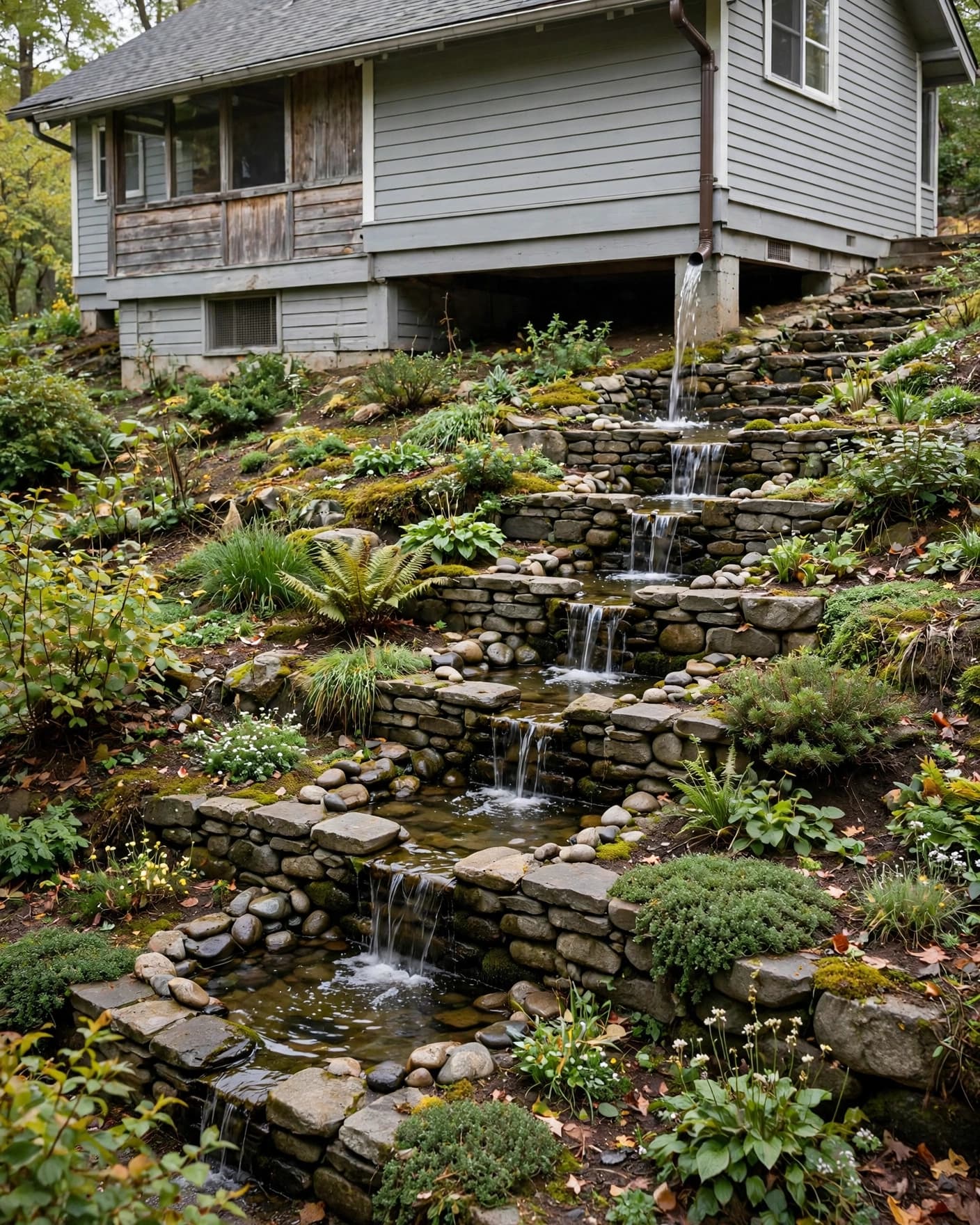
Terraced basins slow water as it moves down a sloped yard. Small stone walls create a sequence of shallow steps, and each basin holds part of the flow before passing it to the next level.
This design adds structure to a hillside garden while reducing the force of downhill runoff. It also gives you several planting pockets for grasses, ground cover, and small shrubs.
Build each terrace with a clear overflow route. Water needs a safe path when one basin fills during a larger storm.
21. Curbside Rain Garden With Native Plants
A curbside rain garden catches water between your lawn and the sidewalk. Native grasses and flowers make the drainage area look like part of the front landscape instead of a separate utility feature.
This idea can help slow water before it reaches the street, but the location requires careful planning. Check local rules before changing drainage near a sidewalk, curb, road, or public right-of-way.
Oregon State University Extension also recommends checking with your local jurisdiction before redirecting downspouts to a rain garden. Its guide to home rain gardens and stormwater covers the planning issues that affect this type of project.
Choosing a Downspout Drainage Idea
Start by looking at where water goes now. A flat yard may suit a rain garden, gravel bed, or catch basin, while a sloped yard may need a swale, stone channel, or terraced basin.
Your soil also matters. Fast-draining soil can support some infiltration features, while compact clay may need a surface channel or another designed outlet.
Keep every drainage path moving away from your foundation. The Massachusetts rain garden guidance explains that rain gardens can collect water from roof downspouts, paved areas, and sump pumps, but the basin still needs the right location and drainage conditions.
Underground systems need extra care. Dry wells and subsurface drainage features can involve local requirements, soil testing, groundwater limits, and stormwater-well rules, so don’t treat them as interchangeable with a surface gravel bed.
The best Downsprout Drainage Ideas match the shape of your yard and give water a clear place to go. Save the two or three layouts that fit your space, then compare their outlet location, maintenance needs, and connection to your existing landscape.

I’m Sumayya and I love turning ordinary spaces into ones you’ll never want to leave. Whether it’s cozy cottagecore corners, bold maximalist magic, or sleek modern minimalism, I’m here to help you discover your style and bring it to life without spending a fortune. Ready to refresh your space? Let’s make it happen!