24 Kitchen Wall Color Ideas for Every Style and Space
These kitchen wall color ideas help you choose a shade that fits your cabinets, counters, lighting, and daily life. You can use soft neutrals for a bright backdrop, rich colors for more character, or a small accent wall when you want a bold change without repainting the whole kitchen.
24 Kitchen Wall Color Ideas
1. Warm White Walls With Natural Oak Cabinets
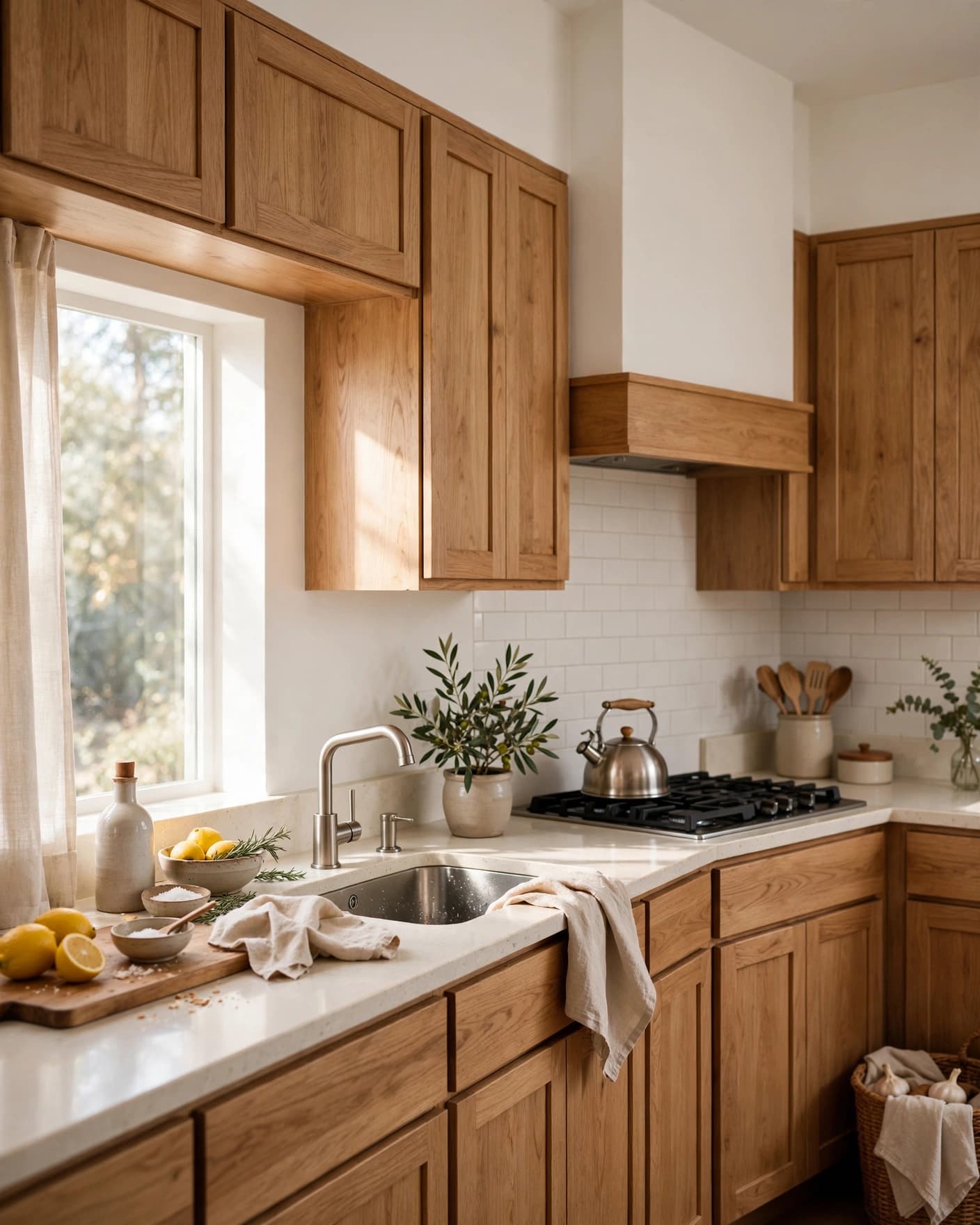
Warm white walls give your kitchen a bright backdrop without the sharp look of a cool white. The shade pairs well with natural oak, cream counters, beige floors, and warm metal hardware.
Choose a white with soft yellow or beige undertones if your kitchen has wood cabinets. You can compare options through Benjamin Moore’s paint color collection, then test your favorite samples near a window and beside your counters.
2. Pale Sage Green Walls With White Cabinets
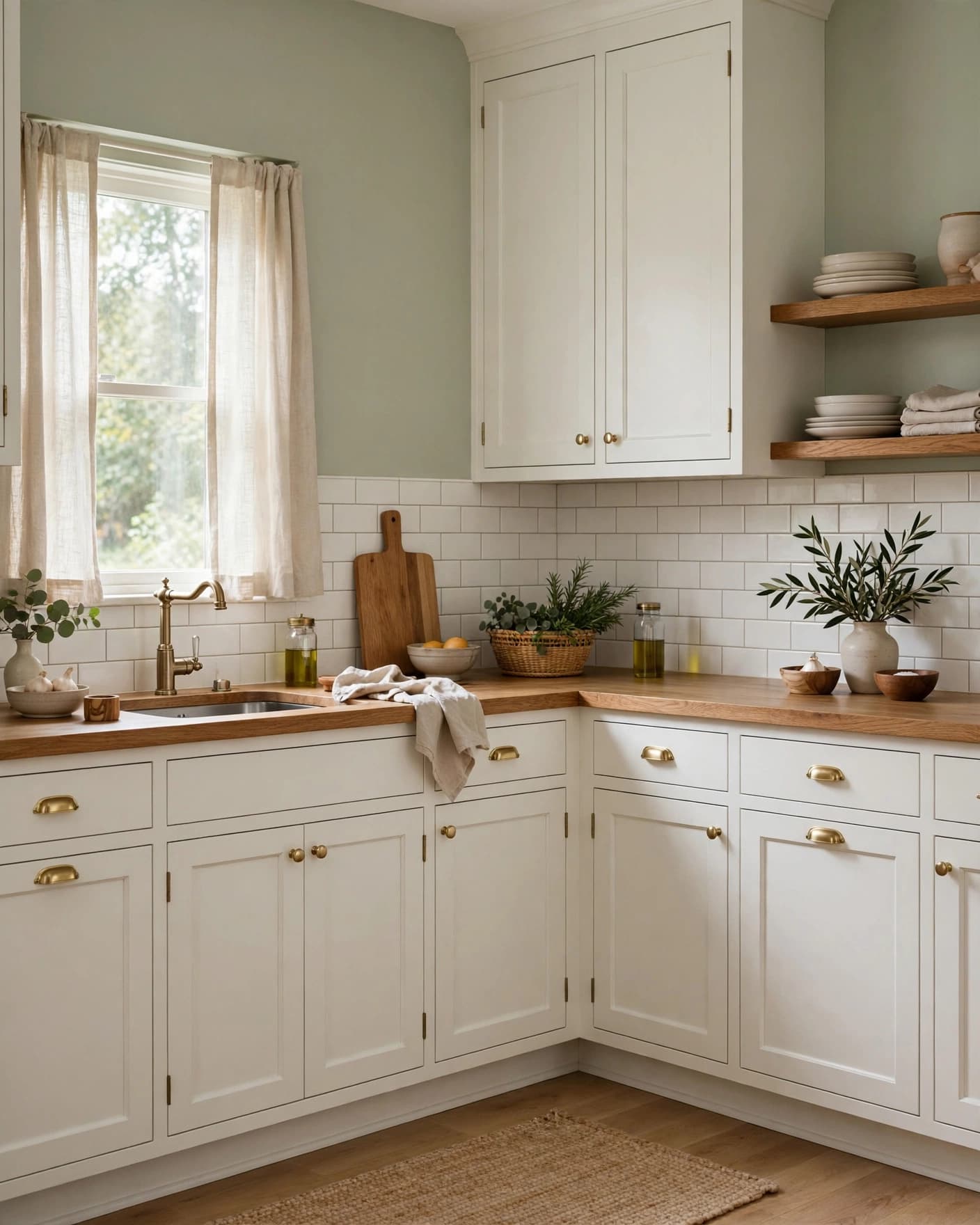
Pale sage green gives your kitchen a calm, soft look while adding more color than a neutral wall. It works especially well with white cabinets, light oak, woven accents, and brushed brass hardware.
Use a muted sage if you want the room to feel relaxed rather than strongly green. A satin finish can help you wipe away cooking marks while keeping the walls from looking too shiny.
3. Navy Blue Walls With White Cabinets
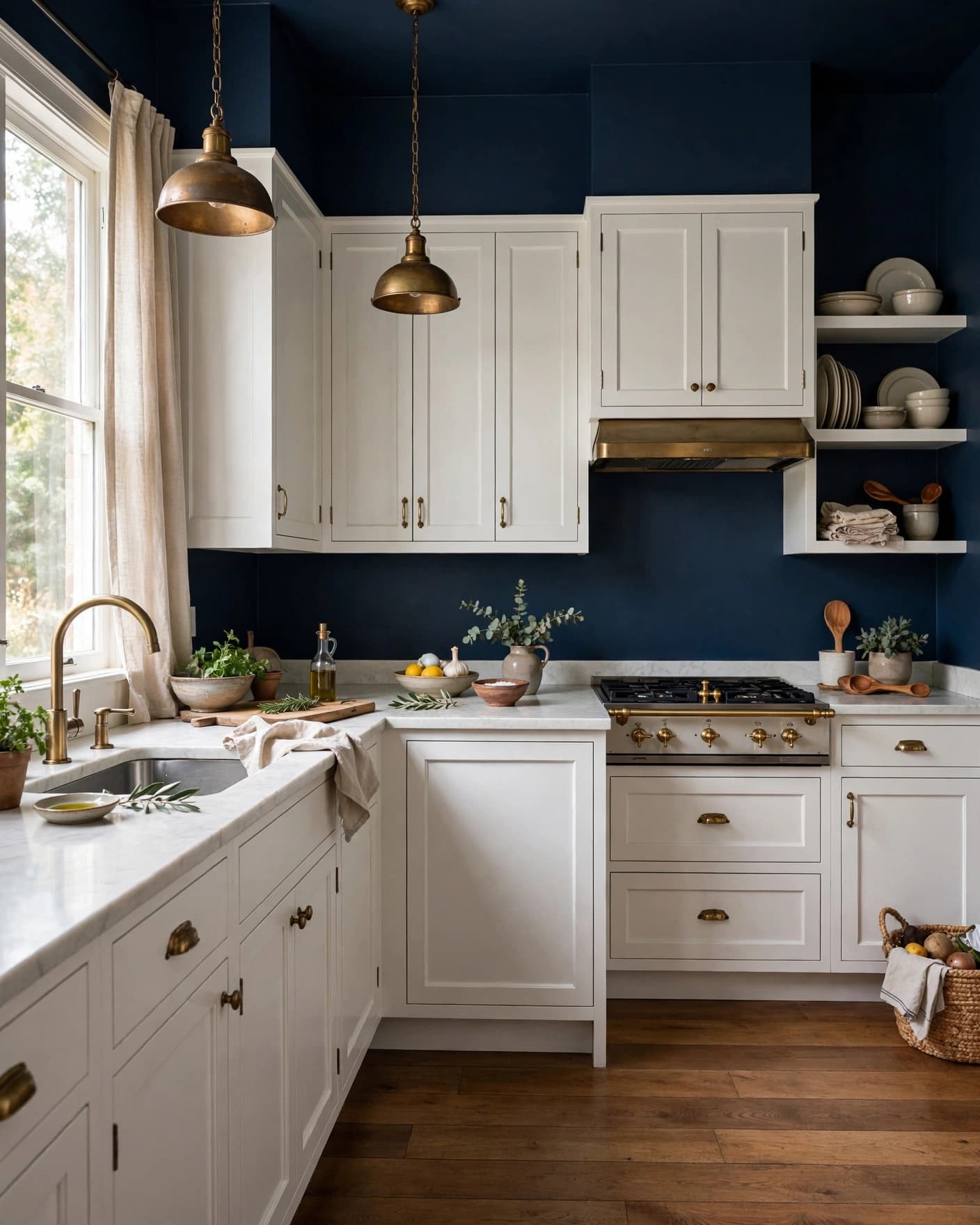
Navy blue walls create a strong contrast against white cabinets and pale counters. The deep shade also gives a kitchen more visual weight, which can make a large or open room feel more settled.
Balance navy with warm wood, brass lighting, or cream accessories. If your kitchen gets little daylight, test the color at night because deep blue can look much darker under warm bulbs.
4. Soft Gray Walls With Pale Stone Counters
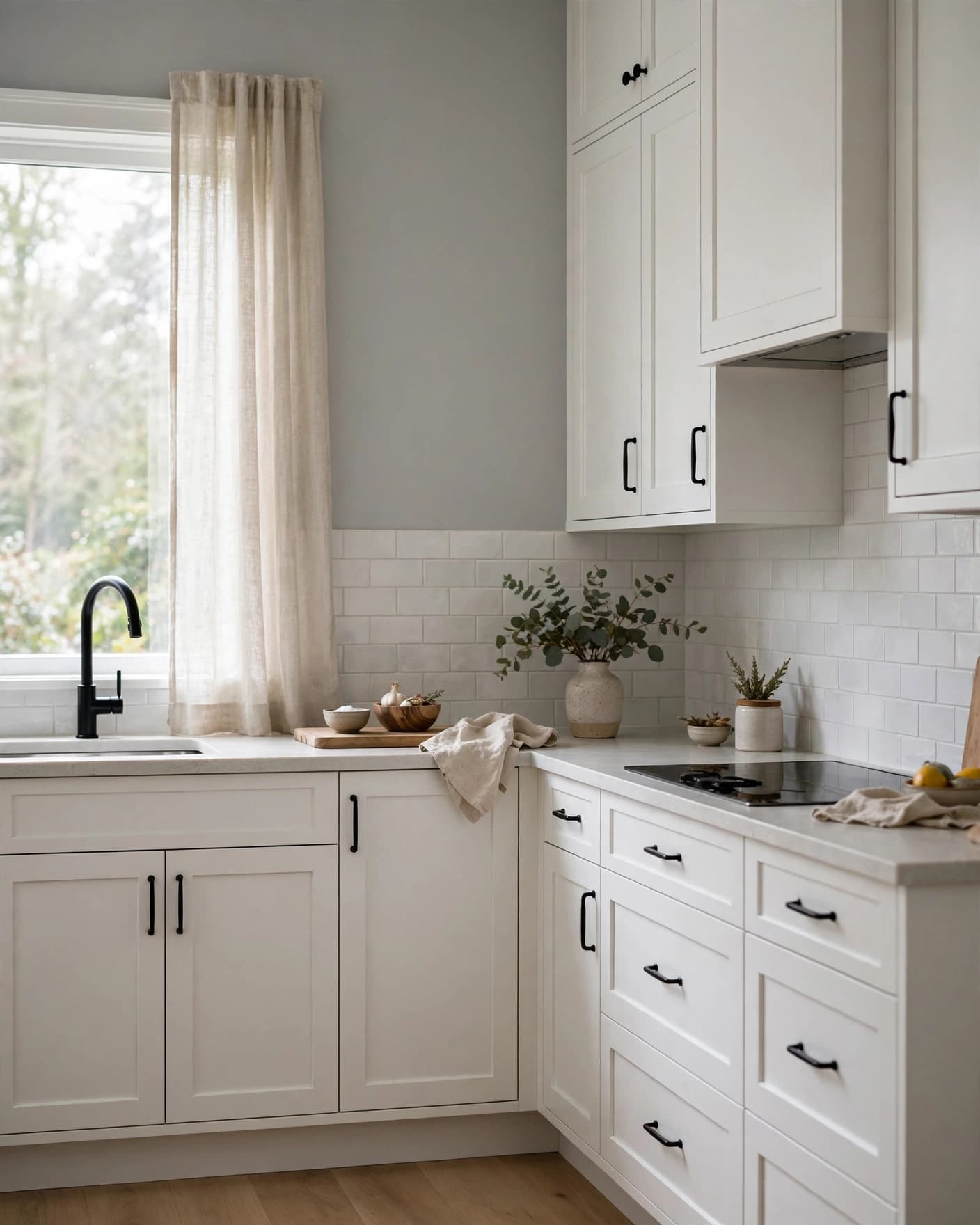
Soft gray walls give you a flexible background for white cabinetry, pale counters, and black accents. The color works well when you want a clean kitchen without the colder feel that some blue-based grays can create.
Look for a gray that matches the undertone in your counter or backsplash. If your stone has warm flecks, choose a gray with a slight beige base so the wall does not clash with the room.
5. Warm Greige Walls With Walnut Cabinets
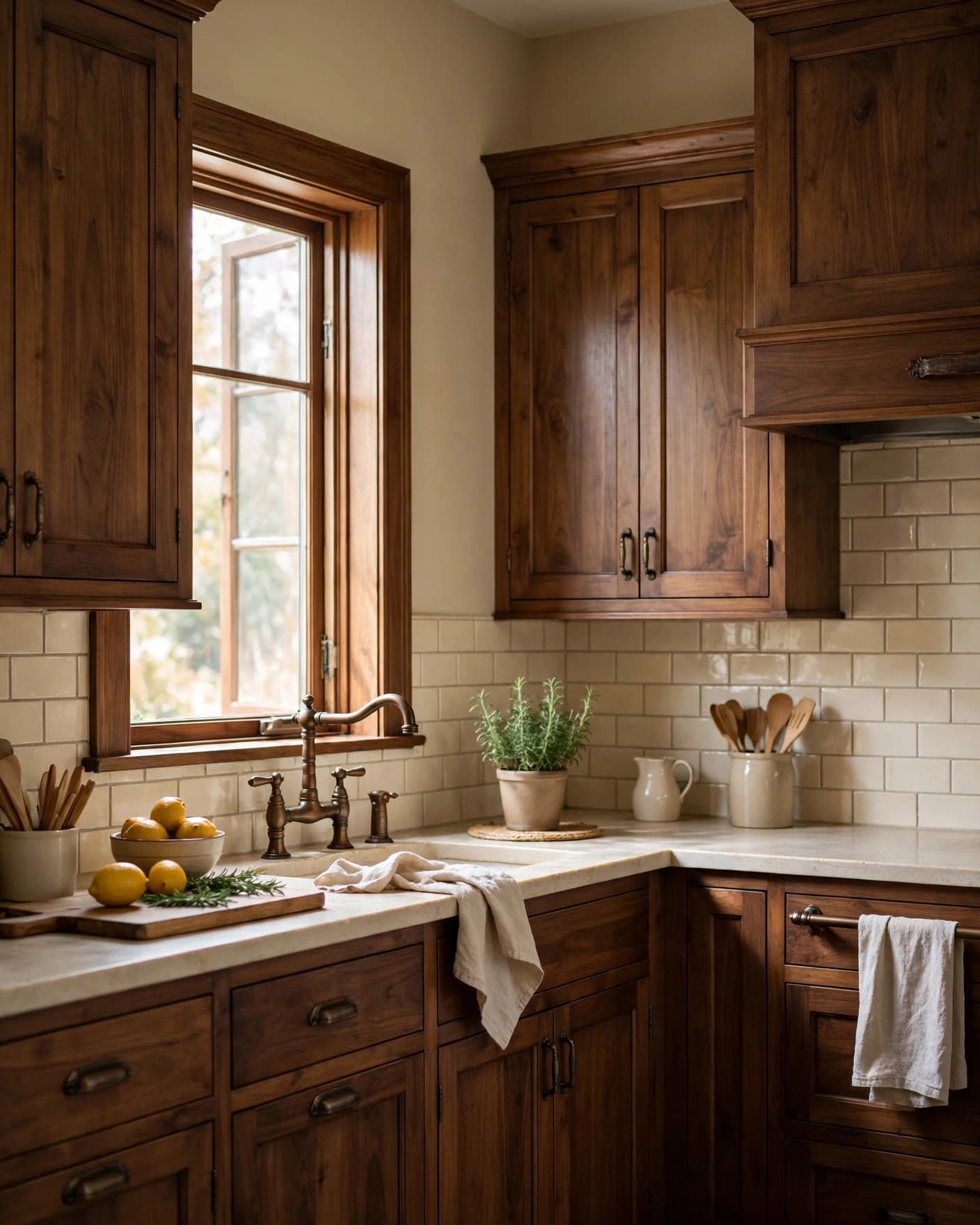
Warm greige combines the softness of beige with the quiet tone of gray. It gives walnut cabinets, cream backsplashes, and bronze fixtures a connected look without adding too much contrast.
This color suits kitchens that need warmth but still have a modern shape. Choose a sample with your cabinet door because greige can shift toward gray or tan as your lighting changes.
6. Muted Terracotta Walls With Oak Cabinetry
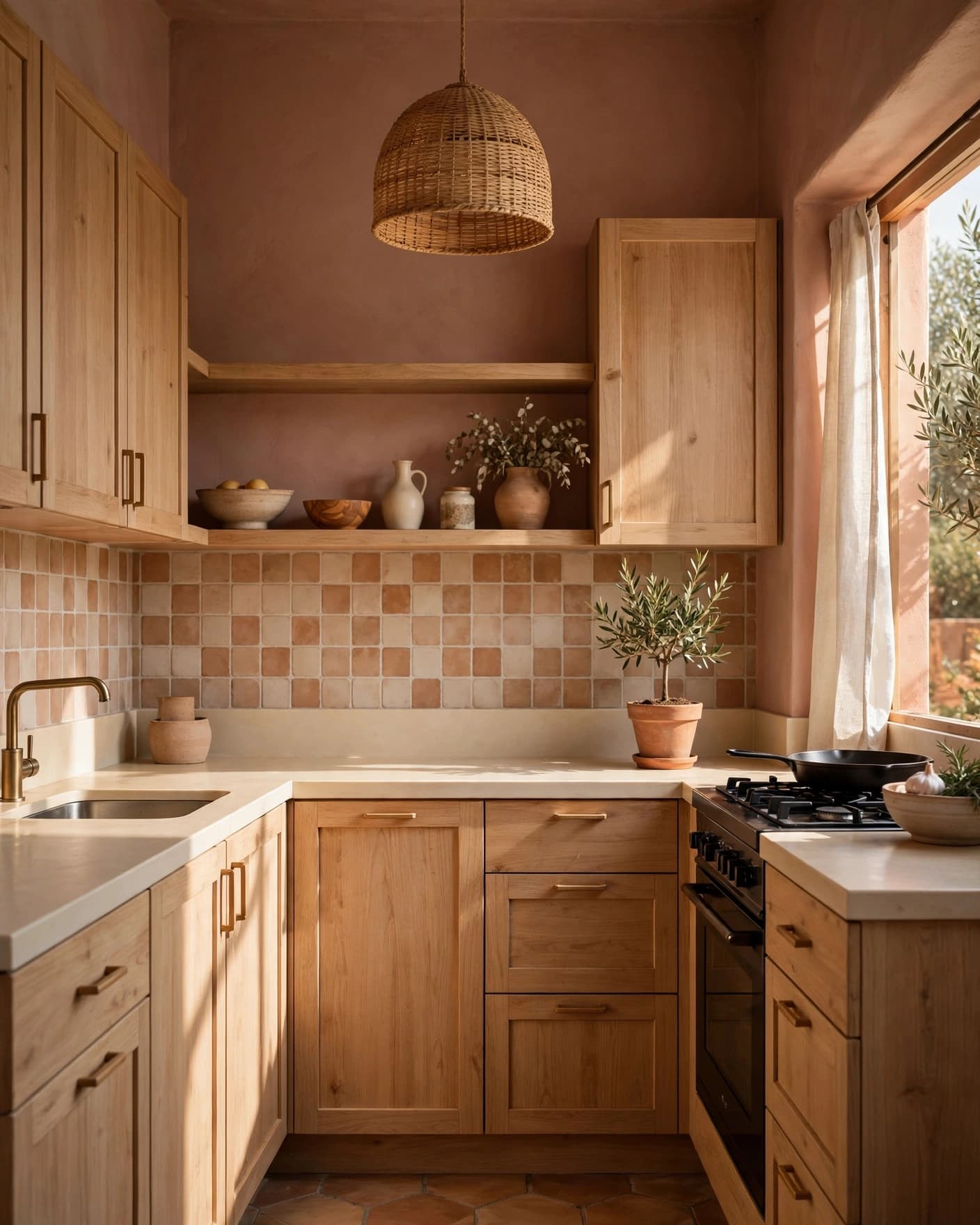
Muted terracotta gives your kitchen an earthy Mediterranean feel without the brightness of orange. The color looks rich beside light oak, creamy counters, woven pendants, and aged brass.
Use this shade on a full wall when your kitchen has plenty of natural light. If the room feels small, keep the cabinets and larger surfaces light so the terracotta adds warmth without making the space feel heavy.
7. Dusty Blue Walls With a Wood Island
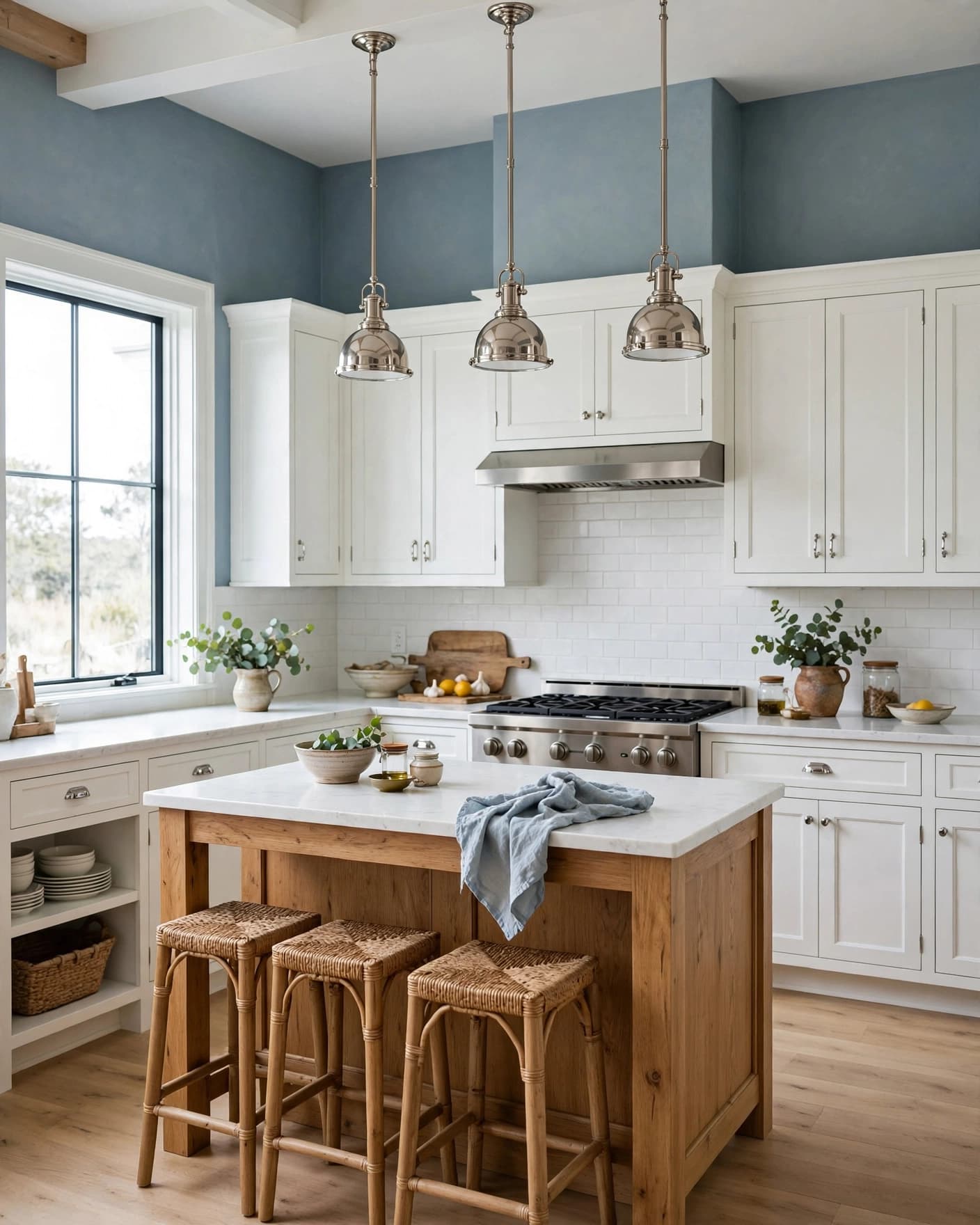
Dusty blue walls add color while keeping your kitchen light and easy to live with. The shade works with white cabinets, natural wood islands, nickel hardware, and pale floors.
Choose a gray-blue when you want a quieter coastal look. You can also pair dusty blue with warm cream instead of bright white if your kitchen needs more softness.
8. Butter Yellow Walls in a Small Kitchen
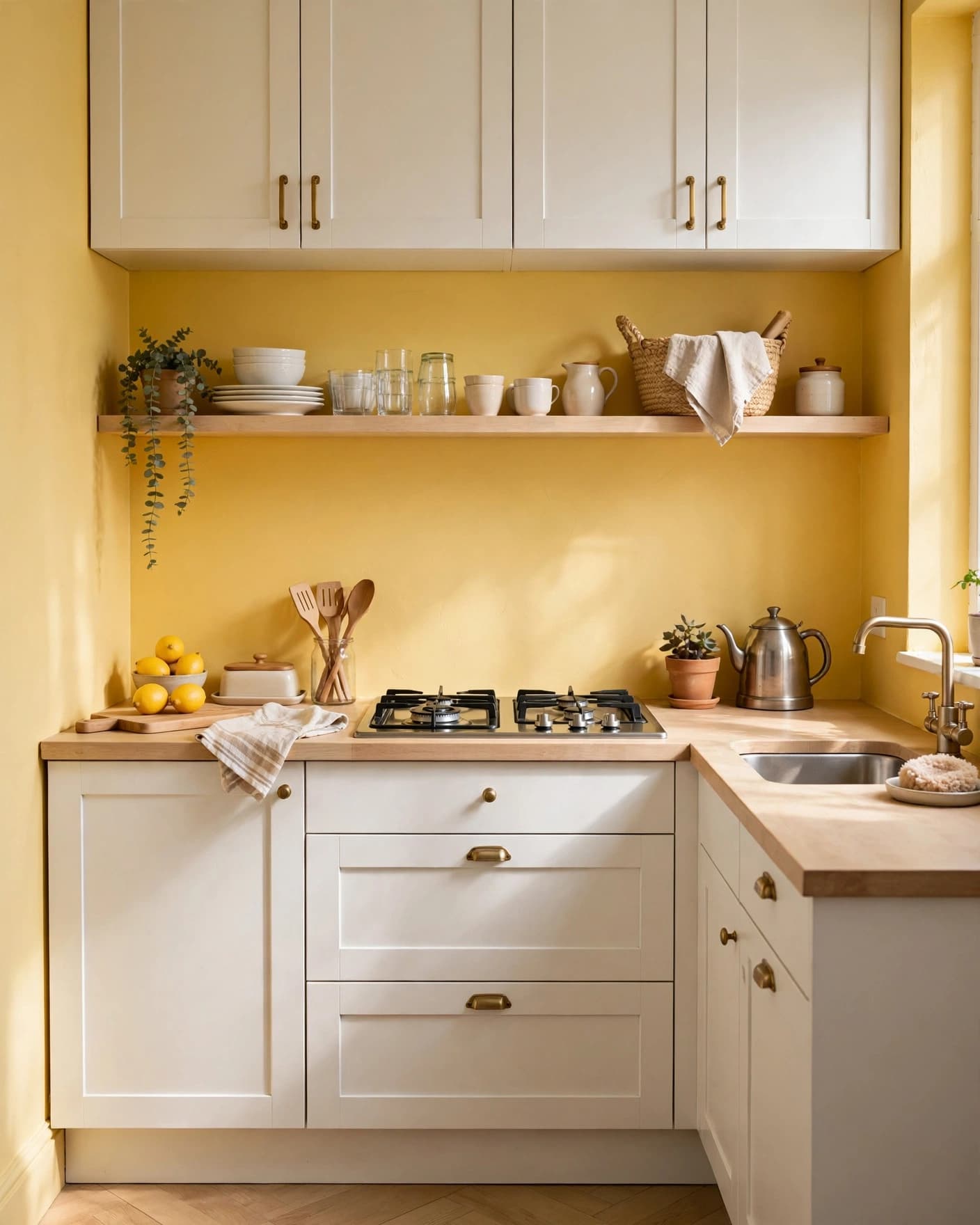
Butter yellow brings a cheerful glow to a small kitchen without the intensity of a bright primary yellow. It pairs naturally with white cabinets, pale wood shelves, vintage details, and warm light.
Use a soft yellow with a creamy base if your kitchen has warm flooring or wood furniture. A satin wall finish can make the color easier to clean near the sink and cooking area.
9. Forest Green Walls With Copper Lighting
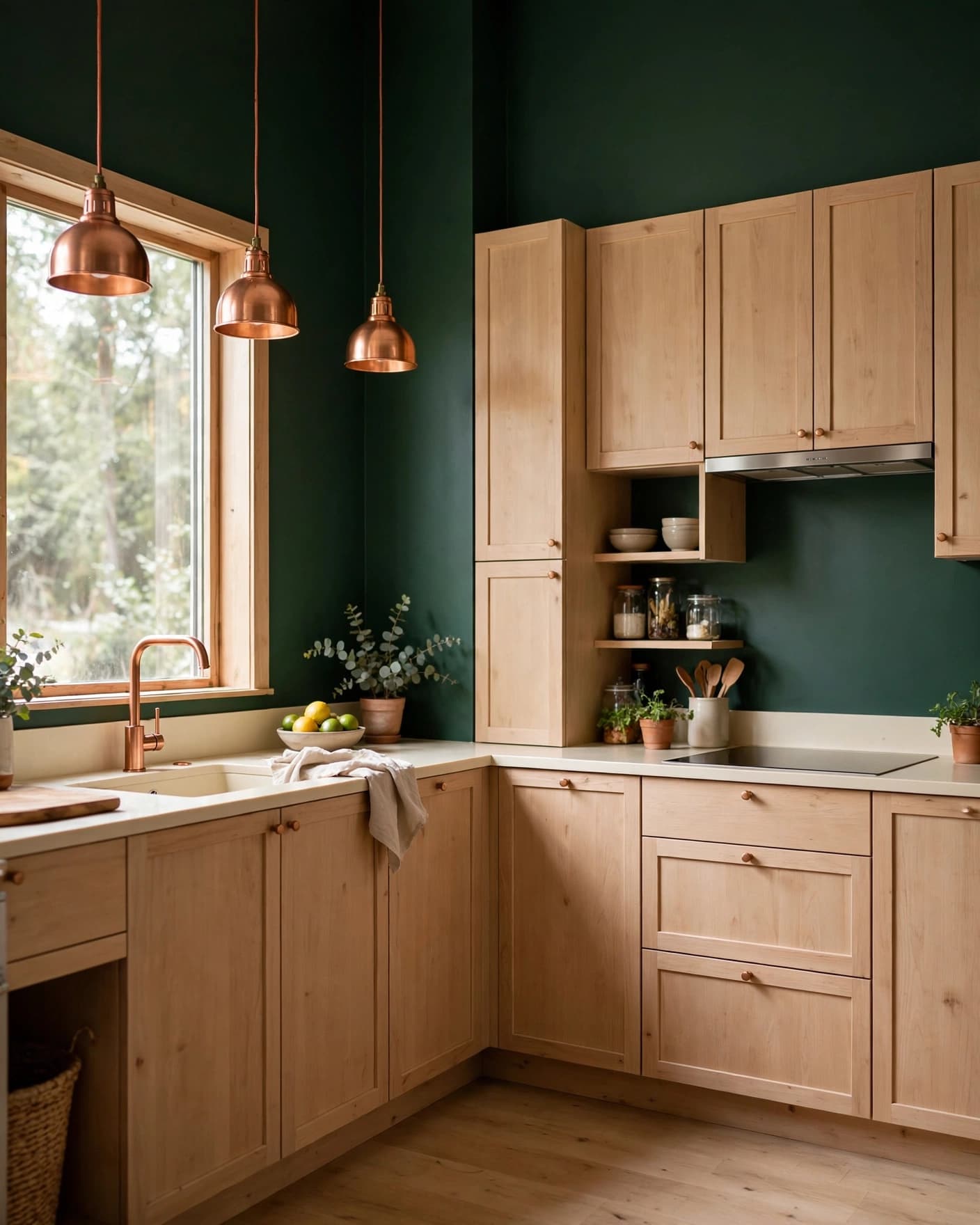
Forest green walls give your kitchen a rich, grounded look. The shade pairs well with light wood cabinets, cream counters, copper lights, and natural textures.
Use forest green when you want your wall color to become a major part of the room’s design. Keep the counter and backsplash light so the deep wall has enough contrast around it.
10. Blush Pink Walls With White Cabinets
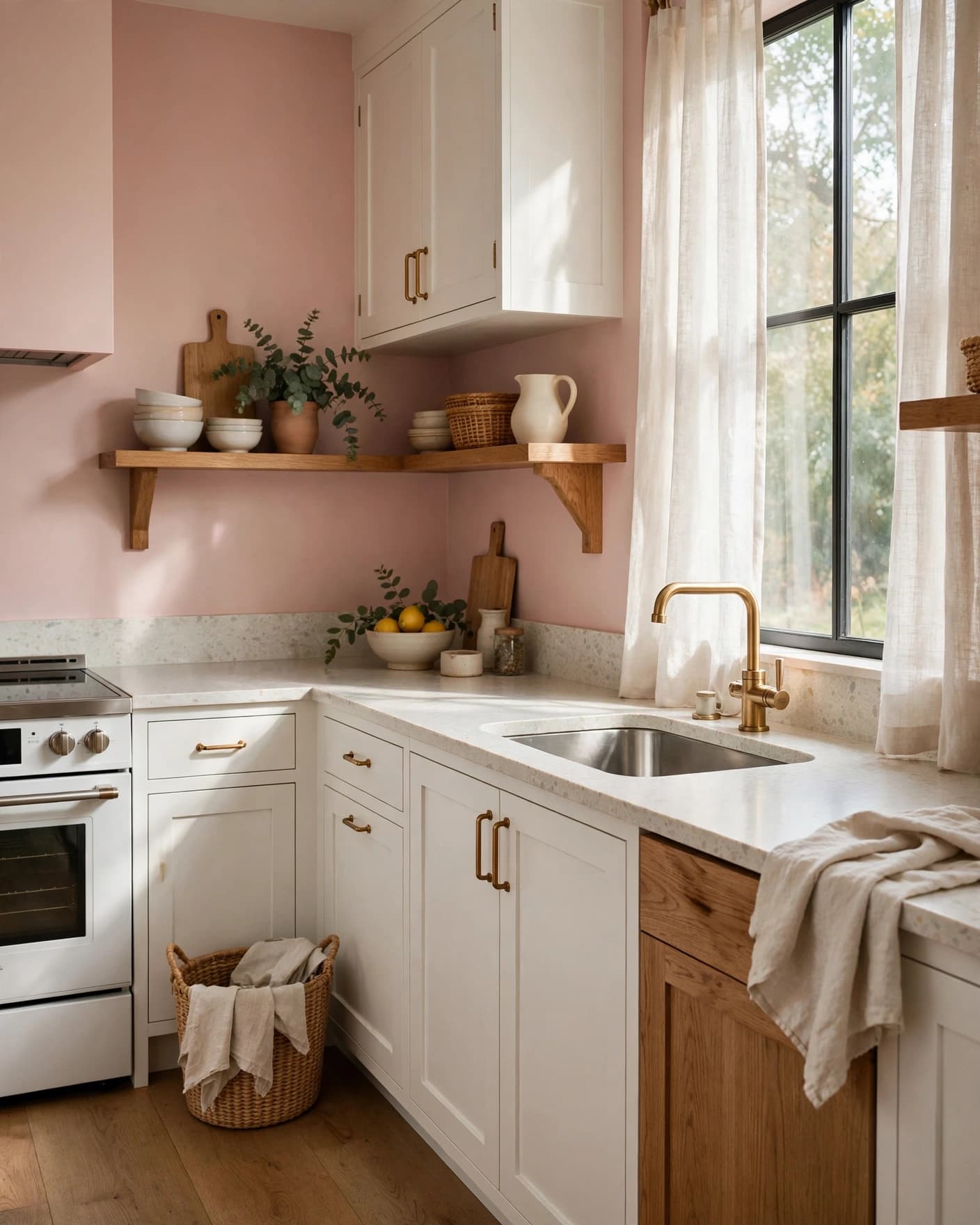
Blush pink walls add warmth without turning your kitchen into a bright, sugary space. A dusty pink works well with white cabinets, terrazzo counters, pale oak, and soft brass fixtures.
Choose a muted pink with beige or gray undertones for a more grown-up look. If you have cool white cabinets, test the pink beside them first because some blush shades can make bright white look blue.
11. Charcoal Gray Walls With Warm White Cabinets
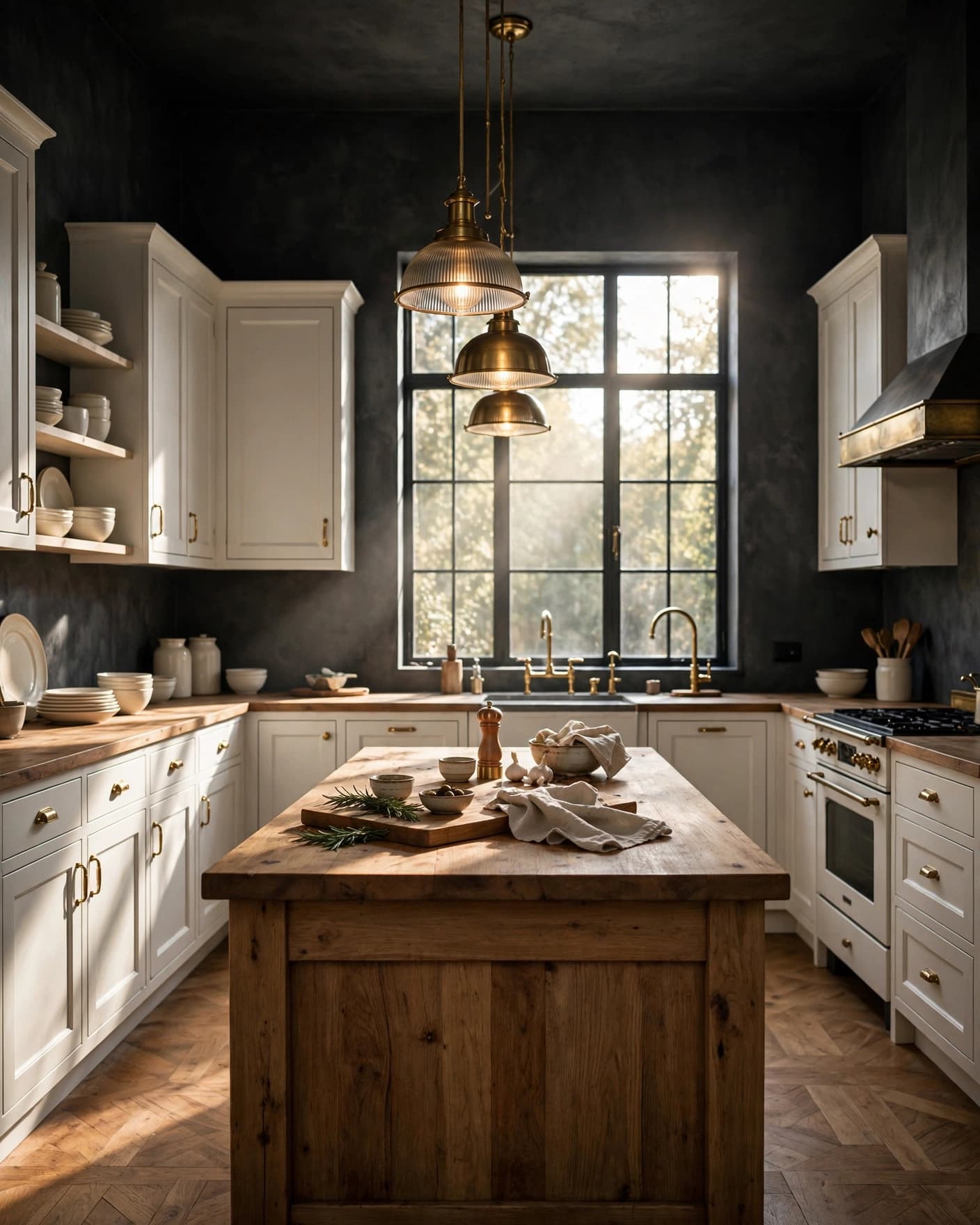
Charcoal gray walls create a bold backdrop for warm white cabinets and natural wood. The deep color looks balanced with brass fixtures, pale counters, and large windows.
Use charcoal on one main wall if your kitchen has limited daylight. You can also paint the full room when your cabinets, ceiling, and counters provide enough light contrast.
12. Lavender-Gray Walls With Brass Details
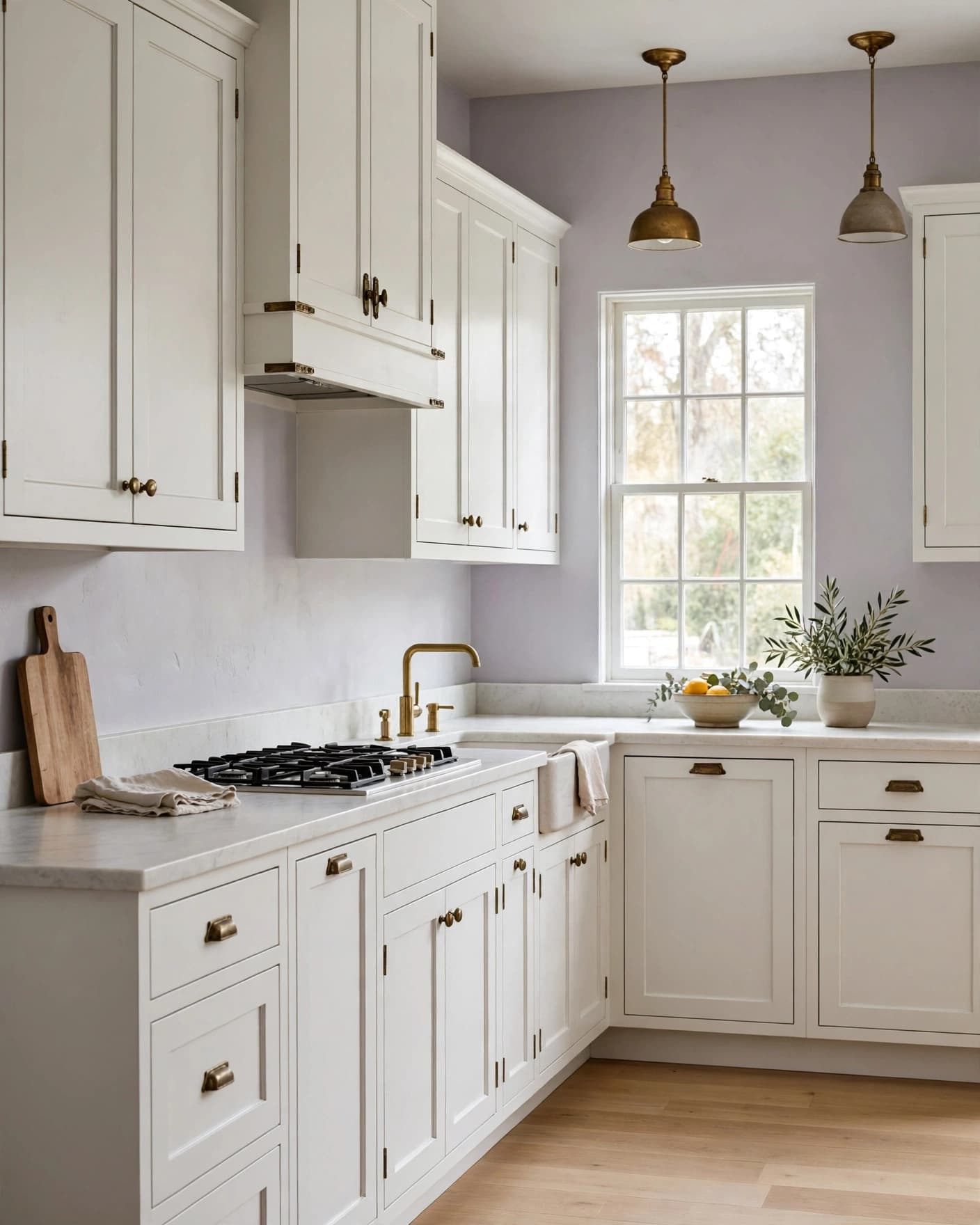
Lavender-gray gives you a subtle color shift that feels more interesting than plain gray. The soft purple base works with white cabinets, light oak floors, and aged brass details.
This color suits a kitchen that gets soft natural light or faces north. Test it in the morning and evening because lavender undertones can look stronger under cool daylight.
13. Creamy Beige Walls With Walnut Cabinets
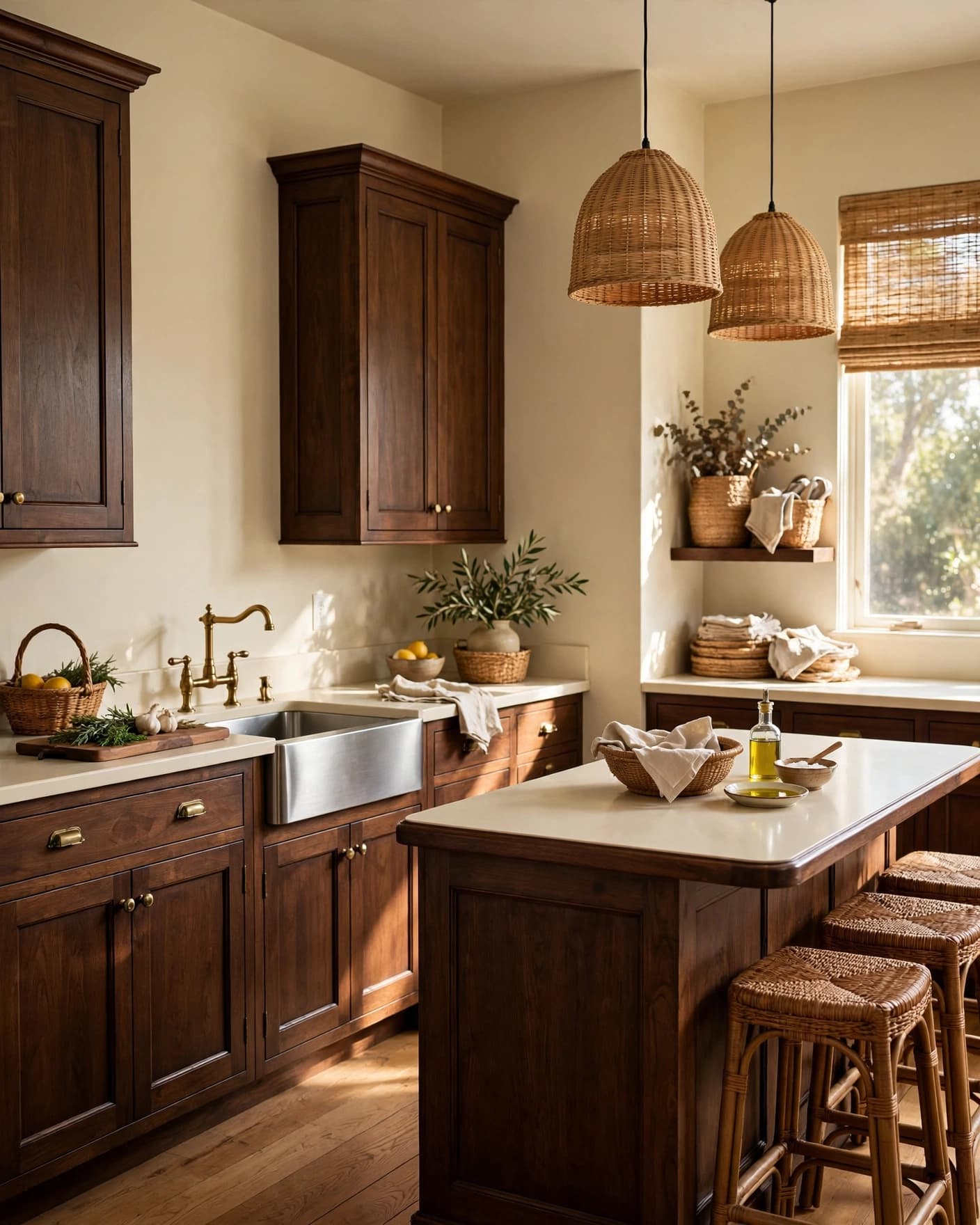
Creamy beige walls give walnut cabinets a warm, classic setting. The color also works with ivory counters, woven accents, dark wood, and traditional hardware.
Choose beige when you want your kitchen to feel connected to nearby living spaces. A soft beige can help an open-concept home feel cohesive without making every room the same color.
14. Olive Green Walls With Terracotta Tile
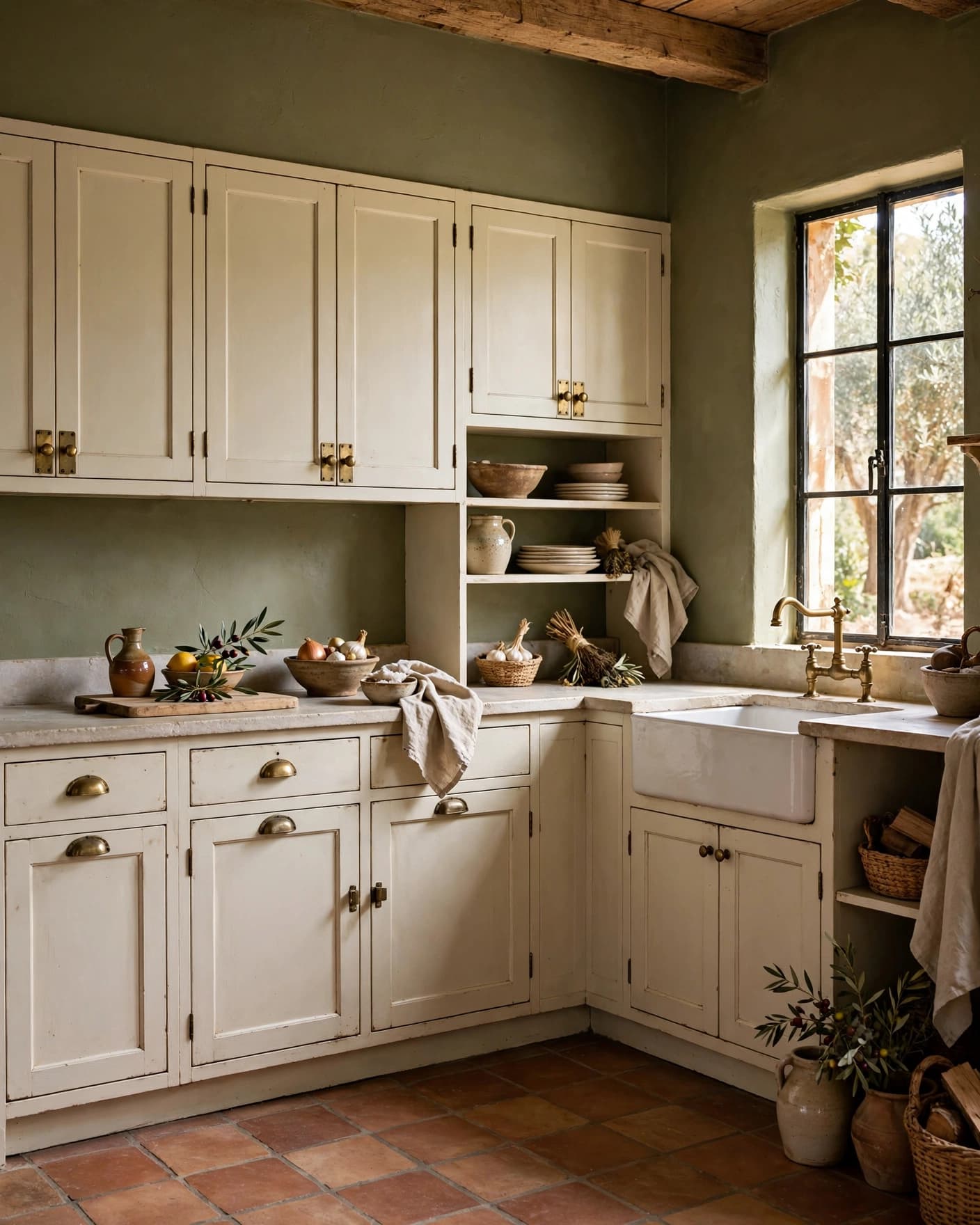
Olive green walls bring a natural, earthy tone to your kitchen. The color looks especially strong with cream cabinets, terracotta floors, aged brass, and warm wood.
Use olive when your room already includes warm materials. If your kitchen has cool gray counters, choose a less yellow olive so the wall does not fight with the stone.
15. Pale Peach Walls With Oak Shelves
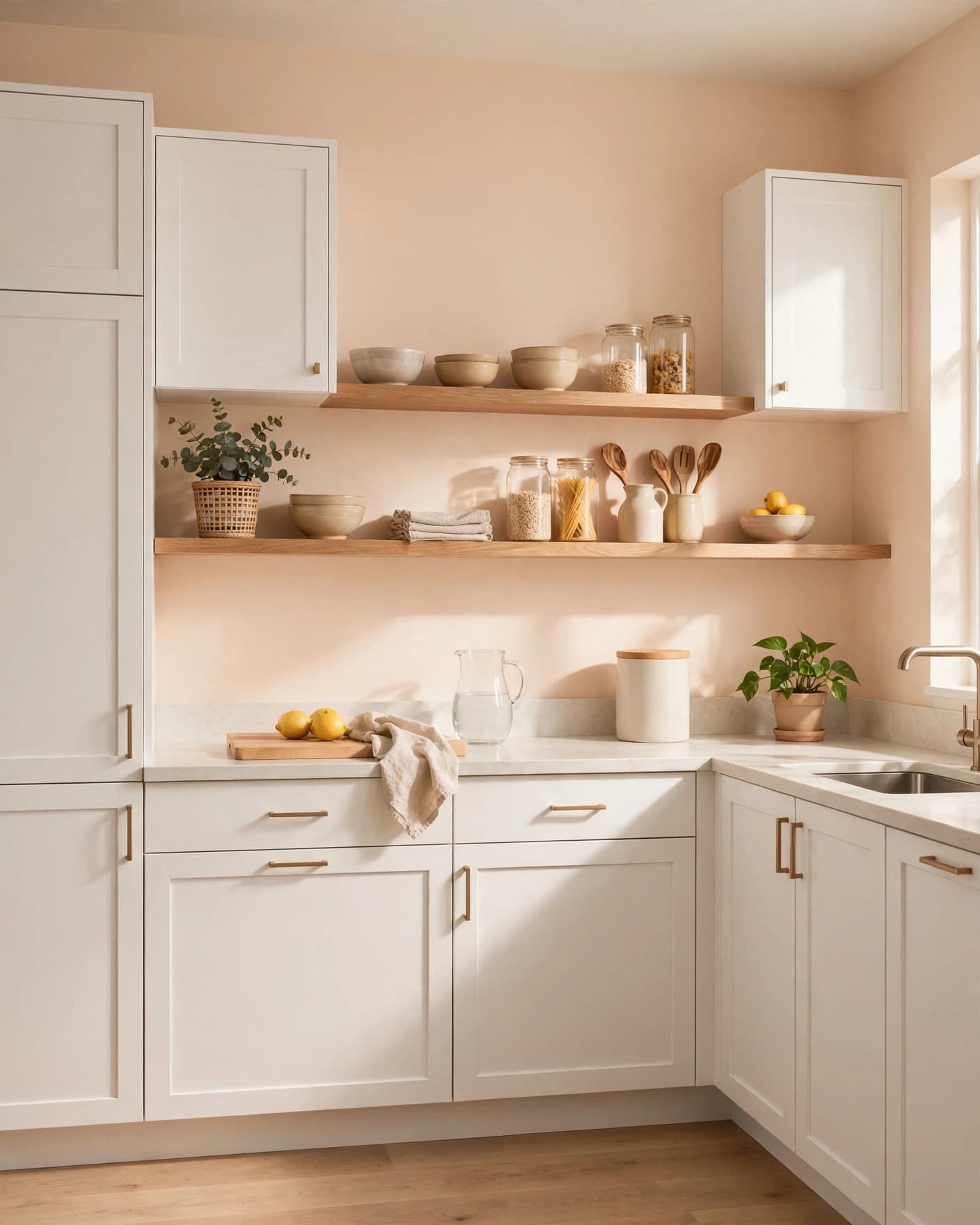
Pale peach adds a warm glow while keeping your kitchen light and fresh. It pairs well with white cabinets, oak shelves, cream counters, and natural woven pieces.
Choose a soft peach if you want a welcoming cottage feel without a strong orange cast. The color also works well in kitchens with morning light because the sun brings out its warm undertone.
16. Black Walls With Marble Counters
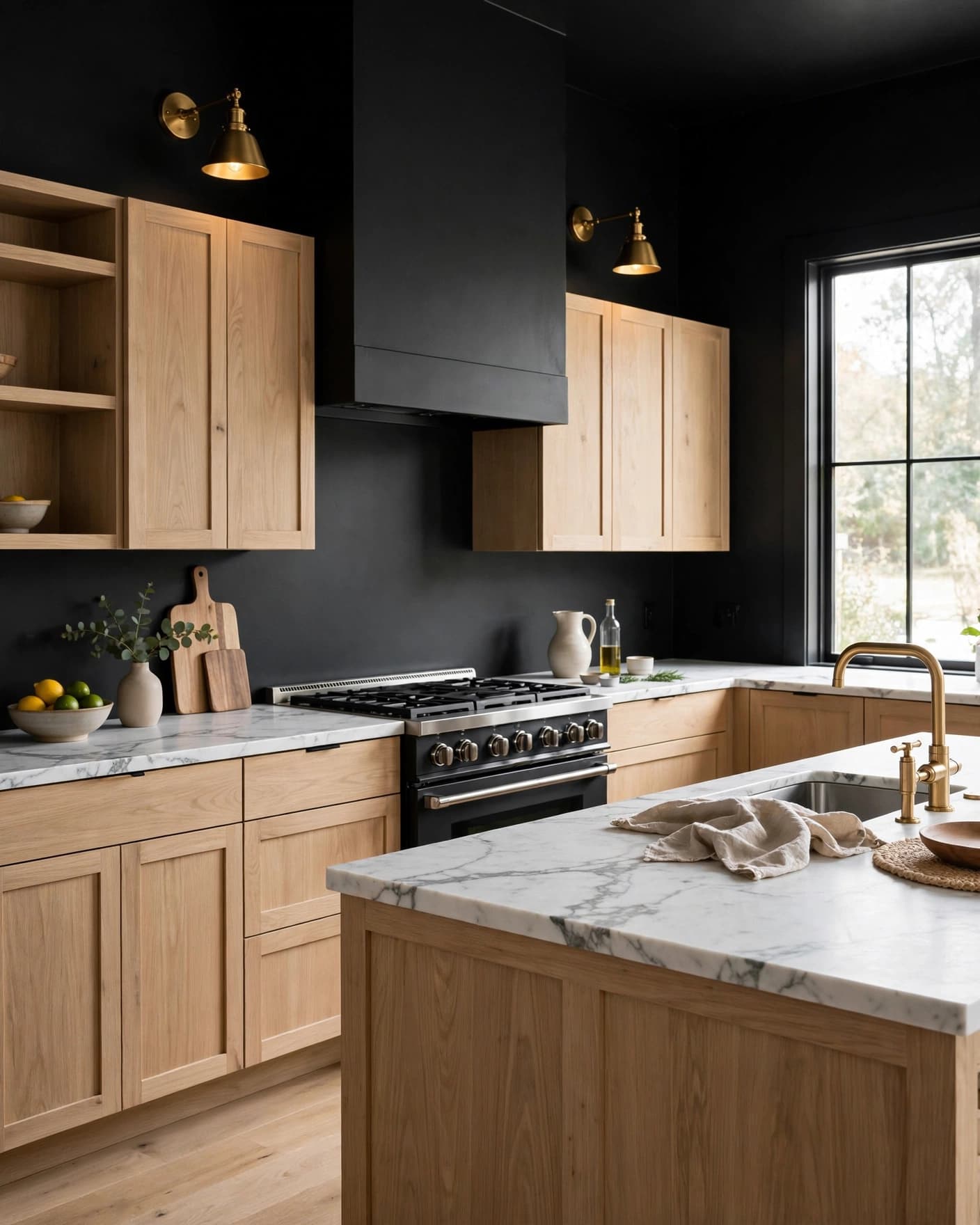
Black walls give your kitchen a dramatic look and make pale surfaces stand out. Marble counters, light oak cabinetry, brass sconces, and white accessories keep the room from looking flat.
Use black on a single wall if your kitchen has limited windows. For a full black room, keep the ceiling light and add several layers of warm lighting so you can still see the details at night.
17. Light Teal Walls With Rattan Lighting
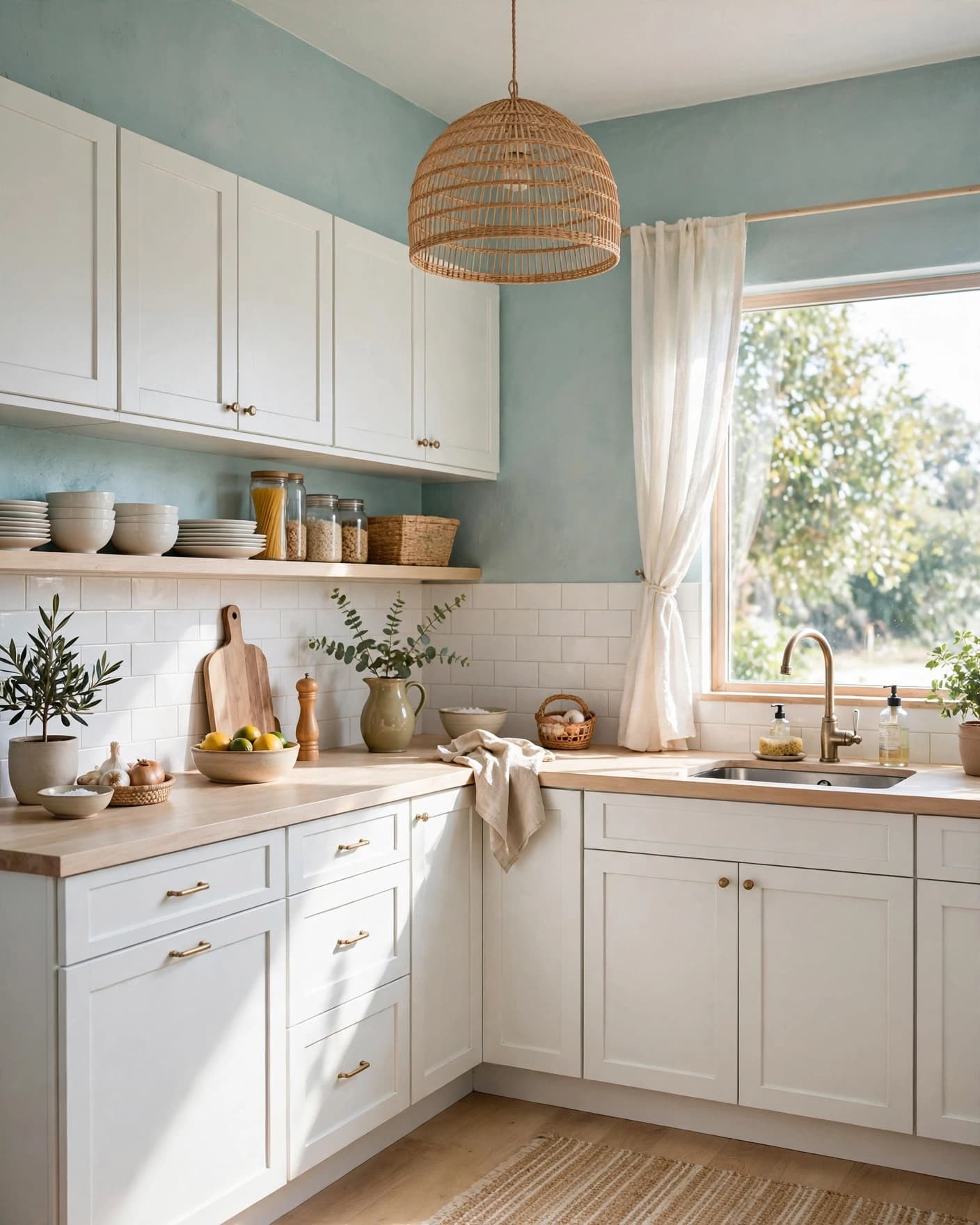
Light teal walls give your kitchen a relaxed coastal feeling without relying on plain blue. The shade works with white cabinets, pale wood, rattan lighting, and simple natural textures.
Choose a muted teal if your room gets strong sunlight. A gray base will keep the color from looking too bright during the day.
18. Mushroom Taupe Walls With Oak Cabinets
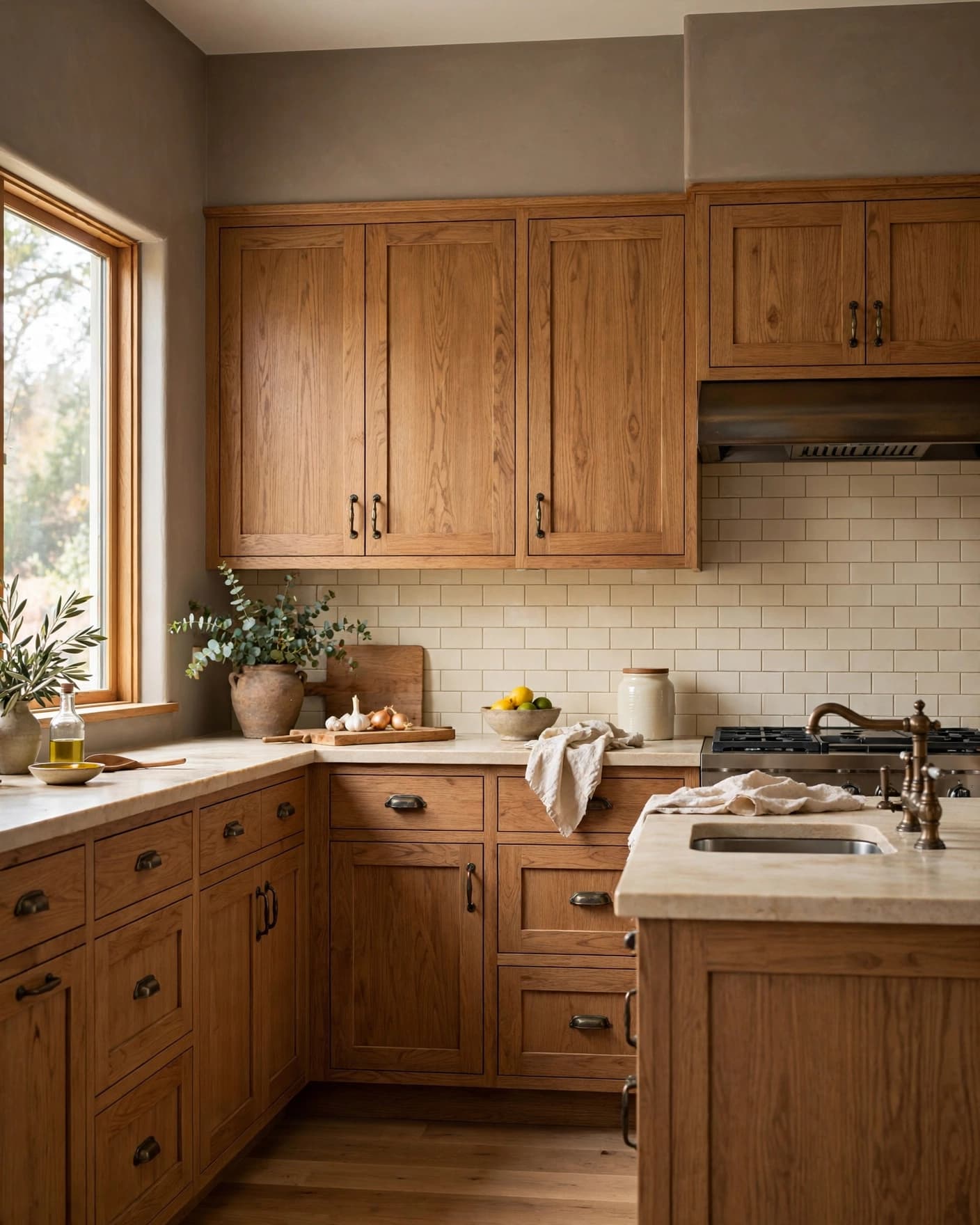
Mushroom taupe gives your kitchen a soft, grounded background. It works with warm oak cabinets, creamy backsplashes, aged bronze, and other natural finishes.
This color fits a modern kitchen that needs more warmth than gray can provide. You can use it across the room or on the walls around a light backsplash for gentle contrast.
19. Cobalt Blue Accent Wall
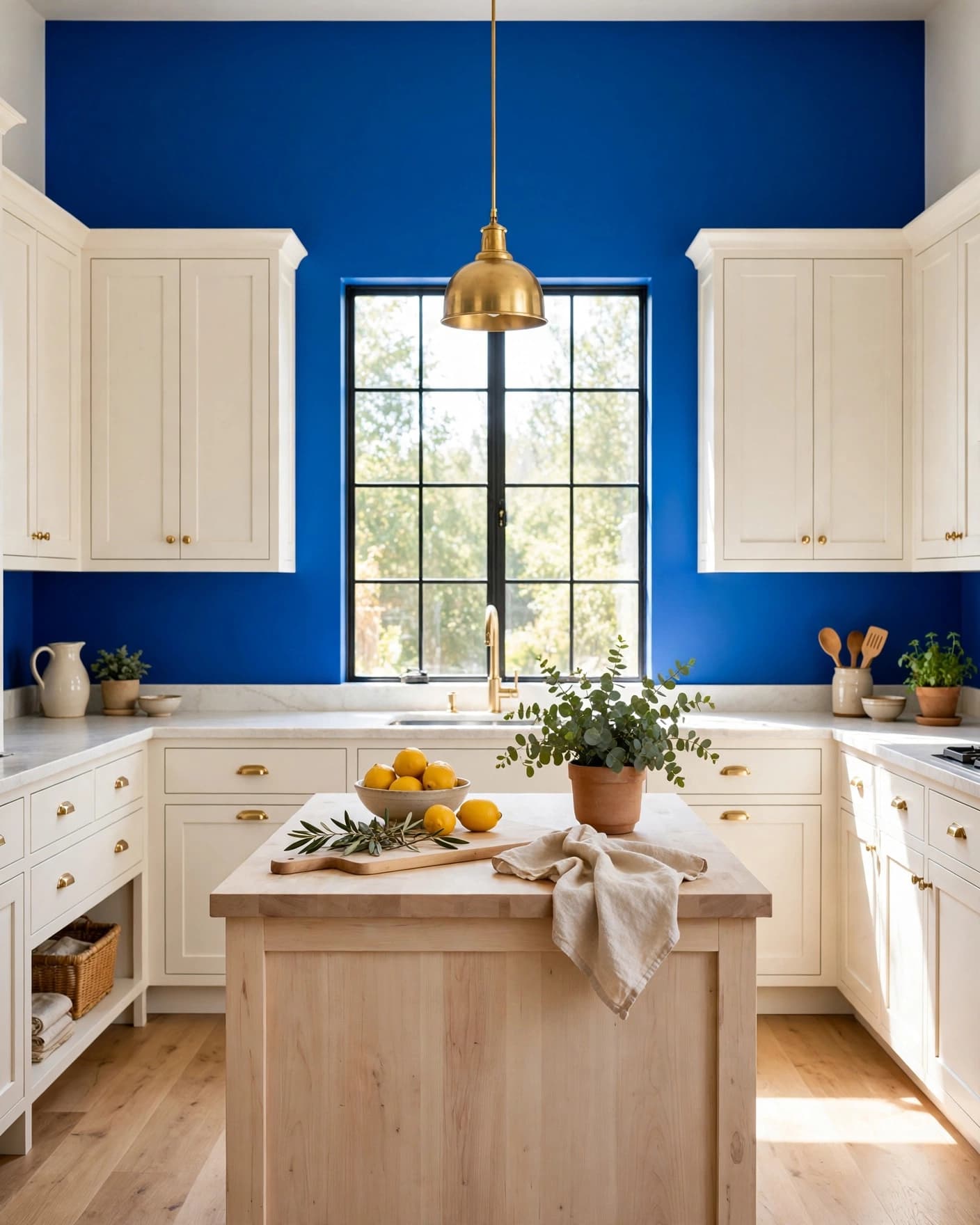
A cobalt blue accent wall gives your kitchen a strong burst of color without covering every surface. The vivid shade looks balanced with warm white cabinets, pale wood, and simple brass lighting.
Place the accent color behind a dining nook, pantry door, or open shelving. Keep the other walls quiet so the blue remains the focal point instead of competing with the backsplash.
20. Dusty Green Color Drenching
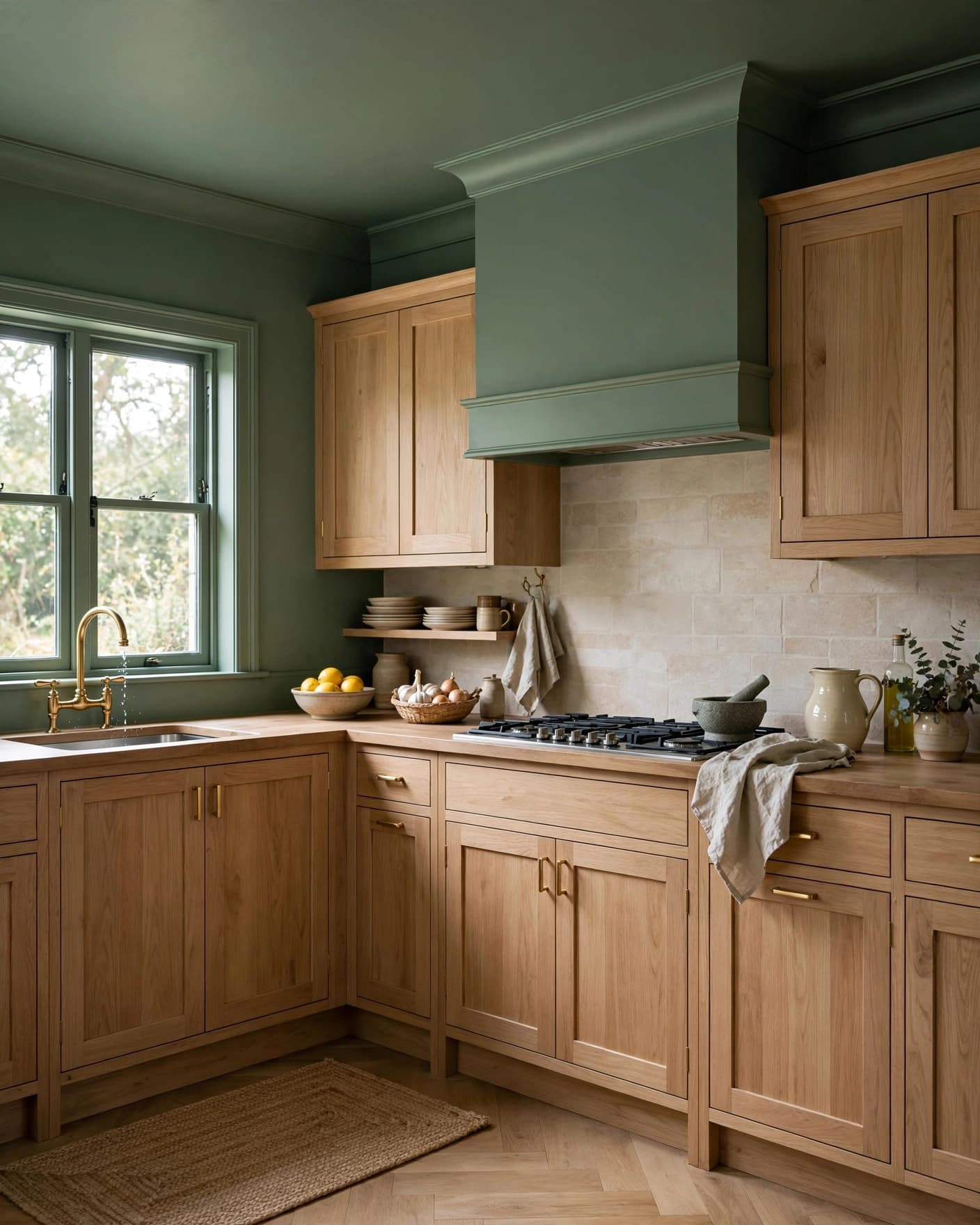
Color drenching means painting the walls, trim, and ceiling in the same or closely related shades. Dusty green creates a calm, wrapped-in color effect that works well with light oak cabinets.
Use a soft, muted green if you plan to cover several surfaces. A lower-sheen finish can help the color feel smooth and connected, while satin works well on areas that need more cleaning.
21. Deep Plum Wall Behind a Dining Nook
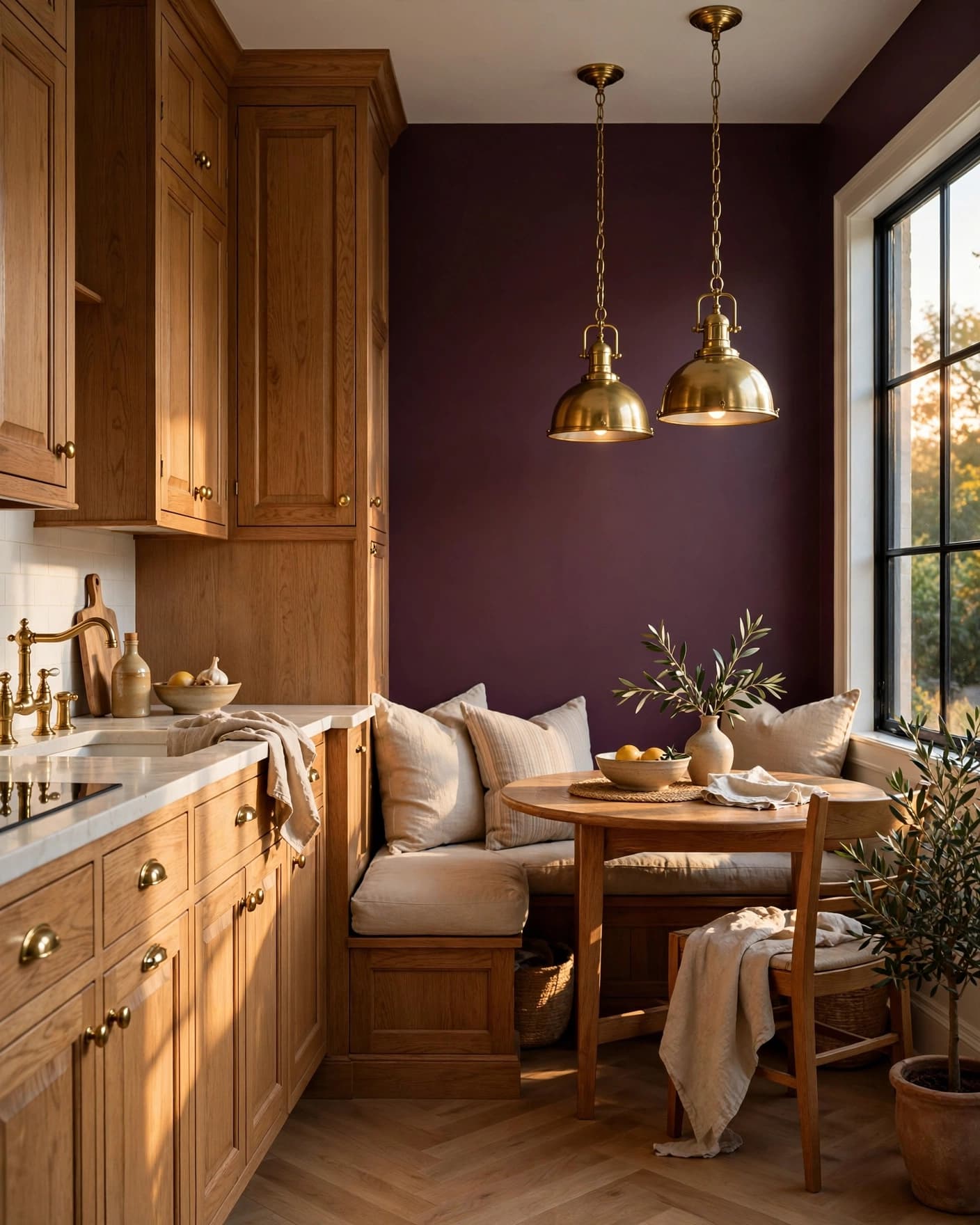
A deep plum wall gives a dining nook or breakfast corner a rich focal point. The color looks elegant with warm white walls, oak cabinets, brass lighting, and cream textiles.
Use plum where you want to define one part of an open kitchen. The shade works best when you repeat a small amount of its warmth in nearby wood, metal, or fabric accents.
22. Pale Mint Walls With a Checkerboard Floor
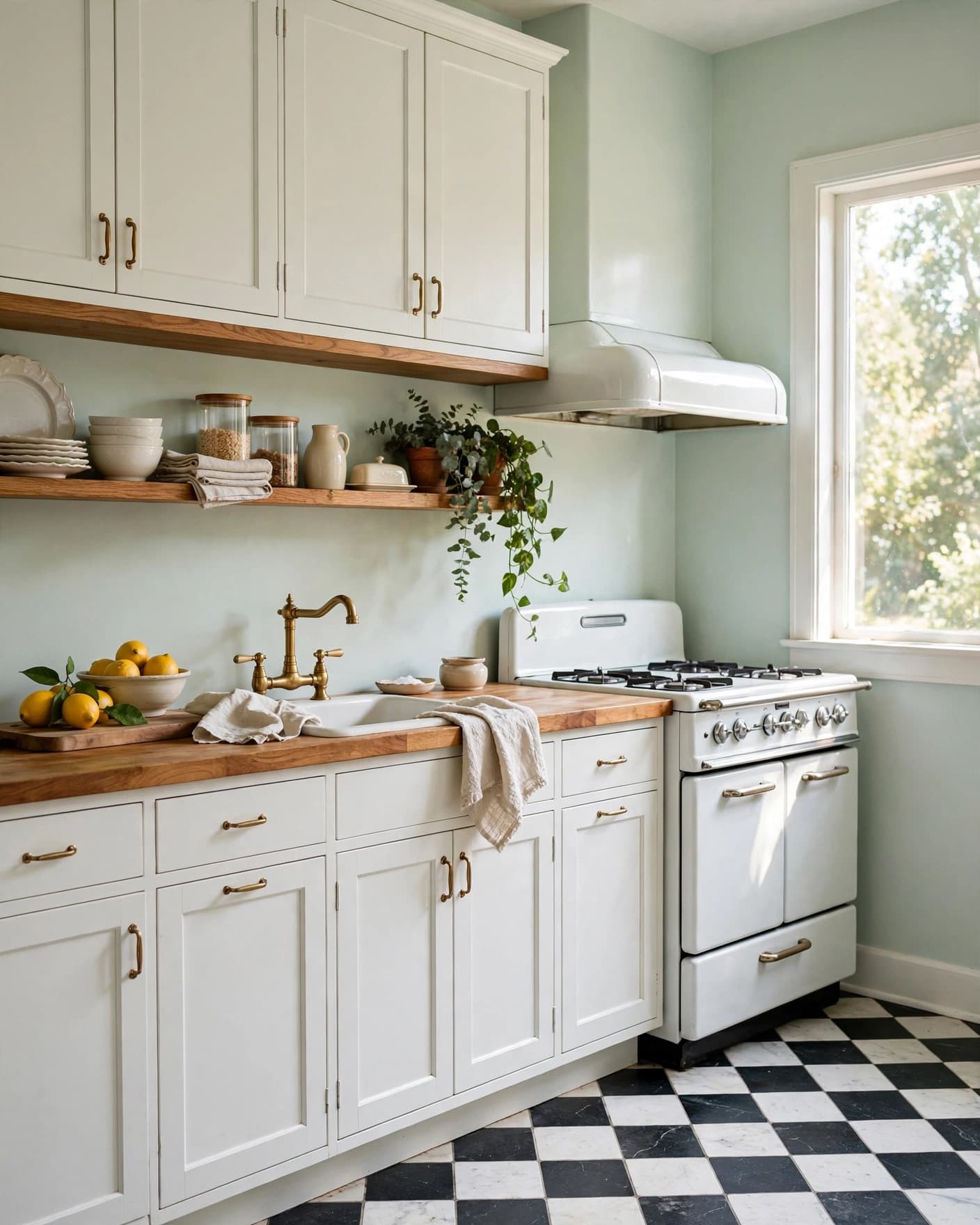
Pale mint walls give your kitchen a fresh retro feel without making the room look dated. The color pairs well with white cabinets, oak shelves, checkerboard floors, and simple vintage shapes.
Choose a soft mint with a gray or creamy base for a more relaxed finish. If your floor already has a strong pattern, keep the wall decor simple so the room does not feel crowded.
23. Warm Camel Brown Walls With Cream Cabinets
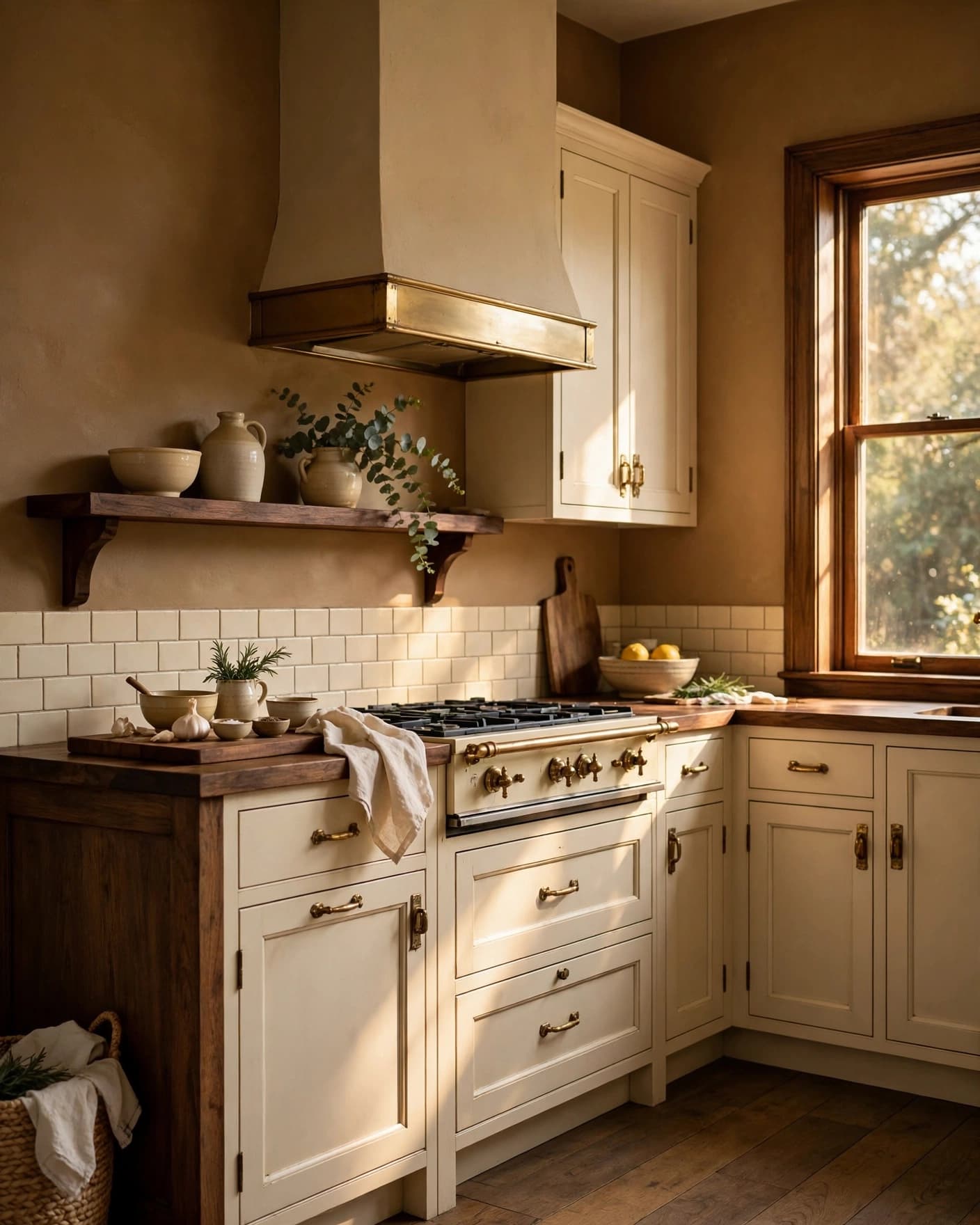
Warm camel brown walls give your kitchen a cozy, enveloping look. The shade works with cream cabinets, dark wood details, aged brass, and golden natural light.
Use camel brown when your kitchen feels too stark or white. Pair it with light counters and open shelving so the darker wall color still has enough visual balance.
24. Mushroom Gray Walls for a Scandinavian Kitchen
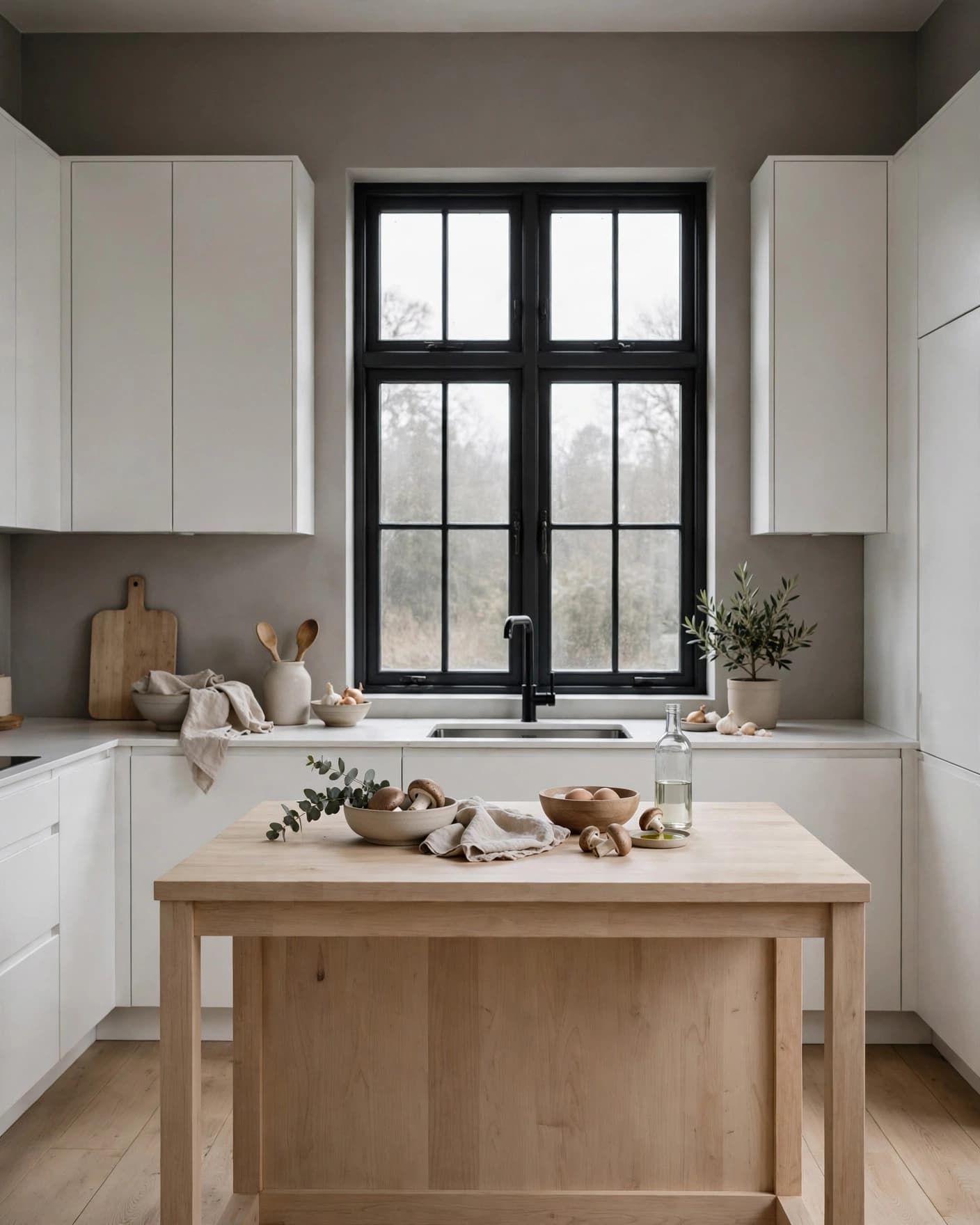
Mushroom gray gives you a soft neutral with more warmth than a standard cool gray. It works with white cabinets, pale wood islands, black window frames, and clean Scandinavian lines.
Use this color when you want a calm kitchen that still has contrast. The shade can connect warm wood and black details without making either one feel too strong.
How to Choose the Right Kitchen Wall Color
Your lighting should guide your first color decision. Bright south-facing rooms can handle deeper shades, while kitchens with little natural light often benefit from warm whites, pale greens, soft beige, or light gray.
Your counters and backsplash should guide the undertone. Hold paint samples beside those surfaces, then check them in daylight, under your kitchen lights, and near the flooring.
The amount of light a color reflects also affects how it looks in your kitchen. You can use this guide to paint color and LRV to understand why the same shade can look lighter in one room and darker in another.
Choosing a Paint Finish for Kitchen Walls
A satin finish gives your kitchen walls a soft glow and makes routine cleaning easier. It works well near sinks, prep areas, and busy walkways because it offers more wipeability than a flat finish.
Eggshell can give you a softer look if your walls have few stains or moisture concerns. Matte paint can also work on smooth, low-contact walls, but it may show marks sooner and need gentler cleaning.
Higher-sheen finishes reflect more light, so they can make a color look brighter. However, they can also show dents, uneven patches, and wall texture more clearly.
Final Thoughts
Your best kitchen wall color should work with the surfaces you already have, the light you receive, and the amount of cleaning your kitchen needs. Save your favorite ideas, test large samples beside your cabinets and counters, and compare them before you commit to the full wall.

I’m Sumayya and I love turning ordinary spaces into ones you’ll never want to leave. Whether it’s cozy cottagecore corners, bold maximalist magic, or sleek modern minimalism, I’m here to help you discover your style and bring it to life without spending a fortune. Ready to refresh your space? Let’s make it happen!