22 Beautiful DIY Creek Bed Ideas for Drainage in Your Yard
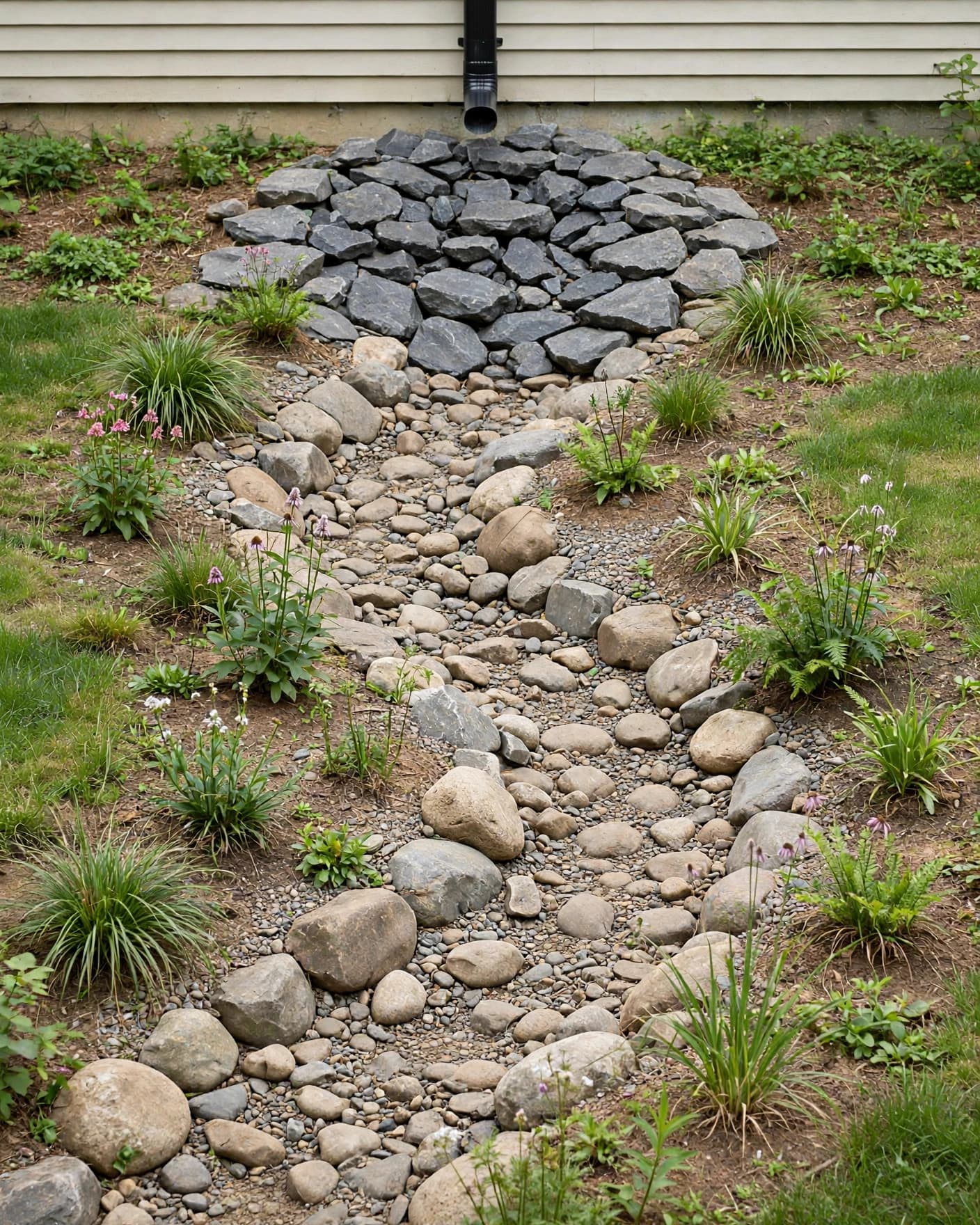
DIY creek bed ideas for drainage help you guide rainwater through your yard while adding texture, movement, and garden style. Each design gives you a different way to shape the channel, control runoff, and connect the drainage path to the rest of your landscape.
22 Beautiful DIY Creek Bed Ideas for Drainage
1. Curved River Rock Creek Bed Through a Garden
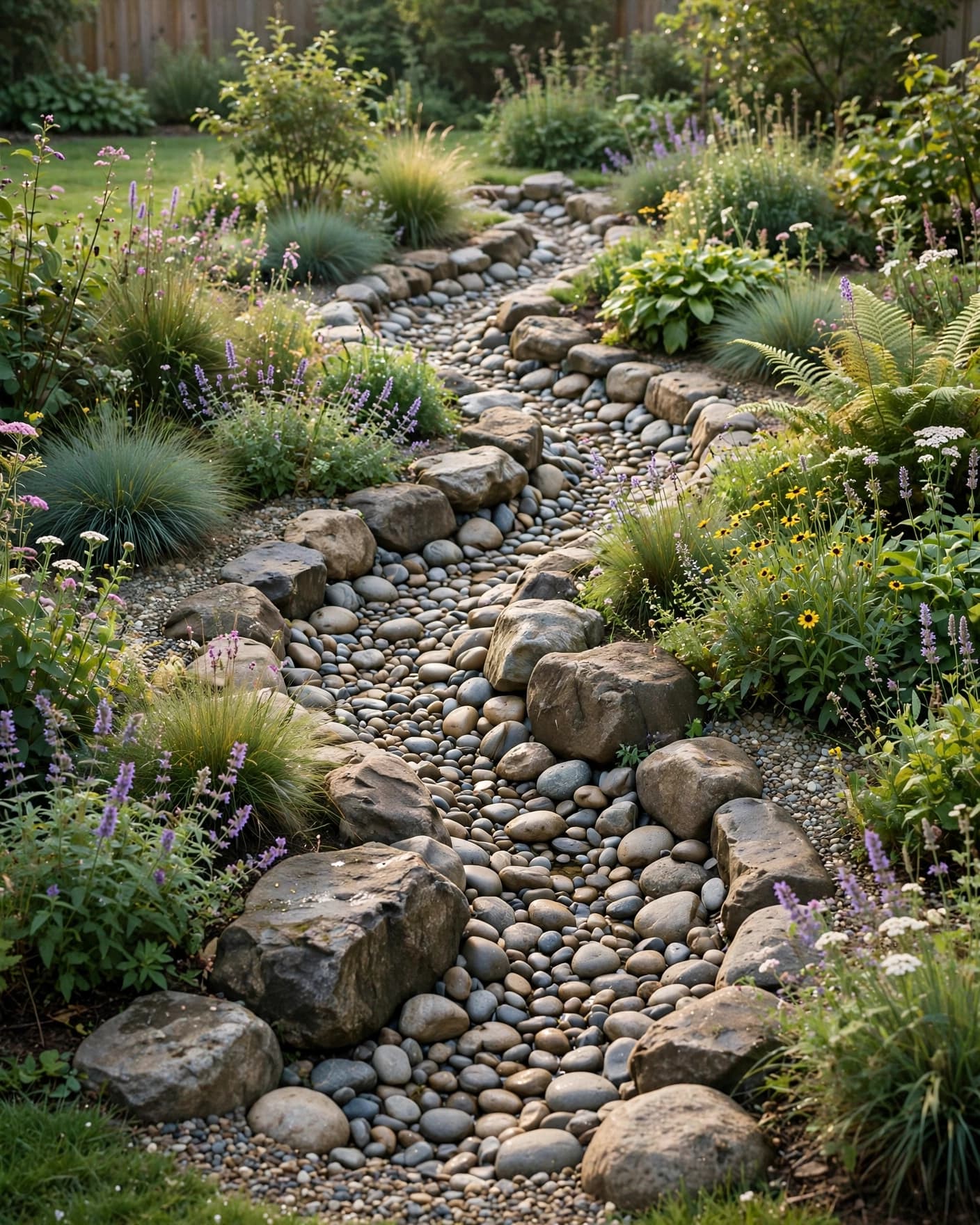
A gently curved creek bed feels more natural than a straight trench. Use larger rocks along the bends, then fill the center with smaller river stones and gravel.
Place the channel where it can receive runoff from a higher part of your yard. A River Rock Landscaping Stone gives the bed a smooth, polished base that pairs well with grasses and flowering plants.
2. Narrow Creek Bed Beside the Foundation
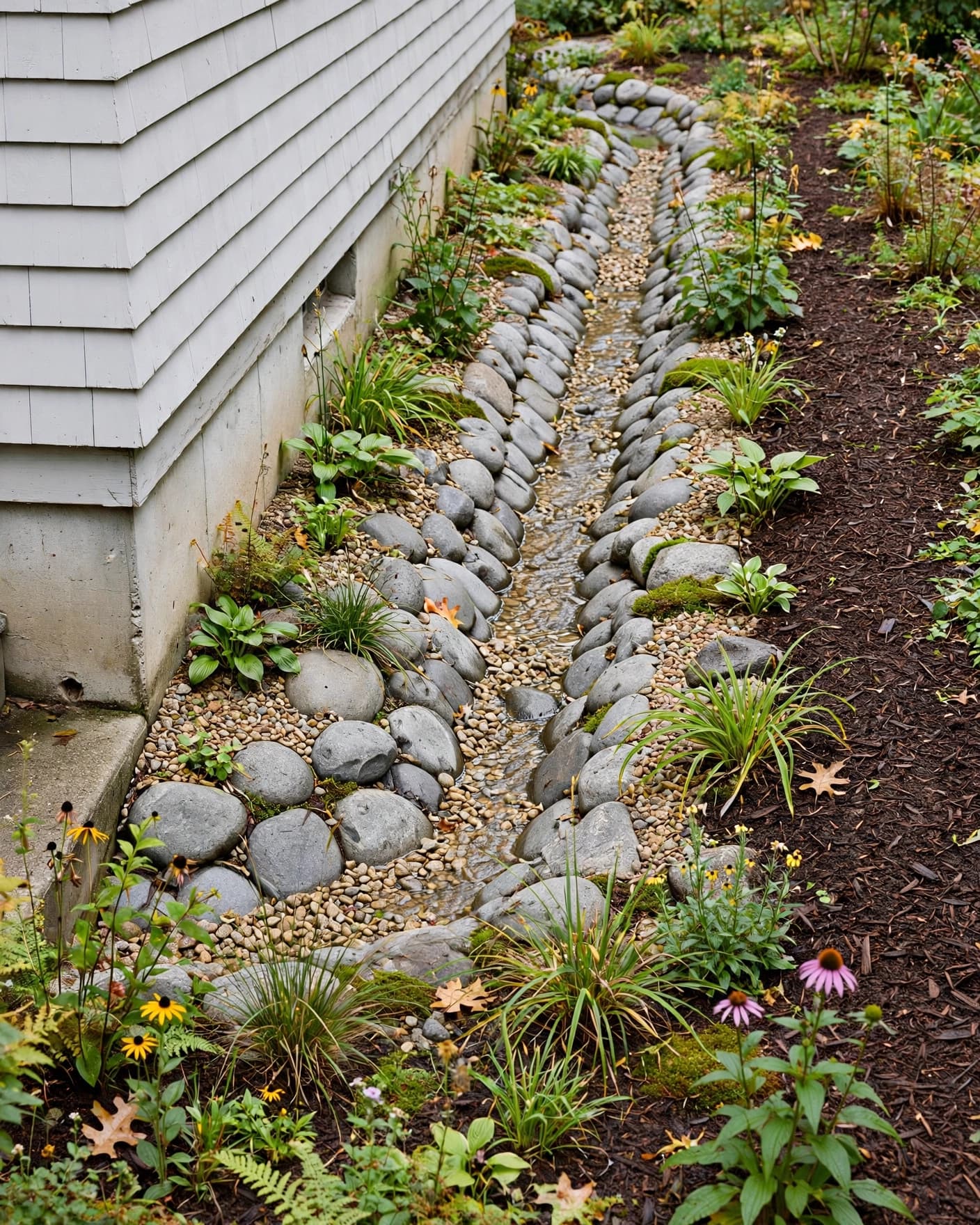
A narrow drainage channel can fit between your house and a fence, garden border, or walkway. Use a shallow stone-lined path to guide water toward a safer part of the yard instead of letting it collect beside the foundation.
Keep the channel at least 10 feet from the foundation when your layout allows it. For a clean edge, use Black Landscape Edging to keep gravel from spreading into nearby planting beds.
3. Wide Dry Creek Swale With Stepping Stones
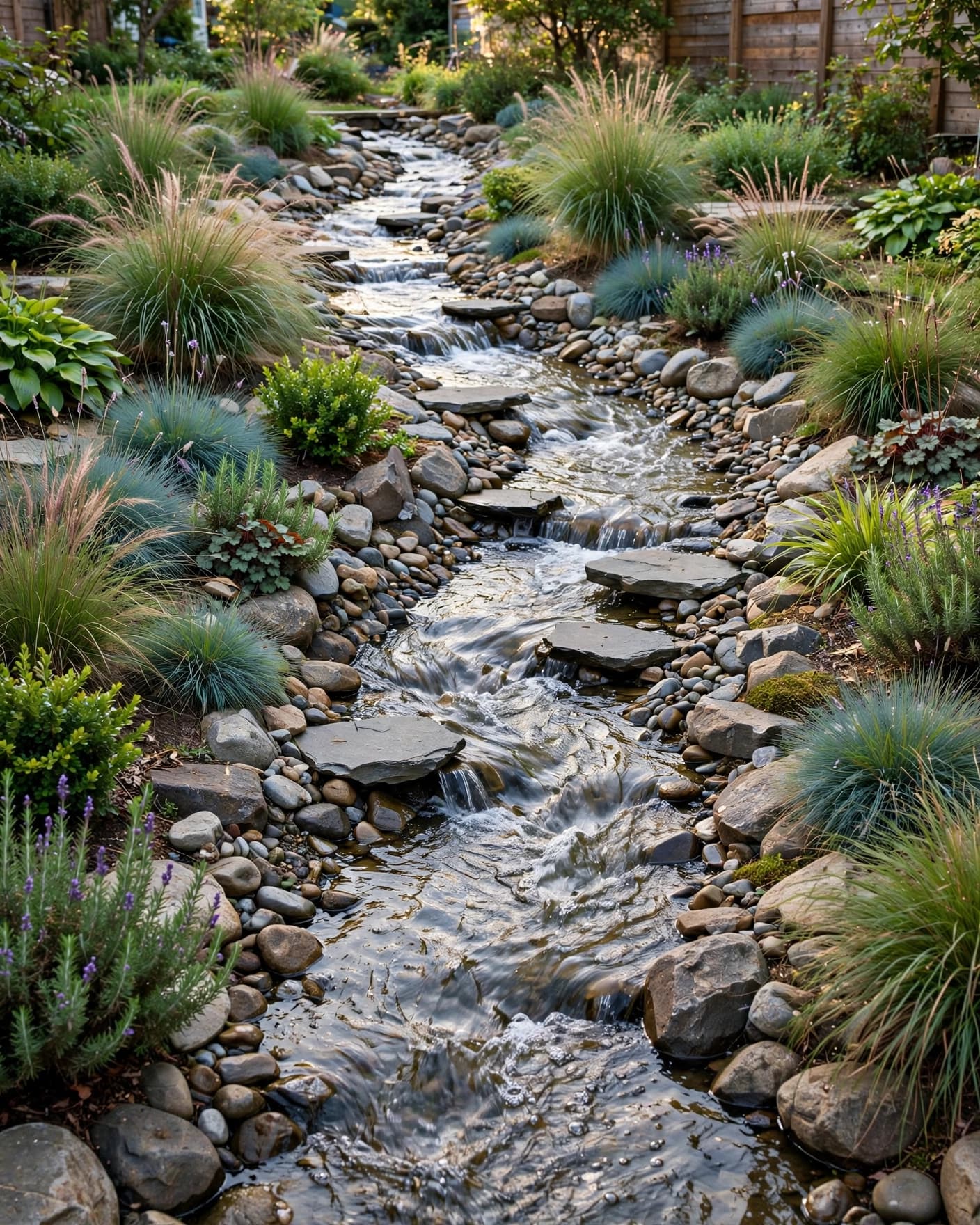
A broad swale gives rainwater more room to move across a gentle part of your property. Shape both sides with a soft slope, then place flat stones across the channel where you want to walk.
This style works well in a large backyard because it can look like a planted garden feature instead of a narrow ditch. Add Large Stepping Stones near the widest section to create a useful path across the drainage area.
4. Downspout-to-Creek Bed Drainage Channel
A downspout creek bed gives roof runoff a clear route into the yard. Start with a splash area under the downspout, then transition from larger stones to smaller river rock as the channel moves away from the house.
Keep the outlet clear so leaves and mulch don’t block the first section. A Downspout Extension can help direct water toward the stone channel when the existing outlet ends too close to the wall.
Oregon State Extension describes rain gardens as sunken beds that collect and treat runoff from roofs, driveways, sidewalks, lawns, and other hard surfaces in its rain garden fact sheet.
5. Stepped Creek Bed for a Sloped Yard
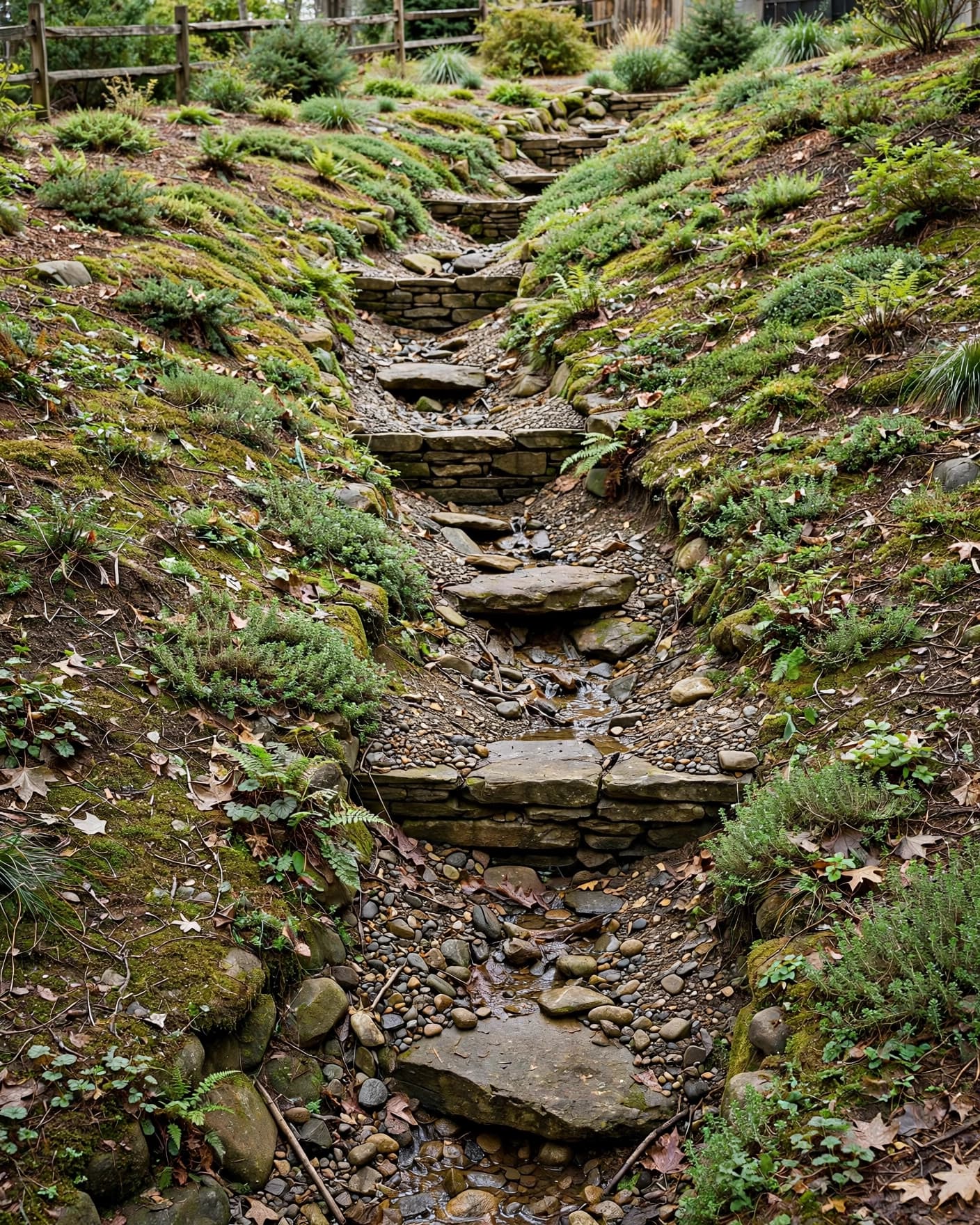
A sloped yard can send water downhill with enough force to move soil and small stones. Break up the flow with flat rocks placed across the channel, creating small sections that slow the water as it travels.
Keep the side slopes stable with low-growing plants and sturdy groundcover. Natural Flat Fieldstone works well for check points because broad pieces sit across the channel more securely than small round stones.
Some rain-garden guidance advises against placing these features on slopes greater than 12 percent, so check the grade before you build. Alabama Cooperative Extension System provides related stormwater guidance on rain garden slope and placement.
6. Compact Side-Yard Creek Bed
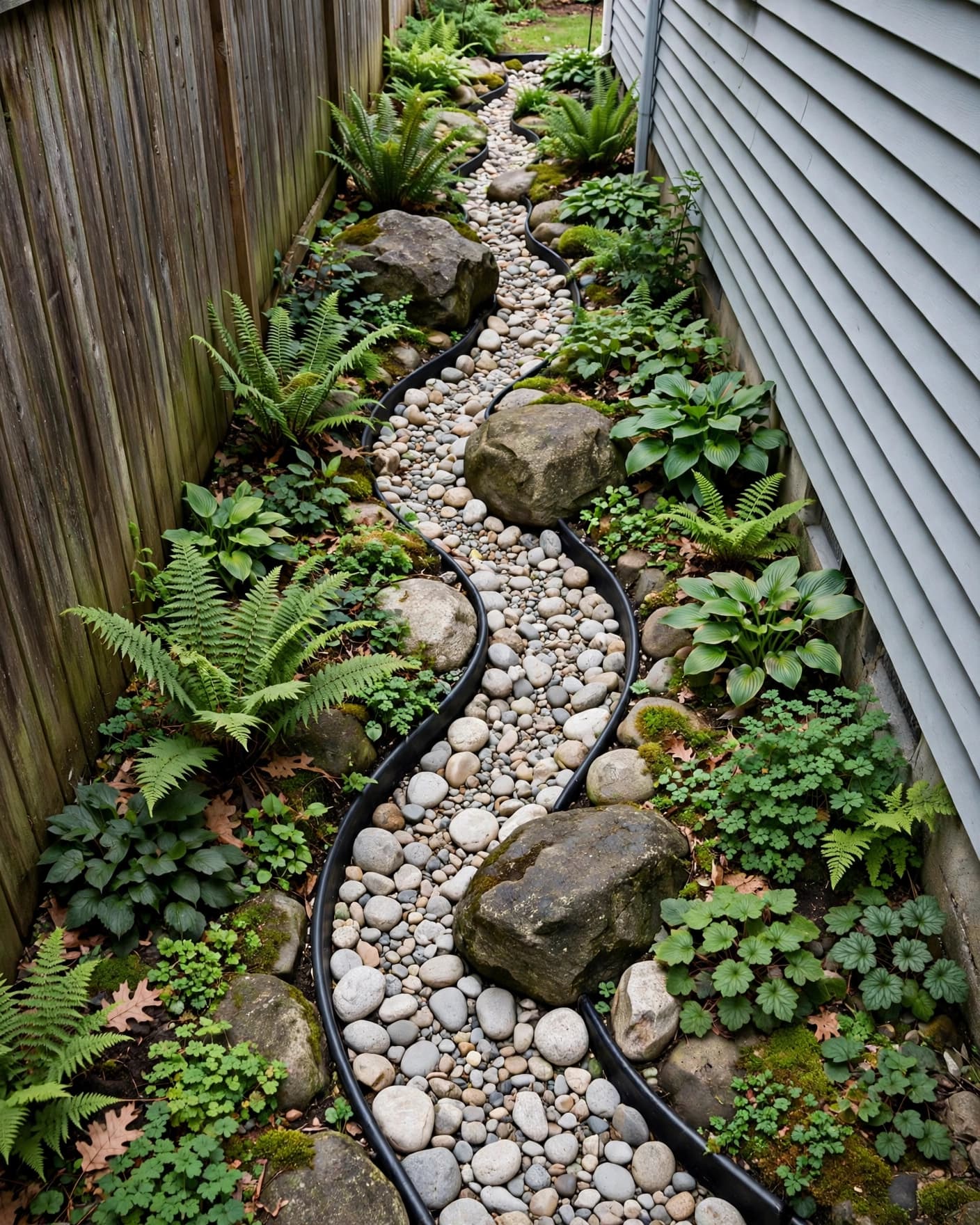
A side yard often needs a narrow drainage idea that doesn’t crowd the walkway or fence. Use a slim channel with pale gravel, a few larger stones, and plants that tolerate shade if the house blocks much of the sun.
Keep the path easy to inspect so you can remove leaves after storms. Decorative Garden Gravel fills tight spaces without the visual weight of large boulders.
7. Woodland Creek Bed With Ferns
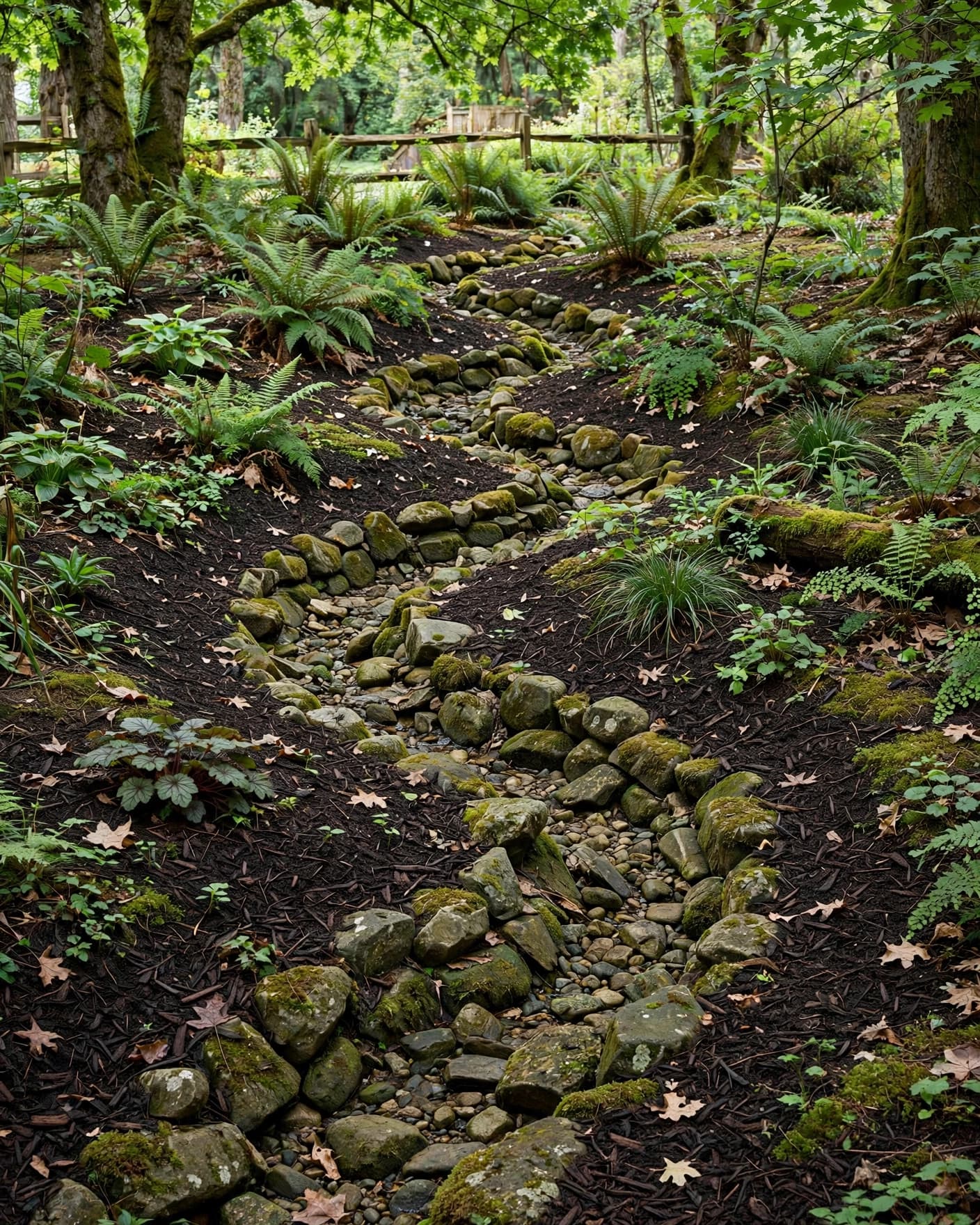
A woodland creek bed fits naturally beneath mature trees or along a shaded fence line. Choose mossy-looking stones, dark mulch, ferns, and other plants that can handle filtered light.
Avoid filling the channel with loose leaves because they can slow the flow after heavy rain. A Garden Leaf Rake makes seasonal cleanup easier without disturbing the larger stones.
8. Modern Gray Stone Drainage Channel
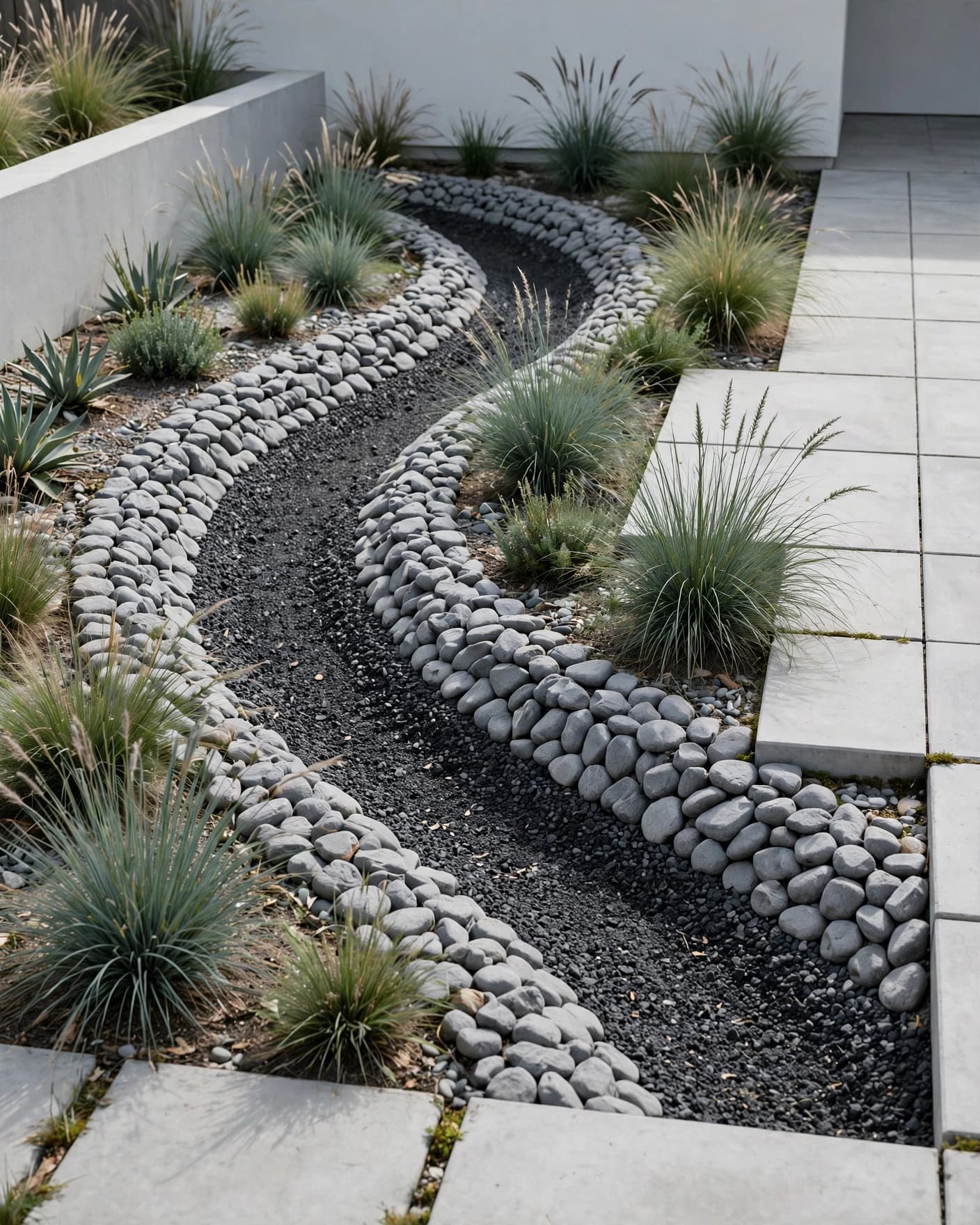
A modern creek bed uses a limited palette and a clear shape. Combine charcoal gravel, gray cobbles, and architectural grasses for a clean design that fits a contemporary yard.
Keep the curve wide and smooth instead of adding many small bends. Gray River Pebbles can create a consistent color base beneath larger accent stones.
9. Creek Bed With Flat Crossing Stones
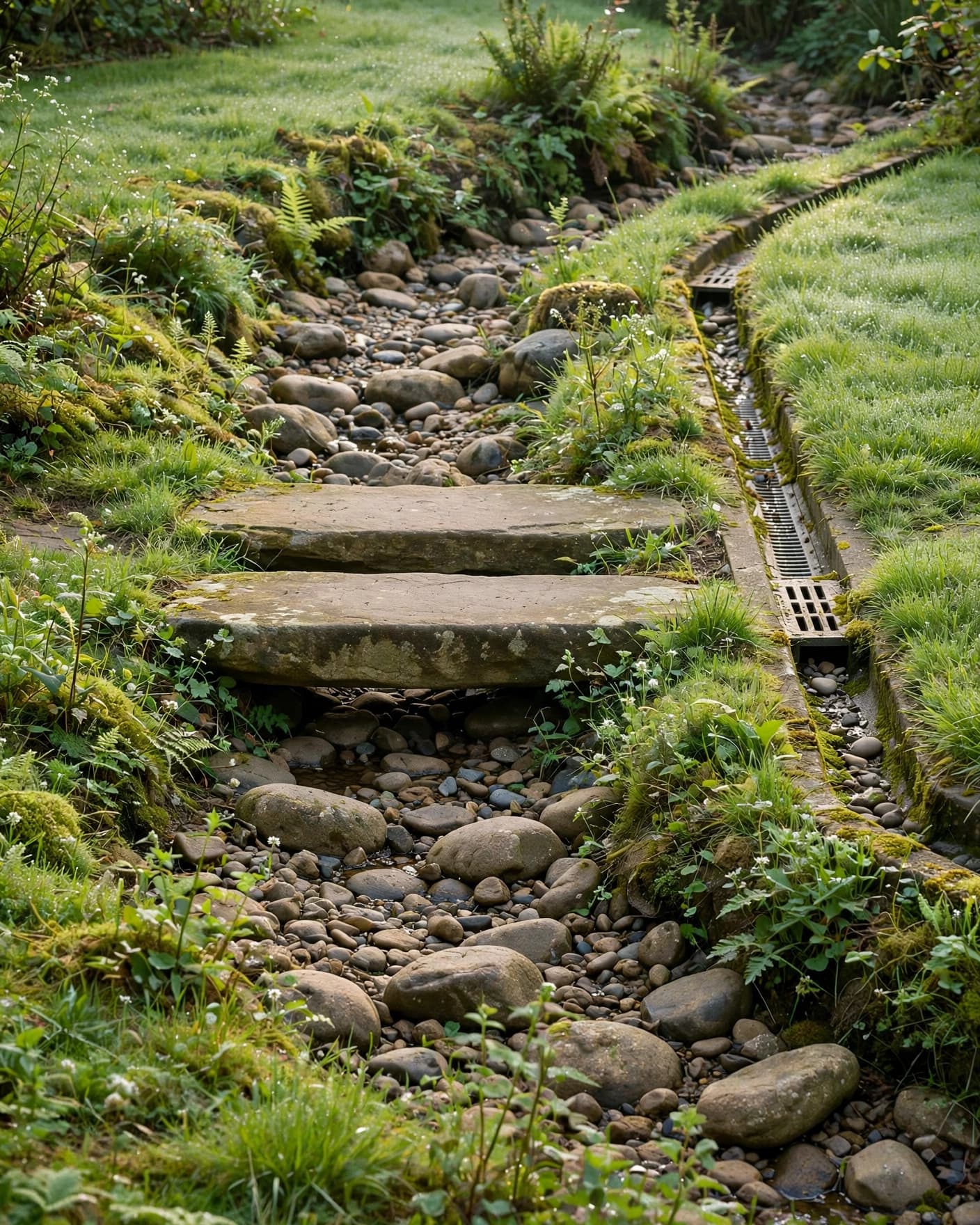
A creek bed doesn’t have to interrupt the way you use your yard. Place two or three wide, stable stones across a narrow section to create a simple crossing between a lawn and a garden.
Set each stone firmly so it doesn’t rock under your foot. Garden Path Stepping Stones offer an easy way to match the crossing to an existing walkway.
10. Creek Bed That Ends in a Rain Garden
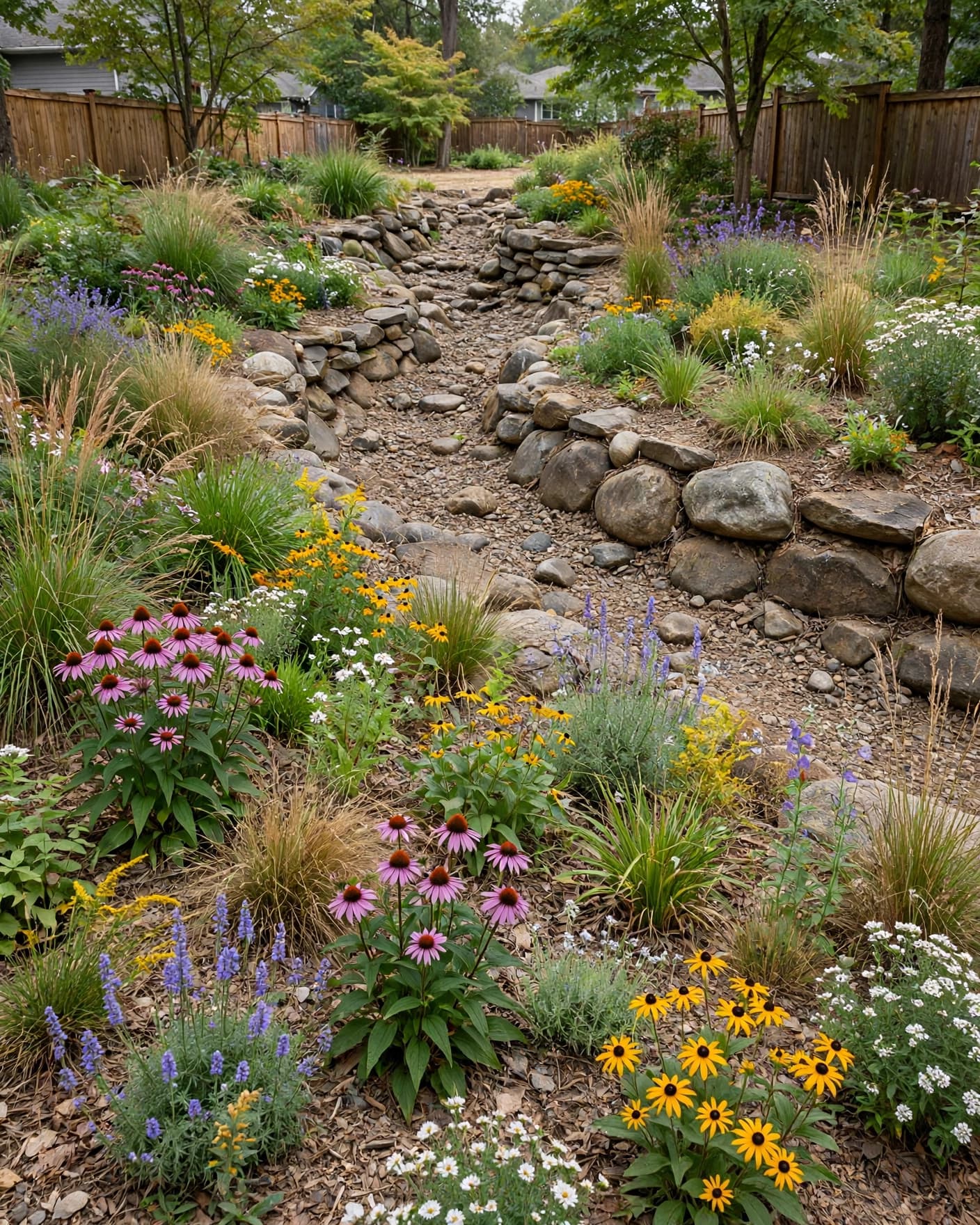
A rain garden gives runoff a planted destination instead of letting it spread across the lawn. Let the stone channel widen as it reaches the basin, then surround the low area with plants that tolerate periods of wet soil.
Keep the overflow route visible so excess water can leave safely during a large storm. This University of California rain garden resource explains how planted depressions can store and infiltrate runoff from nearby hard surfaces.
11. Budget-Friendly Fieldstone Creek Bed
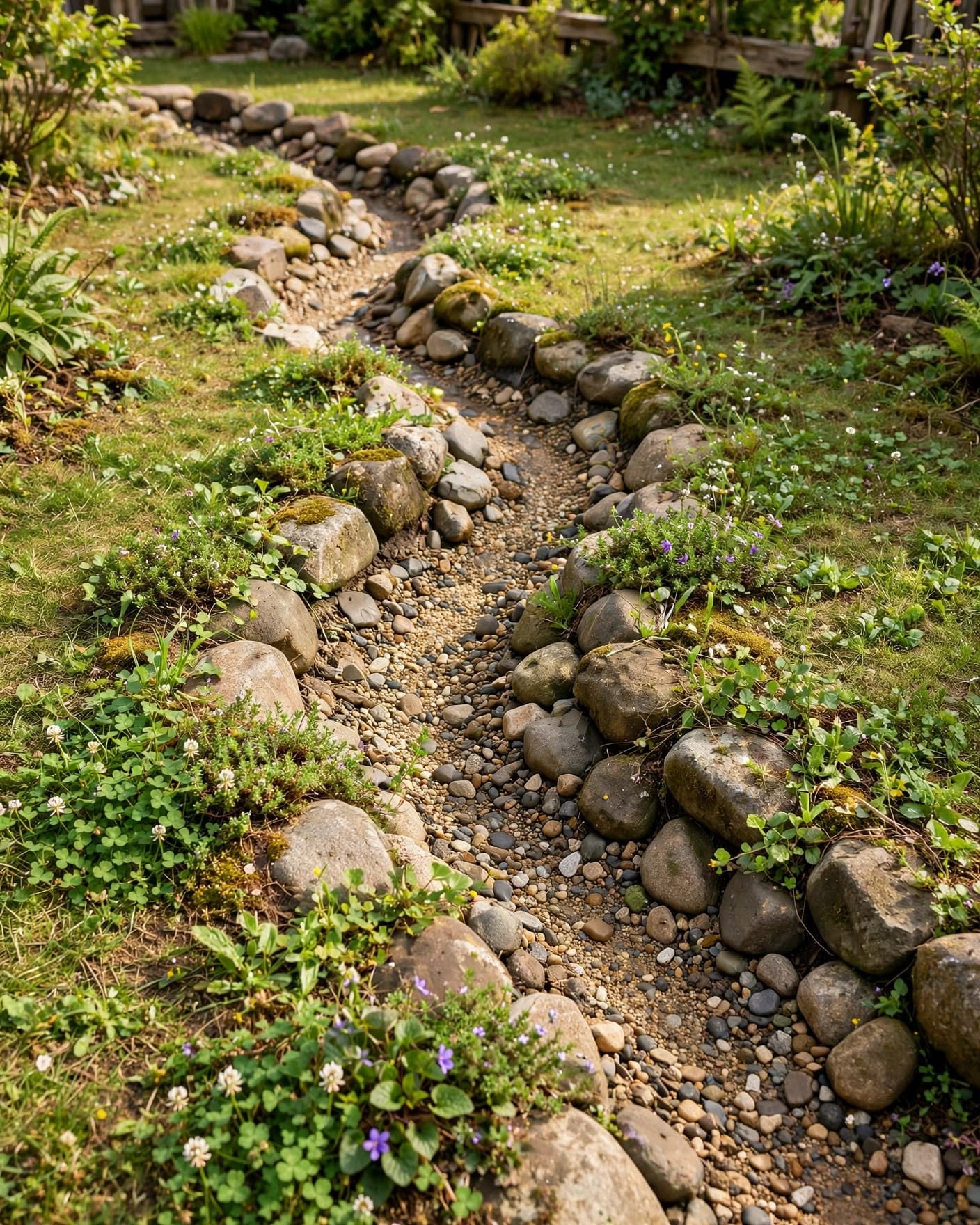
A budget creek bed can use mixed fieldstone instead of matching landscape rock. Place the largest pieces first, then fill open spaces with smaller stones and gravel.
Choose stone that looks natural in your region so the design feels connected to the rest of the yard. Mixed Fieldstone Rock gives you different sizes for the channel, edges, and bends.
12. Decorative Creek Bed Over a French Drain
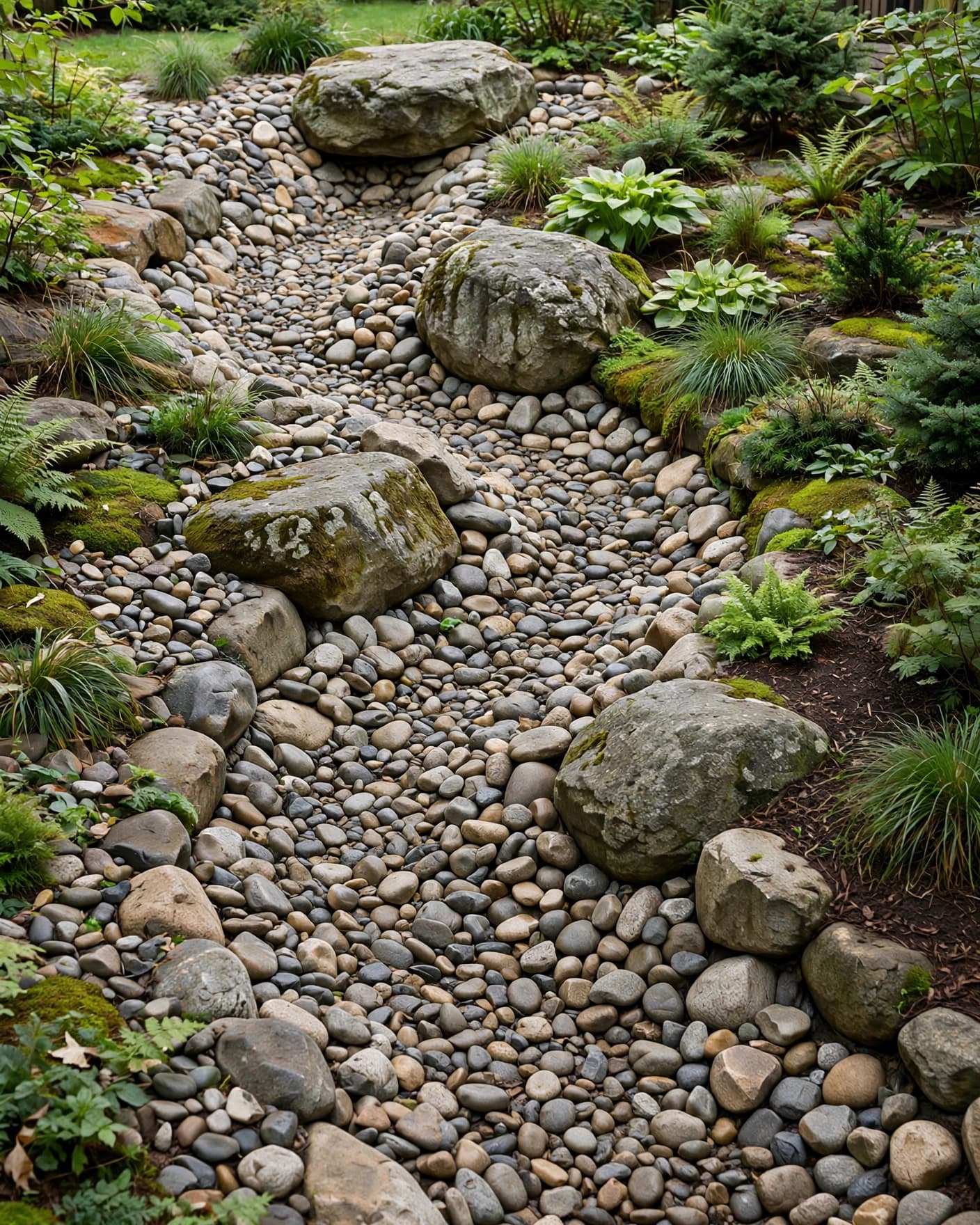
A decorative creek bed can cover an underground drainage line while keeping the surface attractive. Place clean river rock over the drainage area, then use larger stones to mark the curves and protect the edges.
Don’t assume the visible rocks replace the underground system when your soil drains slowly. Perforated French Drain Pipe can support the drainage plan when the site needs an added pipe beneath the stone layer.
13. Rainwater Collection Creek Bed
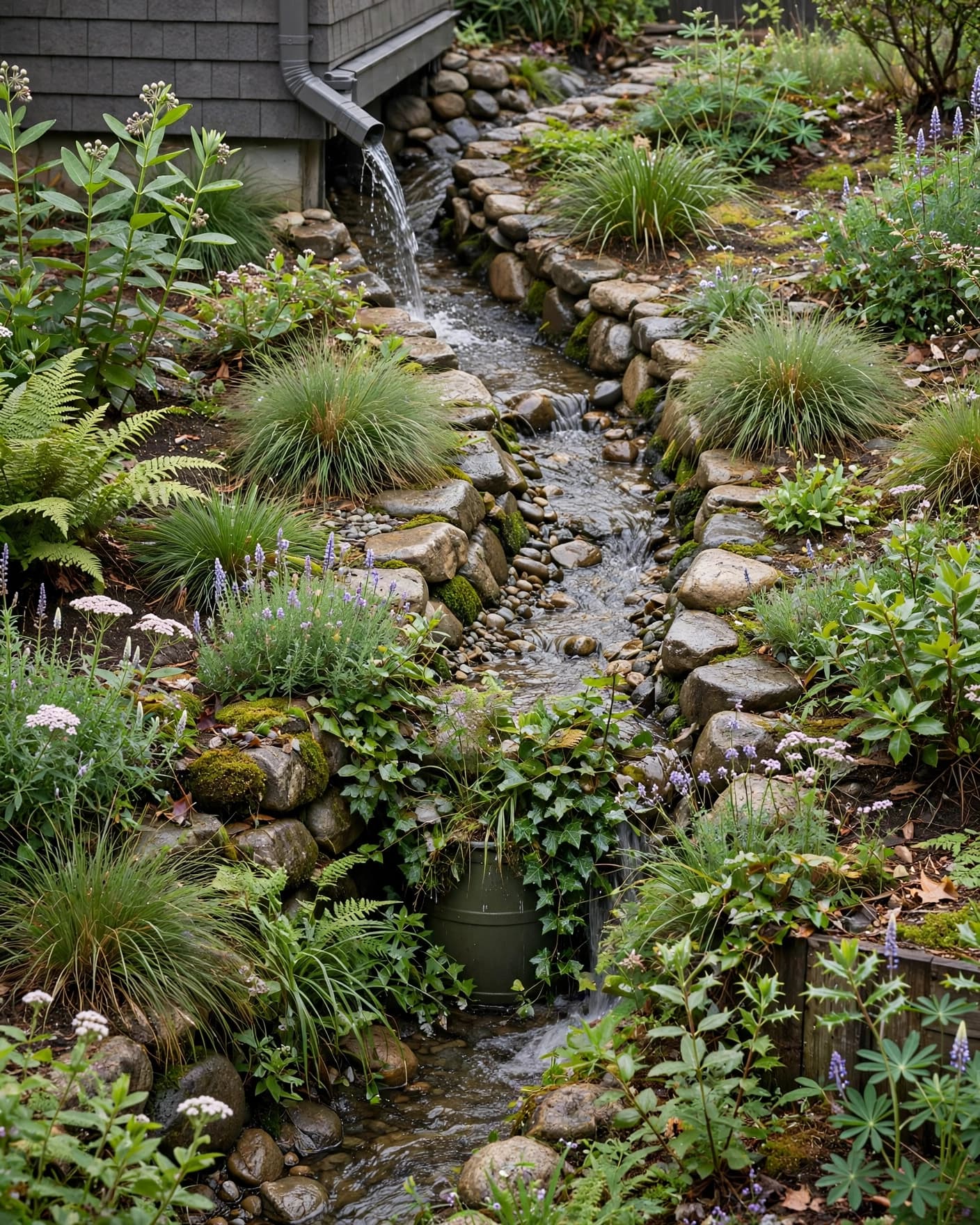
Guide roof runoff through a stone channel toward a rain barrel or planted basin. The creek bed gives water a visible path and reduces random puddling between the house and garden.
Leave room to inspect the downspout connection and clear debris after storms. A Rain Barrel Diverter Kit can help connect roof runoff to a collection barrel when the layout suits your property.
14. Pollinator Garden Creek Bed
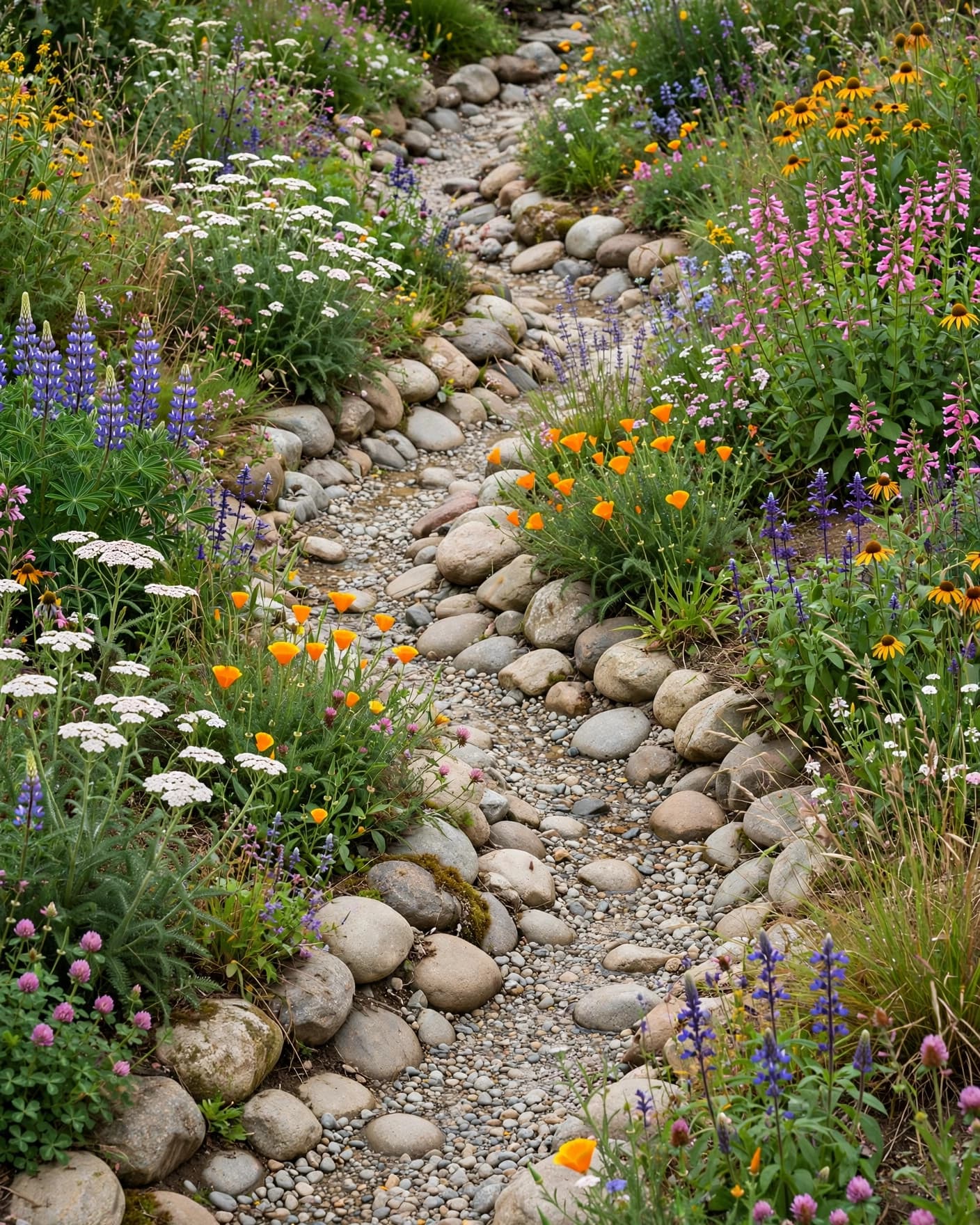
Use a dry creek bed as the center of a pollinator garden. Plant native flowers and grasses along the banks, while keeping the main drainage path open and easy to see.
Choose plants that fit your soil, sun, and local rainfall. Native Wildflower Seed Mix can add seasonal color around the stones, but keep spreading plants out of the channel itself.
15. Rustic Creek Bed Along a Fence
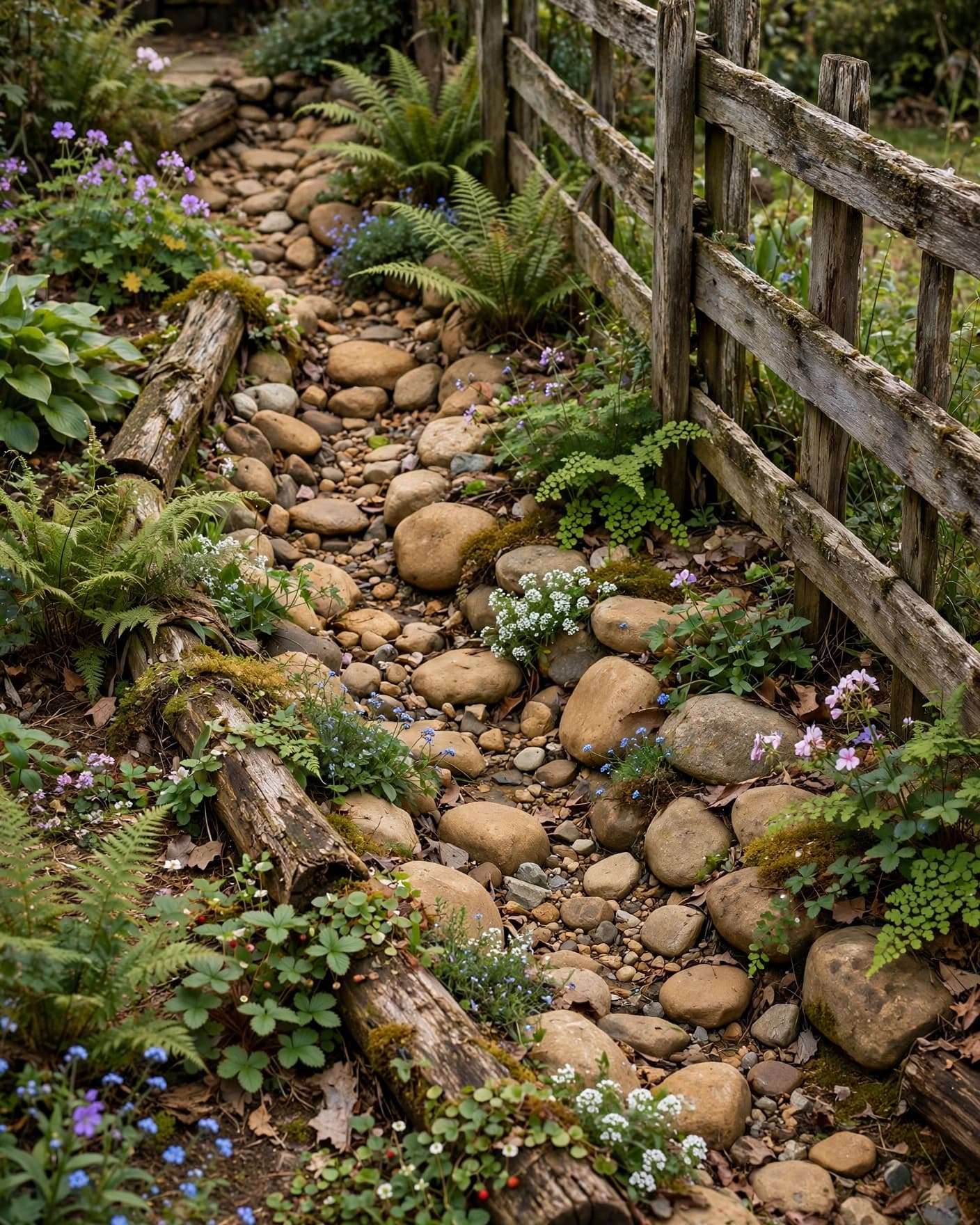
A rustic creek bed looks at home beside a wood fence, cottage garden, or weathered shed. Mix warm tan stones with logs, ferns, and leafy plants to soften the hard edges.
Keep logs outside the main flow if they can shift during rain. Weathered Landscape Timber can frame a garden edge, but anchor it well and inspect it after storms.
16. Front-Yard Creek Bed for Curb Appeal
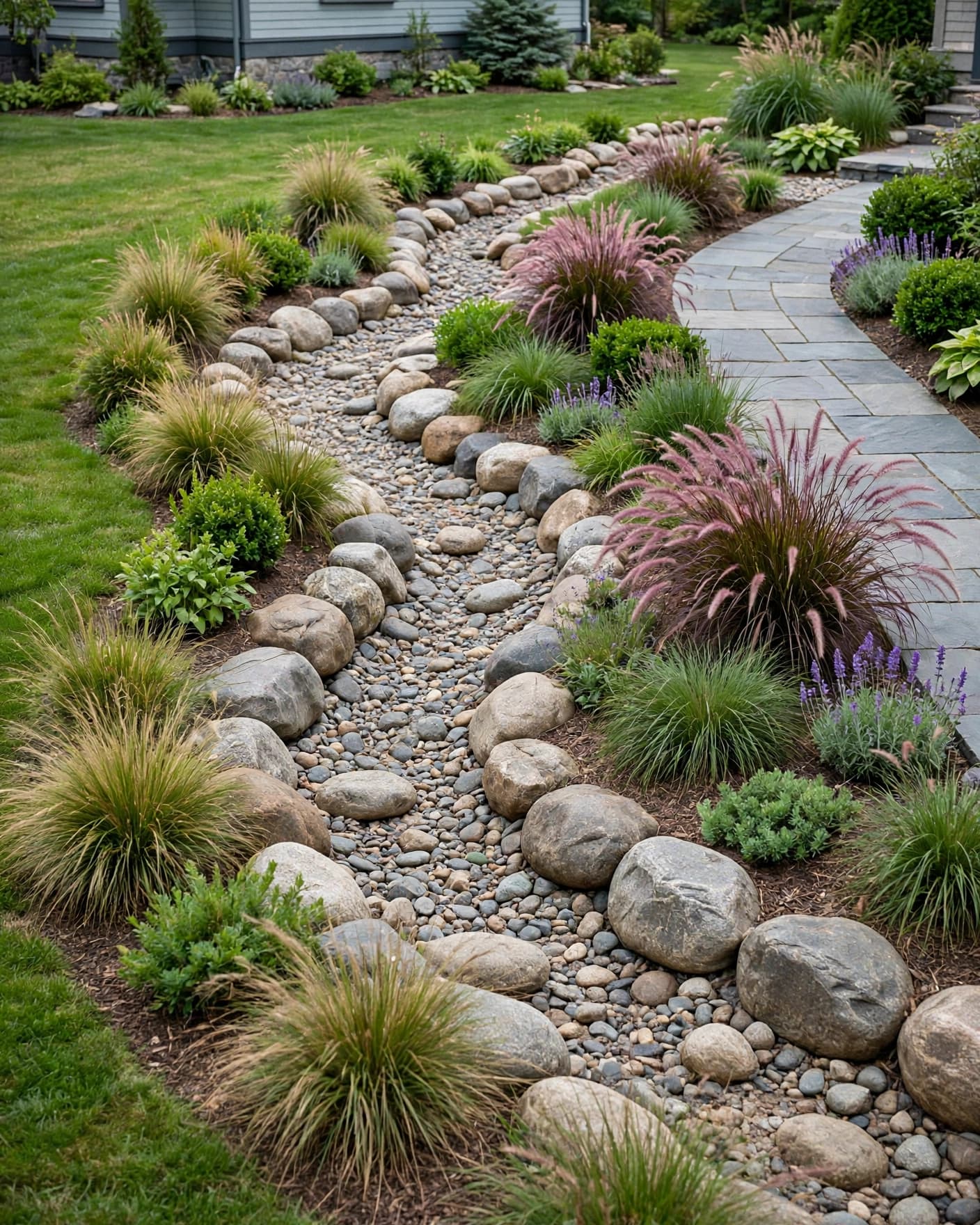
A front-yard creek bed can guide runoff without looking like a utility trench. Keep the channel tidy, use a restrained mix of stones, and repeat the same plants along both sides for a finished look.
Place it beside a walkway only when people can cross safely. Low-Growing Ornamental Grass can soften the edges without blocking the view of the drainage path.
17. Boulder-Anchored Creek Bed
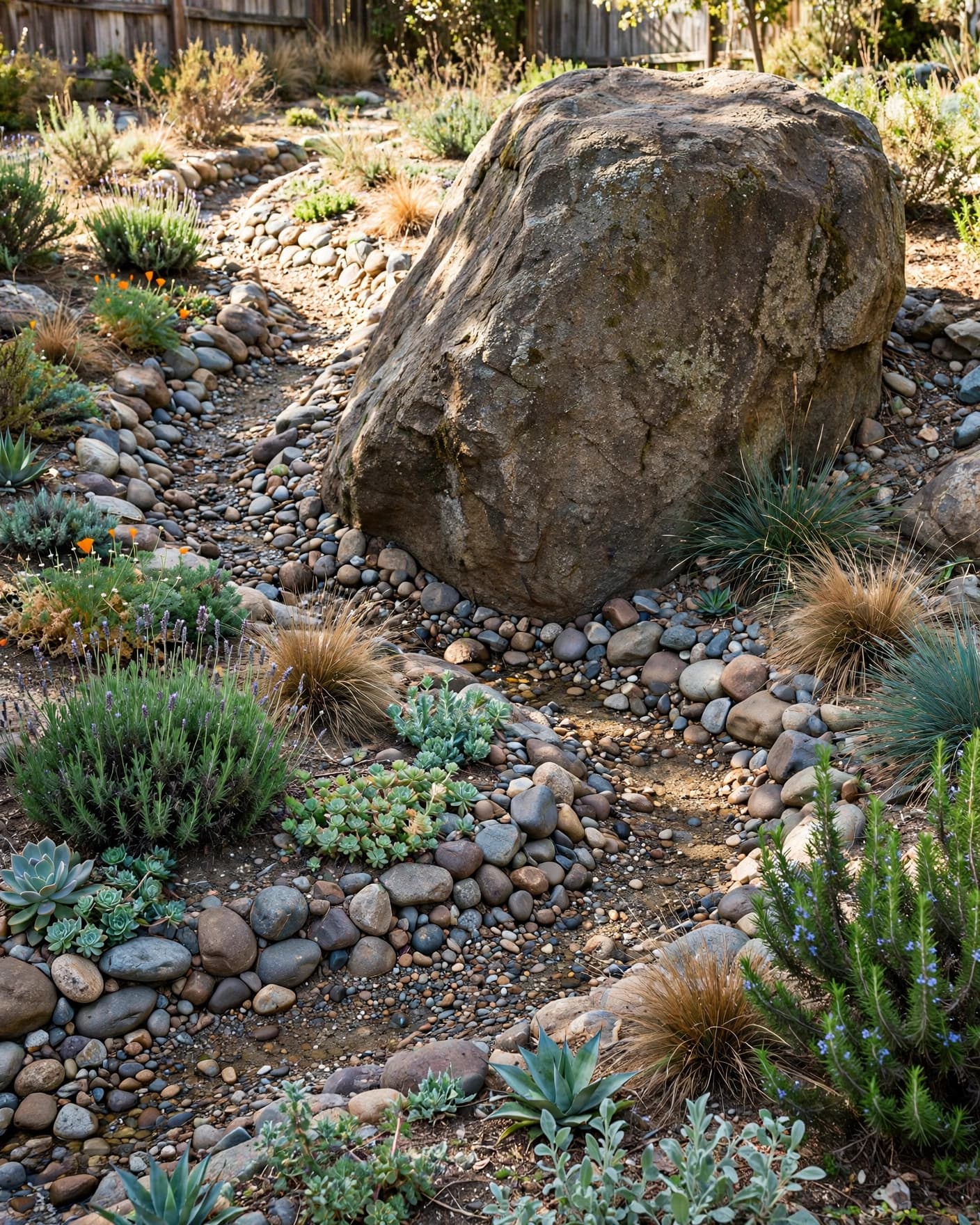
A large boulder can anchor the curve of a creek bed and stop the design from looking too uniform. Place it beside the channel rather than directly in the narrowest part of the flow.
Use smaller stones around the boulder to make it look settled into the landscape. Large Decorative Landscape Boulder works as a focal point in a wide drainage area.
18. Xeriscape Creek Bed With Gravel
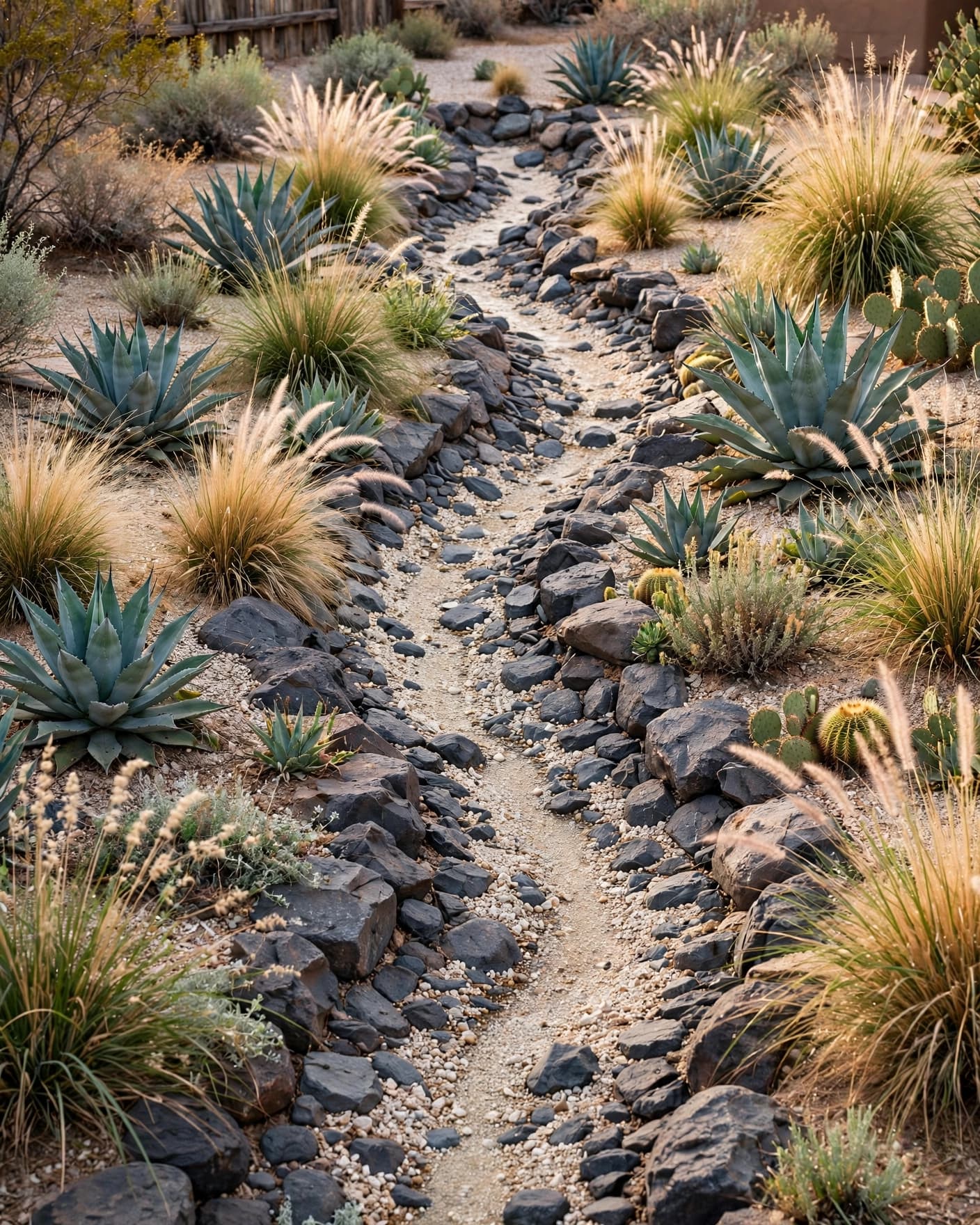
A xeriscape creek bed suits hot, sunny yards where low-water plants make more sense than thirsty lawns. Pair pale gravel with darker stones, ornamental grasses, and drought-tolerant plants.
Keep the planting sparse enough for water to move through the channel. Drought-Tolerant Garden Plant can add structure around the creek bed without demanding frequent watering.
19. Small-Corner Drainage Creek Bed
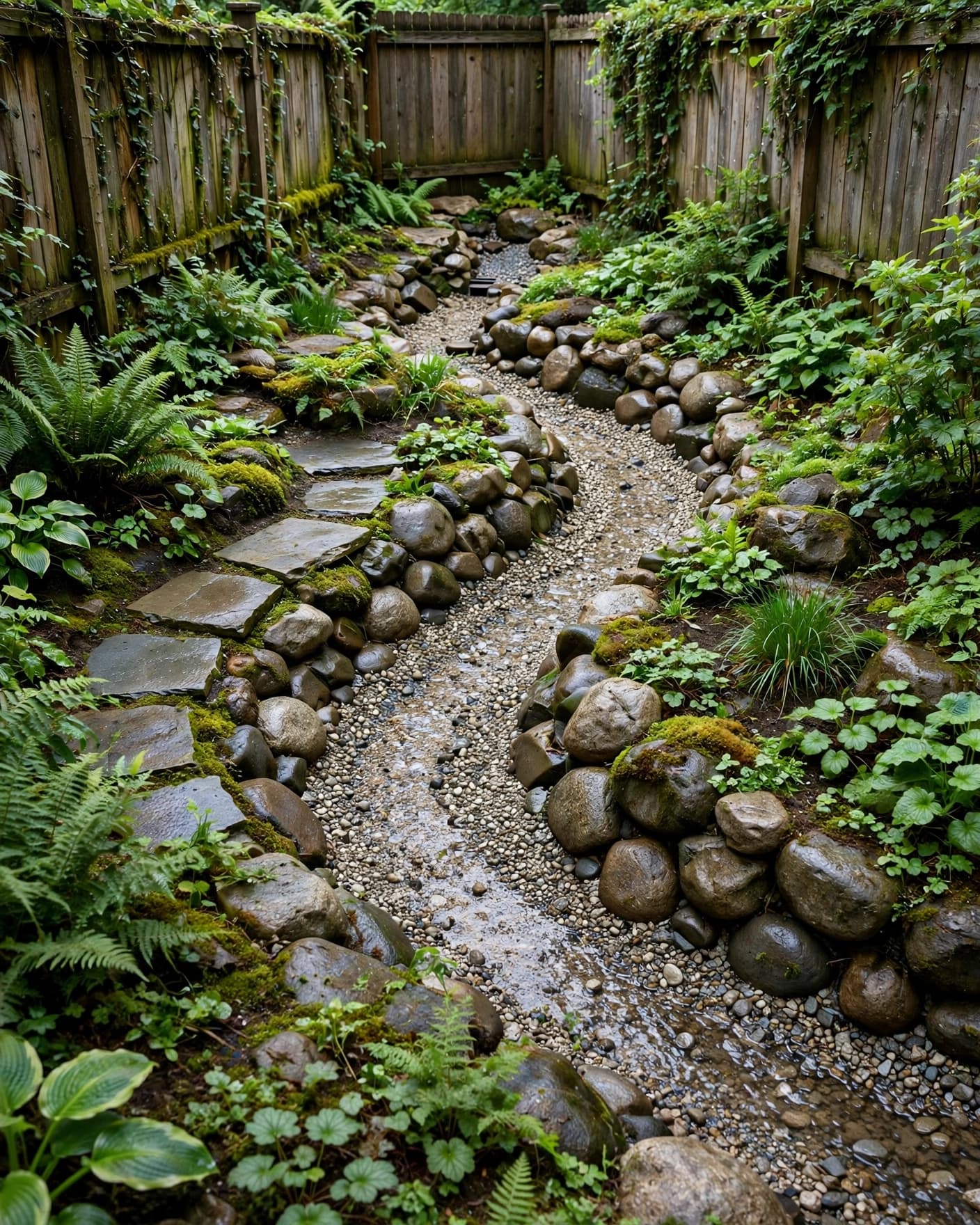
A tight backyard corner can still hold a useful drainage channel. Use a short curved run with layered gravel, a few pavers, and dense plants outside the water path.
Mark the direction of flow before you dig so the channel doesn’t end at another low spot. Landscape Marking Paint helps you map the curve and check the layout before moving soil.
20. Dry Creek Bed With a Wooden Bridge
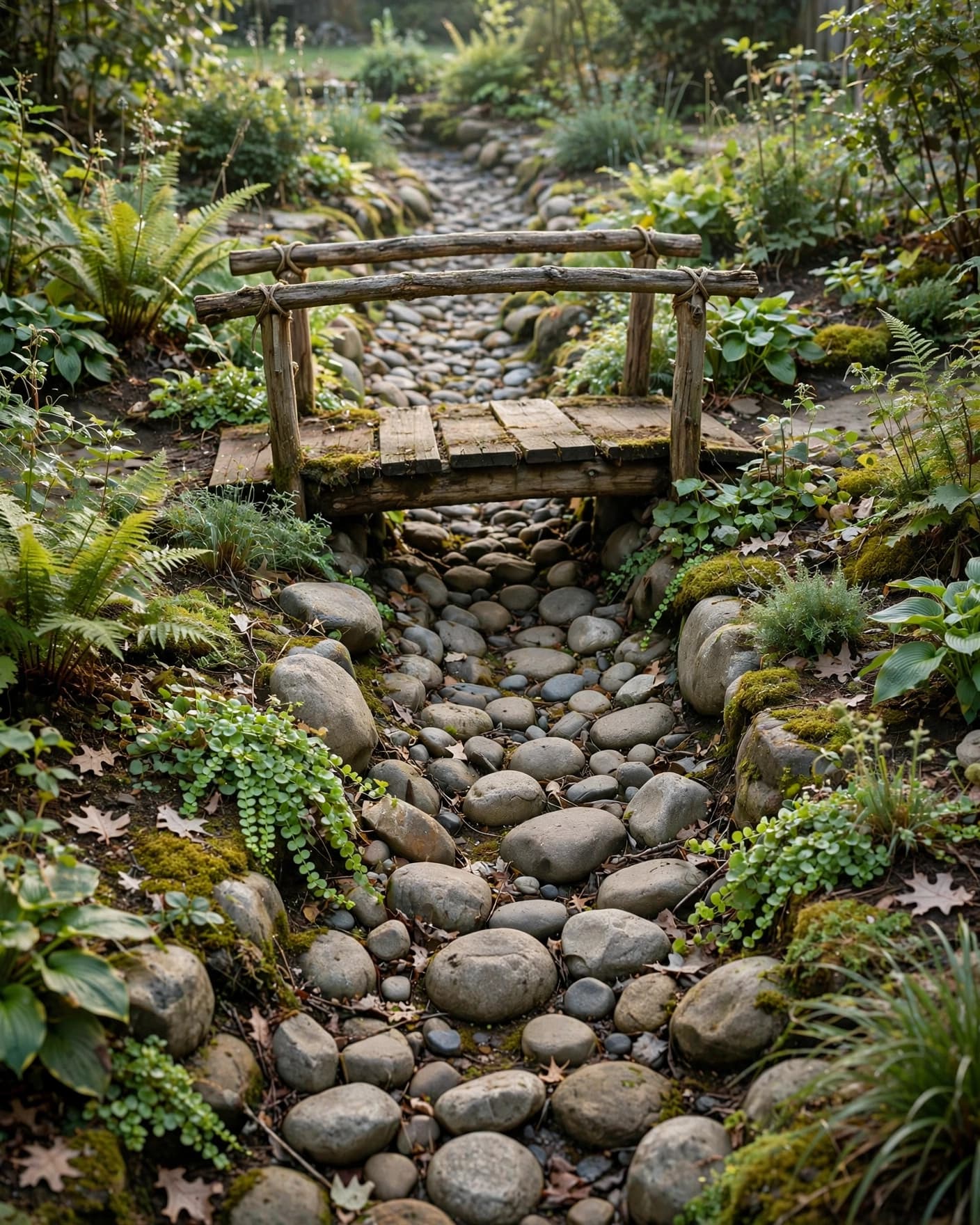
A small wooden bridge makes a wider creek bed part of the garden experience. Set the bridge where the channel stays narrow and keep the surrounding banks low enough for easy inspection.
Use a bridge with a stable base and a surface that stays grippy when wet. Rustic Garden Footbridge can connect two planting areas while giving the drainage feature a clear purpose.
21. Reinforced Creek Bed for Heavy Rain
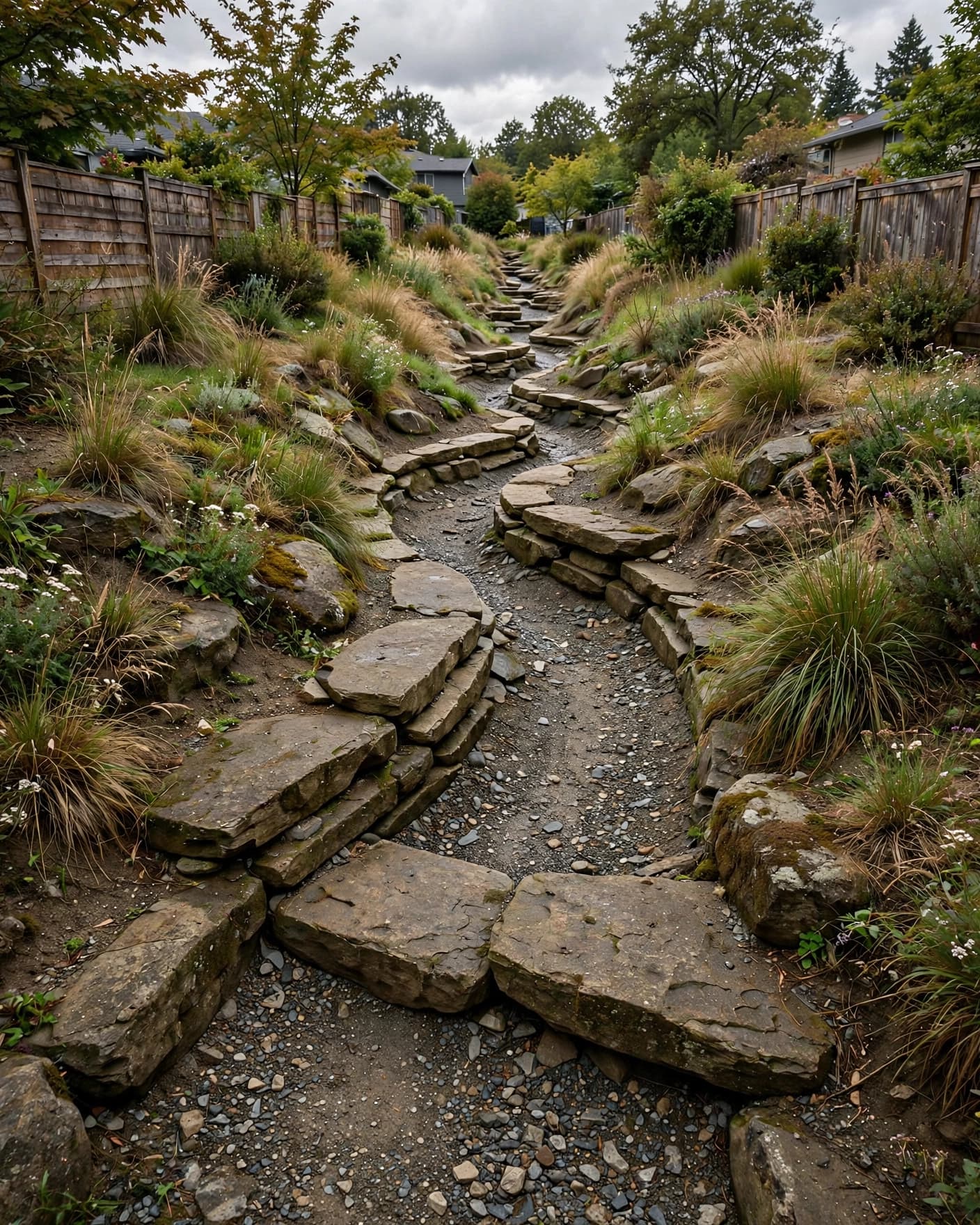
A heavy-rain creek bed needs more room and stronger edge protection than a decorative dry stream. Use large stones at bends, compact gravel in open sections, and deep-rooted plants along the banks.
Plan the overflow before construction so water has a safe route during an unusually large storm. Erosion Control Landscape Fabric can help stabilize exposed soil while plants establish.
22. Finished Mixed-Stone Drainage Bed
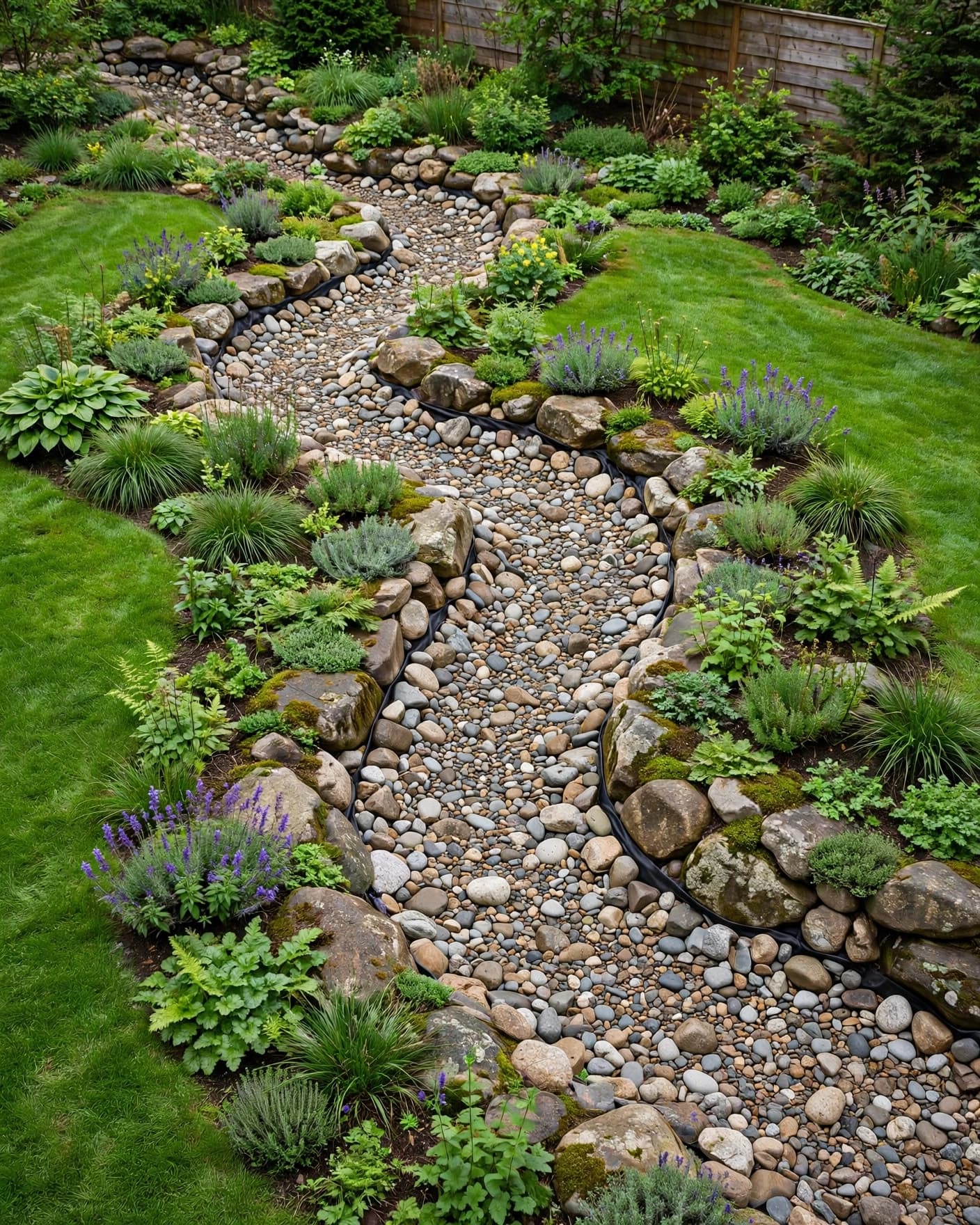
A finished creek bed looks balanced when the stones change size in a planned way. Use the largest rocks at bends and transitions, medium stones through the center, and smaller gravel near the edges.
Check the channel after the first few storms and move any stones that block the flow. Landscape Fabric Staples can hold fabric and edge materials in place during installation.
Planning and Safety Checks Before You Dig
Your creek bed needs a clear starting point, a safe path, and an outlet that won’t send water toward a foundation, septic area, or neighboring property. Call 811 at least two working days before digging, and mark the planned work area before you begin.
Keep the feature at least 10 feet from a house foundation when possible, and avoid areas within 25 feet of a wellhead or septic drain field. The University of Nebraska-Lincoln homeowner rain garden guide offers additional planning information for residential stormwater projects.
Soil drainage also affects the design. Mississippi State University Extension discusses different screening methods, including a test that checks whether water drains at about 1 inch per hour and another that checks whether a test hole empties within 12 hours, so treat those as separate guidelines rather than one universal rule.
How to Add a Safe Overflow Route
A creek bed should have somewhere to send excess water when the channel fills. Direct overflow toward an established drainage path, a suitable planted basin, or another location that won’t affect your home or a neighboring yard.
Build a low berm on the side opposite the incoming water when the site needs help holding runoff in place. Cover exposed soil with mulch, grass, or suitable plants to reduce erosion while the landscape develops.
Massachusetts stormwater guidance also discusses using crushed stone to slow runoff as it enters a rain garden or drainage feature in its stormwater solutions fact sheet. That idea can work well at the start of a creek bed, where fast water first reaches the stones.
Maintaining Your DIY Creek Bed
Clear leaves and sticks after major storms so water can move through the channel. Replace scattered gravel, reset loose stepping stones, and check the edges for new channels cut into the soil.
Trim plants that lean into the drainage path, but keep enough vegetation along the banks to hold the soil. If water regularly jumps the channel, redesign the problem area instead of adding random rocks on top.
A dry creek bed can add structure and garden style while guiding runoff more clearly through your yard. Save the idea that fits your space, mark the proposed route, and check the slope, utility lines, setbacks, and overflow path before you buy materials.

I’m Sumayya and I love turning ordinary spaces into ones you’ll never want to leave. Whether it’s cozy cottagecore corners, bold maximalist magic, or sleek modern minimalism, I’m here to help you discover your style and bring it to life without spending a fortune. Ready to refresh your space? Let’s make it happen!